
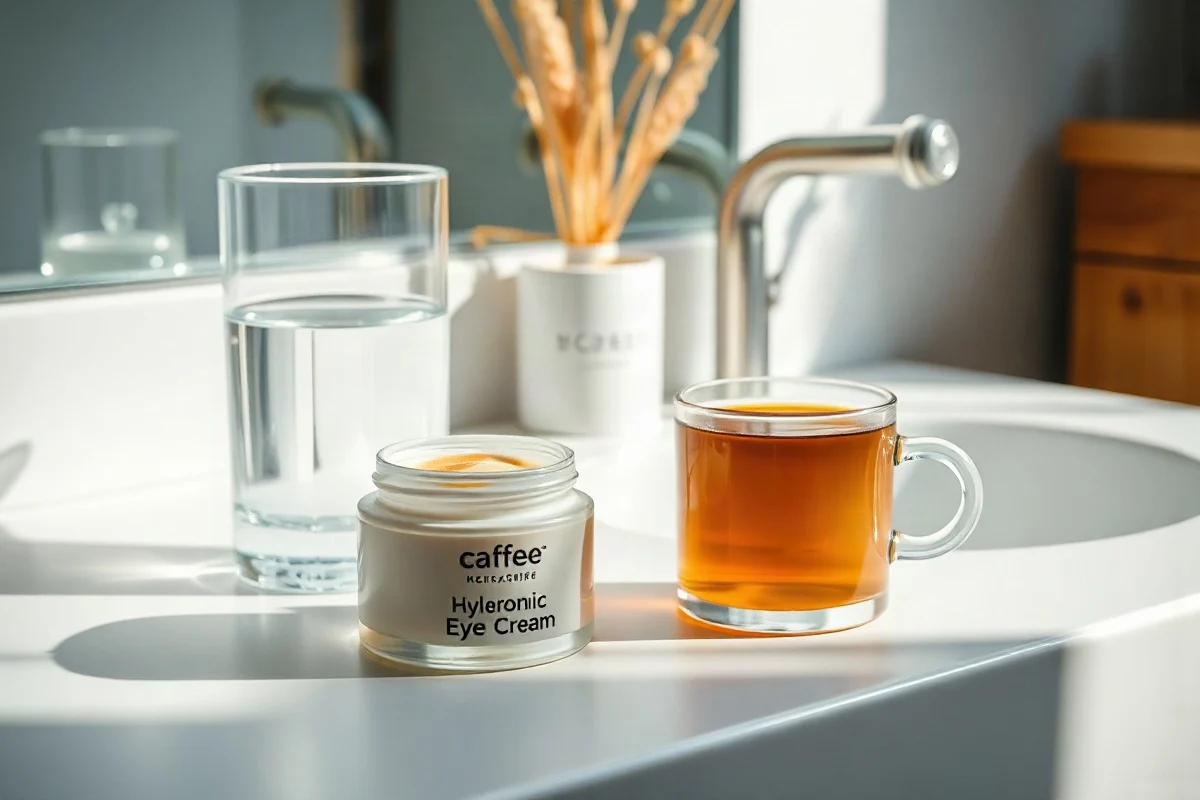
Caffeine and hyaluronic acid are often paired because they address different aspects of the under-eye area. Caffeine may temporarily make puffiness look less noticeable, while hyaluronic acid helps attract and hold water near the skin’s surface, supporting a smoother, more hydrated appearance. Together, they can make an eye product feel both refreshing and moisturizing, but neither ingredient is a guaranteed solution for every type of dark circle, eye bag, or fine line.
What caffeine can do for the look of the under-eye area
Caffeine is a familiar ingredient in eye creams, gels, and serums. Applied topically, it is commonly used in products designed to make tired-looking skin appear more awake. Its cosmetic appeal comes largely from its temporarily refreshing effect and its association with reducing the visible look of puffiness.
Under-eye puffiness can have many everyday contributors, including lack of sleep, crying, allergies, salty meals, fluid retention, or the natural shape of the eye area. Caffeine cannot address all of these factors, and a topical product cannot change the underlying structure of prominent eye bags. However, a caffeine-containing formula may help the area look temporarily less puffy or more toned after application.
The result can depend on the product’s full formula, how much is applied, the condition of the skin, and the reason the area looks swollen. A cooling applicator or lightweight gel texture may also contribute to a refreshed sensation, but that sensory effect should not be confused with a medical treatment.
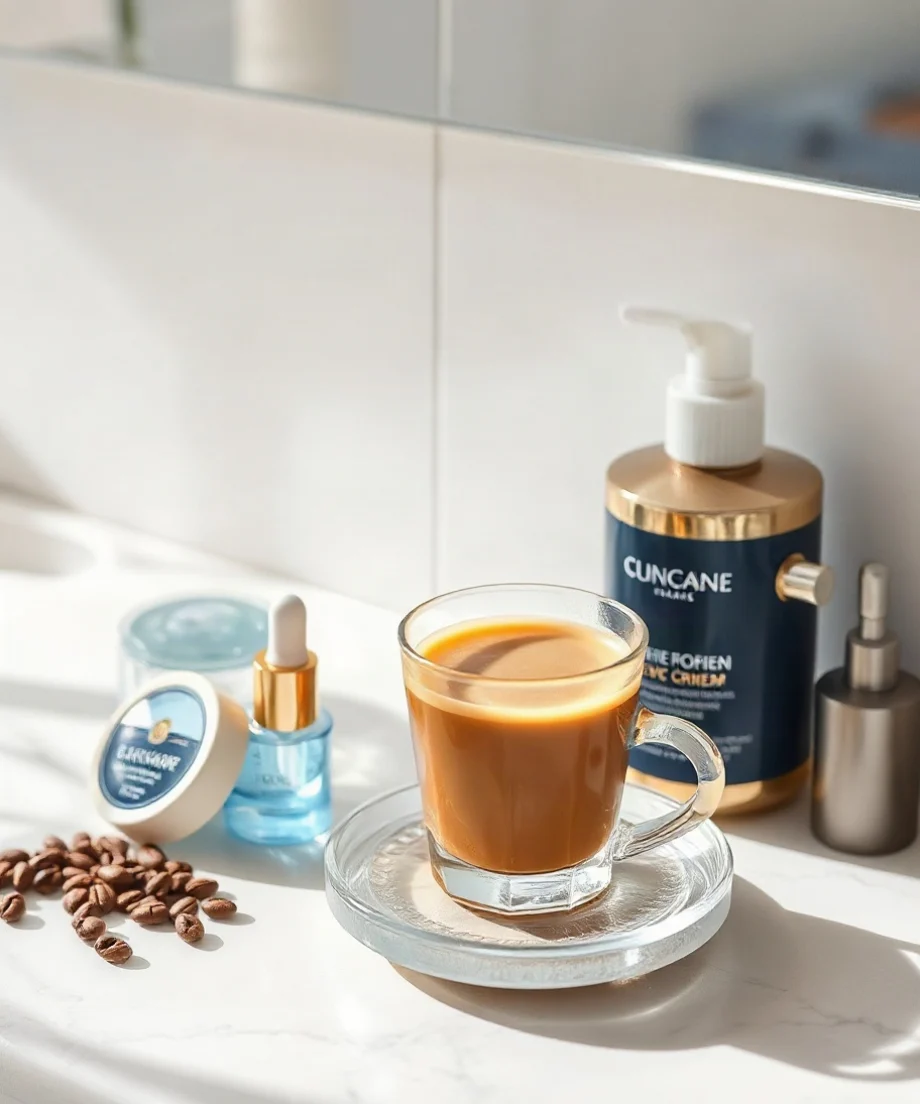
What hyaluronic acid adds
Hyaluronic acid is a humectant, which means it helps attract water to the skin’s surface. It is used in many moisturizers and eye products because hydration can make dry, tight-looking skin appear softer and temporarily make fine lines look less noticeable.
The under-eye area is relatively thin and can show dehydration easily. When the skin looks dry or creased, a well-formulated moisturizing product may improve its surface appearance. Hyaluronic acid is not an exfoliant or a resurfacing treatment, and it does not permanently remove wrinkles. Its main role in this pairing is hydration and comfort.
Hyaluronic acid can appear in different forms and alongside other moisturizing ingredients. The ingredient list alone does not reveal the complete performance of a product, since the overall formula, packaging, preservatives, texture, and supporting ingredients also matter. Formulas can change, so check the current product label or the manufacturer’s ingredient list when evaluating a specific eye cream.
Why the two ingredients work well together
Caffeine and hyaluronic acid are paired because their intended cosmetic roles are complementary rather than identical. Caffeine is generally included for a temporarily more refreshed-looking appearance, especially when puffiness is a concern. Hyaluronic acid is included to support hydration and a smoother-looking skin surface.

This combination can make sense for someone whose under-eye area looks both puffy and dehydrated. For example, a lightweight morning eye gel may provide a comfortable layer of moisture while helping the area look less tired. The product may also sit well under sunscreen or makeup, depending on its texture and the amount applied.
Still, “paired together” does not automatically mean “more effective for everyone.” A person with persistent brown or gray pigmentation may need to think about different product features. Someone with a hollow-looking tear trough may see limited change from topical skincare. If the main concern is dryness, a simple fragrance-free moisturizer may be more useful than a formula chosen primarily for its caffeine content.
For broader ingredient information, see this eye cream ingredient guide before comparing individual formulas.
What this combination may and may not help with
Puffiness
Caffeine may help the under-eye area look temporarily less puffy in some cosmetic formulas. The effect is usually best understood as a short-term appearance benefit, not a permanent change to eye bags. If swelling is frequent, severe, one-sided, painful, or accompanied by other symptoms, skincare is not a substitute for medical evaluation.
Dehydration and fine lines
Hyaluronic acid can help skin feel more hydrated and may make dehydration lines appear softer while the skin remains moisturized. This is different from changing the deeper structure of a wrinkle. Results can fade when the product is no longer used or when the skin becomes dry again.
Dark circles
Dark circles are not one single concern. They may be related to visible blood vessels, shadows from facial anatomy, pigmentation, thin or translucent skin, or temporary tiredness and rubbing. Caffeine and hyaluronic acid may improve the surrounding skin’s hydrated, rested appearance, but they are not guaranteed to lighten every type of dark circle.
If you are trying to identify whether your concern is primarily pigmentation, shadowing, or puffiness, our guide to dark circles can help you compare the possibilities without treating a cosmetic concern as a diagnosis.
How to choose a caffeine and hyaluronic acid eye product
Look beyond the front label
Marketing language can make an eye cream sound more targeted than it is. Read the current ingredient list and product directions instead of relying only on phrases such as “de-puffing,” “brightening,” or “firming.” These terms describe intended cosmetic positioning, not guaranteed outcomes.
Consider the texture
A gel may feel appealing in the morning, particularly if you prefer a light layer under makeup. A richer cream may be more comfortable for dry skin or nighttime use. Texture is a practical consideration because a product that feels comfortable is easier to use consistently.
Check for ingredients that may not suit you
Caffeine and hyaluronic acid are not the only relevant ingredients in an eye product. A formula may also contain fragrance, essential oils, exfoliating acids, retinoids, vitamin C derivatives, botanical extracts, or other preservatives. These additions may be appropriate for some people but irritating for others, especially around the eyes.
If your skin is reactive, review the full label and consider choosing a product made without added fragrance. Follow the product’s directions, patch test when appropriate, and avoid getting the formula into the eyes. Stop using it if you develop burning, persistent redness, swelling, itching, or other irritation.
How to apply the combination
Use the amount recommended on the product label. In general, a small amount is enough for both under-eye areas. Apply it to clean, dry skin using a gentle tapping motion rather than rubbing or pulling. Keep the product on the orbital area recommended by the manufacturer and avoid the immediate eye opening unless the label specifically says otherwise.
In a morning routine, an eye product can usually be followed by moisturizer and broad-spectrum sunscreen for exposed skin. Sunscreen is especially relevant when uneven tone or pigmentation is part of your concern. At night, the product can be used after cleansing and before or alongside a moisturizer, depending on the formula’s instructions.
Using more product will not necessarily produce better results. Too much can migrate into the eyes, pill under makeup, or feel heavy. Give the product enough time to settle before applying concealer, and avoid layering several potentially irritating actives around the eyes at once.
When this pairing may not be enough
A caffeine-and-hyaluronic-acid product may be a reasonable option for mild-looking puffiness, dehydration, or a generally tired appearance. It may be less relevant when the main concern is pronounced pigmentation, deep hollows, persistent eczema-like irritation, or structural eye bags. In those cases, expectations should remain modest.
Eye-area changes can also have causes unrelated to skincare. Seek professional medical advice for sudden swelling, significant pain, vision changes, discharge, a rash that does not settle, or swelling that affects only one side and persists. This article discusses cosmetic skincare choices and is not intended to diagnose or treat a medical condition.
How to set realistic expectations
The most realistic goal is a more hydrated and temporarily refreshed appearance. You may notice that the skin feels softer or that makeup applies more smoothly. Puffiness may look less prominent for a period of time, but the effect can vary and may not be visible every day.
Consistency, gentle application, adequate moisturization, and sun protection can support the overall appearance of the under-eye area. However, no ingredient pairing can guarantee that dark circles, puffiness, or fine lines will disappear. If you are comparing products, focus on the concern you want to address, the formula’s tolerability, and whether the current label matches your needs. Our under-eye routine builder can help organize those choices.
In short, caffeine and hyaluronic acid are often combined because one is commonly used for a temporarily more awake-looking appearance and the other supports surface hydration. That division of roles makes the pairing practical, but the result is still cosmetic, product-dependent, and limited by the underlying cause of your under-eye concern.

Comments
0No comments yet. Be the first to share a helpful note or question.
Leave a Comment
Your email address will not be published. Comments are reviewed before appearing on the site.