
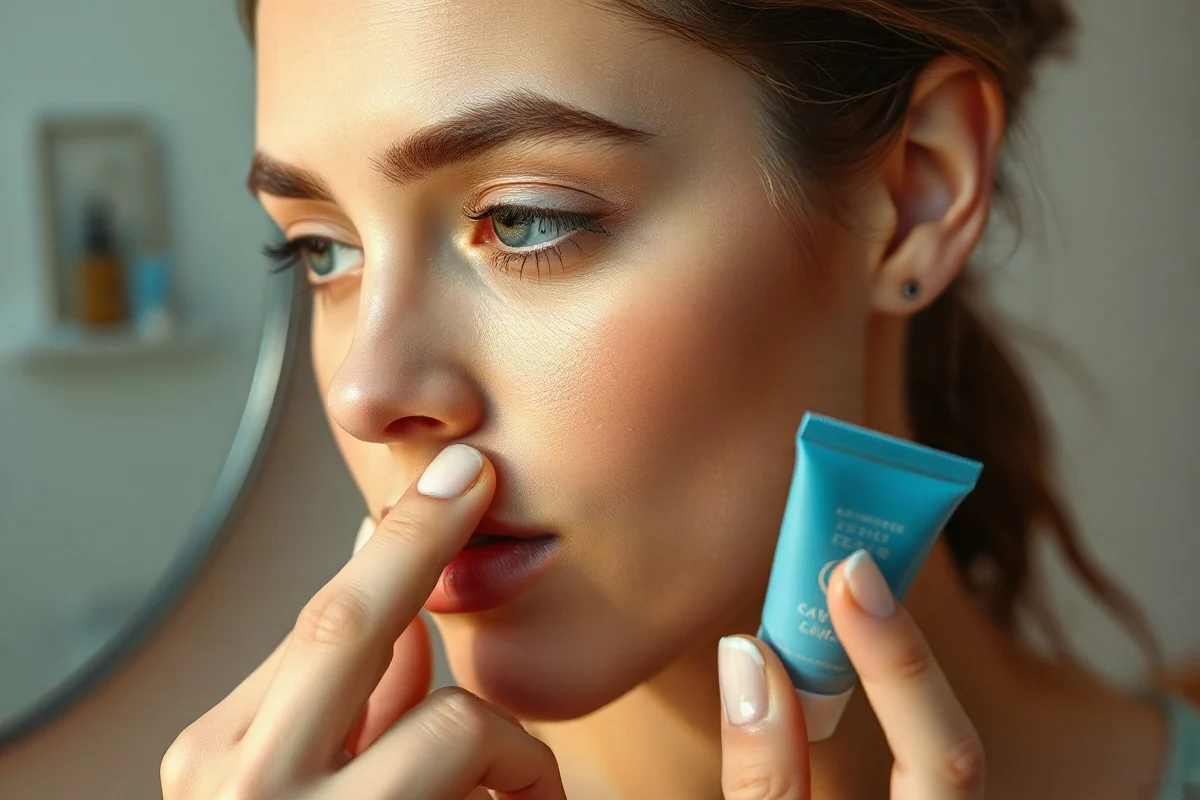
Yes, caffeine eye cream can be a reasonable choice for sensitive skin, especially if you want a lightweight product that may temporarily improve the look of puffiness and tired-looking under-eyes. However, caffeine itself does not make a formula automatically gentle. Fragrance, essential oils, strong exfoliating acids, retinoids, preservatives, and other ingredients can be more relevant to your skin’s comfort than the caffeine label.
The best approach is to judge the complete formula, introduce it gradually, and keep your expectations cosmetic and realistic. Caffeine may make the eye area look temporarily more refreshed, but it does not diagnose or treat the underlying cause of dark circles, persistent swelling, eczema, allergies, or other medical conditions.
What caffeine eye cream may do
Caffeine is commonly used in eye products because it has a temporary tightening and de-puffing appeal. When applied to the under-eye area, a caffeine-containing formula may help the skin look less puffy or more awake for a period of time. The visible effect can vary with the product, the amount applied, your skin, and the reason the area looks tired.
This distinction matters because “dark circles” are not one single concern. Under-eye darkness can be related to visible blood vessels, shadows caused by facial structure, uneven pigmentation, dryness, thin-looking skin, or temporary fatigue. Caffeine may be more relevant to the appearance of mild puffiness than to every type of under-eye discoloration.
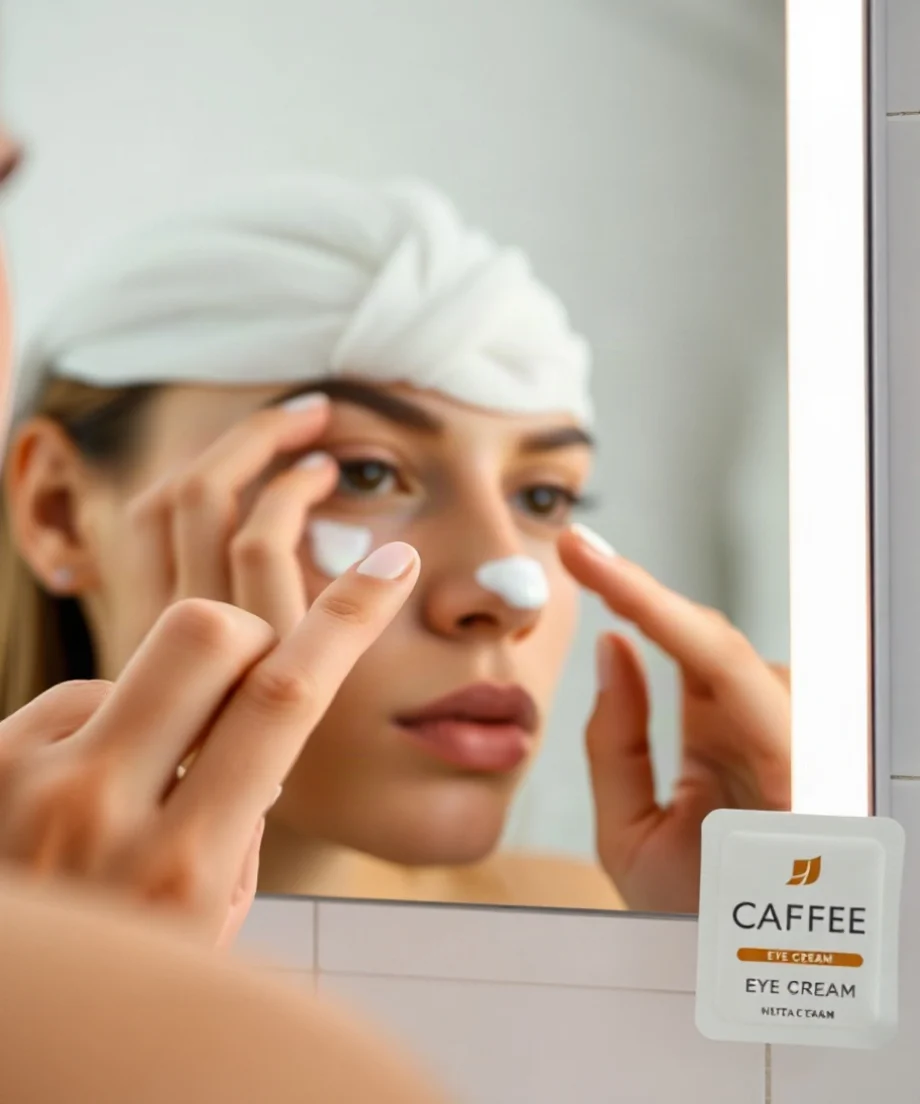
It is also useful to separate temporary cosmetic improvement from medical treatment. A caffeine eye cream cannot be assumed to correct allergies, inflammation, anemia, dermatitis, or another health condition. If discoloration or swelling is sudden, one-sided, painful, itchy, persistent, or accompanied by other symptoms, consider speaking with a qualified health professional.
For broader background on the different types of under-eye darkness, see our guide to dark circles.
Why sensitive skin needs a closer look at the formula
Sensitive skin can react to many different factors, including fragrance, changes in weather, over-cleansing, rubbing, and the combined use of several active products. The thin skin around the eyes may also feel uncomfortable sooner than skin on the cheeks or forehead. A product marketed for the eye area is not automatically suitable for every sensitive-skin routine.
Caffeine is not the only ingredient that determines whether an eye cream feels gentle. The base may contain moisturizing ingredients such as glycerin, certain emollients, or occlusive ingredients that help reduce a dry, tight feeling. On the other hand, a formula may include ingredients that some people find irritating, even when the product’s main marketing focus is caffeine.
Ingredients to review carefully
- Fragrance and parfum: Added scent can be a concern for people whose skin stings or becomes itchy easily.
- Essential oils: Botanical oils may smell pleasant, but “natural” does not automatically mean non-irritating.
- Alcohol denat.: Some people tolerate it well, while others find it drying or uncomfortable, particularly around the eyes.
- Retinoids and exfoliating acids: These can be useful in some routines but may increase the chance of dryness or irritation when introduced too quickly.
- Multiple active ingredients: A long list of brightening, smoothing, and resurfacing ingredients can make it harder to identify the cause of a reaction.
Ingredient tolerance is individual, and an ingredient list alone cannot predict exactly how your skin will respond. Still, choosing a simpler, fragrance-free formula can be a practical starting point if your eye area is easily irritated. Because formulas can change, check the current packaging or the manufacturer’s ingredient list before buying or using a product.
How to choose a caffeine eye cream for sensitive skin
Look for a short, understandable formula
A shorter ingredient list is not a guarantee of safety, but it can make product selection and troubleshooting easier. If you already know that your skin reacts to fragrance or certain preservatives, compare the complete ingredient list with products you have tolerated in the past. Avoid choosing based only on the word “caffeine” on the front of the package.
Consider the product’s texture
A lightweight gel may feel comfortable if you dislike rich products or notice that heavy creams make the area look more swollen. A creamier texture may be more appealing when dryness makes fine lines look more noticeable. Neither texture is universally better. The right choice depends on how your skin feels and whether the product stays comfortably in place.
Keep the amount modest. Applying a large layer close to the lash line can increase the chance that the product migrates into the eyes, where it may sting or water. Follow the product label and avoid applying it directly to the eye or inner eyelid unless the packaging specifically instructs you to do so.
Do not assume “hypoallergenic” means irritation-proof
Terms such as “gentle,” “clean,” or “hypoallergenic” may be useful marketing descriptions, but they do not guarantee that a product will work for your individual skin. Read the ingredient list and consider your own history of reactions. If you have a diagnosed skin condition or recurring irritation around the eyes, ask a qualified clinician for personalized guidance rather than relying on a product label alone.
How to introduce caffeine eye cream cautiously
Patch testing can reduce the risk of applying an unfamiliar product directly to the entire eye area, although it cannot guarantee that irritation will not occur. Apply a small amount to a limited area of skin according to the product’s directions, then monitor for discomfort or a visible reaction. Avoid testing on broken, scraped, or already irritated skin.
If the test area remains comfortable, introduce the eye cream gradually rather than immediately combining it with several new products. Use a small amount on clean, dry skin, keeping a reasonable distance from the lash line. If the product causes burning, persistent stinging, redness, swelling, itching, scaling, or watering, stop using it. Seek medical advice if the reaction is severe, does not settle, or involves the eye itself.
Apply the product with a light tapping motion instead of rubbing. Rubbing can make the area feel more irritated and may temporarily increase redness or swelling. A consistent, uncomplicated routine is usually easier for sensitive skin to tolerate than frequent product changes.
Our under-eye routine builder can help you organize product choices around concerns such as dryness, puffiness, and sensitivity.
What to avoid pairing at first
When starting a caffeine eye cream, avoid introducing several potentially irritating products at the same time. For example, adding a new retinoid eye product, exfoliating acid, brightening active, and caffeine formula in one week makes it difficult to know which product caused a reaction.
If you already use an active eye product, consider alternating applications rather than layering every product in the same routine. Follow each product’s label, and remember that more products do not necessarily produce a better cosmetic result. A gentle cleanser, a suitable moisturizer, and daily sun protection can provide a more stable foundation than an increasingly complicated routine.
Sun protection is particularly relevant when uneven tone is one of your concerns. Use a sunscreen appropriate for your skin and follow its directions, taking care to avoid getting it in your eyes. Sunglasses and physical shade can also help reduce squinting and limit sun exposure around the eye area.
When caffeine may not be the best priority
Caffeine may be worth considering if temporary puffiness is your main concern, but it may not address what bothers you most. If the area looks crepey because of dryness, a bland moisturizing product may be more useful for comfort and surface appearance. If shadows are mainly caused by facial structure, an eye cream may have limited visible impact. If pigmentation is the primary concern, the product’s other ingredients and your sun-protection habits may matter more than caffeine.
Persistent puffiness can also have causes that a cosmetic product cannot address. Allergies, irritation, sleep disruption, fluid retention, and other factors may affect the appearance of the under-eye area. A caffeine eye cream can be part of a cosmetic routine, but it should not be treated as a way to identify or resolve a health problem.
A practical routine for sensitive under-eyes
- Cleanse gently and avoid scrubbing the eye area.
- Apply a small amount of caffeine eye cream only if the formula has been introduced comfortably.
- Keep the product away from the eye itself and follow the package directions.
- Use a moisturizer if the area feels dry, choosing one your skin already tolerates.
- Apply sun protection during the day, taking care to avoid direct contact with the eyes.
- Stop and reassess if burning, itching, redness, or swelling develops.
For ingredient-by-ingredient background, consult our eye cream ingredient guide. You can also browse our coverage of eye care for sensitive skin when comparing routine options.
How to set realistic expectations
A caffeine eye cream may provide a temporary, subtle improvement in the look of puffiness or tiredness, but results are not guaranteed. The effect may be less noticeable when dark circles are primarily structural, genetic, pigment-related, or linked to pronounced volume changes. An eye cream also cannot permanently remove dark circles or replace medical evaluation when symptoms are persistent or unusual.
The most sensible way to assess a product is to use it consistently as directed, introduce no other major changes at the same time, and evaluate comfort and appearance over time. If the formula irritates your skin, discontinue it rather than trying to push through the reaction. Product packaging and ingredient lists can change, so verify current information with the manufacturer before relying on older descriptions or reviews.
For sensitive skin, caffeine eye cream is best viewed as an optional cosmetic step—not a guaranteed solution. Choose the complete formula carefully, start slowly, use a small amount, and prioritize skin comfort over a more aggressive routine.

Comments
0No comments yet. Be the first to share a helpful note or question.
Leave a Comment
Your email address will not be published. Comments are reviewed before appearing on the site.