
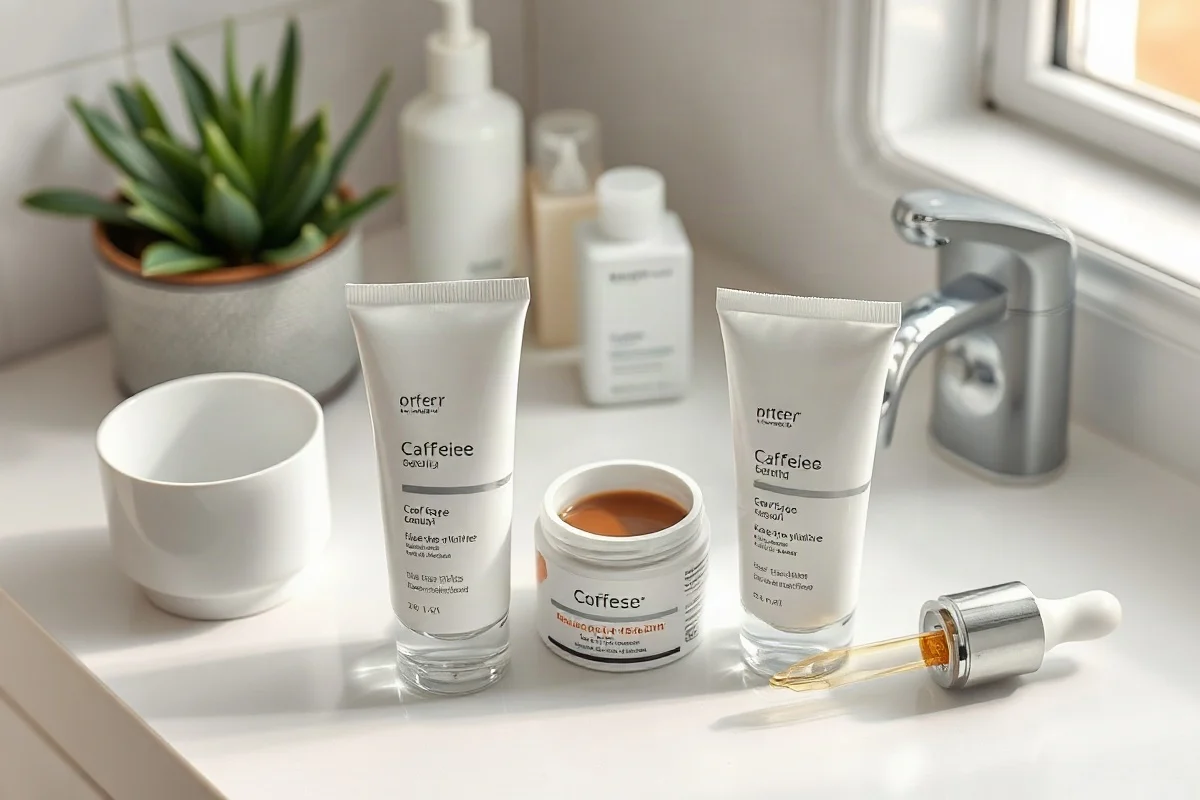
For temporary-looking puffiness, caffeine is usually the more targeted choice; for gradual improvement in the appearance of fine lines and uneven texture, retinol may be more relevant. Neither ingredient is a universal answer for dark circles, and the better option depends on what makes the under-eye area look tired, how sensitive your skin is, and how consistently you can use the product.
Caffeine and retinol are often compared because both appear in eye creams, but they have different roles. Caffeine is commonly used for a short-term, refreshed appearance, while retinol is a vitamin A derivative used in skincare routines focused on visible signs of aging and texture. Choosing between them starts with identifying the concern you want to address rather than assuming that one active is stronger or better for every under-eye issue.
What caffeine may do for the under-eye area
Caffeine is a familiar ingredient in products designed for puffiness and tired-looking eyes. Applied topically, it may temporarily make the eye area appear less puffy or more awake. The visible effect can be subtle and may depend on the rest of the formula, the cause of the puffiness, and individual skin characteristics.
This makes caffeine a practical ingredient for people who want a lightweight morning product or a quick cosmetic refresh. It may be especially appealing when the main concern is mild, occasional puffiness rather than persistent texture changes. Some caffeine eye products also contain moisturizing, soothing, or light-reflecting ingredients, so the overall formula matters more than caffeine alone.
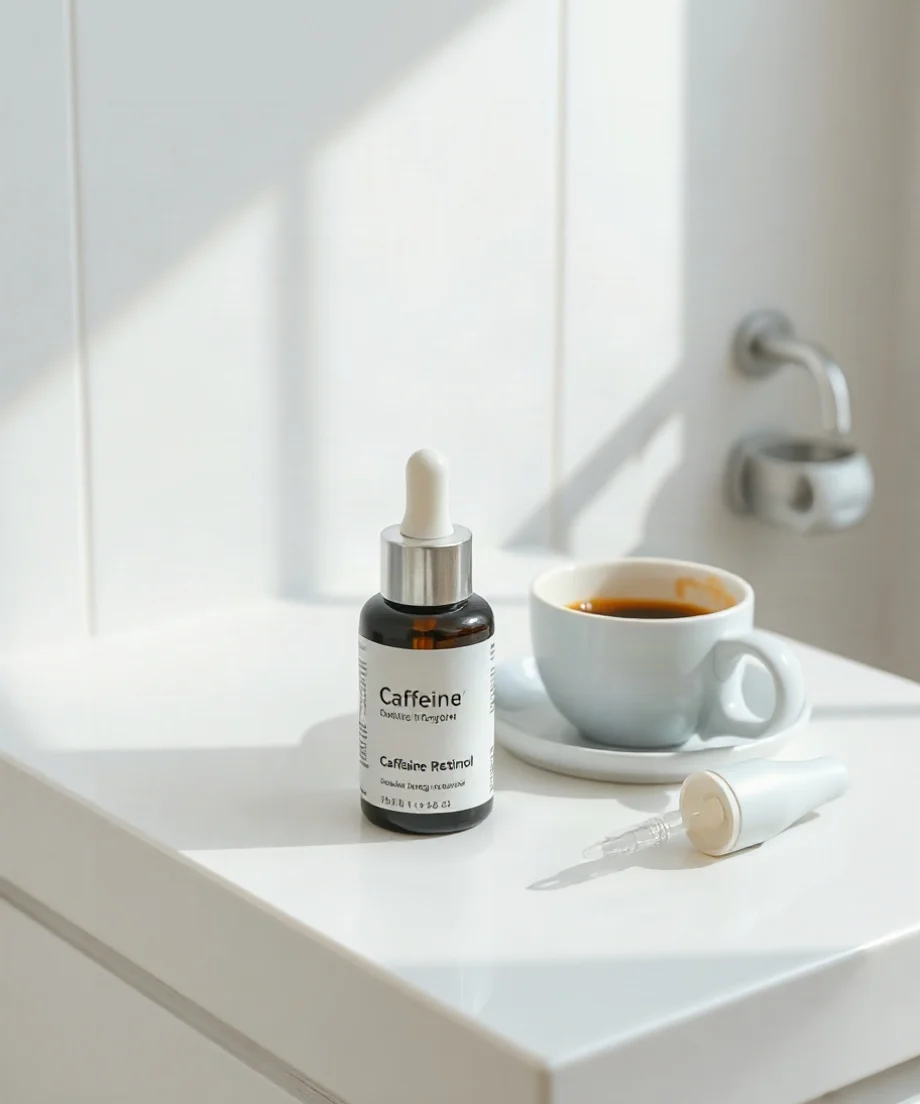
Caffeine does not change every type of dark circle. Under-eye darkness can appear for different cosmetic reasons, including visible blood vessels, natural pigmentation, shadows from facial structure, thin-looking skin, or contrast created by puffiness. A topical caffeine product may not have much visible effect when the primary concern is genetic pigmentation or a hollow that creates a shadow.
For more background, see our guide to caffeine eye creams and the broader puffiness and eye bags category.
What retinol may do for the under-eye area
Retinol is used in skincare to support the appearance of smoother-looking skin and softened fine lines over time. In an eye product, it may be a reasonable choice for someone whose main concern is crepey-looking texture, early fine lines, or an uneven surface. The expected process is gradual rather than immediate, and results can vary considerably between people.
Retinol is not a quick de-puffing ingredient. It also is not a guaranteed solution for dark circles caused by pigmentation, anatomy, allergies, or other factors. Its potential cosmetic value is more closely related to skin texture and the appearance of fine lines than to every form of under-eye discoloration.
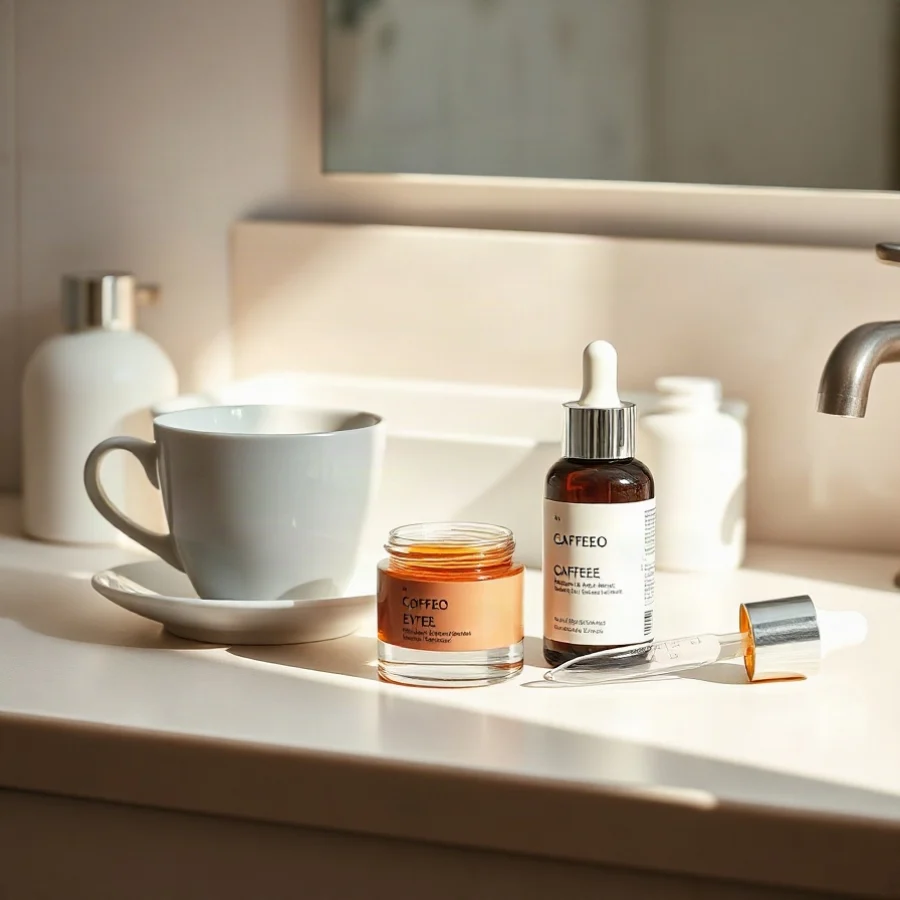
Because the eye area is delicate, retinol requires a more cautious approach than a basic moisturizing eye cream. Depending on the product and the user, it may cause dryness, stinging, redness, or peeling. Product labels differ, and the appropriate frequency depends on the specific formula and your skin’s tolerance. Follow the label rather than copying a routine designed for a different retinol product.
Our retinol eye cream coverage can help you evaluate this ingredient in the context of eye-area skincare, while our fine lines and wrinkles section covers related concerns.
Caffeine vs. retinol: Which concern are you trying to address?
For morning puffiness
Caffeine is generally the more logical first ingredient to consider when your priority is the temporary appearance of puffiness. Apply a small amount as directed, and give the product time to settle before makeup. A cool application can also feel refreshing, but avoid assuming that a cooling sensation means the product is treating the cause of swelling.
Persistent or pronounced swelling may have causes that an eye cream cannot address. If puffiness is sudden, painful, one-sided, associated with vision changes, or accompanied by other concerning symptoms, seek appropriate medical guidance rather than relying on a cosmetic product.
For fine lines and crepey-looking texture
Retinol may be the more relevant option when fine lines and texture are the main visual concerns. However, a well-formulated moisturizer can also improve the temporary appearance of dryness-related lines by helping the surface look smoother and more hydrated. Retinol is not the only useful ingredient, and using more of it will not necessarily produce better results.
Introduce a retinol eye product slowly if the label permits gradual use. Avoid applying it too close to the lash line or directly into the eye. If dryness or irritation develops, reduce use or stop and allow the skin to recover. Do not continue through significant burning, swelling, or persistent redness.
For dark circles
Neither caffeine nor retinol is a guaranteed match for all dark circles. Caffeine may offer a temporarily brighter or less tired-looking appearance when puffiness contributes to the shadow. Retinol may be considered when texture or the look of thin, uneven skin is part of the concern, but it is not a dependable answer for every type of discoloration.
Think of dark circles as a visual concern with multiple possible contributors, not as a single problem with one universal ingredient. Gentle moisturizing, daily sun protection that is suitable for the eye area, adequate rest, and avoiding rubbing can support the overall appearance of the skin. These habits may help the area look more comfortable and even, but they do not guarantee that natural under-eye shadows will disappear.
Can you use caffeine and retinol together?
Some routines can include both ingredients because they serve different purposes: caffeine in the morning for a refreshed appearance and retinol at night for a texture-focused routine. However, using two products does not automatically make a routine more effective. Each additional product can increase the chance of irritation, especially when the formulas contain other active ingredients.
If you want to combine them, keep the routine simple. Use each product according to its label, apply a small amount, and introduce one new product at a time. This makes it easier to identify which product is causing a reaction. A bland moisturizer may be useful if the area feels dry, but avoid layering multiple potentially irritating actives around the eyes until you know your skin can tolerate the routine.
Always check the current packaging and manufacturer ingredient list. Formulas can change, and products with similar names may have different supporting ingredients, directions, or warnings.
How to choose between the two
- Choose caffeine first if your main goal is a temporary refreshed look or less noticeable mild puffiness.
- Consider retinol if your main goal is the gradual cosmetic improvement of fine lines or uneven texture and your skin can tolerate a retinoid-style active.
- Prioritize hydration if the area looks tight, flaky, or more lined when dry. An eye cream does not need a strong active to be useful.
- Be cautious with sensitive skin if you have a history of reactions, eczema-prone areas, or frequent stinging around the eyes. A fragrance-free, simple formula may be easier to tolerate, but no ingredient list guarantees that irritation will not occur.
- Do not select based only on the word “brightening.” Review the full label, directions, and active ingredients instead of relying on a marketing description.
Application tips for either ingredient
Apply eye products with clean hands and use only the amount directed. A small dot spread gently along the orbital area is generally preferable to rubbing a large amount across the eyelids. Keep the product out of the eyes, and wash it away if it gets inside and causes discomfort.
Patch testing can be a sensible precaution, especially for retinol or for skin that reacts easily. Patch testing cannot guarantee that the eye area will tolerate a product, so introduce it carefully and monitor the skin over time. Stop using the product if you develop significant irritation, swelling, or discomfort.
Retinol can increase sensitivity to irritation, so follow the product’s sun-care instructions and use suitable daytime sun protection around the eye area. Be particularly careful not to combine a new retinol eye product with several other exfoliating or active products at the same time.
What to expect from a realistic routine
Caffeine may provide a more immediate but temporary cosmetic effect, particularly when puffiness is the main issue. Retinol requires patience and consistent, tolerated use, and any visible change in texture is likely to be gradual. Neither ingredient should be judged after only one application, but neither should be used aggressively in pursuit of faster results.
If your under-eye area becomes drier or more irritated after starting a product, the routine may be working against your goal. Irritation can make the area look more noticeable, emphasizing redness, flaking, or fine lines. Returning to gentle cleansing and moisturizing may be more helpful than adding another active.
The practical choice
Caffeine is usually the better starting point for a short-term, refreshed appearance and mild puffiness. Retinol is more appropriate to consider when fine lines and texture are the primary cosmetic concerns and you are prepared to introduce a potentially irritating active carefully. If dark circles are mainly due to pigmentation, facial structure, or persistent changes, neither ingredient is guaranteed to create a major visible difference.
The most useful routine is the one that matches your concern, fits your tolerance, and remains simple enough to follow consistently. Check current product instructions and ingredient lists before buying, and seek medical advice for sudden or unusual changes that do not seem like ordinary cosmetic concerns.

Comments
0No comments yet. Be the first to share a helpful note or question.
Leave a Comment
Your email address will not be published. Comments are reviewed before appearing on the site.