
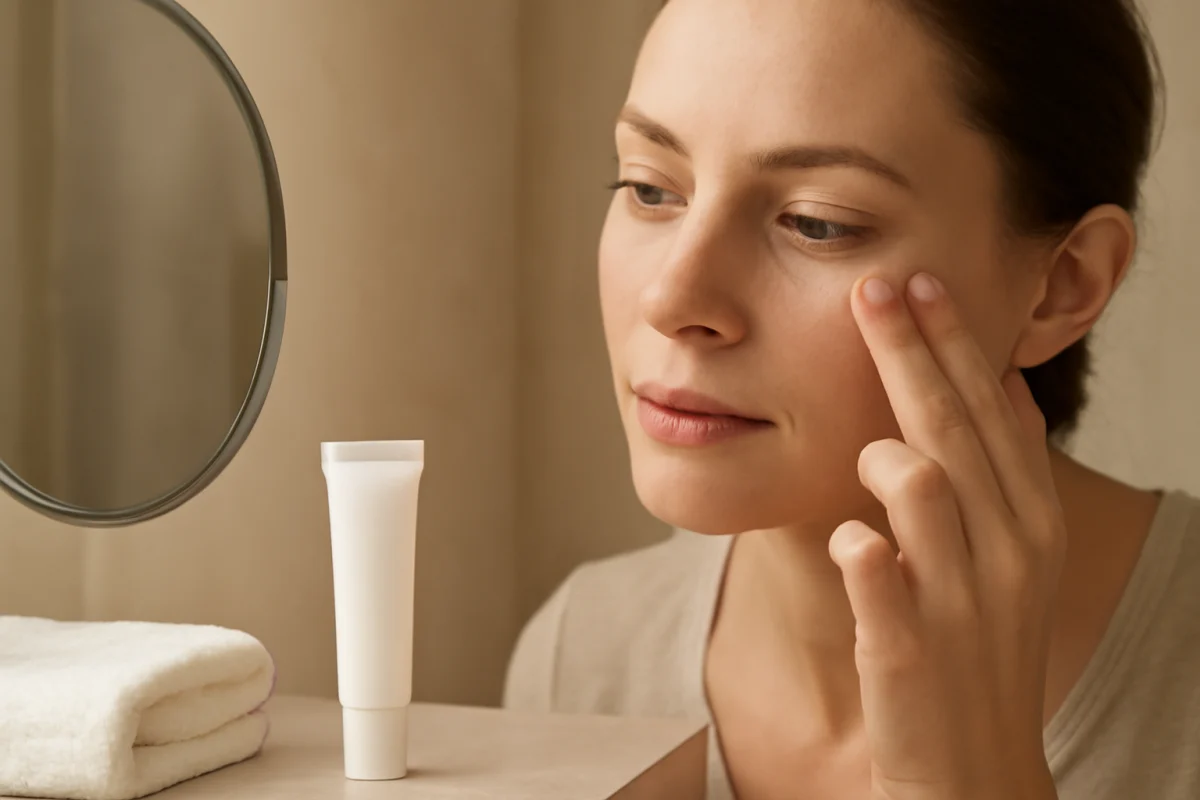
Yes, vitamin C may make tired-looking under-eyes appear brighter and more even, especially when dullness or uneven pigmentation contributes to the concern. However, it cannot address every reason the under-eye area looks dark. Shadows from hollowness, visible blood vessels, puffiness, irritation, dryness, genetics, and lack of sleep can all create a darker appearance, and a topical product may have limited influence over those factors.
Vitamin C is best understood as a cosmetic brightening ingredient rather than a universal solution for dark circles. With consistent, careful use, a well-formulated product may support a more radiant-looking eye area. The most realistic goal is gradual improvement in the appearance of uneven tone—not a guaranteed removal of dark circles or a change to the underlying structure of the face.
What vitamin C can do for the under-eye area
Vitamin C refers to a group of antioxidant ingredients used in skin care. The best-known form is ascorbic acid, while other products use vitamin C derivatives designed for improved stability or gentler application. These forms can behave differently on the skin, so the ingredient name alone does not predict how a particular eye cream will feel or perform.
In cosmetic skin care, vitamin C is commonly used to help the skin look brighter and more even. It also provides antioxidant support, which is one reason it appears in products intended for exposed areas of the face. Because the skin around the eyes is thin and often more reactive than the cheeks, eye-area formulas may use a different type or concentration of vitamin C than a facial serum. Product packaging and the current manufacturer ingredient list are the most reliable sources for formula-specific information.
Uneven pigmentation and dullness
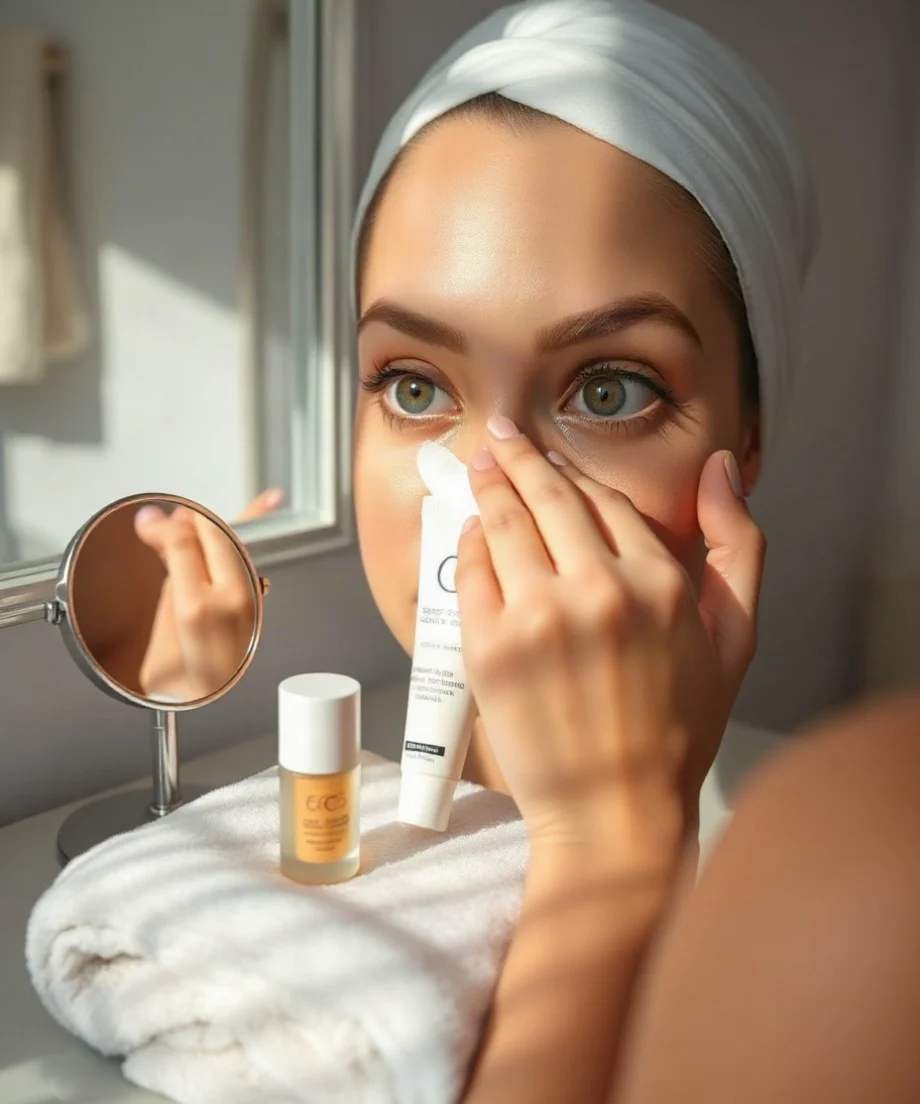
If the under-eye area looks darker because of excess pigment or an uneven-looking tone, vitamin C may help improve the appearance gradually. This is a cosmetic effect and should not be confused with diagnosing or treating a pigmentation disorder. The result, if it occurs, may be subtle and can take time to become noticeable.
Shadows from hollowness
Some dark circles are created primarily by the way light falls into a hollow beneath the eyes. In that situation, brightening the skin may not remove the shadow because the concern is related to facial structure rather than surface color. A topical eye cream may still improve hydration or radiance, but it is unlikely to change the contour that creates the shadow.
Blue, purple, or reddish tones
Thin under-eye skin can make blood vessels or underlying tissue more visible, producing a blue, purple, or reddish appearance. Vitamin C may support a brighter-looking surface, but it should not be expected to conceal visible vessels or permanently change their appearance. Gentle hydration and daily sun protection may be useful parts of an overall cosmetic routine.
Why results vary from person to person
“Dark circles” describes an appearance, not one single skin concern. Two people may use the same vitamin C product and see different results because their discoloration has different contributing factors. Skin tone, genetics, sun exposure, rubbing, allergies, dryness, sleep patterns, and facial anatomy can all influence how the under-eye area looks.
Puffiness can also make the area look darker by creating a shadow. Vitamin C is not a dedicated de-puffing ingredient, and it should not be presented as a treatment for eye bags. If puffiness is your main concern, you may find it more useful to compare ingredients and routine choices in our guide to puffiness and eye bags.
Persistent or unusual changes around the eyes, especially when accompanied by pain, marked swelling, a rash, vision changes, or other symptoms, warrant medical advice. Skin care can address appearance, but it cannot diagnose the cause of a new or concerning change.
How to choose a vitamin C eye cream
Look beyond the words “vitamin C”
Check the ingredient list to see which vitamin C form the product contains. Ascorbic acid and vitamin C derivatives may have different stability, texture, and tolerability characteristics. A product may also combine vitamin C with moisturizing, soothing, or antioxidant ingredients. Since formulas can change, verify the current packaging and manufacturer information before relying on older product descriptions.

Consider your sensitivity level
The eye area is especially vulnerable to stinging and watering. Some vitamin C products may feel irritating, particularly when they contain a more active form, a low-pH formula, fragrance, or several other potentially irritating ingredients. “Stronger” does not automatically mean better for the under-eyes. A formula you can use consistently and comfortably may be more practical than one that causes repeated irritation.
If your skin is reactive, review our guidance for sensitive skin before adding a new active. Follow the product label, keep the product away from the eye itself unless it is specifically intended for that area, and patch test when appropriate. Stop using it if you develop burning, persistent redness, swelling, itching, or other irritation.
Choose packaging that protects the formula
Vitamin C can be sensitive to factors such as light, air, and heat, depending on the form and overall formula. Opaque or air-restrictive packaging may help protect some products, but packaging alone does not prove that a formula will remain effective. Keep the product according to the label’s storage directions and pay attention to changes in color, smell, or texture. When in doubt, check with the manufacturer.
How to add vitamin C to an under-eye routine
Start with clean, dry skin unless the product label gives different instructions. Apply a small amount around the orbital area, avoiding the lash line and the eye itself. You do not need to apply a thick layer; using more product will not necessarily produce better results and may increase the chance of migration into the eyes.
If you are new to the ingredient, begin less frequently than the label’s maximum directions and increase only if your skin remains comfortable. Use a moisturizer afterward if the area feels dry. During the day, apply broad-spectrum sunscreen to the surrounding face and use sunglasses or other sun-protective habits when practical. Sunscreen should not be applied inside the eyes, and the eye cream should not be treated as a substitute for sun protection.
Introduce one new active at a time when possible. Adding vitamin C alongside retinol, exfoliating acids, or other strong products makes it harder to identify the cause of irritation. If you already use a retinol product, you may want to separate the products by time of day or alternate them, but follow each product’s instructions and prioritize comfort. Our under-eye routine builder can help organize a simpler approach.
Can vitamin C be used with other eye-care ingredients?
Vitamin C is often paired with moisturizing ingredients such as humectants, emollients, and barrier-supportive lipids. These combinations can make an eye cream feel more comfortable, particularly if dryness makes the area look crepey or dull. Hydration may temporarily soften the appearance of fine lines by making the skin look smoother, but it does not erase lines or permanently change skin structure.
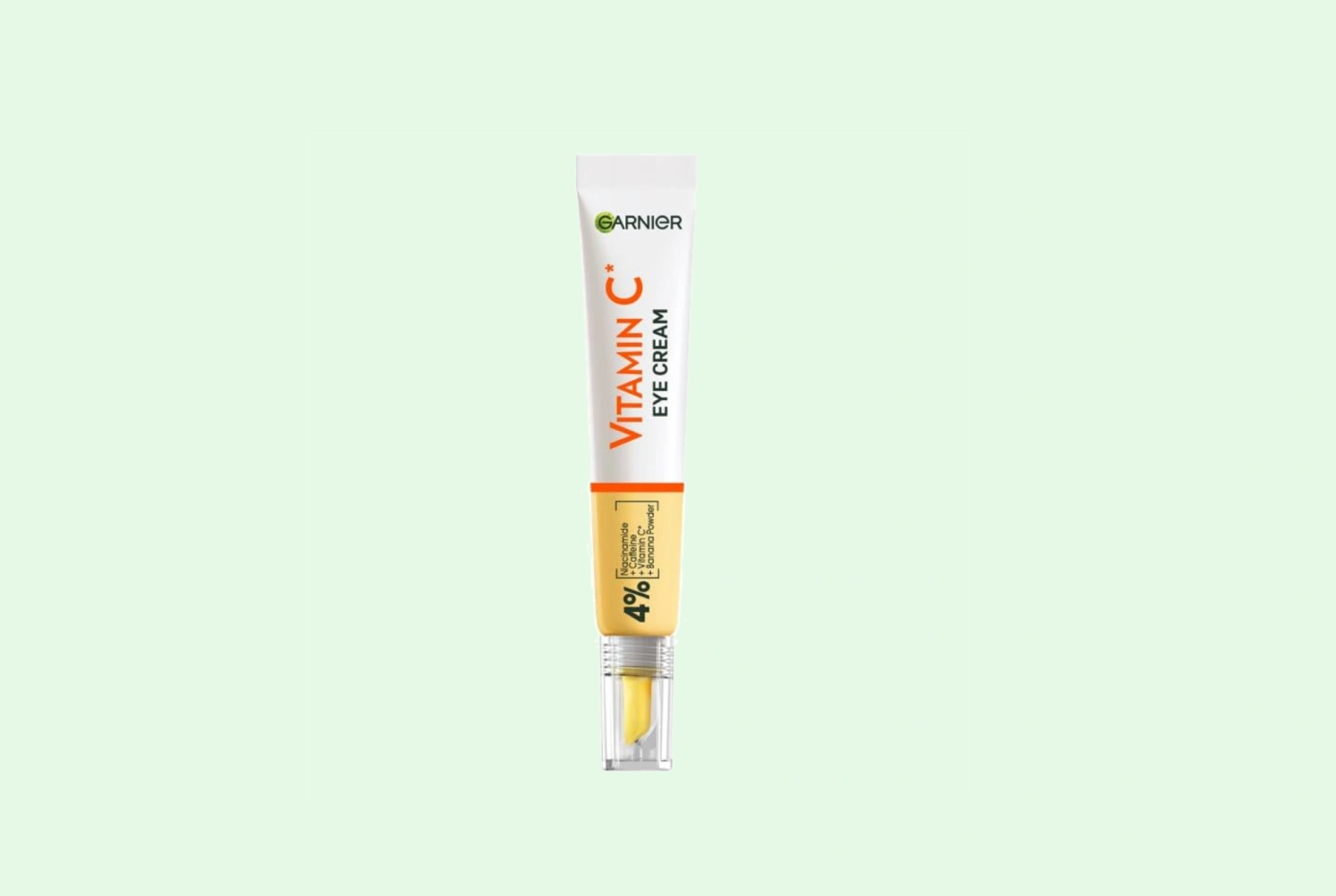
Some routines also combine vitamin C with caffeine, niacinamide, peptides, or retinoids. These ingredients have different cosmetic purposes and different irritation considerations. Caffeine is often selected for the temporary appearance of puffiness, while retinoids are commonly used in routines focused on the look of fine lines. More active ingredients are not always better, especially around the eyes. A short, consistent routine is usually easier to tolerate than several overlapping products.
For broader ingredient research, you can browse our eye cream ingredient guide. Evaluate the full formula, directions, packaging, and your own skin response rather than choosing an eye cream based on one highlighted ingredient.
What timeline should you expect?
Vitamin C is not an instant concealer. Any improvement in radiance or hydration may be easier to notice before changes in uneven tone, while other concerns may not respond visibly at all. Give a product enough time for a fair cosmetic assessment, provided your skin remains comfortable and the product is stored properly. Avoid comparing your skin with heavily edited images or expecting identical results to someone else’s experience.
Consistency matters, but consistency does not mean pushing through irritation. Stinging, peeling, swelling, or persistent redness is a reason to pause rather than increase use. If symptoms continue after stopping the product, seek advice from a qualified health professional.
The bottom line on vitamin C for tired-looking under-eyes
Vitamin C can be a reasonable option when your main goal is a brighter, more even-looking under-eye area. Its potential is greatest when dullness or uneven pigmentation is part of the visible concern, and its effect is likely to be limited when darkness comes mainly from hollowness, shadows, visible vessels, or puffiness. Choose a formula intended for the eye area, follow the label, introduce it gradually, and protect the surrounding skin from sun exposure. Most importantly, treat vitamin C as one supportive step in a routine—not a guaranteed way to eliminate dark circles.

Comments
0No comments yet. Be the first to share a helpful note or question.
Leave a Comment
Your email address will not be published. Comments are reviewed before appearing on the site.