
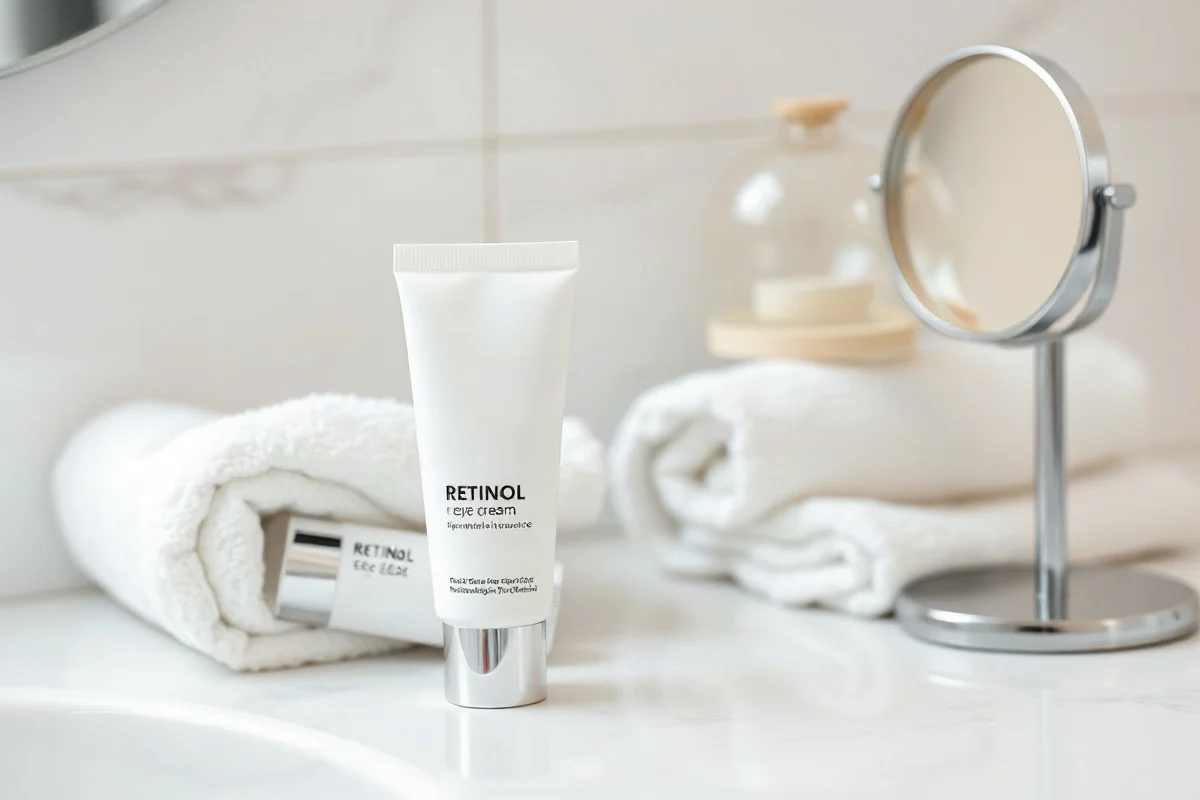
Yes, you can use retinol eye cream with vitamin C, but using both carefully is important because the skin around the eyes is thin and can be more sensitive than the rest of the face. Many people find it more comfortable to use vitamin C in the morning and retinol at night rather than layering both products at the same time. This approach lets you include both ingredients without unnecessarily increasing the chance of dryness, stinging, redness, or peeling.
Retinol and vitamin C are cosmetic skincare ingredients that may support a smoother, brighter-looking under-eye area over time. They cannot diagnose or treat the medical causes of dark circles, and neither ingredient guarantees that discoloration, puffiness, or fine lines will disappear. Your results may depend on the reason for the concern, your skin’s sensitivity, the rest of your routine, and how consistently you use sunscreen during the day.
What retinol and vitamin C do for the under-eye area
Retinol is a vitamin A derivative commonly used in skincare products designed to improve the appearance of fine lines, uneven texture, and dull-looking skin. Around the eyes, a retinol eye cream may be formulated with a milder approach than a product intended for the entire face, although formulas vary widely. Retinol can be irritating, especially when introduced too quickly or applied too close to the eyes.
Vitamin C is an antioxidant ingredient used in skincare to help defend against environmental stressors and support a brighter, more even-looking complexion. Vitamin C eye creams may be aimed at the appearance of dullness or uneven tone, but the ingredient is not a guaranteed solution for every type of dark circle. Under-eye darkness can have several visible contributors, including shadows from facial structure, visible blood vessels, pigment, thin-looking skin, or temporary dehydration.

For a broader overview of common under-eye ingredients, see the eye cream ingredient guide. It can help you compare what an ingredient is intended to do cosmetically with what it cannot realistically promise.
Why separating the ingredients often makes sense
Retinol and vitamin C are not automatically incompatible. The main concern is usually tolerability rather than a dangerous chemical interaction in a normal skincare routine. Applying multiple active ingredients to the delicate eye area at once can make it harder to identify which product is causing a reaction. It may also make dryness or irritation more noticeable.
A simple schedule is:
- Morning: Use a vitamin C eye product, if it is labeled for the eye area and your skin tolerates it. Follow with moisturizer and broad-spectrum sunscreen applied carefully around, but not directly into, the eyes.
- Evening: Use retinol eye cream according to its label. Follow with a gentle moisturizer if your skin needs additional comfort.
Separating the products does not make the routine ineffective. Instead, it can make the routine easier to manage and may reduce the amount of irritation caused by introducing two potentially active products at the same time.

Can you apply vitamin C and retinol at the same time?
Some people may be able to use both in one routine, but that does not mean everyone should. If you want to layer them, check that both products are intended for the eye area, follow each label, and introduce only one new product at a time. Use a small amount and avoid applying either product directly to the eyelids, lash line, or inner corners unless the packaging specifically directs you to do so.
Layering is less practical if your skin is dry, reactive, eczema-prone, or already irritated. It is also a poor time to combine products if you are experiencing burning, persistent redness, flaking, watering eyes, or discomfort. In those situations, simplify the routine and allow the area to recover. Stop using a product if it causes irritation that does not quickly settle, and seek medical advice for severe or persistent symptoms.
How to add retinol eye cream safely
Start with a low-frequency schedule
If you have not used retinol around the eyes before, begin slowly rather than applying it every night. A cautious starting schedule may involve using it a few evenings per week, provided that approach is consistent with the product label. If your skin remains comfortable, you can consider increasing use gradually. More frequent application is not automatically better, and irritation can make the under-eye area look temporarily drier or more lined.
Use a small amount
Eye creams are generally applied in small amounts because the product spreads as you gently pat it over the area. Applying more does not guarantee better cosmetic results and may increase the chance that the product migrates toward the eyes. Keep the application controlled and avoid rubbing.
Protect the surrounding skin
If your skin is easily irritated, you may prefer applying a bland moisturizer before or after retinol, depending on the product instructions and how your skin responds. This can make the routine feel more comfortable, although it does not eliminate retinol’s potential to irritate. Do not use retinol on skin that is cracked, sunburned, or actively irritated.
Be consistent with daytime sun protection
Daytime sun protection is useful when your goal is to maintain a more even-looking complexion and reduce additional sun-related discoloration. Apply sunscreen carefully according to its directions, taking care to avoid getting it in the eyes. Sunglasses and physical shade can also help limit squinting and direct sun exposure. Sunscreen does not guarantee that existing dark circles will fade, but skipping it can work against an even-tone routine.
How to add vitamin C eye cream safely
Vitamin C products vary considerably. Some use different forms of vitamin C, while others combine it with additional ingredients that may affect how the product feels or how well your skin tolerates it. Because formulas can change, check the current packaging and manufacturer ingredient list before buying or using a specific product.
Choose a product that is specifically labeled for the eye area rather than assuming that every facial vitamin C serum is suitable for use near the eyes. A facial serum may be too strong, too acidic, or otherwise unsuitable for this sensitive location. Keep the product away from the eye itself and follow the label’s application instructions.
If vitamin C causes stinging, redness, dryness, or watering, stop using it and allow your skin to settle. A patch test can provide useful information about basic tolerability, but it cannot guarantee that a product will not irritate the delicate eye area. For people with sensitive skin, the sensitive skin eye cream guide offers a useful starting point for simplifying product choices.
Should you use both ingredients for dark circles?
That depends on what you want to improve and what your skin can tolerate. Retinol may be more relevant to the appearance of fine lines and uneven texture, while vitamin C may appeal to people focused on dullness and uneven-looking tone. Neither ingredient addresses every visible type of dark circle.
For example, a hollow area beneath the eyes can create a shadow that topical skincare cannot fully change. Similarly, puffiness may be influenced by sleep, allergies, fluid retention, genetics, or other factors that a retinol or vitamin C eye cream does not address. If the appearance is new, one-sided, painful, swollen, itchy, or associated with vision changes, skincare is not a substitute for professional medical evaluation.
When the concern is temporary puffiness, a gentle routine and practical habits may be more useful than adding more active ingredients. You can explore guidance in the puffiness and eye bags section. If fine lines are your primary concern, the fine lines and wrinkles guide explains why hydration and daily sun protection also matter for the appearance of the eye area.
Signs that your routine is too irritating
Watch for ongoing burning, redness, itching, swelling, tightness, pronounced flaking, or increased sensitivity. Some products can cause brief sensations when first applied, but persistent or worsening discomfort is a reason to stop rather than push through it. The eye area is especially vulnerable to product migration, so watering or irritation in the eyes may also indicate that you are applying too close to the lash line or using too much.
If irritation develops, pause retinol and vitamin C, use a gentle cleanser if needed, and apply a simple moisturizer that your skin already tolerates. Avoid adding exfoliating acids, scrubs, or other strong actives while the area is recovering. Seek medical care for significant swelling, hives, severe pain, vision changes, or symptoms that do not improve after stopping the suspected product.
A practical routine for combining retinol and vitamin C
A straightforward routine may look like this:
- Cleanse gently without scrubbing the eye area.
- In the morning, apply an eye-area vitamin C product if you tolerate it and the label supports that use.
- Apply a moisturizer suited to your skin’s needs.
- Use broad-spectrum sunscreen during the day, avoiding direct contact with the eyes.
- At night, cleanse gently and apply retinol eye cream according to its label.
- Use moisturizer as needed, and do not add other potentially irritating actives until you know how your skin responds.
Introduce products separately so you can identify the source of any reaction. Keep your expectations realistic: improvements in the look of fine lines, texture, or dullness may be gradual, and some types of dark circles may remain visible despite consistent skincare. Product packaging and ingredient lists can change, so verify current details directly with the manufacturer before relying on a specific formula.
The best routine is not necessarily the one with the most active ingredients. It is the one you can use consistently without discomfort, while recognizing the difference between improving cosmetic appearance and treating a medical condition.

Comments
0No comments yet. Be the first to share a helpful note or question.
Leave a Comment
Your email address will not be published. Comments are reviewed before appearing on the site.