
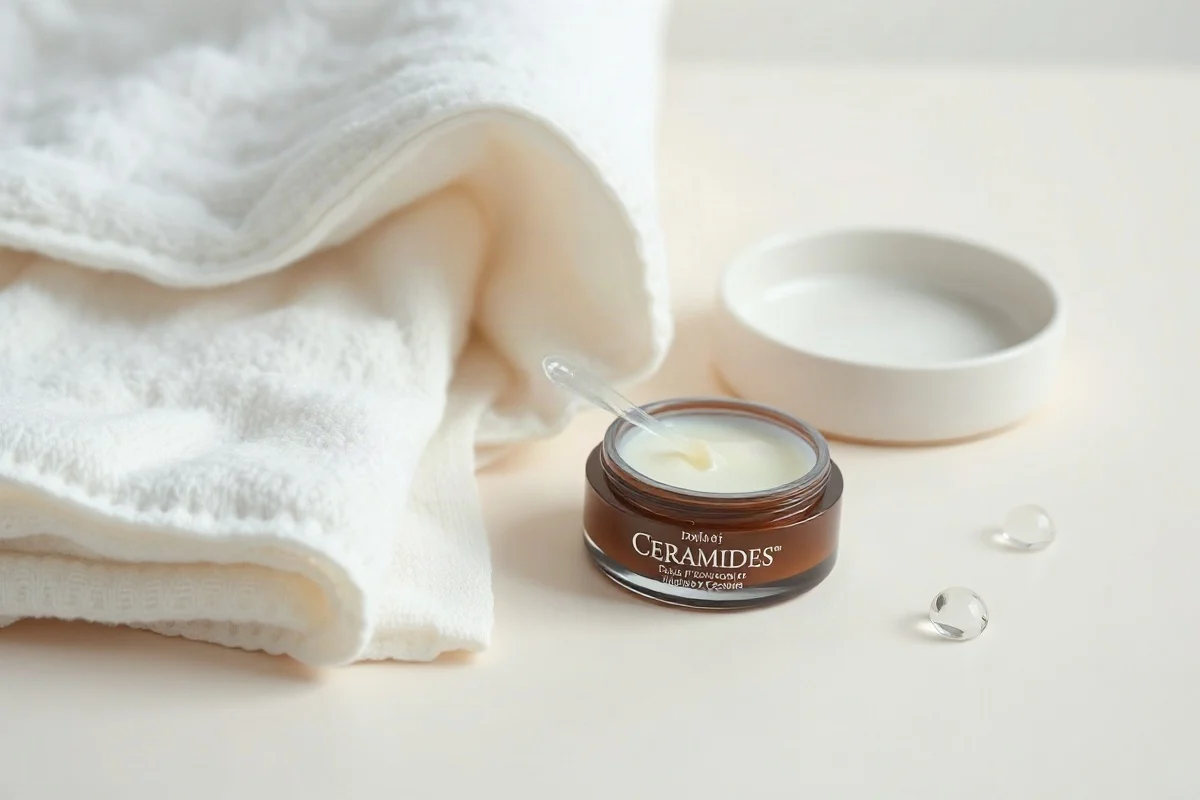
Ceramides can help the under-eye area hold on to moisture and maintain a healthier-feeling skin barrier, which may make dryness, tightness, flaking, and some fine lines look less noticeable. They do not directly remove dark circles, dissolve under-eye bags, or change the underlying causes of discoloration. Their main value is supportive: they help dry or easily irritated skin stay more comfortable and resilient when used in a well-tolerated formula.
What ceramides are
Ceramides are lipid molecules naturally found in the outer layers of skin. Along with other lipids, including cholesterol and fatty acids, they help form part of the barrier that limits water loss and helps protect the skin from environmental stressors. You can think of this barrier as a flexible seal rather than a solid wall. When it is functioning well, skin is better able to retain water and remain comfortable.
The skin around the eyes is often more vulnerable to dryness and irritation than skin on other parts of the face. It is relatively delicate, frequently exposed to cleansing and makeup removal, and close to areas where products can migrate into the eyes. Rubbing, cold or dry weather, indoor heating, and the use of strong active ingredients can also leave the area feeling tight or reactive.
Topical ceramides are used in moisturizers and eye creams to supplement the skin’s barrier-supporting lipids. They are not exfoliants, bleaching agents, or stimulants. In practical terms, a ceramide product is usually intended to moisturize, soften, and support comfort rather than create a dramatic overnight change in the appearance of the eye area.
What ceramides may do for the under-eye area
Help reduce moisture loss
When the skin barrier is weakened, water can escape more easily from the surface. This can contribute to tightness, rough texture, or visible flaking. A moisturizer containing ceramides may help reduce that moisture loss by supporting the lipid structure of the outer skin layer. The result is generally a more comfortable, flexible-feeling surface.
This benefit is most relevant if your under-eye area feels dry after cleansing, looks crepey when you smile, or becomes uncomfortable in cold or dry conditions. It is a cosmetic skin-care benefit, not a treatment for a medical condition.
Make dryness-related lines look softer
Fine lines can appear more prominent when the surface of the skin is dehydrated. Applying a moisturizing product can temporarily plump the outermost layer with water, making the skin look smoother. Ceramides may contribute to that effect by helping the skin retain moisture over time, especially when they are part of a balanced moisturizing formula.
That does not mean ceramides erase wrinkles or reverse structural changes in the skin. Their effect is better understood as improved hydration and surface softness. If lines are primarily related to facial movement, collagen changes, or natural aging, a ceramide cream may improve the look of dryness without removing the lines themselves.
Support tolerance when the skin feels sensitive
A simple, barrier-focused moisturizer can be useful when the under-eye area feels easily irritated. Ceramides may be especially appealing for people who are using other products that can cause dryness, although they do not automatically make every active ingredient suitable for the eye area.
Look for a formula that feels comfortable and does not sting. Fragrance, essential oils, strong exfoliating acids, and certain preservatives can be troublesome for some people, but sensitivity varies. Ingredient lists and the complete formula matter more than the presence of one highlighted ingredient.
What ceramides do not do
Ceramides are sometimes discussed alongside products marketed for dark circles, puffiness, or fine lines, but they have a narrower role. They do not target every visible concern around the eyes.
- They do not directly lighten all dark circles. Under-eye darkness can have several visible contributors, including shadows from facial structure, visible blood vessels, uneven pigmentation, and temporary changes related to fatigue or irritation. Moisturizing may make dry skin look less dull, but it cannot be expected to correct every type of darkness.
- They do not remove puffiness or under-eye bags. A barrier-supporting cream may make the surface feel smoother, but it is not designed to change fluid movement, fat pads, allergies, or other factors associated with swelling.
- They do not replace sunscreen. If sun exposure contributes to uneven tone or visible aging, daily broad-spectrum sunscreen used as directed can be an important part of a daytime routine. Keep products away from the eyes as directed on their labels.
- They do not guarantee prevention of wrinkles. Ceramides can support hydration, but no topical ingredient can promise that lines will never develop.
For a broader look at visible under-eye concerns, see our guide to dark circles. It is also useful to separate a cosmetic concern from a medical one. New, persistent, painful, one-sided, or markedly changing swelling or discoloration should not be self-diagnosed with skin care. A qualified health professional can help determine whether an evaluation is appropriate.
How to choose a ceramide eye cream
Consider the whole formula
A product does not need an elaborate ingredient list to moisturize effectively. Ceramides work within a broader formula that may also contain humectants, emollients, and occlusive ingredients. Humectants such as glycerin can attract water to the skin’s surface, while emollients help soften it. Occlusive ingredients can help reduce water loss by forming a protective layer.
The texture should fit your preferences and routine. A richer cream may feel more comfortable on very dry skin, while a lighter lotion or gel-cream may be easier to use under makeup. However, a heavy texture is not automatically better, and a lightweight product can still be a reasonable choice if it keeps the area comfortable.
Check the packaging and current ingredient list
Product formulas can change. Names, claims, and packaging may also differ between markets or product versions. If a specific ceramide type, fragrance-free claim, or other formula detail matters to you, check the current package and the manufacturer’s ingredient list rather than relying on an older product page or retailer description.
Marketing language can make a product sound more specialized than it is. Focus on whether the formula is intended for the eye area, whether the texture works for your skin, and whether you can use it consistently without stinging or irritation. Our eye cream ingredient guide can help you compare ceramides with other commonly discussed ingredients.
Be cautious with fragrance and active ingredients
The under-eye area may not tolerate the same products as the rest of the face. If a ceramide eye cream also contains retinoids, exfoliating acids, vitamin C derivatives, or other potentially irritating actives, follow the product label closely. Introduce it gradually if the instructions allow, avoid getting it in the eyes, and stop using it if you develop burning, persistent redness, swelling, rash, or worsening discomfort.
People with a history of eczema, contact reactions, or recurring eyelid irritation may want to discuss product choices with a qualified clinician. A product labeled for the eye area can still cause a reaction in an individual user.
How to use ceramides around the eyes
Apply a small amount to clean, slightly damp skin if that suits the product instructions. Use your ring finger or another gentle method to lightly pat the product around the orbital area, rather than rubbing back and forth. Avoid applying cream directly into the eye or too close to the lash line unless the packaging specifically instructs you to do so.
More product is not necessarily more effective. A thin, even layer is usually sufficient, and using too much can increase the chance of migration into the eyes or create unwanted heaviness under makeup. If you use other treatments, apply them in the order recommended by their labels. When combining a barrier moisturizer with a potentially irritating active, the moisturizer may help improve comfort, but it cannot guarantee that irritation will not occur.
Consistency matters more than applying a large amount occasionally. Give the product time to show whether it improves comfort and surface dryness, and judge it by realistic measures such as less tightness, reduced flaking, or a smoother-looking texture. Do not assume that a lack of dramatic change means the product is defective; ceramides are primarily supportive ingredients.
Are ceramides suitable for dry and sensitive skin?
They can be a sensible option for dry skin because their role is closely connected to barrier support and moisture retention. They may also fit a sensitive-skin routine when the overall formula is gentle and well tolerated. Still, “ceramide” does not automatically mean “hypoallergenic” or irritation-free.
Patch testing can reduce, but not eliminate, the possibility of a reaction. Apply a small amount to a discreet area according to a cautious routine, and monitor the skin before using the product near the eyes. If irritation develops, stop using the product. Avoid applying it to broken or actively irritated skin unless a health professional has advised you to do so.
For routine ideas based on skin needs, you can use our under-eye routine builder or browse guidance for sensitive skin.
The practical takeaway
Ceramides are most useful when the under-eye area is dry, tight, rough, or prone to feeling irritated. They can support the outer skin barrier, reduce moisture loss, and make dehydration-related texture look less obvious. They are not a universal solution for dark circles, puffiness, or established wrinkles, and they should not be presented as a medical treatment.
Choose a formula made for the eye area, check the current ingredient list, and use it gently and consistently. If your main concern is dryness, ceramides may be a practical ingredient to look for. If the concern is persistent discoloration, swelling, pain, or a noticeable change in the skin, moisturizing alone may not explain or address what is happening.

Comments
0No comments yet. Be the first to share a helpful note or question.
Leave a Comment
Your email address will not be published. Comments are reviewed before appearing on the site.