
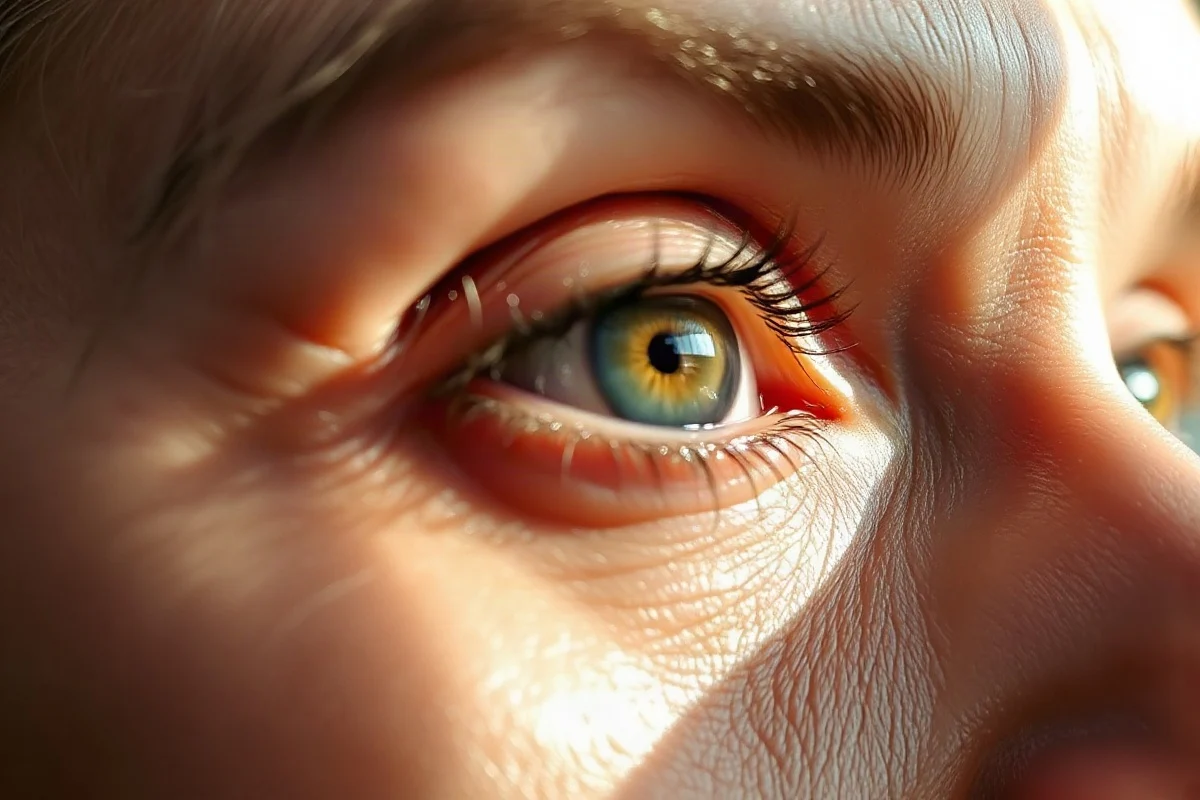
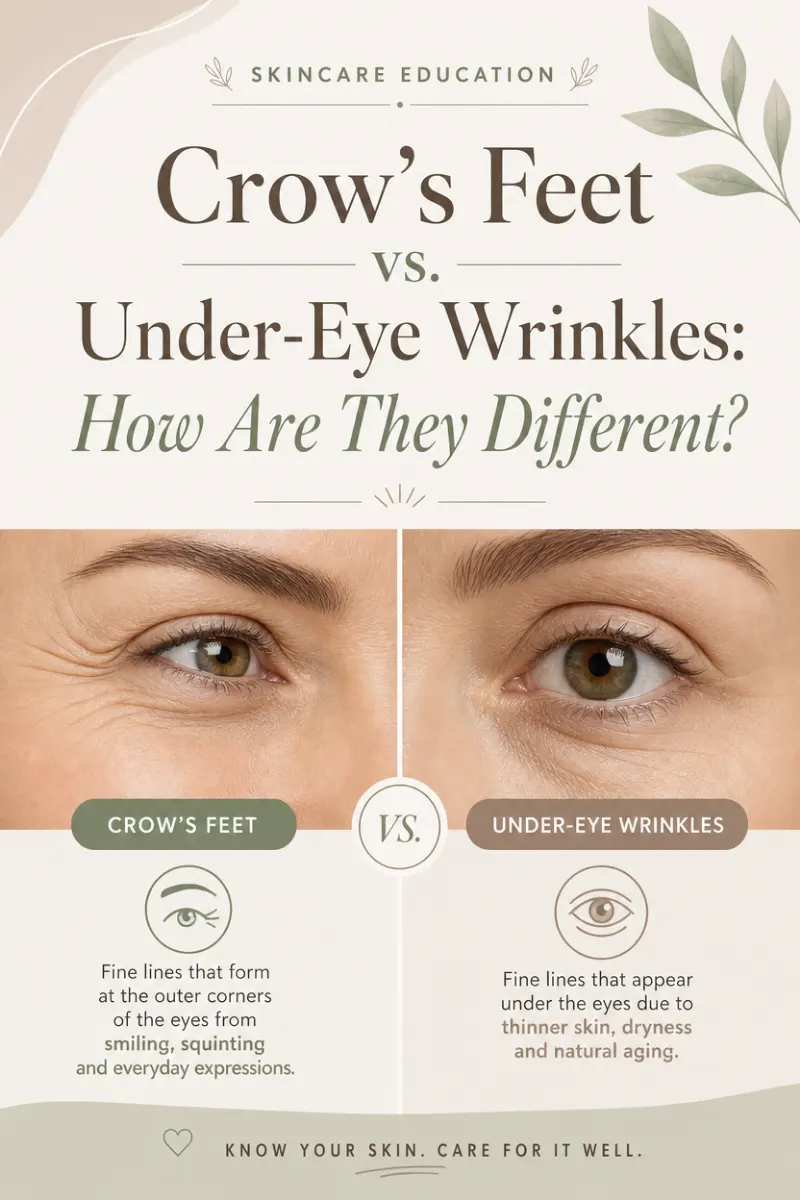
Crow’s feet and under-eye wrinkles are both fine lines, but they usually appear in different areas and behave differently. Crow’s feet radiate outward from the outer corners of the eyes, especially when you smile or squint. Under-eye wrinkles sit beneath the lower eyelid and may look like horizontal, vertical, or crinkled lines across the delicate skin below the eye. Both can be influenced by facial movement, dryness, sun exposure, and the natural reduction of skin resilience, but they are not exactly the same concern.
The distinction matters because the most useful skincare approach depends on what you are trying to improve cosmetically. A moisturizing product may temporarily make dry-looking lines appear less noticeable, while a carefully chosen active may support a smoother-looking texture over time. No eye cream can guarantee that wrinkles will disappear, and skincare cannot diagnose or treat a medical condition. The goal is usually to soften the appearance of lines, support the skin barrier, and make the eye area look more comfortable and hydrated.
What are crow’s feet?
Crow’s feet are lines that extend from the outer corners of the eyes toward the temples. They are sometimes called lateral canthal lines. These creases commonly become more visible during smiling, laughing, squinting, or other expressions that contract the muscles around the eyes.
Early crow’s feet may be visible mainly during facial movement and fade when the face relaxes. Over time, repeated movement and changes in skin structure can make some lines more noticeable even when the face is at rest. This does not mean that facial expressions are harmful or that you need to avoid smiling. It simply explains why the outer eye area can develop a recognizable pattern of lines.
Sun exposure can also make the appearance of crow’s feet more pronounced. Ultraviolet exposure is one reason daily broad-spectrum sunscreen and sunglasses are often included in a practical wrinkle-care routine. Sunscreen should be applied according to its label, while taking care not to get it directly in the eyes.
What are under-eye wrinkles?
Under-eye wrinkles appear on the skin below the lower eyelid rather than primarily at the outer corner. They may look like fine horizontal folds, small creases, or a textured, crinkled pattern. Some people notice them most when they smile, while others see them even when their face is relaxed.
The lower-eye area has relatively thin, delicate skin. It can look more lined when the skin is dry, irritated, or temporarily dehydrated. Frequent rubbing, makeup removal that requires too much friction, and products that cause stinging may also make the area look more uncomfortable. Sleep, allergies, and fluid retention can change the overall appearance of the eye area as well, although these factors do not necessarily explain every wrinkle.
Under-eye wrinkles can be confused with shadows or folds created by the shape of the eye socket. A shadow may look like a line but may not be a wrinkle in the skin. Puffiness can also create temporary creasing beneath the eyes. If swelling is persistent, painful, sudden, or accompanied by other symptoms, consider speaking with a qualified health professional rather than relying on cosmetic skincare alone.
How crow’s feet and under-eye wrinkles differ
Location
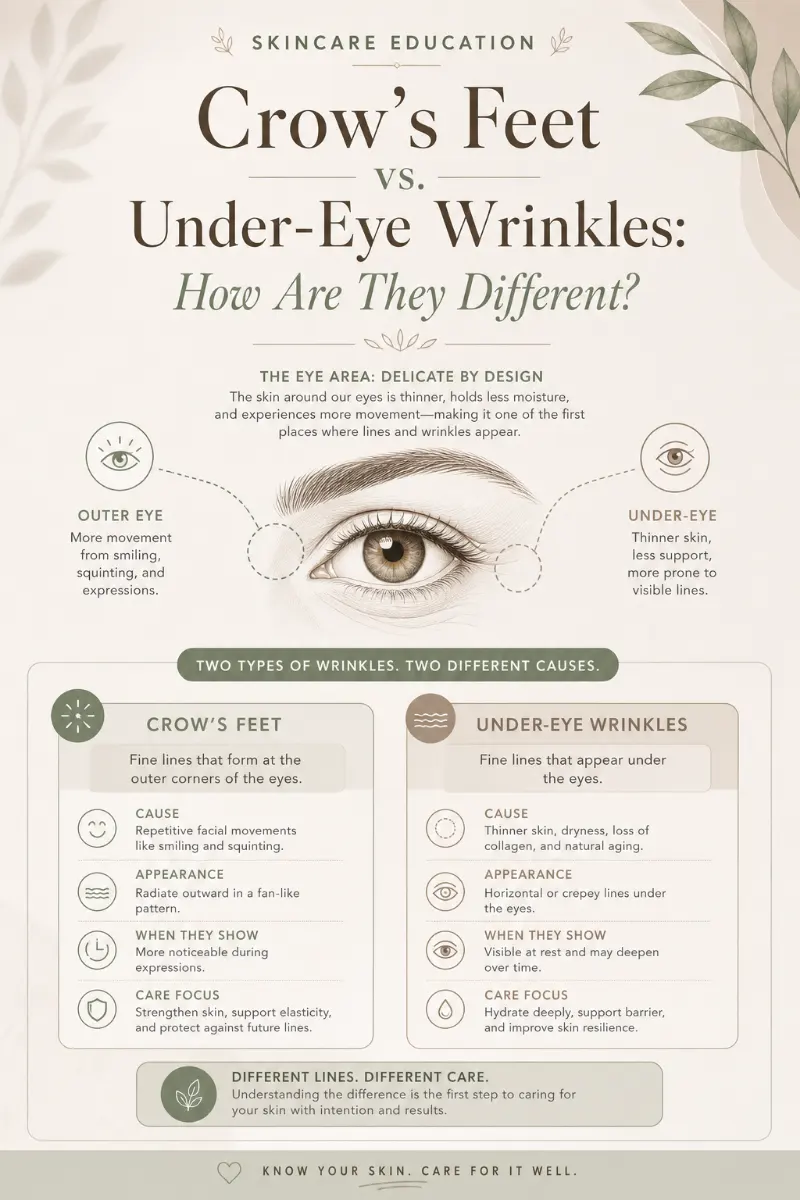
The clearest difference is location. Crow’s feet begin at the outer eye corner and fan toward the temple. Under-eye wrinkles are located beneath the lower eyelid and may extend across the under-eye area.
Movement pattern
Crow’s feet often follow the direction of muscle movement during smiling and squinting. Under-eye lines may also deepen with expression, but their pattern is more likely to look like fine creases across the skin below the eye. A person can have one pattern, both patterns, or lines that do not fit neatly into either description.
What makes them look worse
Both concerns can look more prominent with dryness, sun exposure, and reduced skin elasticity. Crow’s feet are particularly associated with repeated movement around the outer eye. Under-eye wrinkles may be more affected by dryness, irritation, rubbing, and the natural thinness of the lower-eye skin.
How they respond to skincare
Neither type of wrinkle should be expected to vanish completely from a topical product. Hydrating ingredients can temporarily make the surface look plumper and smoother, which may soften the appearance of fine lines. Ingredients that support gentle exfoliation or encourage a more even-looking texture may be useful for some people, but the eye area can be sensitive and requires a conservative approach.
Ingredients that may support a smoother-looking eye area
Ingredient names can help you compare products, but the full formula, packaging, and directions matter. Product formulas can change, so check the current label and manufacturer information before relying on a product-specific ingredient list. For a broader overview, see this eye cream ingredient guide.
Humectants
Humectants attract water to the outer layers of the skin. Common examples include glycerin, hyaluronic acid, and certain forms of sugar-based moisturizing ingredients. They may help the eye area feel more hydrated and make dehydration lines look less noticeable temporarily. Humectants work best as part of a formula that also helps reduce water loss.
Emollients and barrier-supporting ingredients
Emollients help soften the feel and appearance of dry skin. Ingredients such as squalane, fatty acids, ceramides, and some plant oils may be used in products designed to support a comfortable skin barrier. These ingredients do not erase wrinkles, but they can be helpful when dryness makes fine lines stand out.
Retinoids
Retinoids, including retinol, are commonly discussed in routines for visible signs of skin aging. They may support a smoother-looking texture for some users, but they can also cause dryness, peeling, burning, or irritation, especially around the eyes. Use only a product labeled for the eye area or follow appropriate professional guidance. Start cautiously, follow the product directions, and avoid applying it too close to the eyes or on compromised skin.
If you are pregnant, trying to become pregnant, breastfeeding, or managing a skin condition, ask a qualified healthcare professional whether a retinoid is appropriate for you. For product research, you can review our retinol eye cream category, but always verify the current formula and directions before purchasing.
Antioxidants
Antioxidant ingredients, such as vitamin C derivatives, vitamin E, and green tea extracts, appear in many eye-area products. Their role varies by formula, and the eye area may react to some versions more easily than the rest of the face. Antioxidants can complement sun-protection habits, but they are not a substitute for sunscreen or sunglasses.
How to choose an eye cream for crow’s feet or under-eye wrinkles
Start with the concern you notice most. If the skin around the outer corners feels dry and looks creased when you smile, a simple moisturizing formula may be a sensible first step. If the lower-eye area looks crinkled or tight, prioritize gentle hydration and barrier support before adding stronger actives.
Look for a texture you can apply without rubbing. A product that spreads easily with a small amount may be more practical than a thick formula that requires repeated tugging. Fragrance-free options may be worth considering if your eyes or surrounding skin are easily irritated, although “fragrance-free” does not guarantee that a product will suit every person.
Do not assume that a higher number of active ingredients makes a product better. The eye area has limited tolerance, and using several potentially irritating products at once can make dryness and visible lines look worse. Introduce one new product at a time so you can identify what your skin accepts.
A simple routine for visible eye-area lines
Morning
- Cleanse gently, or rinse if cleansing is not needed.
- Apply a hydrating eye product with light tapping rather than vigorous rubbing.
- Use broad-spectrum sunscreen on the surrounding face and wear sunglasses outdoors. Follow the sunscreen label and keep the product out of the eyes.
Evening
- Remove makeup without scrubbing the eyelids or under-eye area.
- Apply a bland moisturizer or eye product suited to your skin’s needs.
- If using a retinoid or another active, follow its label closely and introduce it gradually rather than combining multiple new actives at once.
For help organizing products by skin type and concern, the under-eye routine builder can be a useful starting point. Adjust the routine if your skin becomes dry, sore, itchy, or unusually sensitive.
What results are realistic?
Moisturizers may improve the look of dryness relatively quickly, but this is usually a temporary cosmetic effect rather than a permanent change in wrinkle structure. Products aimed at texture and visible signs of aging generally require consistent use, and individual results vary. Lighting, facial expression, hydration, makeup, and the angle of a photograph can all change how noticeable a line appears.
Be skeptical of claims that an eye cream permanently removes crow’s feet or under-eye wrinkles. Topical skincare may improve the appearance of the skin, but it cannot reproduce every result associated with professional procedures. If you are considering an in-office treatment, discuss possible benefits, risks, and alternatives with a licensed medical professional.
When to stop using a product
Stop using an eye product if it causes persistent burning, swelling, rash, significant redness, or worsening discomfort. Rinse carefully if the product gets into the eyes. Patch testing can help identify potential irritation, but it cannot guarantee that a product will not cause an eye-area reaction. Follow the packaging directions, keep products away from the eye itself unless specifically labeled for that use, and seek medical advice for severe or ongoing symptoms.
Crow’s feet and under-eye wrinkles are normal variations in how facial lines develop. Identifying their location can help you choose a simpler, more targeted routine: moisturize dry skin, limit unnecessary friction, use sun protection, and introduce active ingredients cautiously. The most useful product is usually the one you can apply consistently without irritating the delicate skin around your eyes.

Comments
0No comments yet. Be the first to share a helpful note or question.
Leave a Comment
Your email address will not be published. Comments are reviewed before appearing on the site.