
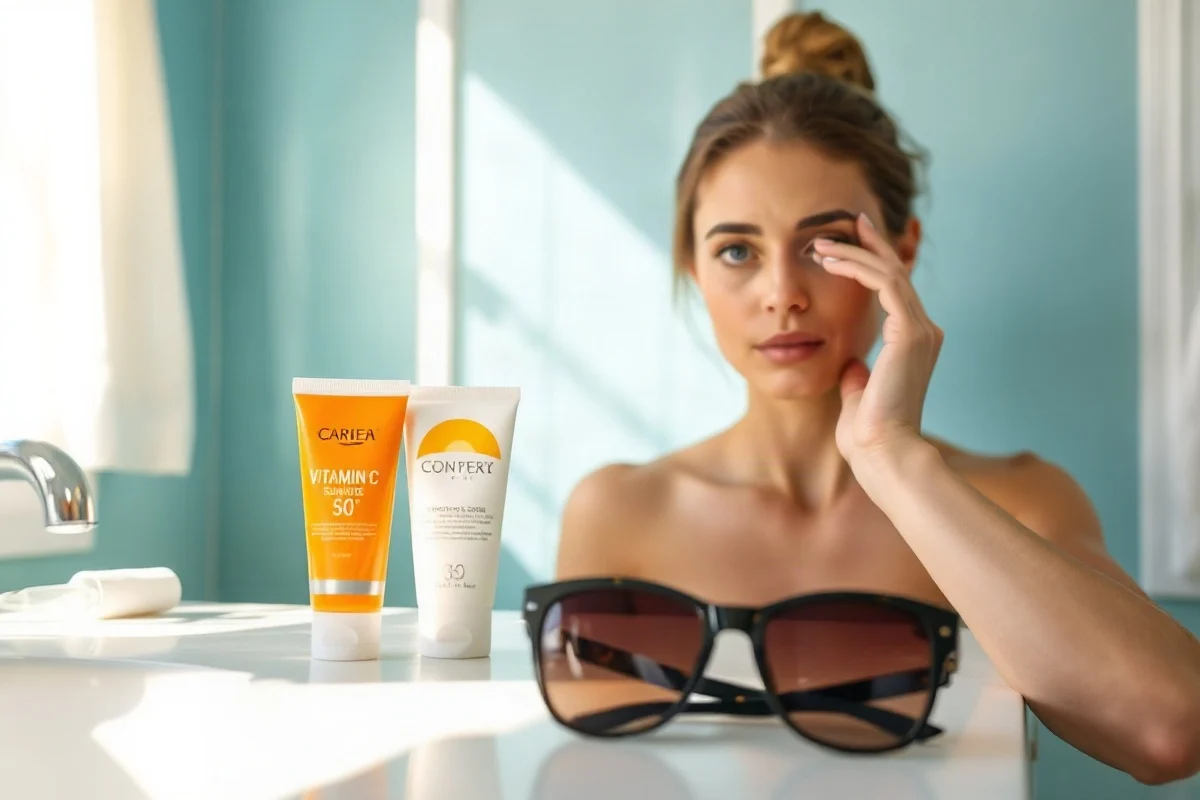
Yes, you still need sunscreen when using a vitamin C eye cream. Vitamin C may help support a brighter-looking, more even appearance, but it does not provide reliable broad-spectrum UV protection unless the product is specifically labeled as sunscreen with an SPF rating. Most vitamin C eye creams are cosmetic treatments, not substitutes for sunscreen. A practical morning routine is to apply the vitamin C product according to its label, moisturize if needed, and use a broad-spectrum sunscreen on the areas exposed to daylight.
This distinction matters because sunlight can contribute to the appearance of uneven tone and can make it harder to maintain the look you want from a brightening routine. Sunscreen and vitamin C have different jobs: vitamin C is an antioxidant ingredient used in many cosmetic formulas, while sunscreen is formulated and regulated for UV protection when it carries an appropriate SPF and broad-spectrum claim.
What vitamin C eye cream can and cannot do
Vitamin C is commonly included in eye creams designed to improve the appearance of dullness, uneven tone, or tired-looking skin. Depending on the form used and the rest of the formula, a vitamin C eye cream may help the under-eye area look more refreshed or brighter over time. Results can vary based on the cause and appearance of your dark circles, your skin’s sensitivity, and how consistently you use the product.
It is important to keep those cosmetic expectations realistic. Dark circles can have several visible contributors, including natural variation in pigmentation, shadows from facial structure, visible blood vessels, dryness, and puffiness. An eye cream cannot be expected to address every contributor in the same way. It also should not be treated as a diagnosis or medical treatment for a skin or health condition.

Vitamin C does not function as a sunscreen. Even if an eye cream contains an antioxidant form of vitamin C, that does not tell you how much UV protection the product provides. Unless the packaging clearly identifies the product as a sunscreen and lists an SPF, do not count it as sun protection.
Why sunscreen still matters around the eyes
The under-eye area is often exposed to daylight, including incidental exposure during commuting, walking, driving, or sitting near windows. UV exposure is one reason daily sun protection is commonly recommended as part of a routine focused on maintaining an even-looking complexion. Sunscreen can also help protect the cosmetic progress you are trying to maintain with products for discoloration or dullness.
Sun protection is not limited to the lower eyelid. The upper cheek, brow area, temples, and sides of the face can also receive exposure. However, sunscreen should be used carefully around the eyes. A product that feels comfortable on the cheeks may sting, water the eyes, or migrate when applied near the eyelids.
Choose a sunscreen with a broad-spectrum claim and follow its directions. Apply it only to areas the label indicates are appropriate, and avoid placing it directly into the eyes. Sunglasses, a hat, and shade can add practical protection without requiring more product near the lash line.

How to layer vitamin C eye cream and sunscreen
A simple morning order
- Cleanse gently, if needed. Use a cleanser that does not leave the eye area feeling tight or dry. In the morning, some people may prefer rinsing with water if cleansing is unnecessary for their skin.
- Apply the vitamin C eye cream. Use the amount and frequency recommended on the current product label. Pat it onto the orbital area rather than rubbing aggressively or bringing it directly to the lash line.
- Use moisturizer if your skin needs it. A lightweight moisturizer can help reduce a dry or tight feeling, especially if the eye cream or sunscreen does not provide enough comfort.
- Finish with sunscreen. Apply broad-spectrum sunscreen to the face and other exposed areas as directed. Give extra attention to the upper cheeks, temples, and forehead, while avoiding direct contact with the eyes.
Some eye products are designed to be used at night, so do not assume every vitamin C eye cream belongs in your morning routine. The label’s directions take priority. If the product pills when layered with sunscreen or makeup, try using less product, allowing each layer to settle, or choosing textures that work better together.
Should you use vitamin C eye cream at night instead?
Yes, that can be a reasonable option if the product label permits nighttime use or does not specify a different schedule. Using it at night may simplify your morning routine and reduce the number of products competing for space under makeup. You still need daytime sun protection because nighttime application does not protect the skin during the next day.
There is no universal rule that vitamin C must be used in the morning. Product formulas differ, and vitamin C can appear in several forms with different stability and texture characteristics. Check the current packaging and, when product-specific information matters, the manufacturer’s ingredient list and directions. Formulas can change after publication.
Choosing a sunscreen for the under-eye area
The best sunscreen for this part of the face is one you can apply consistently without uncomfortable stinging or excessive watering. Consider these practical factors:
- Broad-spectrum labeling: Look for a product that clearly states broad-spectrum protection and includes an SPF rating.
- Comfort near the eyes: A fluid, lotion, stick, or cream may work differently for different people. Texture matters because a product that migrates easily can be difficult to tolerate.
- Compatibility with makeup: If you wear concealer, consider whether the sunscreen leaves enough time and a comfortable surface for makeup application.
- Skin sensitivity: Fragrance, certain preservatives, and some sunscreen filters may bother sensitive users. Review the ingredient list and patch test a new product when appropriate.
- Application directions: Follow the package instructions for amount, reapplication, and use around the eyes. Do not improvise by applying a product inside the eye or directly onto the waterline.
Mineral and organic, sometimes called chemical, sunscreen filters can both be suitable options when used as directed. The more useful question is often whether the product provides the labeled protection and feels comfortable enough for regular use. If a sunscreen repeatedly irritates your eyes, stop using it and consider a different formula rather than forcing the routine.
How to use vitamin C eye cream with sensitive skin
The eye area can be more reactive than other parts of the face, and vitamin C formulas vary considerably. Some may feel gentle, while others may cause stinging, dryness, redness, or watering. A stronger sensation is not proof that a product is working better.
Start by following the product’s recommended frequency instead of applying more often in hopes of faster cosmetic improvement. Use a small amount, keep it away from the immediate lash margin, and avoid combining several potentially irritating products in the same area until you know how your skin responds. For example, adding a retinoid, exfoliating acid, or fragranced product at the same time can make it harder to identify the source of irritation.
Patch testing can be a useful precaution, although it cannot guarantee that a product will not irritate the eye area. If you develop persistent burning, swelling, rash, significant redness, or eye discomfort, stop using the product. Seek medical advice for symptoms that are severe, ongoing, affect vision, or do not improve after discontinuing the product.
For more ingredient-focused context, review this eye cream ingredient guide. If your main concern is reactivity, you can also compare routine ideas in our guide to eye care for sensitive skin.
What if your sunscreen makes dark circles look worse?
Sunscreen does not usually create dark circles, but its finish can change how the area looks. A shiny layer may emphasize texture, while a product that dries down unevenly can collect in fine lines. White or tinted residue can also alter the apparent tone under the eyes. These are cosmetic effects of the product’s finish, not evidence that it is damaging the skin.
Try applying a thinner, even layer to the under-eye area and allowing it to settle before using concealer. Keep enough product on the broader exposed areas to follow the sunscreen’s directions, and avoid rubbing it off while blending makeup. If the formula causes stinging or watering, switch to a different sunscreen rather than reducing protection to an inadequate amount.
Remember that no eye cream can fully compensate for a sunscreen that you cannot tolerate. A comfortable, correctly labeled product used consistently is generally more useful than a theoretically ideal formula that is abandoned after a few applications.
When should you expect visible changes?
Cosmetic changes from an eye cream are rarely immediate or guaranteed. The appearance of the under-eye area can also vary with sleep, hydration, allergies, facial expression, lighting, and makeup. If a vitamin C product is suitable for you, consistent use may be more informative than judging it after one or two applications, but the amount of visible change will depend on the individual and the type of concern.
Sun protection is similarly a maintenance habit rather than a quick fix. It does not erase existing dark circles, and it cannot change structural shadows or every cause of under-eye discoloration. Its role is to reduce avoidable exposure while you use products intended to support the look of your skin.
The practical answer for your routine
Keep both products if they work comfortably for you, but do not treat them as interchangeable. Vitamin C eye cream may be a cosmetic brightening step, while broad-spectrum sunscreen provides labeled UV protection. Use the vitamin C product according to its directions, apply sunscreen to exposed skin without getting it in your eyes, and add sunglasses or a hat when practical.
If you are still deciding which type of product fits your concern, the site’s under-eye routine builder can help organize the basics. For broader background on why dark circles can look different from person to person, see our dark circles guide.

Comments
0No comments yet. Be the first to share a helpful note or question.
Leave a Comment
Your email address will not be published. Comments are reviewed before appearing on the site.