
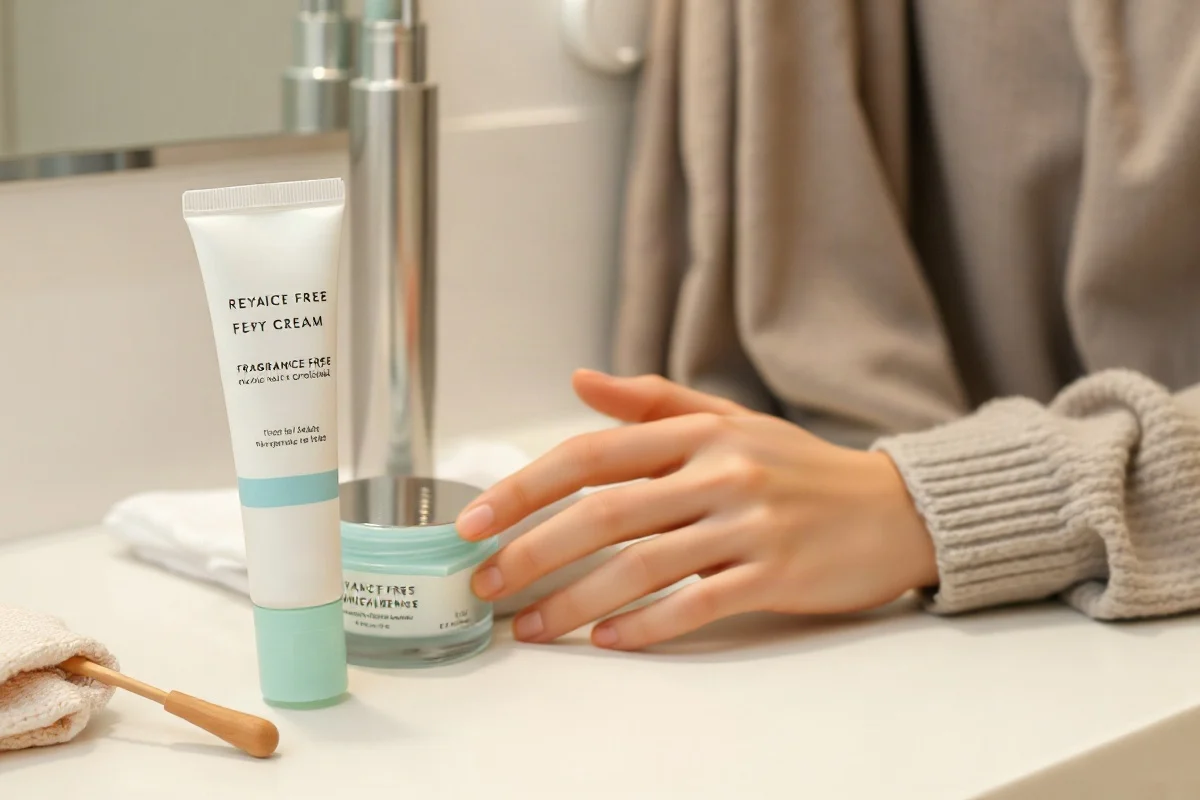
If the skin around your eyes reacts easily, choose an eye cream with a short, fragrance-free formula focused on barrier support and hydration rather than a long list of strong actives. Look for ingredients such as glycerin, ceramides, squalane, and hyaluronic acid, and be cautious with products containing fragrance, essential oils, exfoliating acids, or retinoids. Introduce one product at a time, follow the label, and stop using it if burning, swelling, or persistent redness develops.
Reactive skin can make ordinary eye-cream shopping more complicated. The under-eye area is thin and delicate, and products that feel comfortable elsewhere on the face may sting near the eyes. A careful selection process can reduce avoidable irritation while still addressing cosmetic concerns such as dryness, visible puffiness, dullness, and the look of fine lines.
Start with the skin barrier
The first job of an eye cream for reactive skin is usually not dramatic brightening or intensive wrinkle care. It is helping the area feel comfortable and look more hydrated. When the skin barrier is disrupted, water loss and exposure to potential irritants may make the area feel tight, rough, itchy, or more sensitive.
A simple, supportive formula may be a better starting point than a product marketed around multiple corrective ingredients. Hydration can temporarily soften the look of fine lines caused or emphasized by dryness, while a smoother surface may make concealer sit more evenly. These are cosmetic appearance benefits, not treatment of a skin condition.
Ingredients that may support comfort
- Glycerin: A humectant that helps attract water to the outer layers of skin.
- Hyaluronic acid: Another humectant commonly used to provide a hydrated, cushioned feel.
- Ceramides: Lipid ingredients associated with the skin barrier and often included in moisturizing formulas.
- Squalane: An emollient that can help give dry skin a softer, more flexible feel.
- Panthenol: A conditioning ingredient often used in products designed to moisturize and soothe the feel of skin.
- Colloidal oatmeal: An ingredient used in some moisturizers for dry or uncomfortable-feeling skin.
No single ingredient is automatically suitable for everyone. Even a familiar moisturizing ingredient can be uncomfortable if the overall formula does not agree with your skin. Read the complete ingredient list and consider the product's texture, packaging, and directions rather than relying on one highlighted ingredient.
For more background on common eye-care ingredients, see this eye cream ingredient guide.
Be selective with fragrance and essential oils
Fragrance is one of the first formula features many people with reactive skin choose to avoid. An eye cream may list fragrance as “parfum” or include individual fragrance components. Essential oils and fragrant botanical extracts can also contribute scent, and naturally derived does not automatically mean non-irritating.
Fragrance-free does not mean the product can never cause a reaction. Preservatives, botanical ingredients, solvents, and active ingredients may still be unsuitable for a particular person. However, choosing a fragrance-free formula can remove one common source of avoidable exposure, especially when the product is used close to the eyes.
Approach strong actives gradually
Ingredients often used for the appearance of dark circles, uneven tone, puffiness, or fine lines can be useful in some routines, but reactive skin may need a slower approach. More active is not automatically better, and a formula that causes irritation may make the under-eye area look temporarily more red, dry, or creased.
Retinoids
Retinoids are commonly included in products aimed at the appearance of fine lines and uneven texture. They can be irritating, particularly when first introduced or when applied too close to the eye. If you are considering a retinoid eye product, follow its specific directions, use only the recommended amount, and avoid adding several other potentially irritating products at the same time.
Do not apply a facial retinoid to the eyelids or under-eye area unless the product label specifically indicates that use. If you want to research this category, review our guide to retinol eye cream and pay close attention to usage guidance.
Vitamin C and brightening ingredients
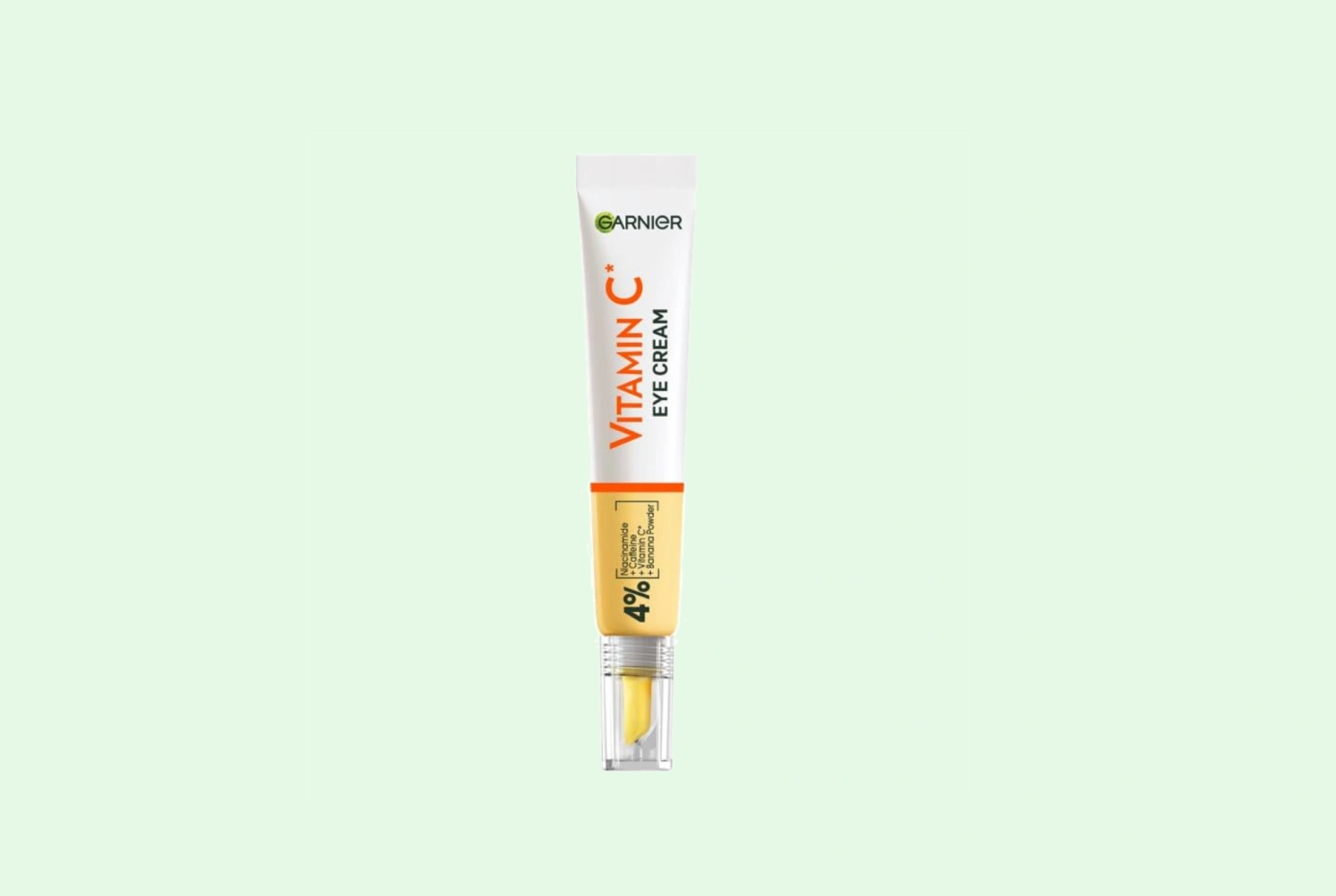
Vitamin C products vary widely in their forms and formulas. Some may feel comfortable, while others can sting sensitive skin. Other brightening ingredients may also be unsuitable if the skin barrier is already compromised. Consider starting with a basic moisturizer before introducing a brightening active, and avoid layering multiple new products at once.
Exfoliating acids
Alpha hydroxy acids, beta hydroxy acids, and other exfoliating ingredients can increase the chance of stinging around the eyes. The thin skin in this area generally does not need an aggressive exfoliating routine. Unless a product is specifically formulated and labeled for the eye area, keep facial exfoliants away from the eyelids and immediate under-eye skin.
Consider the texture and packaging
Texture matters for more than personal preference. A rich balm may feel comfortable on dry skin, while a lightweight lotion may suit people who dislike residue or experience milia-like bumps. There is no universal best texture, so consider how the product behaves under sunscreen or makeup and whether it makes the area feel congested.
Packaging can also affect the experience. A pump or tube may limit repeated contact with the formula compared with an open jar, although packaging alone does not determine whether a product is suitable. Use clean hands, keep the container closed, and follow any storage instructions on the label.
Product formulas can change. Before buying or using a specific eye cream, verify the current ingredient list and directions on the package or the manufacturer's website. Older reviews, retailer pages, and search snippets may not reflect the current formula.
How to test an eye cream carefully
A patch test cannot guarantee that a product will be comfortable around the eyes, but it can be a useful precaution. Apply a small amount to an inconspicuous area according to the product's instructions and observe how your skin responds. Do not test a product on broken, freshly exfoliated, or already irritated skin.
When you are ready to use the eye cream near the eyes, introduce it on its own rather than at the same time as a new cleanser, serum, sunscreen, or makeup product. Apply a small amount to the area recommended by the label, keeping it away from the lash line and inside of the eye unless the product specifically directs otherwise. Avoid rubbing, since friction can add to discomfort and temporarily intensify the look of redness or puffiness.
If you notice burning, worsening redness, itching, swelling, watering, or a rash, stop using the product. Rinse gently if appropriate and avoid retrying it while the area is irritated. Seek medical advice for severe, persistent, or recurrent symptoms, changes affecting vision, or swelling that concerns you. An eye cream is a cosmetic product and should not be used to diagnose or treat an eye disease, allergy, infection, or other medical condition.
Match expectations to the concern
Reactive skin does not rule out every cosmetic goal, but it may change the order of priorities. Start by keeping the area moisturized and comfortable. Once your routine is stable, you can decide whether adding a targeted active is worth the potential irritation.
Dark circles have different visible contributors, including shadows from facial structure, visible blood vessels, brown discoloration, and the appearance of fatigue or dryness. An eye cream may improve hydration and make the area look smoother or more refreshed, but it may not change every contributor. For broader context, explore our coverage of dark circles.
Puffiness may also have several cosmetic or personal causes. A cool, comfortable product may temporarily make the area look less puffy for some people, but an eye cream should not be presented as a guaranteed solution. Persistent or unusual swelling deserves medical attention rather than repeated product experimentation.
A practical shopping checklist
- Choose a formula labeled for the eye area and follow its directions.
- Look for a short ingredient list centered on moisturization and barrier support.
- Consider fragrance-free products if fragrance commonly bothers your skin.
- Be cautious with essential oils, exfoliating acids, retinoids, and strongly active formulas.
- Check the current package or manufacturer ingredient list before purchase.
- Introduce one new product at a time.
- Patch test when practical, without applying the test product to irritated skin.
- Stop use if irritation develops instead of trying to push through it.
The most suitable eye cream for reactive skin is often the one you can use consistently without discomfort. A modest, fragrance-free moisturizer may offer more practical value than a highly active formula that repeatedly causes stinging or dryness. Keep the routine simple, change only one variable at a time, and treat comfort as an important part of product performance.

Comments
0No comments yet. Be the first to share a helpful note or question.
Leave a Comment
Your email address will not be published. Comments are reviewed before appearing on the site.