
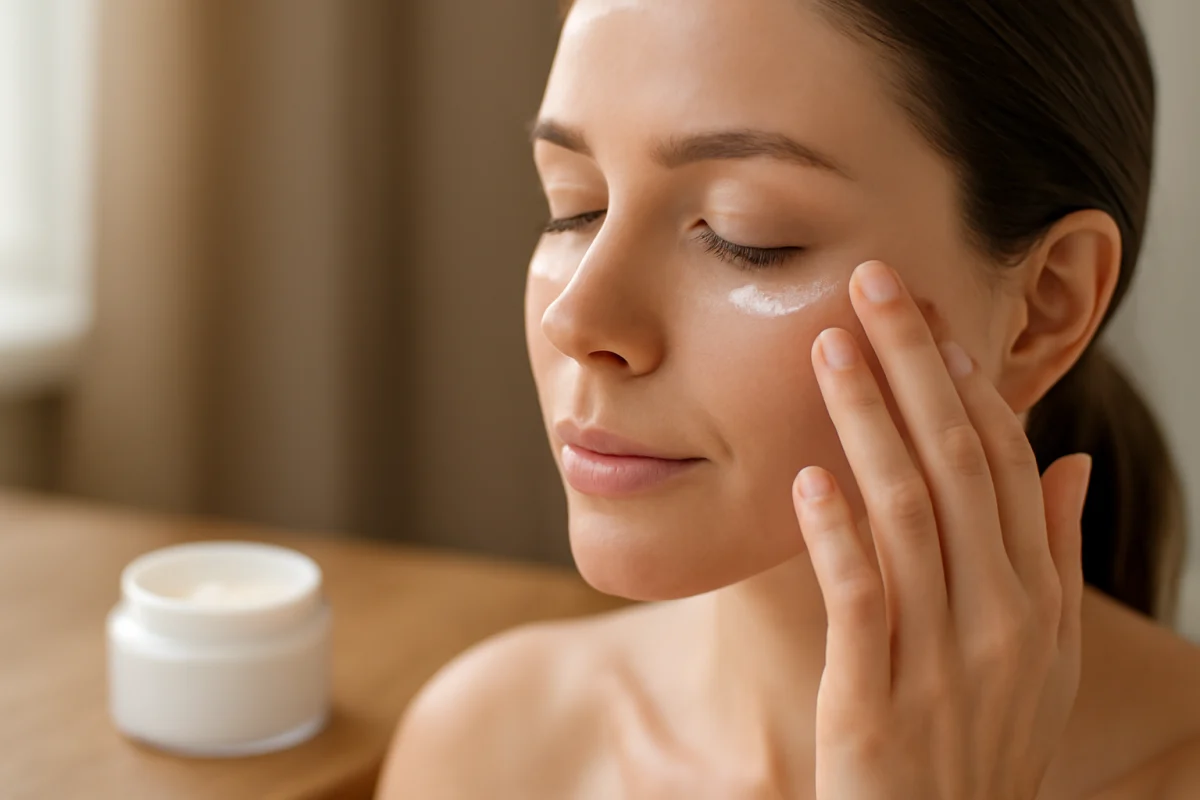
Ceramides can help support a damaged under-eye skin barrier by replenishing lipids that reduce moisture loss and improve the look of dryness-related fine lines. They do not permanently erase wrinkles, remove dark circles, or treat an underlying skin condition. Instead, a ceramide-containing eye product may make the delicate area look smoother and feel less tight when used as part of a gentle, consistent routine.
The skin around the eyes is especially prone to dryness because it is relatively thin and exposed to frequent movement, cleansing, rubbing, makeup removal, weather changes, and potentially irritating skincare ingredients. When the barrier is stressed, the area may feel tight, rough, flaky, or more sensitive. Fine lines can also look more noticeable when the surface is dehydrated. Ceramides are useful in this situation because they are part of the skin’s natural lipid structure and can help reinforce the surface’s moisture-retaining function.
What the under-eye skin barrier does
The skin barrier is the outermost protective layer of the skin. It helps limit water loss while providing a first line of defense against environmental exposure and ingredients that may cause discomfort. A healthy barrier is not a sealed, motionless shield. It is a dynamic structure that must balance water, lipids, and natural moisturizing components.
Among the lipids found in the outer skin are ceramides, cholesterol, and fatty acids. These substances help organize the spaces between skin cells, somewhat like mortar between bricks. When the barrier is functioning well, water is better retained at the surface. When it is compromised, increased water loss can contribute to roughness, tightness, visible flaking, and greater sensitivity.
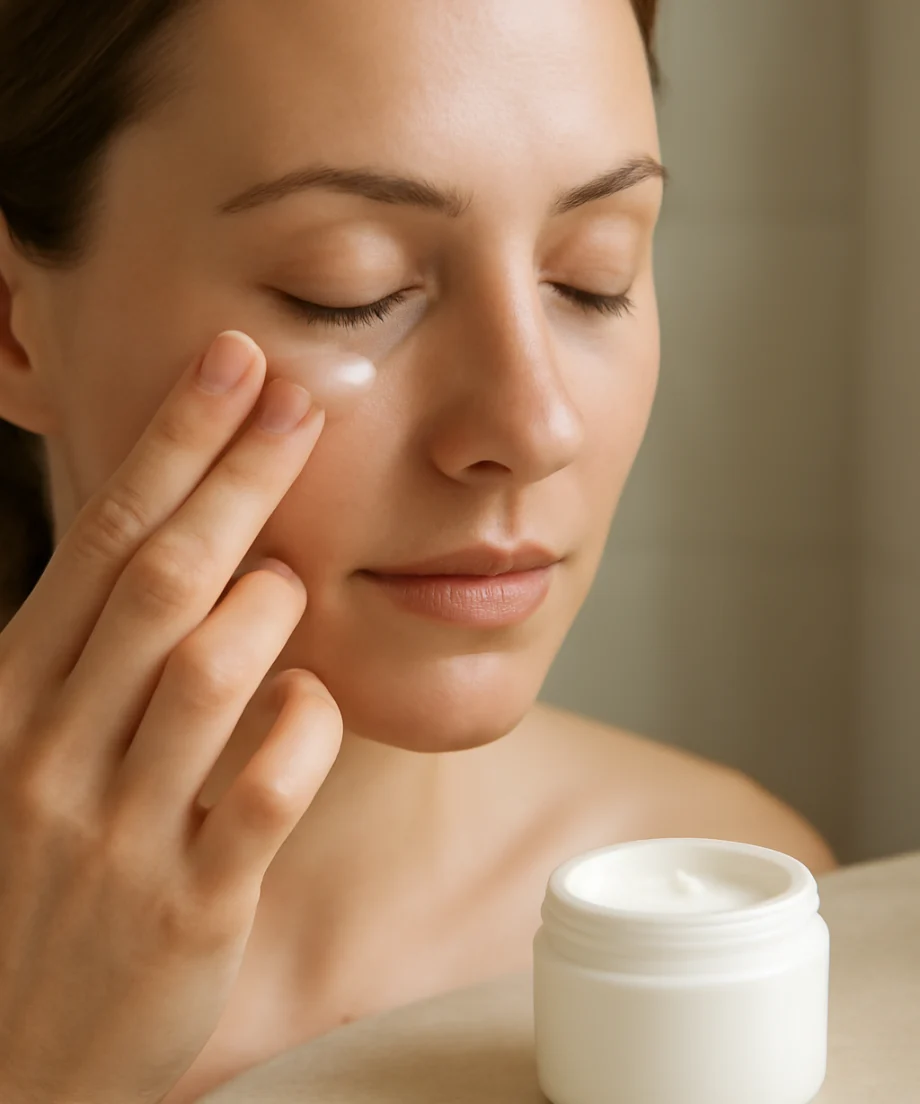
The under-eye area may show these changes quickly because the skin is delicate and because facial expressions constantly move it. Dryness does not necessarily mean the skin is permanently damaged. It can reflect temporary stress from cold air, low humidity, over-cleansing, rubbing, or using too many active products too close to the eyes.
How ceramides support a weakened barrier
Topical ceramides are used in skincare to supplement the lipids naturally present in the skin’s outer layer. In a well-formulated product, they can help support the barrier and reduce the conditions that allow moisture to escape too easily. This may improve the feel of dry skin and create a smoother-looking surface over time.
That effect matters for fine lines because dehydration can make shallow lines appear sharper. When the surface has more comfortable hydration and less roughness, those lines may look temporarily softened. This is a cosmetic improvement in appearance, not the same as changing the deeper structure of an established wrinkle.
Ceramides are also generally considered a barrier-supporting ingredient rather than an exfoliating or resurfacing active. They do not work by removing surface cells or creating a visible peeling effect. This makes them a practical option for people who find stronger ingredients uncomfortable around the eyes, although any product can cause irritation in an individual user.
Which ingredients pair well with ceramides?
Ceramides are often used alongside other moisturizing ingredients. The exact formula matters, so check the current packaging or the manufacturer’s ingredient list rather than assuming every product with “ceramides” on the front contains the same supporting ingredients.
Humectants
Humectants attract and hold water near the skin’s surface. Common examples include glycerin, hyaluronic acid, and certain forms of polyols. In an eye cream, humectants can help improve the feel of dehydration, while ceramides support the lipid side of the barrier. A product that combines hydration with barrier support may be more useful for dry-looking fine lines than a product focused on only one type of moisturizing ingredient.
Occlusive ingredients
Occlusives help reduce water loss by forming a protective layer over the skin. Petrolatum, dimethicone, and some plant-derived oils are examples found in different skincare formulas. Occlusive ingredients can be helpful when the under-eye area feels particularly dry, although texture and personal preference will determine whether a formula is comfortable under makeup.
Cholesterol and fatty acids
Cholesterol and fatty acids are also components of the skin’s natural barrier lipids. Some products combine these ingredients with ceramides, while others use a simpler moisturizing system. No single ingredient guarantees a better result, and a short ingredient list does not automatically indicate a weaker or stronger formula. The goal is a product that feels comfortable, does not sting, and fits consistently into your routine.
For more ingredient background, see our eye cream ingredient guide.
Signs that your under-eye barrier may need more support
You cannot confirm a barrier problem from appearance alone, and this article is not a diagnosis. However, the following cosmetic and comfort changes can suggest that your routine is not agreeing with the area:
- Persistent tightness after cleansing
- Rough or flaky texture
- Stinging when applying products that normally feel comfortable
- More noticeable dryness around fine lines
- Redness or discomfort after rubbing, makeup removal, or using active ingredients
These signs can have different causes. If discomfort is severe, persistent, spreading, or associated with swelling, pain, discharge, vision changes, or other concerning symptoms, seek appropriate medical advice instead of trying to manage the issue with eye cream alone.
How to choose a ceramide eye cream
Start with the product’s complete ingredient list and the directions on the current label. Look for a formula intended for the eye area, especially if the product contains additional active ingredients. Packaging and formulas can change, so verify details with the manufacturer before purchasing or relying on older product information.
Choose a simple formula if your skin is reactive
If the under-eye area is easily irritated, a straightforward moisturizer may be a better starting point than a product combining ceramides with multiple exfoliating, brightening, or anti-aging actives. Fragrance and essential oils are not comfortable for everyone near the eyes, and a product that feels pleasant on the cheeks may still sting around the eyes.
Consider the texture and your routine
A cream or balm may feel more protective on dry skin, while a lighter lotion or gel-cream may be easier to layer under concealer. Neither texture is universally best. Apply enough to lightly coat the area without creating a heavy layer that migrates into the eyes.
Do not shop by the ingredient name alone
The presence of ceramides does not tell you the concentration, delivery system, supporting ingredients, or overall tolerability of a formula. Product claims may also be updated over time. Read the current label, follow the directions, and consider the complete formula rather than treating one ingredient as a guarantee.
How to use ceramides in an under-eye routine
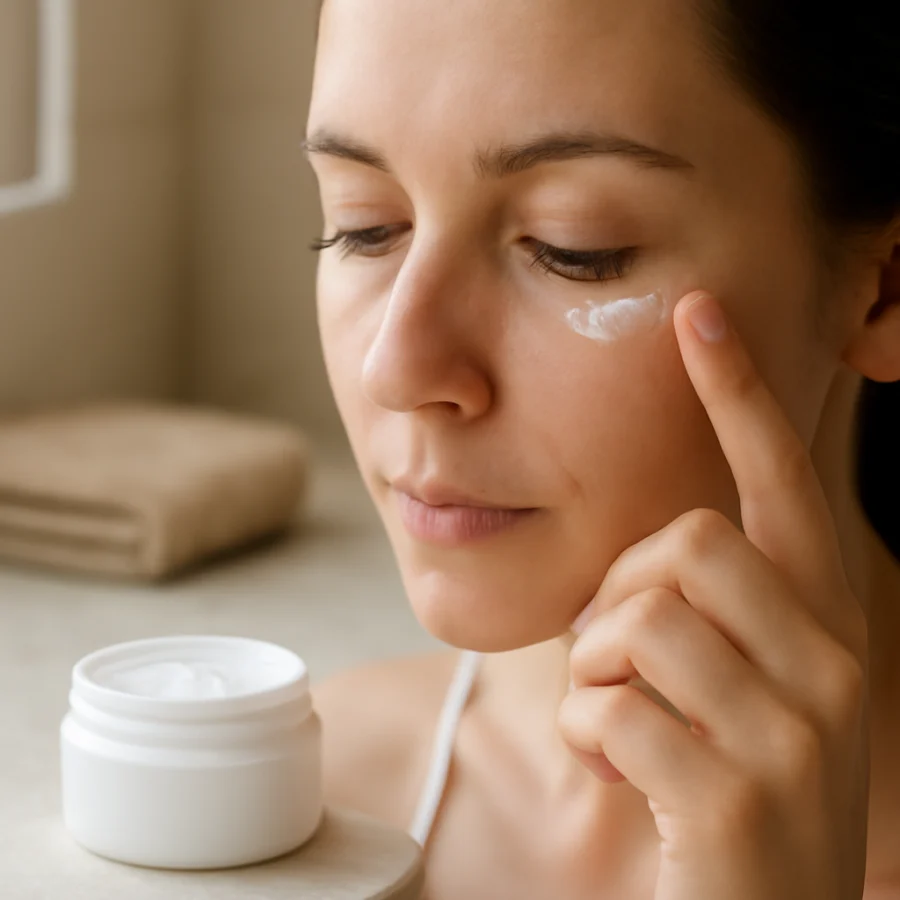
Apply a small amount to clean, slightly damp skin if the product directions allow it. Use your ring finger or another gentle touch to pat the product along the orbital area, avoiding direct contact with the eyes and the lash line unless the label specifically says otherwise. Pulling or rubbing the skin can add unnecessary friction.
Use the product consistently according to its instructions. More product is not automatically more effective, and applying a thick layer can increase the chance of migration or pilling beneath makeup. If you use several skincare products, introduce one new product at a time so it is easier to identify the source of a reaction.
People with sensitive skin should patch test when appropriate and follow the product label. Patch testing cannot predict every reaction around the eyes, but it can be a cautious step before regular use. Stop using the product if it causes burning, worsening redness, swelling, or persistent irritation. Avoid applying skincare to visibly irritated skin unless a qualified healthcare professional has advised you to do so.
Where ceramides fit with retinol and other actives
Ceramides can complement a routine that includes ingredients such as retinol, but they do not cancel out the irritation potential of an active. Retinol and other potentially irritating ingredients should be used only as directed, introduced cautiously, and kept away from the eye’s surface. A barrier-supporting moisturizer may improve comfort, but it should not be used to justify applying more active product or using it more often.
If your main concern is the appearance of fine lines, you can read our guide to what to look for in an eye cream for fine lines. For a broader routine based on your skin’s needs, the under-eye routine builder can help organize basic product choices.
What ceramides can and cannot do for fine lines
Ceramides may help fine lines look less emphasized when dryness, roughness, or temporary dehydration contributes to their appearance. Improved comfort and surface hydration can make the area look more supple. These changes are usually gradual and depend on the formula, frequency of use, the condition of the skin, and other routine factors.
Ceramides are not a replacement for sun protection, and they are not expected to remove established lines, change facial movement, or reverse every visible sign of aging. They also do not address every cause of under-eye darkness. Dark circles can have several contributing factors, including visible blood vessels, shadows from facial anatomy, pigmentation, and changes associated with aging. A barrier cream may improve dryness around the area without changing those other features.
Daily sun protection on the surrounding face, gentle cleansing, avoiding unnecessary rubbing, and using a moisturizer that your skin tolerates can all support a more comfortable routine. Keep expectations realistic: the most useful result may be skin that feels less tight and looks smoother, rather than a dramatic transformation.
The practical takeaway
Ceramides are a reasonable ingredient to consider when the under-eye area looks dry or feels tight, particularly if you want barrier support without relying solely on stronger anti-aging actives. Choose an eye-area formula with a texture you can use consistently, verify the current ingredient list, and introduce it gently. If irritation continues or symptoms seem unusual, stop experimenting with products and seek medical guidance.




Comments
0No comments yet. Be the first to share a helpful note or question.
Leave a Comment
Your email address will not be published. Comments are reviewed before appearing on the site.