
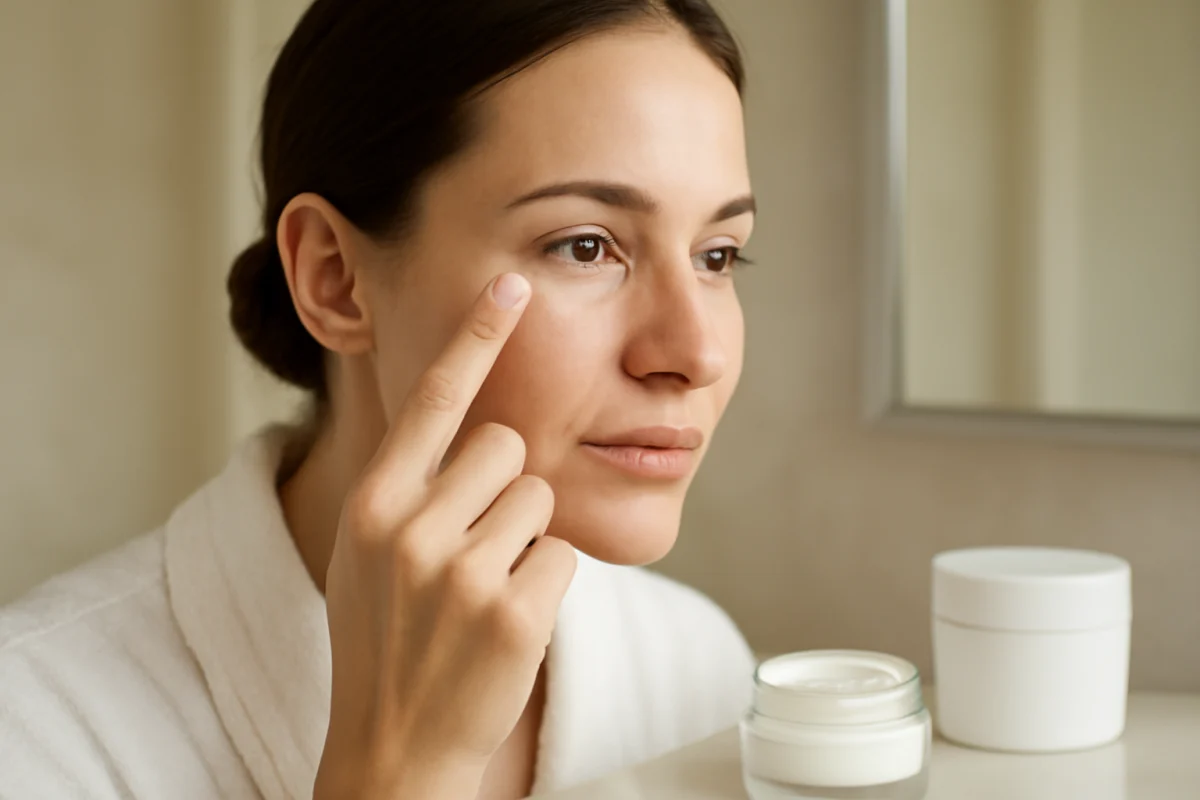
For most beginners, using retinol around the eyes once or twice a week is a cautious starting point. If your skin remains comfortable after several weeks, you may be able to increase use gradually, following the product label. The eye area is thin and easily irritated, so more frequent application is not automatically better. A small amount applied to the orbital area—not directly on the eyelids, lash line, or inner corners—may be a more practical approach than trying to use retinol every night.
Retinol is a vitamin A derivative commonly used in cosmetic skincare to improve the look of fine lines, uneven texture, and some types of discoloration over time. It can also cause dryness, stinging, peeling, redness, and increased sensitivity, particularly when introduced too quickly. Around the eyes, careful application and a slow schedule matter as much as the ingredient itself.
Why the eye area needs a slower schedule
The skin around the eyes often has less surface area and can feel more delicate than skin on the cheeks or forehead. It is also exposed to frequent movement from blinking and facial expressions. Because the area is close to the eyes, even a small amount of product can migrate during the night and cause watering or discomfort.
These factors do not mean that everyone must avoid retinol around the eyes. They do mean that a face product should not automatically be used in the same amount or frequency near the eyes. A product specifically labeled for the eye area may be formulated with that intended use in mind, but formulas can change. Check the current packaging and manufacturer ingredient list before relying on older product information.
How often should you apply it?
A cautious beginner schedule
If you have never used retinol near your eyes, begin with one evening per week. Use the product as directed and observe how your skin feels over the following days. If there is no persistent burning, significant redness, swelling, or uncomfortable peeling, you can consider moving to twice weekly after a few weeks.
Some people may remain comfortable using retinol only once or twice a week. That is not a failure. The most useful schedule is one that your skin can tolerate consistently. Increasing frequency is optional, not a requirement for a reasonable routine.
For people already using retinol on the face
Facial retinol experience does not guarantee that the eye area will tolerate the same routine. The skin around the eyes may still react to a product that feels comfortable elsewhere. If you already use retinol on your face, introduce it around the eyes separately rather than assuming your established facial schedule is suitable.
For example, you might apply your facial retinol as usual while keeping the eye area free of it for several weeks. Then introduce a small amount of an eye-area product on one evening per week. This makes it easier to identify whether irritation is coming from the new application area or from another change in your routine.

When daily use may be too much
Nightly use can be excessive for some people, especially those with dry, sensitive, reactive, or eczema-prone skin. It may also be poorly tolerated when combined with other potentially irritating products. Even if a label allows frequent use, your skin’s response should guide your routine within those directions.
If you develop irritation, pause retinol until the area feels normal again. Returning at a lower frequency—or deciding not to use it around the eyes—may be more appropriate than trying to push through discomfort.
Where should retinol go around the eyes?
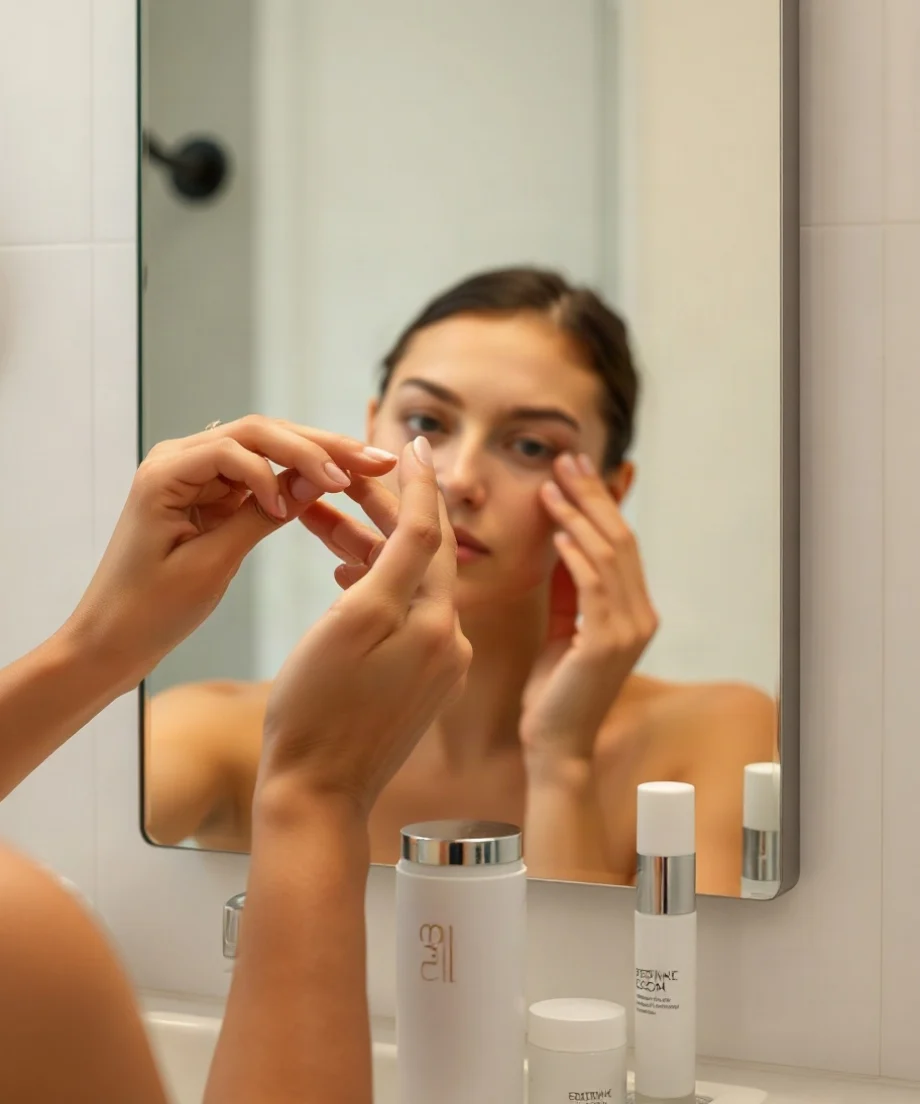
Use only the amount directed on the packaging. In general, keep the product on the bony orbital area around the eye rather than placing it directly on the mobile eyelid, upper lash line, lower lash line, or inner corner. Skin warmth and facial movement can cause the product to spread after application.
Apply with clean, dry hands and avoid rubbing. A light tapping motion can help limit mechanical irritation. Wash your hands afterward so that residual product does not accidentally reach the eyes or transfer to other sensitive areas.
If you use a moisturizer, you can apply it before or after retinol depending on your skin’s needs and the product instructions. Applying moisturizer first may make the routine feel more comfortable for dry or sensitive skin, although it can also change how the product spreads. Do not dilute a product unless the label specifically instructs you to do so.
How to reduce dryness and irritation
Keep the rest of the routine simple
When introducing retinol, avoid making several major skincare changes at the same time. A basic routine may include a gentle cleanser, a plain moisturizer, and sunscreen during the day. This gives you a clearer way to assess how your skin responds.
Be particularly cautious about using retinol in the same routine as other products that may be irritating, such as exfoliating acids, scrubs, or other retinoid products. The right combination depends on the specific products and directions, so read each label rather than assuming that layering more active ingredients will produce better cosmetic results.
Support the skin barrier
A fragrance-free moisturizer may help reduce the feeling of tightness associated with dryness, although no moisturizer can guarantee that retinol will be tolerated. Avoid applying retinol to skin that is already cracked, sunburned, freshly waxed, or visibly irritated.
During the day, use broad-spectrum sunscreen on exposed skin and wear sunglasses when helpful. Retinol can make some users more sensitive to sun exposure, and regular sun protection is an important part of caring for the skin around the eyes. Keep sunscreen out of the eyes and follow the product’s application directions.
What results can you realistically expect?
Retinol may help improve the appearance of fine lines and uneven texture over time, but results vary. It is not a guaranteed solution for every type of dark circle. Under-eye darkness can be influenced by visible blood vessels, natural skin tone, shadows from facial structure, dryness, irritation, pigmentation, or temporary congestion. A topical cosmetic product may have limited influence over some of these factors.
Puffiness can also have many possible contributors, including sleep disruption, allergies, fluid retention, genetics, and normal anatomy. Retinol should not be viewed as a dependable way to eliminate eye bags or diagnose the reason for swelling.
Consistency matters, but patience is also important. Cosmetic changes generally require ongoing use, and the timeline is not identical for everyone. If retinol causes repeated irritation, continuing to apply it may make the area look drier or more noticeable rather than improving its appearance.
For broader ingredient information, you can review the eye cream ingredient guide. If your main concern is fine lines, our coverage of fine lines and wrinkles may also help you compare routine options without assuming that one ingredient fits every skin type.
Who should be especially cautious?
People with very sensitive skin, a history of eyelid dermatitis, persistent dryness, or frequent irritation should introduce retinol conservatively or ask a qualified healthcare professional whether it is appropriate for them. The same caution applies if you are using prescription treatments or other products that affect skin sensitivity.
If you are pregnant, trying to become pregnant, or breastfeeding, ask your healthcare professional about retinoid and retinol use. Recommendations can depend on the specific ingredient, product, and personal circumstances.
Stop using the product if you experience significant burning, swelling, blistering, marked redness, or persistent irritation. If product enters the eye, rinse with clean water and seek medical advice if discomfort continues. Sudden, painful, one-sided, or persistent swelling is not a routine skincare concern and should be evaluated by a medical professional.
How to choose a retinol eye product
Start with the intended use on the label. A product made for the face may not be labeled for use around the eyes, while an eye product may provide more specific application instructions. Look for clear directions about how much to apply, where to apply it, and how often to begin.
Consider the rest of your routine, too. If you already use exfoliating products, acne treatments, brightening actives, or another vitamin A product, choose a schedule that avoids unnecessary overlap. You may find it useful to build a routine using the site’s under-eye routine builder, especially if you are trying to balance retinol with dryness or sensitivity.
Packaging and formulas can change, so verify current claims, directions, warnings, and ingredient lists on the product packaging or the manufacturer’s website. Do not rely on an old review, an online product listing, or a remembered formula when a detail affects how you plan to use the product.
A simple weekly plan
On retinol nights, cleanse gently, let the skin dry if the product directions call for dry skin, and apply a small amount to the recommended orbital area. Follow with moisturizer if needed. On non-retinol nights, focus on gentle hydration rather than adding more active ingredients.
After several weeks, assess comfort rather than chasing a particular number of applications. If your skin is calm, moving from once weekly to twice weekly may be reasonable according to the label. If dryness or irritation appears, reduce use or pause. There is no advantage to maintaining a schedule that leaves the eye area uncomfortable.
The practical answer is simple: start low, increase slowly only if your skin tolerates it, and do not assume that nightly use is necessary. Retinol can be one option for improving the appearance of fine lines and texture, but a careful routine is more useful than an aggressive one—and persistent or unusual eye symptoms need medical attention rather than more skincare.

Comments
0No comments yet. Be the first to share a helpful note or question.
Leave a Comment
Your email address will not be published. Comments are reviewed before appearing on the site.