
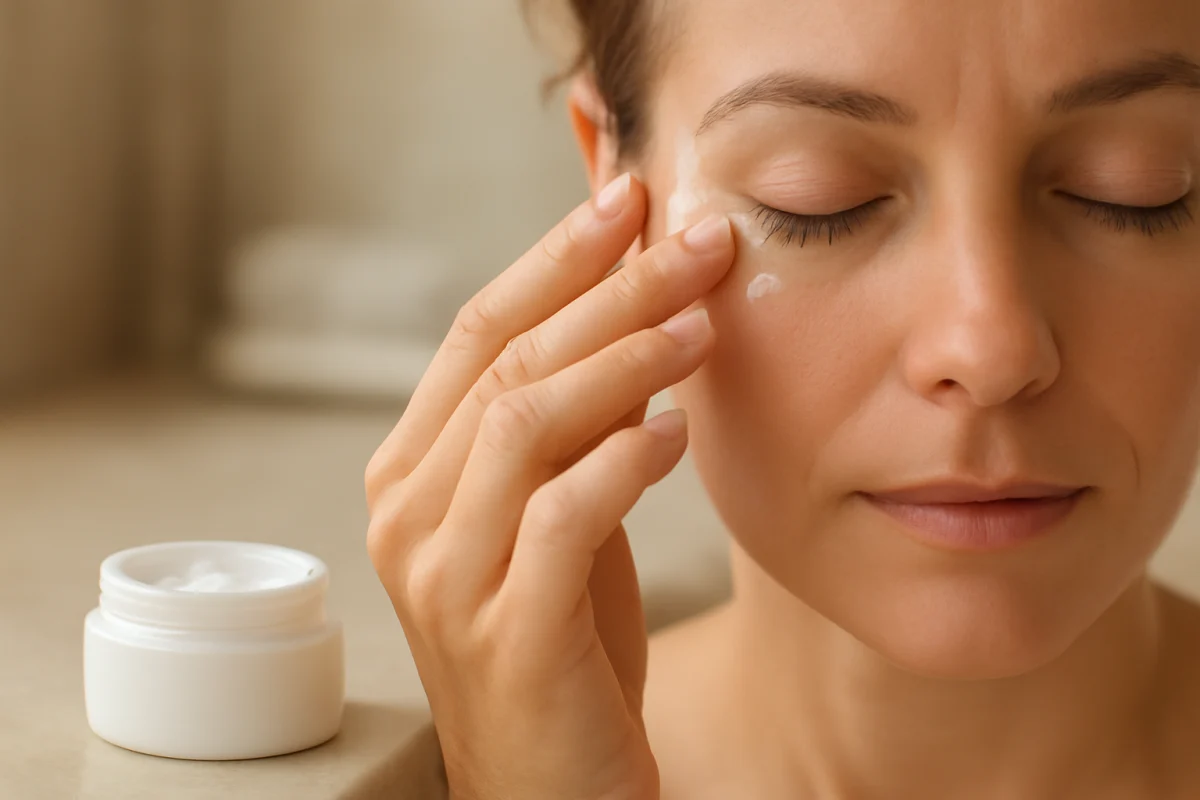
Apply eye cream after cleansing and before heavier moisturizers or sunscreen, using a small amount and gently tapping it along the orbital bone rather than rubbing it directly into the eyes. Use your ring finger or another finger that allows a light touch, start with clean, dry hands, and follow the product label for frequency. This technique can help distribute a formula evenly without unnecessary tugging, although it cannot guarantee that dark circles, puffiness, or fine lines will disappear.

Where should eye cream go?
Eye cream is generally applied around the eye area, not across the movable eyelid or directly against the lash line unless the product specifically says it is suitable for those locations. A practical guide is the orbital bone: the firm ridge beneath the eye, along the outer corner, and under the brow bone.
Place the product on the skin beneath the eyes and around the orbital area, leaving a small gap from the eye itself. Body heat and blinking can move a product closer to the eyes after application. Avoid applying it into the inner corner, waterline, or directly on the eyelashes unless the packaging provides clear instructions.
The skin around the eyes is thin and mobile, so more product is not necessarily better. A thin, even layer is usually easier to tolerate and less likely to migrate into the eyes. If you are unsure how much to use, begin with less than you think you need and add a very small amount only if the area still feels uncovered.
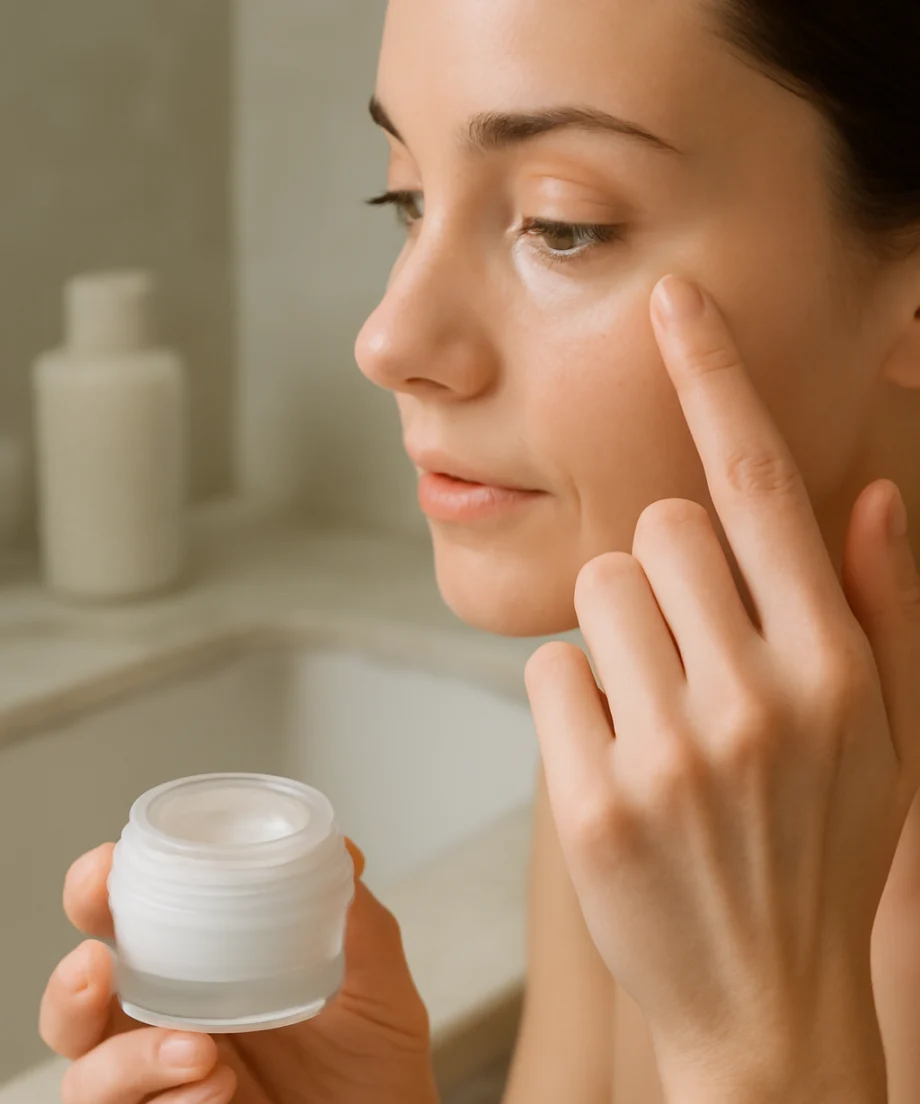
How to apply eye cream step by step
1. Cleanse without over-scrubbing
Start with a clean face. Remove makeup and sunscreen gently, without pulling at the skin. If a cleanser or makeup remover leaves the eye area stinging, tight, or unusually dry, consider changing the product or technique before adding an eye cream. Applying multiple potentially irritating products to already uncomfortable skin can make it harder to identify the source of the reaction.
2. Apply water-based products first
In a typical routine, eye cream follows cleansing and lightweight treatments and comes before a heavier face moisturizer. However, product order can vary by formula. Some eye creams are designed to be used on bare skin, while others may be intended to layer over a serum or moisturizer. Follow the current packaging directions when they differ from general routine advice.
3. Use a small amount for both eyes
Dispense a small amount and divide it between both eyes. The exact quantity depends on the product, its texture, and the size of the area being covered. A thin film should be enough to lightly moisturize the skin without leaving a heavy or slippery layer.
4. Place small dots around the orbital bone
Use small dots beneath each eye and, if desired, around the outer corner and along the brow bone. Do not drag a large stripe of cream across the skin. Dots make it easier to control the quantity and spread the formula with minimal pressure.
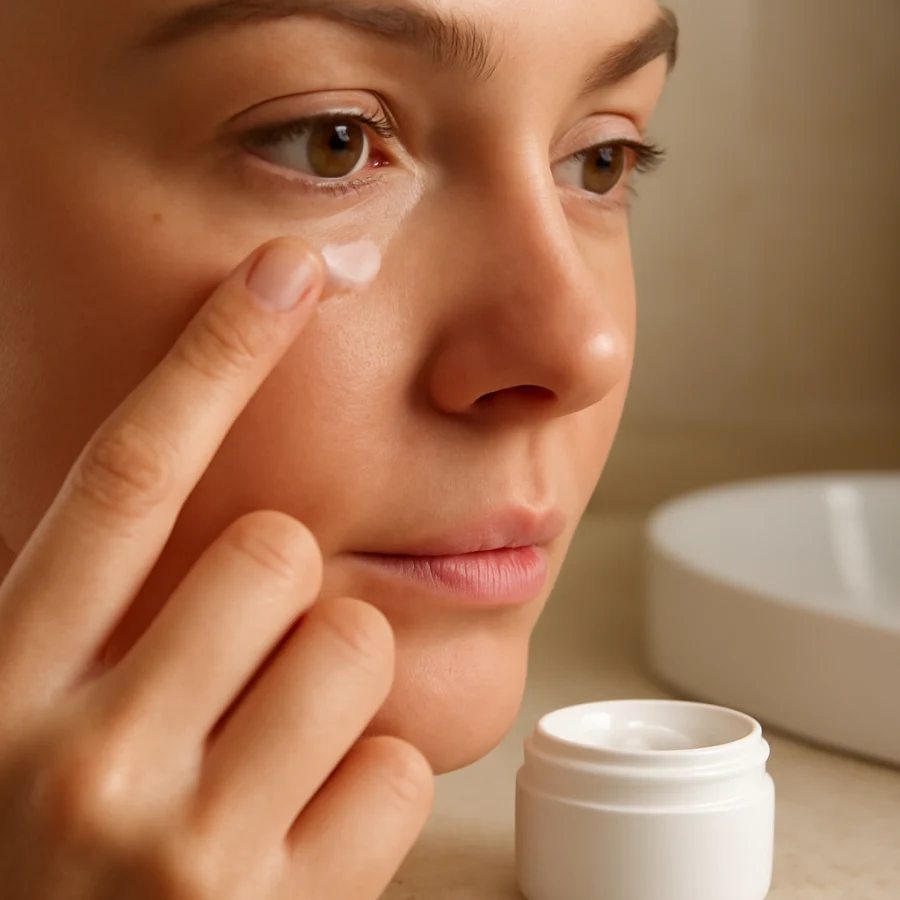
5. Tap gently until it is distributed
Use light tapping or pressing motions to spread the product. You do not need to keep tapping until every trace disappears; the goal is an even layer, not vigorous massage. If the skin moves substantially under your finger, reduce the pressure.
6. Allow it to settle before layering
Give the eye cream a moment to settle before applying face moisturizer, makeup, or sunscreen. This can help reduce pilling, although pilling may also result from incompatible textures, applying too much product, or rubbing layers together. If the formula rolls into small pieces, try using less, allowing more time between layers, or changing the order according to the label.
Which finger should you use?
Many people prefer the ring finger because it naturally encourages a lighter touch. That is a useful technique, but it is not a rule. The most important factor is pressure: use whichever clean finger lets you apply the product without pulling or rubbing. Keep fingernails away from the delicate skin and wash your hands before application.
Gentle application matters more than a particular tapping pattern. Repeated rubbing can contribute to temporary redness and discomfort, especially when the skin is dry, sensitized, or already irritated. A few controlled movements are usually enough to spread the cream.
When should you apply eye cream?
You can apply eye cream in the morning, at night, or both, depending on the formula and your routine. Morning application may be convenient for moisturizing the area before sunscreen and makeup. Evening application can fit naturally after cleansing and before heavier products. Some formulas are intended for one use per day, while others may be labeled for more frequent use.
Check the product directions instead of assuming that a morning-and-night schedule is appropriate. If you use an eye cream with a potentially irritating active, begin cautiously and follow the label. Using more often than directed will not necessarily improve the appearance of the under-eye area and may increase the chance of irritation.
During the day, use broad-spectrum sunscreen on the surrounding face and follow the product directions for safe use near the eyes. Sunscreen can sting if it migrates into the eyes, so apply carefully and consider a product that you can comfortably use around this area. Sunglasses and physical shade can also reduce squinting and help limit direct sun exposure.
How to choose an eye cream for your concern
Application technique is only part of the routine. Choose a product based on the appearance you want to address and how your skin responds to ingredients and textures. Our eye cream ingredient guide can help you compare common ingredient categories without treating any one ingredient as a guaranteed solution.
For dryness and a crepey appearance
Look for a comfortable moisturizing formula with ingredients such as humectants, emollients, or occlusive agents. These categories can support surface hydration and make dry-looking lines appear less noticeable temporarily. Results depend on the formula, your skin, and consistent use. If the eye area feels tight after cleansing, address the overall routine as well rather than relying on a single eye product.
For the appearance of puffiness
A lightweight formula may feel more comfortable in the morning, particularly if rich products tend to migrate or feel heavy. Some products include caffeine or other ingredients marketed for a more refreshed-looking eye area. These effects are cosmetic and may be temporary; an eye cream should not be treated as a diagnosis or treatment for persistent swelling. See our coverage of puffiness and eye bags for more routine considerations.
For the appearance of dark circles
Dark circles can have different visible contributors, including shadowing, discoloration, thin-looking skin, or the appearance of blood vessels. An eye cream may improve hydration or make the area look more even, but no topical product can be expected to address every contributor. If you are exploring brightening ingredients, introduce them carefully and use sun protection as directed.
For fine lines
Moisturization can soften the look of fine lines caused or emphasized by dryness. Products containing retinoid-related ingredients or other active ingredients may require more careful use because the eye area can be sensitive. Follow the label, introduce one active at a time, and avoid combining multiple potentially irritating products around the eyes until you know how your skin responds. Our guide to retinol eye creams covers additional precautions.
Common eye cream application mistakes
- Using too much: Excess product can feel greasy, migrate into the eyes, interfere with makeup, or contribute to pilling.
- Rubbing aggressively: Firm rubbing can create friction and may leave the area temporarily red or uncomfortable.
- Applying directly to the eyes: Keep the formula out of the eye itself unless the product is specifically designed for that use.
- Layering too many actives: Several exfoliating, brightening, or retinoid-style products may be too much for sensitive under-eye skin.
- Skipping the label: Directions, warnings, and usage recommendations can differ between formulas, and formulations may change.
- Expecting instant permanent change: Hydration may affect the way the area looks temporarily, while concerns such as pigmentation or structural shadowing may not respond fully to topical skincare.
How to introduce a new eye cream safely
Patch-test a new product according to the manufacturer's instructions when possible, especially if your skin is sensitive or the formula contains active ingredients. A patch test cannot guarantee that a product will be comfortable around the eyes, but it may help you identify an obvious reaction before applying it to a larger area.
Introduce one new product at a time so you can better understand how your skin responds. Avoid applying a new formula immediately after shaving, exfoliating, or using another product that has already caused stinging. If burning, significant redness, swelling, rash, or persistent discomfort develops, stop using the product and avoid adding other irritating products until the area feels calm. Seek medical advice for severe, ongoing, or concerning symptoms.
Check the current packaging and the manufacturer's ingredient list before use, particularly when purchasing an older product or repurchasing a formula you have used before. Ingredients, instructions, and packaging can change. If you have a known eye condition, recurrent irritation, or swelling that concerns you, a qualified medical professional can provide advice that cosmetic skincare cannot.
A simple routine to remember
For most people, the basic process is straightforward: cleanse gently, apply a small amount around the orbital bone, tap rather than rub, allow the product to settle, and finish with the rest of your routine. In the morning, use sunscreen as directed. At night, follow the eye cream's frequency instructions and keep potentially irritating actives limited until you know your tolerance.
Consistency and comfort are more useful goals than applying a large amount or using an elaborate technique. The right eye cream is one that fits your skin, your concern, and your routine without causing irritation. For a personalized starting point, try the under-eye routine builder, then adjust gradually as you learn what your skin can comfortably handle.




Comments
0No comments yet. Be the first to share a helpful note or question.
Leave a Comment
Your email address will not be published. Comments are reviewed before appearing on the site.