
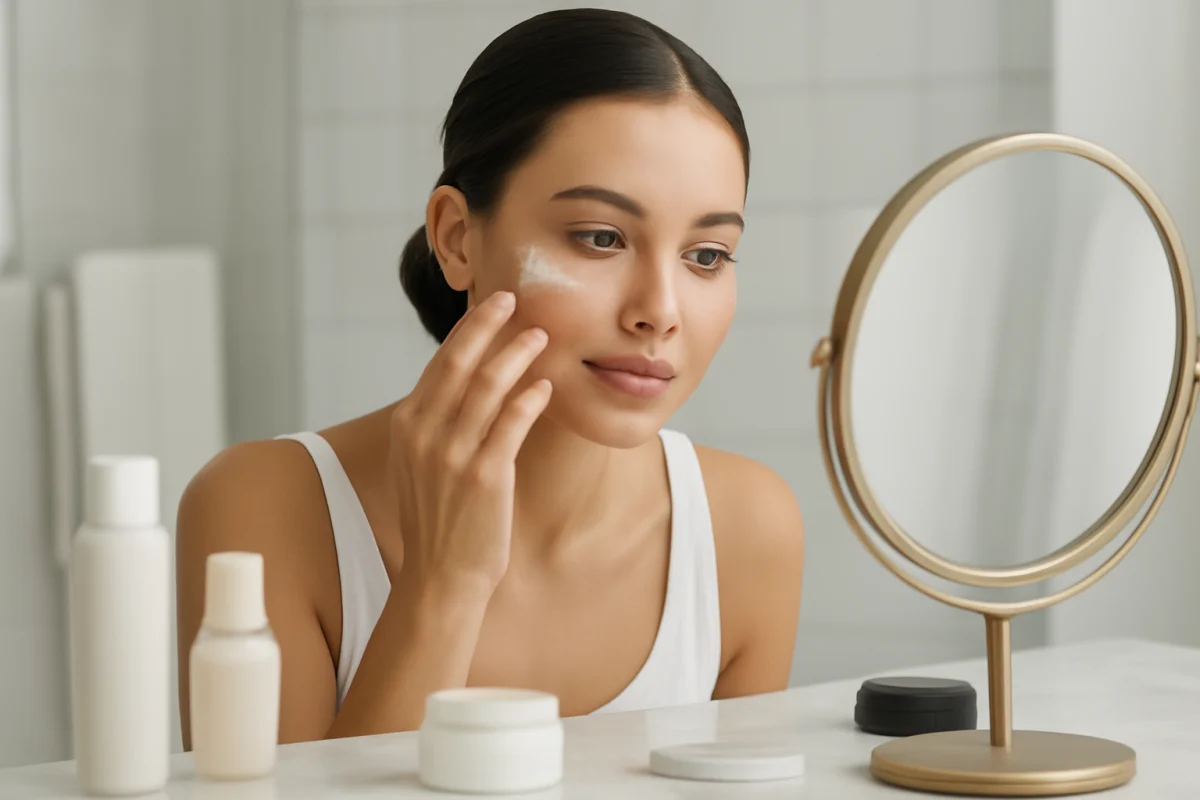
To apply eye cream under makeup, use a small amount on clean, dry skin, gently tap it around the orbital area, allow it to absorb, and then apply makeup in thin layers. The key is using less product than you might expect and giving each skincare step enough time to settle before concealer or foundation goes on top.
Eye cream can make the under-eye area feel more comfortable and create a smoother-looking surface for makeup. It cannot guarantee that dark circles, puffiness, or fine lines will disappear, and makeup results depend on the product formula, your skin, and the coverage you choose. With the right order and technique, however, you can reduce common problems such as pilling, patchiness, creasing, and concealer that moves throughout the day.
Use the right order before makeup
A simple morning routine usually works best in this order:
- Cleanse or gently rinse the skin, depending on your routine.
- Apply any lightweight serum or treatment product intended for daytime use.
- Apply eye cream in a thin layer.
- Use moisturizer where needed.
- Apply sunscreen to exposed skin, avoiding direct contact with the eyes.
- Apply primer, foundation, concealer, and other makeup products.
You do not necessarily need a separate eye cream and face moisturizer under your eyes. Layering several rich products in the same area can leave excess slip, which may cause concealer to move or collect in fine lines. If your eye cream feels moisturizing enough, use a smaller amount of your regular moisturizer around the eye area or skip that step there.
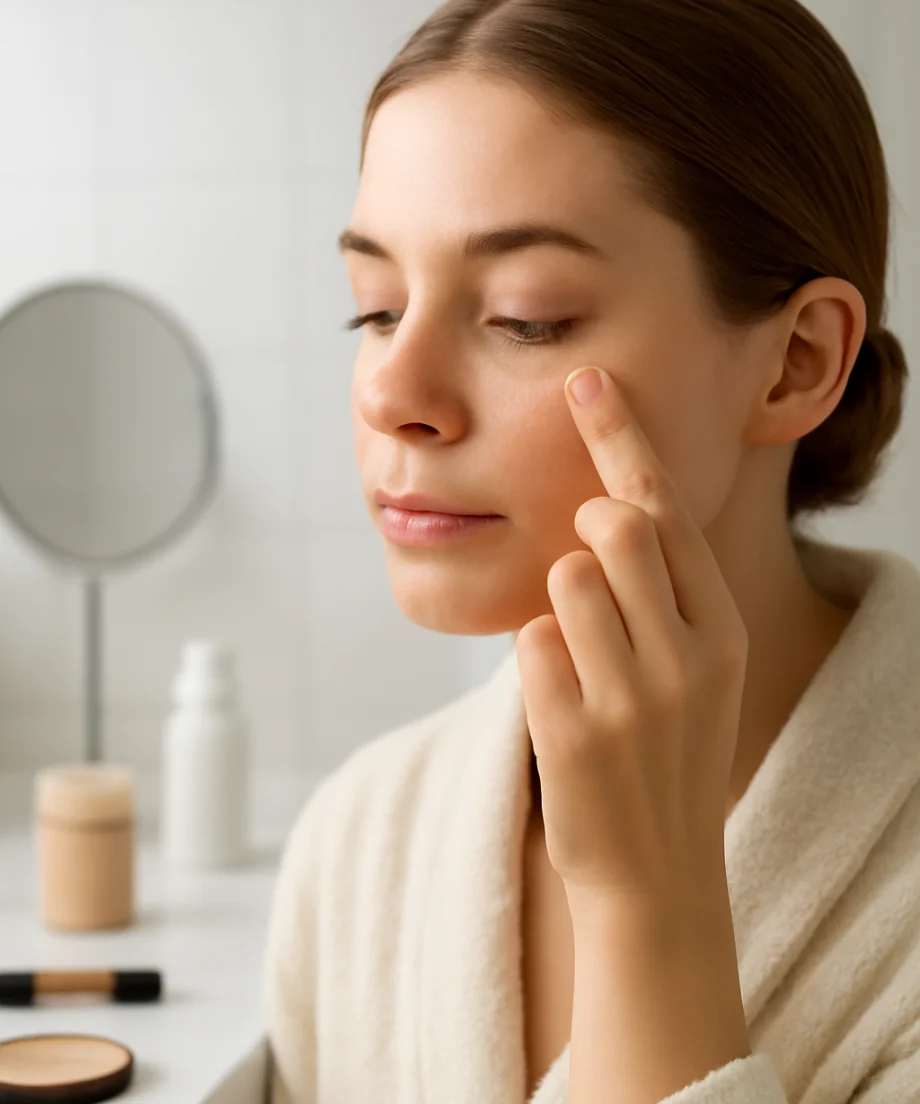
Sunscreen is an important part of daytime skin care, but sunscreen products vary in texture and eye tolerance. Follow the product directions and avoid getting sunscreen directly into the eyes. If a product stings, causes watering, or makes makeup difficult to wear, consider a different formula for the eye area.
How much eye cream should you use?
Start with a very small amount for both eyes—roughly a rice-grain-sized amount is a practical starting point, although the ideal quantity depends on the product and the size of the area you are covering. Use enough to spread comfortably without leaving a visibly wet or greasy layer.
Applying more eye cream does not necessarily improve its cosmetic effect. Excess product can sit on the skin, mix with concealer, and contribute to creasing or pilling. If the skin still feels dry after the product has absorbed, you can adjust the amount gradually rather than applying a large layer all at once.
For product-specific directions, check the current packaging. Formulas and instructions can change, so the label and the manufacturer’s current ingredient list are more reliable than an older product description.
Where to apply eye cream
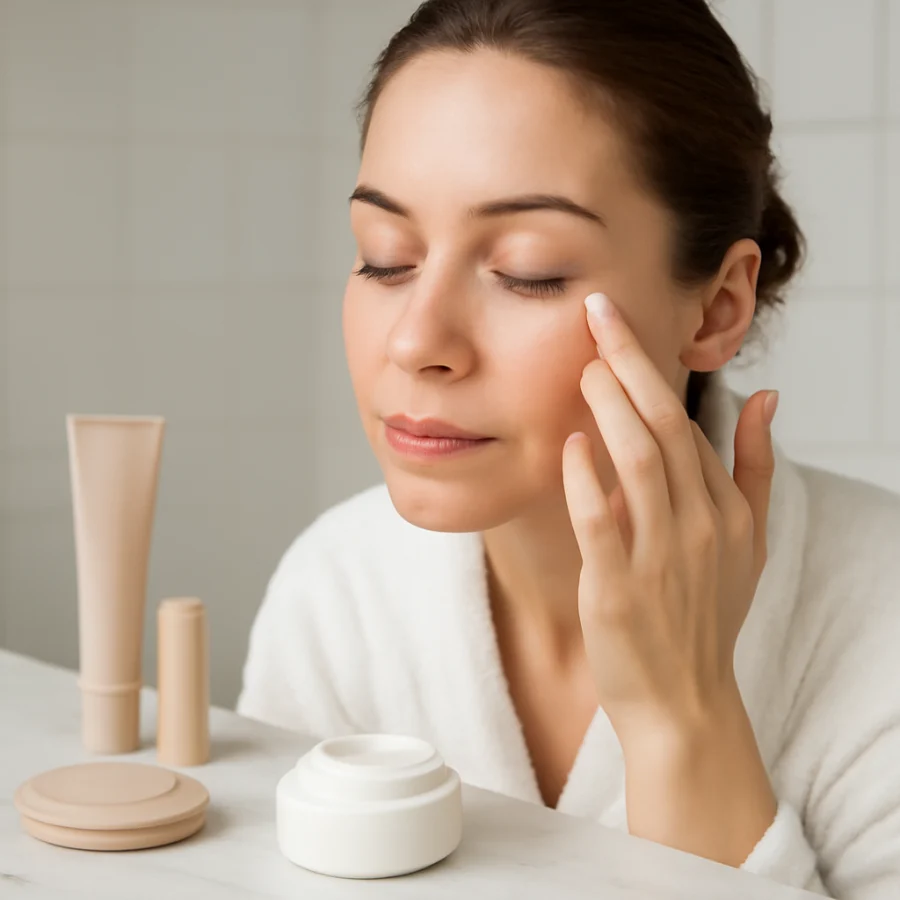
Apply eye cream to the skin around the eye rather than directly on the eyelids, lash line, or inside the eye. A common approach is to place tiny dots along the orbital bone beneath the eye and, if the product is suitable for it, along the outer corner and brow bone.
Use your ring finger or another finger that allows a light touch. Gently tap and press the product into the skin instead of rubbing back and forth. The goal is to distribute the cream without pulling at the delicate-feeling under-eye area. Keep a small gap from the lash line because natural movement and body heat can cause products to migrate toward the eyes.
If you are prone to morning puffiness, avoid applying a heavy layer immediately before makeup. A rich product may feel comfortable but can also add too much slip under concealer. A thinner layer, applied farther from the lash line, may be easier to wear.
Let the product settle before concealer
Waiting is one of the simplest ways to improve how makeup sits over eye cream. Give the product time to absorb or settle before applying concealer. The exact timing varies by formula, climate, and how much you used. When the skin feels lightly moisturized rather than wet or slippery, it is usually ready for the next step.
You can use this time to do another part of your routine, such as brushing your hair or applying lip balm. If the area still looks shiny, gently press it with a clean tissue or a soft, dry sponge. Do not wipe aggressively, because that can remove too much product and irritate the skin.
Choose a makeup-friendly eye cream texture
Lightweight gels and lotions
Gel and lightweight lotion textures often work well under makeup because they tend to leave less oil or wax on the surface. They may be a practical choice if your concealer frequently slips, separates, or settles into lines. This does not mean every gel will suit every person; some gel formulas can still feel tacky or form residue when layered with certain products.
Creams and balms
Richer creams and balms can be useful when the under-eye area feels dry, tight, or flaky. Under makeup, apply them sparingly and allow extra time for them to settle. If the product remains noticeably slick, blot lightly before concealer or reserve the richer formula for nighttime.
Silicone-rich or smoothing formulas
Some eye creams contain ingredients that create a smooth, silky surface. These textures can pair well with makeup for some people, but layering products with different bases may cause pilling. If small rolls or flakes appear, reduce the amount, press rather than rub, and simplify the layers beneath makeup.
To learn more about common skincare ingredients and their typical cosmetic roles, use the site’s eye cream ingredient guide. Product formulas vary, so always verify the current ingredient list before making a decision.
Apply concealer without disturbing the eye cream
Once the eye cream has settled, apply concealer in a thin layer. Place product only where you want coverage instead of covering the entire under-eye area by default. A small brush, clean fingertip, or damp makeup sponge can work, depending on the finish you prefer.
Press or tap the concealer into place rather than dragging it across the skin. Start with a small amount and add more only where needed. Heavy layers are more likely to crease, emphasize texture, or look dry as the day progresses.
If creasing appears shortly after application, look at the amount of both products. Remove excess concealer from the crease with a clean fingertip or small brush, then use a very light amount of setting powder if you normally use powder. Too much powder can make the area look dry, so apply it selectively rather than coating the entire under-eye.
Adjust the routine for your skin type
For dry or flaky under-eye skin
Choose a comfortable moisturizing formula and apply it before makeup, but avoid trying to smooth away flakes by rubbing. Gentle application and a thin, even layer are less likely to disturb the surface. If the area is irritated or visibly peeling, makeup may accentuate it, and adding more products may not solve the underlying discomfort.
For more routine ideas, see the guidance on eye creams for dry skin. The goal is a comfortable base, not a thick coating.
For oily or combination skin
Try a lightweight formula and use less product near the inner corners and lower lash line. If you use a separate moisturizer, apply it selectively rather than layering it heavily under the eyes. A compatible primer may help makeup wear more evenly, but adding more layers can also increase pilling, so introduce one change at a time.
For sensitive skin
Keep the routine simple and follow the product label. Potentially irritating ingredients, including some exfoliating acids, retinoids, fragrance components, or strong active formulas, may not be ideal immediately before makeup for everyone. Patch testing can help you assess tolerance, although it cannot predict every reaction around the eyes. Stop using a product if it causes burning, persistent redness, swelling, or other irritation, and seek medical advice for concerning symptoms.
More cautious product-selection guidance is available in the section on eye creams for sensitive skin.
What if your eye cream pills under makeup?
Pilling can happen when products roll into small pieces instead of forming a smooth layer. Common contributors include using too much product, rubbing during application, applying several layers too quickly, or combining formulas that do not sit well together.
To troubleshoot, simplify the routine first. Use a smaller amount of eye cream, press it into the skin, and let it settle. Test the makeup over the product on one side of the face before applying it everywhere. If pilling continues, try changing either the eye cream or the concealer, but not both at the same time. This makes it easier to identify which combination works better for you.
Can eye cream improve the look of dark circles under makeup?
Eye cream may moisturize the skin and make the area look temporarily smoother, which can help concealer apply more evenly. Some formulas are designed around ingredients such as caffeine, vitamin C derivatives, niacinamide, or retinoids, but their suitability and visible effects vary. They should not be treated as guaranteed solutions for dark circles.
Dark circles can have several visible contributors, including shadowing, pigmentation, thin-looking skin, facial structure, and temporary changes in appearance. Skincare and makeup may improve the look without addressing every contributor. If discoloration changes suddenly, comes with significant swelling or pain, or concerns you, consult a qualified health professional rather than relying on cosmetic products for an explanation.
A simple under-eye makeup routine
- Start with clean, dry skin.
- Apply a small amount of eye cream around the orbital area, keeping it away from the eyes.
- Tap gently until the product is distributed evenly.
- Let it settle, then blot only if the skin remains overly slick.
- Apply a thin layer of concealer where coverage is needed.
- Tap to blend and remove any product that gathers in creases.
- Set selectively with a small amount of powder if desired.
The best under-makeup routine is usually the one with the fewest layers that leave your skin comfortable and your makeup stable. If you are comparing formulas or building a routine for a specific concern, the site’s under-eye routine builder can help organize your choices. Keep expectations cosmetic and realistic: careful application can improve the appearance of the under-eye area, but no eye cream guarantees that dark circles, puffiness, or fine lines will be erased.




Comments
0No comments yet. Be the first to share a helpful note or question.
Leave a Comment
Your email address will not be published. Comments are reviewed before appearing on the site.