
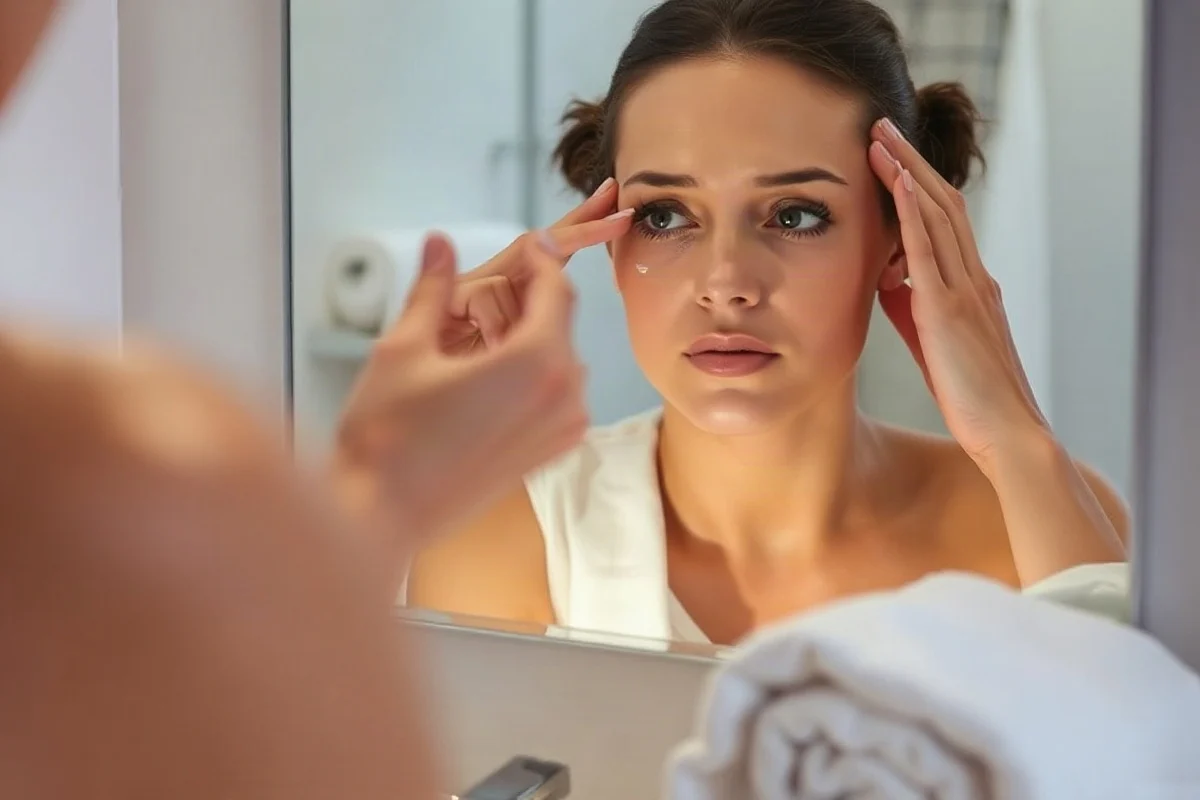
If your under-eye skin feels tight, flaky, rough, or uncomfortable, apply eye cream after lightweight water-based products and before a richer moisturizer or face oil. Use a small amount on clean, slightly damp skin, press it in gently, and give each layer time to settle. The goal is to support a more comfortable, smoother-looking under-eye area without creating friction or applying too much product.
Very dry skin often needs more than one moisturizing step, but layering does not mean piling on every product at once. The under-eye area is delicate, and too much rubbing, fragrance, or potentially irritating active ingredients can make dryness look and feel worse. A simple routine with compatible products is usually easier to follow and easier to adjust.
Why layering matters for very dry under-eyes
Dryness can make the under-eye area look dull, crepey, or more lined because dehydrated skin reflects light differently and may have a rougher surface. Moisturizing products can temporarily improve the appearance of surface dryness by adding water, softening the skin, and reducing moisture loss. These are cosmetic effects, not a treatment for a medical skin condition.
Layering can help separate different jobs within a routine. A lightweight hydrating product may add water and humectants, an eye cream may provide a blend of moisturizing ingredients, and a richer cream may help reduce moisture loss. However, the best order depends on the texture and directions of the products you use. If a product label gives different instructions, follow the label.
The best order for an eye-care routine
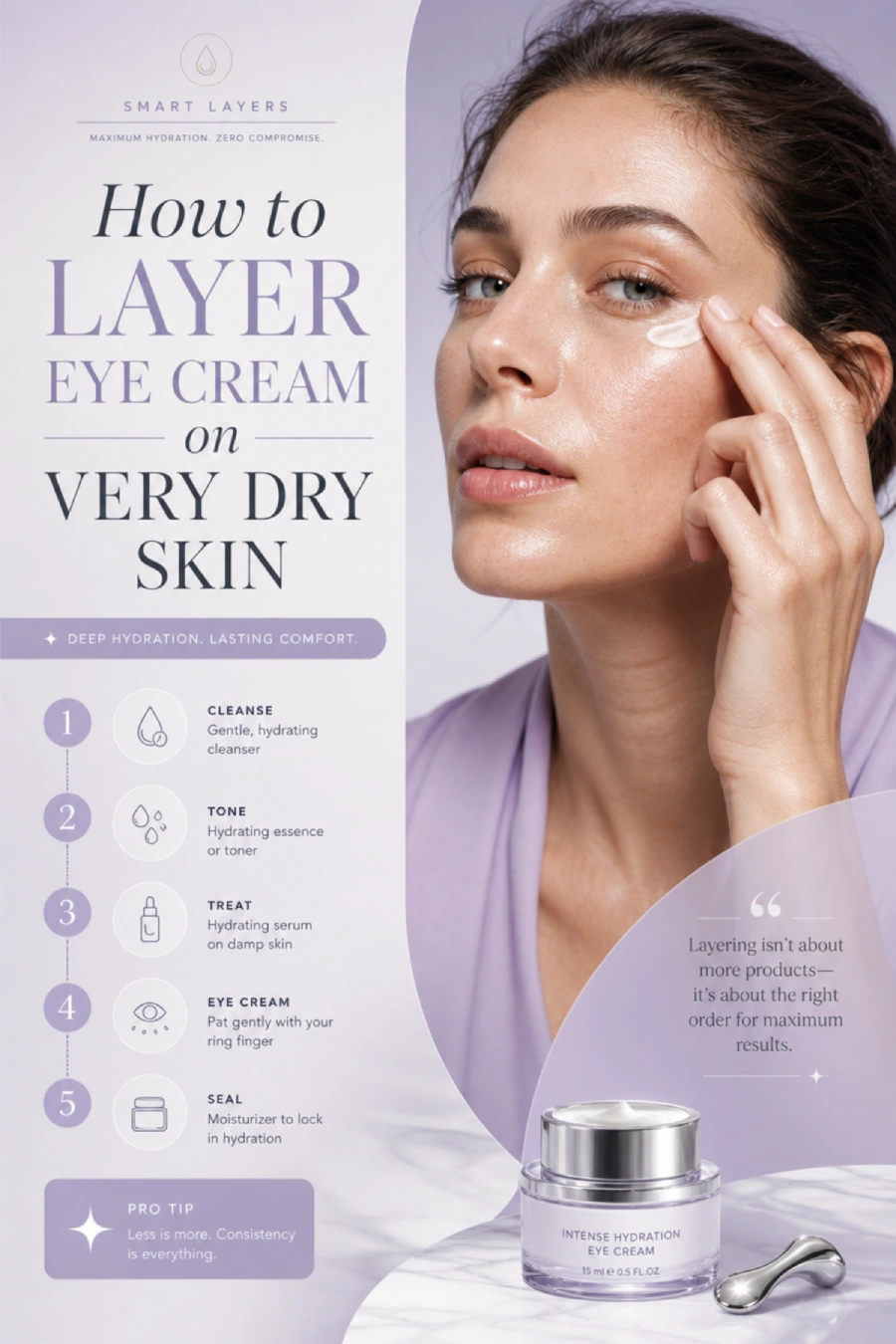
A practical routine for very dry under-eyes may look like this:
- Gentle cleanser: Remove makeup and sunscreen without scrubbing or using water that feels hot.
- Hydrating toner, essence, or serum: If you use one, apply a thin layer to slightly damp skin and avoid getting it into the eyes.
- Eye cream: Apply a small amount around the orbital area, following the product's directions.
- Face moisturizer: Use a richer moisturizer around, but not inside, the eye area if your skin needs more comfort.
- Face oil or balm: If you use one, place a very thin layer last to help reduce moisture loss.
- Sunscreen in the morning: Apply a broad-spectrum sunscreen as directed, taking care to avoid direct contact with the eyes.
This sequence is a starting point rather than a fixed rule. In general, apply thinner, more watery textures before thicker ones. If your eye cream is richer than your face moisturizer, you may use it after the moisturizer instead. The most important considerations are comfort, compatibility, and avoiding unnecessary rubbing.
How to apply eye cream without irritating dry skin
Use less than you think you need
A large amount of eye cream will not necessarily provide more hydration. Excess product can migrate toward the eyes, feel heavy, or cause makeup to slide. Start with a small amount for both eyes and add only if the product instructions recommend it and your skin still feels uncomfortable.
Place the product around the orbital area
Apply eye cream along the orbital bone rather than directly on the eyelids or right against the lash line, unless the packaging specifically says the product is suitable for those areas. The warmth of the skin can help the product spread slightly. Keeping a little distance from the eye itself may reduce the chance of stinging or watering.
Press instead of rubbing
Use a clean ring finger or another gentle fingertip to dot the product around the area. Press and lightly tap until it is distributed. Avoid dragging the skin, repeatedly massaging flaky patches, or trying to smooth fine lines by force. Friction can increase visible redness and discomfort, especially when the skin barrier feels compromised.
Give layers a moment to settle
You do not need to wait for a long, exact amount of time between every product. Still, allowing a layer to absorb or settle before applying the next one can help prevent pilling and reduce the temptation to rub. If products roll into small flakes, try using less, changing the order, or allowing more time between layers.
Ingredients that may suit very dry under-eyes
When comparing eye creams, look for a formula that focuses on moisturization and comfort rather than a long list of aggressive actives. Product labels and ingredient lists can change, so check the current packaging or the manufacturer's information before making a decision. You can also use the site's eye cream ingredient guide to research common ingredients.
Humectants
Humectants help attract and hold water at the skin's surface. Common examples include glycerin, hyaluronic acid, and panthenol. These ingredients may make dry skin feel more hydrated and appear temporarily plumper, although results vary by formula and individual skin.
Emollients
Emollients help soften rough-feeling skin and improve the feel of dry patches. Examples may include certain plant oils, fatty alcohols, esters, and other skin-conditioning ingredients. The name and texture of the ingredient matter less than how the finished formula feels and whether it remains comfortable around your eyes.
Occlusive ingredients
Occlusives form a protective layer that can help reduce moisture loss. Petrolatum, mineral oil, dimethicone, and some waxes are examples found in skincare products. They can be useful for very dry skin, but richer formulas may feel too heavy for some people or may migrate into the eyes.
Barrier-supporting ingredients
Some formulas include ingredients such as ceramides, cholesterol, or fatty acids to support the skin barrier. Their value depends on the complete formula, not just the presence of one ingredient. A product that feels soothing and does not sting may be a better choice for you than one with a more impressive-sounding ingredient list.
Should you use active ingredients on very dry skin?
Active ingredients such as retinoids, exfoliating acids, and some forms of vitamin C may be included in products designed for the eye area. They may target the appearance of concerns such as uneven tone or fine lines, but they can also be irritating, particularly when skin is very dry or already sensitive.
If you want to try an active eye product, introduce only one new product at a time. Follow the label, begin as often as directed for your skin's tolerance, and consider patch testing when appropriate. Keep the product away from the eyes themselves and avoid applying it to cracked, peeling, or irritated skin. Stop using it if you develop burning, persistent redness, swelling, or worsening discomfort. A simple moisturizer-only routine may be more appropriate while the skin feels distressed.
Retinoids deserve extra caution because they can be drying for some users. If you are considering a retinol eye cream, review the product directions and consult a qualified healthcare professional if you have concerns, are pregnant or breastfeeding, or have a history of significant eye-area sensitivity. Cosmetic skincare guidance cannot diagnose or treat a skin or eye condition.
Morning and evening layering routines
A gentle morning routine
In the morning, cleanse gently or rinse if cleansing leaves your skin tight. Apply a lightweight hydrating layer if needed, followed by eye cream and moisturizer. Finish with sunscreen according to its directions. Sunglasses and physical shade can also help limit squinting and sun exposure, but sunscreen should not be applied so close that it causes eye irritation.
A richer evening routine
At night, remove makeup carefully without tugging at the skin. Apply your hydrating product, then eye cream, followed by a richer moisturizer if necessary. If your skin tolerates a very thin layer of an occlusive product, you may apply it last to selected dry areas. Keep heavy products away from the eye opening and stop if the product causes watering, blurred vision, or irritation.
Common layering mistakes to avoid
- Applying too many products: More layers can increase pilling, heaviness, and irritation without improving comfort.
- Rubbing flaky skin: Flakes usually call for gentler care, not more friction.
- Using fragrance-heavy products near the eyes: Fragrance is not automatically a problem, but sensitive users may prefer a fragrance-free option.
- Applying strong actives too frequently: Follow the label and give your skin time to adjust.
- Putting product directly into the eye: Eye cream is for the surrounding skin unless the packaging clearly states otherwise.
- Changing several products at once: If irritation develops, it becomes difficult to identify the likely cause.
- Ignoring product age or storage: Check the packaging instructions and replace products when recommended.
How to choose a formula for very dry skin
Texture is an important selection criterion. A cream or balm may feel more comfortable than a lightweight gel when the skin is very dry, but a rich texture is not automatically better. Look for a formula that spreads without pulling, leaves the area comfortable, and does not make your eyes water.
If you are prone to sensitivity, consider starting with a short ingredient list and avoiding unnecessary fragrance or strong exfoliating ingredients. If you wear concealer, choose a product that settles without leaving a greasy film or causing makeup to separate. Because formulas can change, verify the current ingredient list on the package or manufacturer's website rather than relying on an old product description.
For help organizing products by texture and skin concern, try the under-eye routine builder or browse the site's sensitive skin guidance.
What eye cream can and cannot do
Consistent moisturization may make very dry under-eyes look smoother, softer, and less visibly flaky. It may also make makeup sit more evenly. These changes are usually cosmetic and may be temporary. Eye cream cannot be expected to remove every type of dark circle, permanently erase lines, or correct puffiness caused by anatomy, genetics, allergies, sleep disruption, or another underlying issue.
If darkening, swelling, scaling, pain, itching, or irritation is persistent, severe, or new, seek advice from a qualified healthcare professional. A healthcare professional can help determine whether a symptom needs medical evaluation. Skincare layering is intended for cosmetic care, not diagnosis or treatment.
For most very dry under-eyes, the most reliable approach is a short routine: gentle cleansing, one hydrating layer if needed, a comfortable eye cream, and a richer moisturizer when necessary. Apply each product lightly, avoid the lash line, and adjust the routine based on how your skin feels rather than adding more steps automatically.

Comments
0No comments yet. Be the first to share a helpful note or question.
Leave a Comment
Your email address will not be published. Comments are reviewed before appearing on the site.