
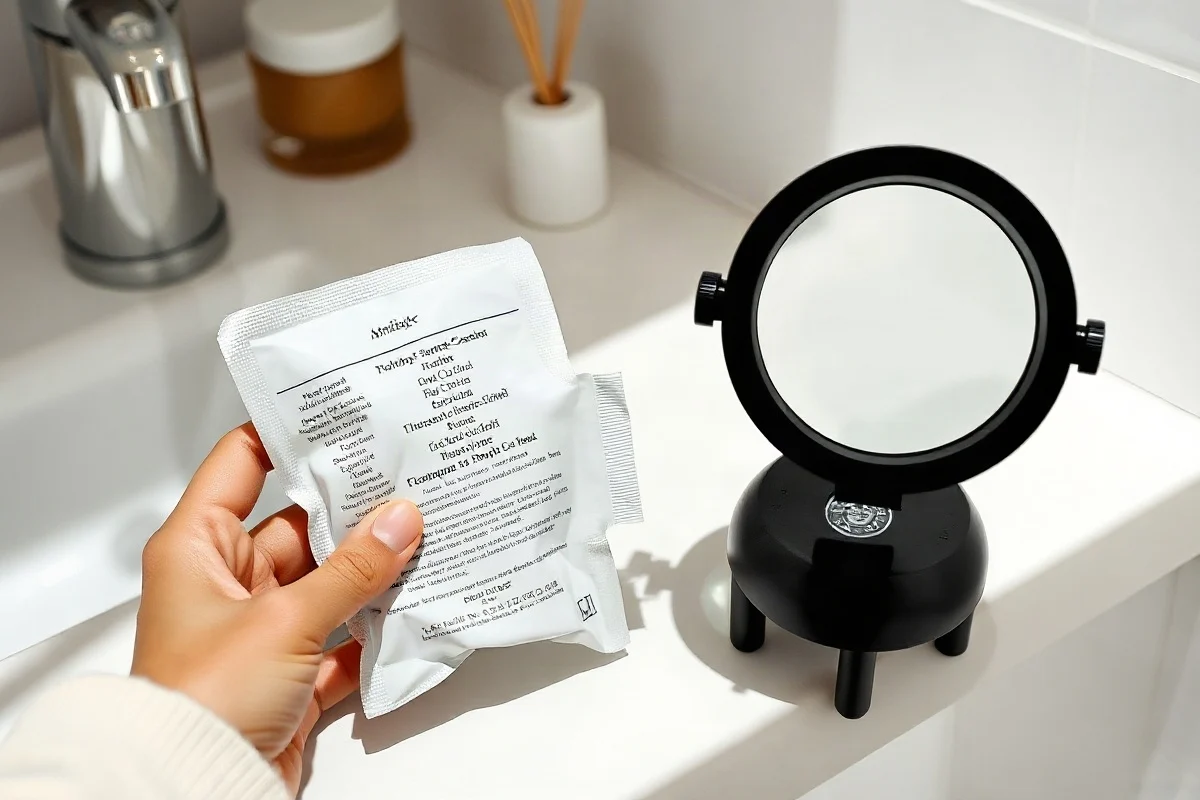
To read an eye cream ingredient list, look past the front-label promises and focus on the first several ingredients, the active ingredients relevant to your concern, and the potential for irritation. Ingredients are generally listed from highest to lowest concentration until the formula reaches ingredients used in smaller amounts. The list cannot tell you everything about how a product will perform, but it can help you decide whether a formula is designed mainly to moisturize, brighten the look of the under-eye area, temporarily reduce the appearance of puffiness, or address the look of fine lines.
It is also important to keep expectations realistic. An eye cream may improve the appearance of dryness, dullness, or dehydration-related fine lines, but it cannot guarantee that every type of dark circle, eye bag, or wrinkle will disappear. Dark circles can have several visible causes, including pigmentation, shadows from facial structure, thin-looking skin, and vascular color. A cosmetic product may support a more even, hydrated appearance without diagnosing or treating an underlying medical condition.
Start with the ingredient list, not the front label
Words such as “brightening,” “lifting,” “de-puffing,” “firming,” and “anti-aging” are marketing descriptions, not standardized guarantees. They can be useful clues about a product’s intended purpose, but the ingredient list provides more concrete information about what the formula contains.
Before judging an eye cream, check the current packaging and, when possible, the manufacturer’s current ingredient list. Formulas can change, and product pages may not always be updated at the same time as packaging. If a product contains a specific ingredient that matters to you, verify that it appears on the current label rather than relying only on an old review, retailer listing, or promotional image.
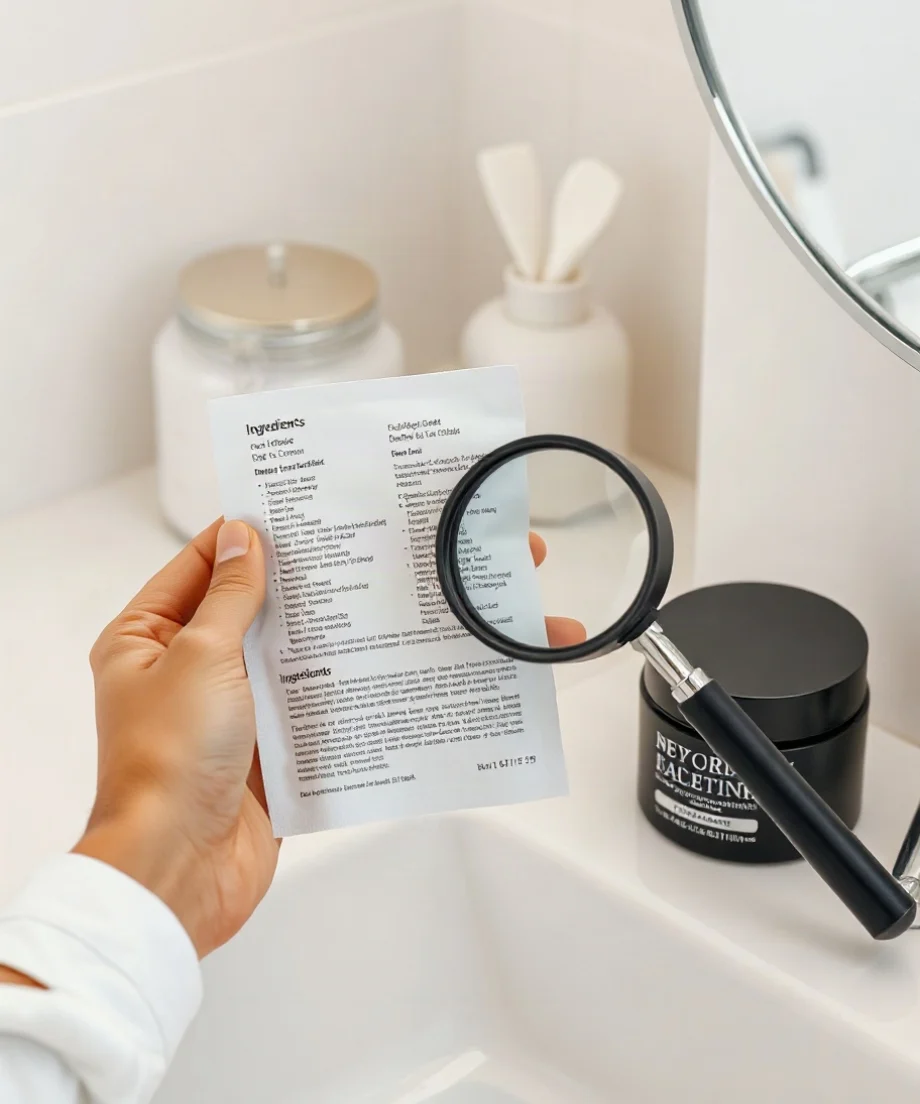
Pay attention to the first several ingredients
The beginning of the list often reveals the product’s basic structure. Water or another water-based ingredient may appear first, followed by humectants, emollients, silicones, or other texture-building ingredients. This does not mean the first ingredient is automatically the most important one for your concern. It simply helps you understand whether the formula is primarily lightweight and hydrating, rich and cushioning, or designed to create a smooth surface.
Common moisturizing ingredients include glycerin, propanediol, hyaluronic acid, sodium hyaluronate, and other humectants. Humectants help attract and hold water at the skin’s surface. They can make the under-eye area look temporarily smoother and less creased when dryness contributes to a lined appearance.
Emollients and occlusive ingredients help soften the skin and reduce water loss. Examples may include plant oils, fatty alcohols, shea butter, petrolatum, dimethicone, and other silicones. A richer formula may be helpful for dry skin, while someone prone to milia-like bumps or a heavy feeling around the eyes may prefer a lighter texture. Ingredient lists alone cannot predict exactly how a product will feel on every person’s skin.
Match ingredients to the appearance you want to improve
The most useful question is not “Which eye cream is best?” but “What visible concern am I trying to improve?” Different ingredients support different cosmetic goals, and one formula may not be equally useful for every type of under-eye concern.
For dryness and dehydration-related lines
Look for a combination of humectants, emollients, and occlusives rather than focusing on one fashionable ingredient. Glycerin and hyaluronic acid can support surface hydration, while ingredients such as dimethicone, squalane, ceramides, and fatty acids may help create a softer, more comfortable feel. When the skin looks crepey mainly because it is dry, consistent moisturization may make fine lines appear less noticeable.
Moisture does not permanently remove wrinkles, and a hydrated appearance can vary from day to day. If you have sensitive skin, a simple fragrance-free formula may be easier to tolerate than a product containing multiple strong actives and fragrant botanical extracts.
For the look of puffiness
Caffeine is a common ingredient in products marketed for puffiness. It may provide a temporarily more awake-looking appearance for some users, but the ingredient list cannot promise a particular degree or duration of visible change. A cooling applicator or lightweight gel texture can also affect how refreshed the area feels, but that sensation is not the same as treating the cause of swelling.
Morning puffiness can be influenced by sleep, fluid retention, allergies, crying, salt intake, and other factors. If swelling is persistent, severe, painful, one-sided, or accompanied by vision changes or other symptoms, an eye cream is not a substitute for medical evaluation.
For the look of uneven tone
Brightening formulas may contain vitamin C derivatives, niacinamide, licorice-derived ingredients, azelaic acid derivatives, or other ingredients intended to support a more even-looking complexion. These ingredients vary widely in form and strength, and the ingredient name alone does not reveal the full formula, stability, or likely performance.
Under-eye discoloration is not always caused by excess pigment. Sometimes the appearance comes from shadows, visible blood vessels, or thin-looking skin. That is why a brightening ingredient may be more relevant to some people than others. Daily sun protection around the eye area, used according to the product label and with care to avoid direct eye contact, can also be an important part of maintaining a more even-looking tone.
For the look of fine lines
Retinol and other retinoids are frequently included in products designed for the appearance of fine lines. They can be potentially irritating, especially on the thin skin around the eyes. Follow the product directions, introduce the product cautiously, and avoid applying it too close to the eye if the label does not direct you to do so. A patch test may help identify obvious sensitivity, although it cannot guarantee that irritation will not occur in the eye area.
Peptides are another common category in firming and smoothing products. The term covers many different ingredients, and peptide products may be formulated in very different ways. Treat peptide claims as a reason to inspect the complete formula, not as proof that a product will visibly tighten or reshape the skin.
For more background on commonly used ingredients, you can browse the eye cream ingredient guide before comparing individual products.
Learn to spot potential irritants
The eye area is especially vulnerable to stinging because the skin is thin and the eyes are sensitive to migrating products. Fragrance, essential oils, denatured alcohol, exfoliating acids, and strong retinoid formulas may be tolerated by some people but irritating to others. A product can be well formulated and still be a poor match for your skin.
Fragrance may appear under several names, including parfum, fragrance, or individual aromatic components. Essential oils may be listed by their plant or botanical names. “Natural” does not automatically mean gentle, and “chemical” does not automatically mean harmful. The more useful question is whether the formula suits your sensitivity, tolerance, and intended use.
If you are sensitive, choose a small amount first, follow the label, and avoid introducing several new products at once. Stop using the product if you develop burning, persistent redness, swelling, rash, or worsening discomfort. Do not apply eye cream to broken or irritated skin unless a qualified healthcare professional has advised you to do so.
Do not overinterpret ingredient order
Ingredient order is helpful, but it has limits. Ingredients used at low concentrations may appear near the end even when they are included for a specific functional purpose. Some ingredients can be effective at relatively small amounts, while others need a particular concentration, delivery system, pH, or packaging to perform well. The list generally does not provide enough information to calculate how much of each ingredient is present.
For that reason, do not assume that an ingredient near the top is automatically better, or that an ingredient near the bottom is meaningless. Do not assume that a longer list is more advanced, either. A shorter formula may be easier to understand and tolerate, while a longer formula may combine hydration, texture, preservation, and multiple active ingredients.
Understand what supporting ingredients do
Not every ingredient is there to target dark circles or wrinkles. Preservatives help protect the product from contamination. Emulsifiers help oil and water-based ingredients remain blended. Thickeners, stabilizers, solvents, chelating agents, and pH adjusters help create a usable and consistent formula.
These ingredients are not distractions from the “active” ingredients. A stable, preserved formula is necessary for a product that is used near the eyes. If you are concerned about a particular ingredient, research its role in the complete formula rather than judging it from its name alone.
Consider your skin type and routine
A formula should fit your routine as well as your ingredient preferences. Dry skin may benefit from a cream with richer emollients and occlusives. Oily or combination skin may prefer a light lotion or gel. Mature-looking skin may need both hydration and a carefully introduced active, while sensitive skin may be better served by a simple formula with fewer potential irritants.
Use the eye cream where the label directs you to apply it, usually on the orbital area rather than directly along the lash line or inside the eye. A small amount is generally enough to spread gently without rubbing. Applying several active products to the same area can increase the chance of irritation, so consider alternating them instead of layering everything at once.
If you are unsure how to organize products, the under-eye routine builder can help you think through texture, timing, and concern-specific choices.
Separate cosmetic improvement from medical concerns
Eye creams are cosmetic products. They may improve hydration, smoothness, or the temporary appearance of tired-looking skin, but they are not designed to diagnose or treat every reason for dark circles, swelling, or changes around the eyes. A sudden change, persistent swelling, pain, itching, discharge, significant redness, or a change affecting one eye deserves professional attention.
Dark circles that remain despite good hydration and a consistent routine may reflect factors that a topical product cannot change, such as facial anatomy or naturally thin skin. In those cases, a product may still support comfort and surface appearance, but a stronger promise would not be realistic.
A practical checklist before you buy
- Identify your main visible concern: dryness, dullness, puffiness, or fine lines.
- Read the current ingredient list instead of relying only on the front label.
- Check whether the formula includes useful moisturizing ingredients for your skin type.
- Look for actives that match your goal, while avoiding unrealistic claims.
- Consider fragrance, essential oils, retinoids, acids, and other potential irritants.
- Verify product details on current packaging or the manufacturer’s website because formulas can change.
- Introduce one new product at a time and stop if irritation develops.
- Allow time for a consistent cosmetic routine, without treating a product as a guaranteed solution.
Reading an ingredient list is less about finding a single miracle ingredient and more about judging the entire formula. A well-matched eye cream should make sense for your specific appearance concern, skin tolerance, routine, and expectations. When the label and the marketing claim seem to tell different stories, trust the ingredient list, the directions, and your skin’s response rather than the promise on the front of the package.

Comments
0No comments yet. Be the first to share a helpful note or question.
Leave a Comment
Your email address will not be published. Comments are reviewed before appearing on the site.