
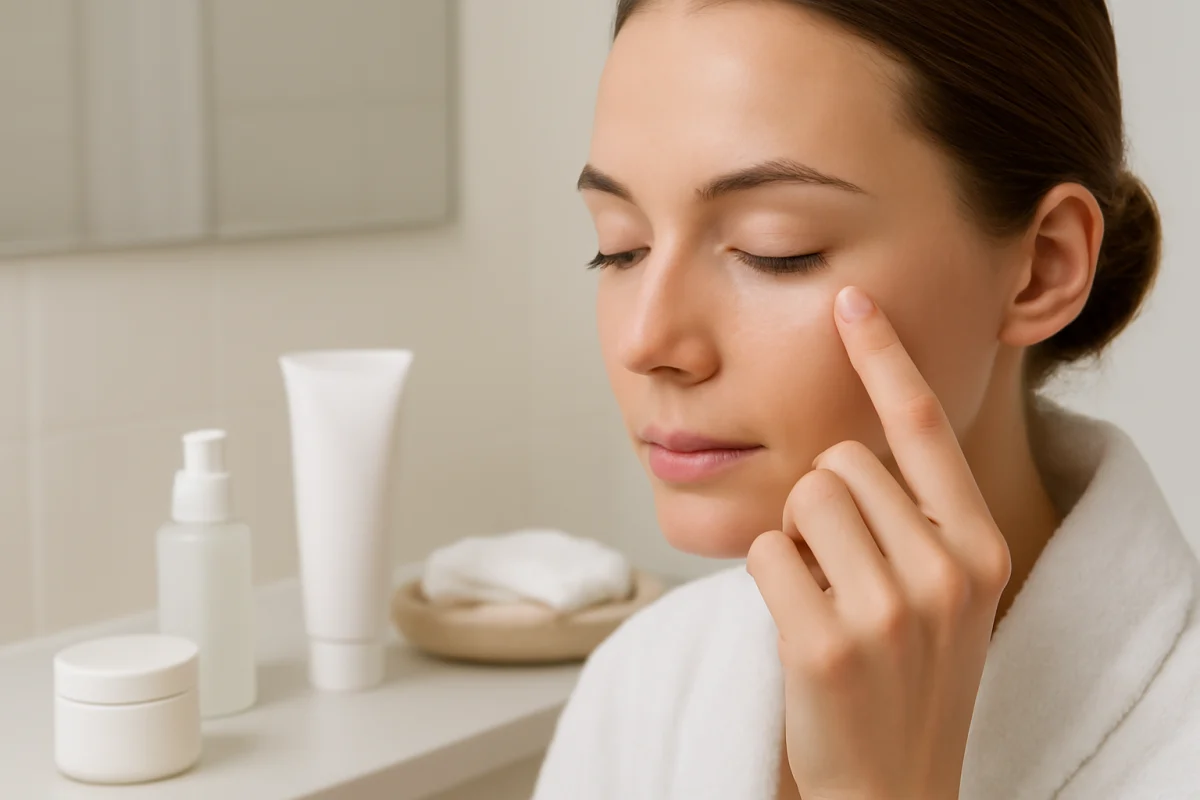
To stop eye cream from pilling, use less product, apply it to clean skin in a thin layer, allow each step to settle, and avoid rubbing the under-eye area. Pilling happens when skincare forms small flakes, rolls, or crumbs on the surface instead of blending in. The problem is usually related to application technique, product texture, layering, or the interaction between formulas—not necessarily a sign that the eye cream is ineffective.
A smooth application can make the under-eye area look more even, especially before concealer or sunscreen. However, preventing pilling will not diagnose or treat dark circles, puffiness, fine lines, or any underlying skin condition. The goal is a more comfortable routine and a smoother cosmetic finish.
Why does eye cream pill?
Eye cream can pill when one or more products do not spread well together. As you massage the layers, ingredients and film-forming materials may gather into tiny rolls. The same thing can happen if the skin is coated with too much product or if a formula has not had enough time to set.
Common causes of pilling
- Applying too much: A thick layer leaves more material on the surface, where it is more likely to move and bunch up.
- Rubbing repeatedly: Friction can lift partially absorbed skincare and turn it into visible flakes or rolls.
- Layering too quickly: Applying moisturizer, sunscreen, makeup, or another treatment immediately afterward can disturb the eye cream.
- Incompatible textures: A rich balm, silicone-feeling primer, gel, or film-forming product may not layer smoothly with every formula.
- Applying over damp skin: Slightly damp skin can be useful for some moisturizing products, but excess water may make a layer more slippery and harder to set.
- Dry or flaky skin: Loose surface skin can combine with product and create visible crumbs.
- Product changes: Formulas may change over time, and a product can also become less uniform if it has been exposed to heat, air, or contamination.
Use a smaller amount
The easiest adjustment is to reduce the amount of eye cream. Start with a very small dot for each eye and spread it between your ring fingers before applying. The product should leave a light, comfortable layer rather than a thick, shiny coating.
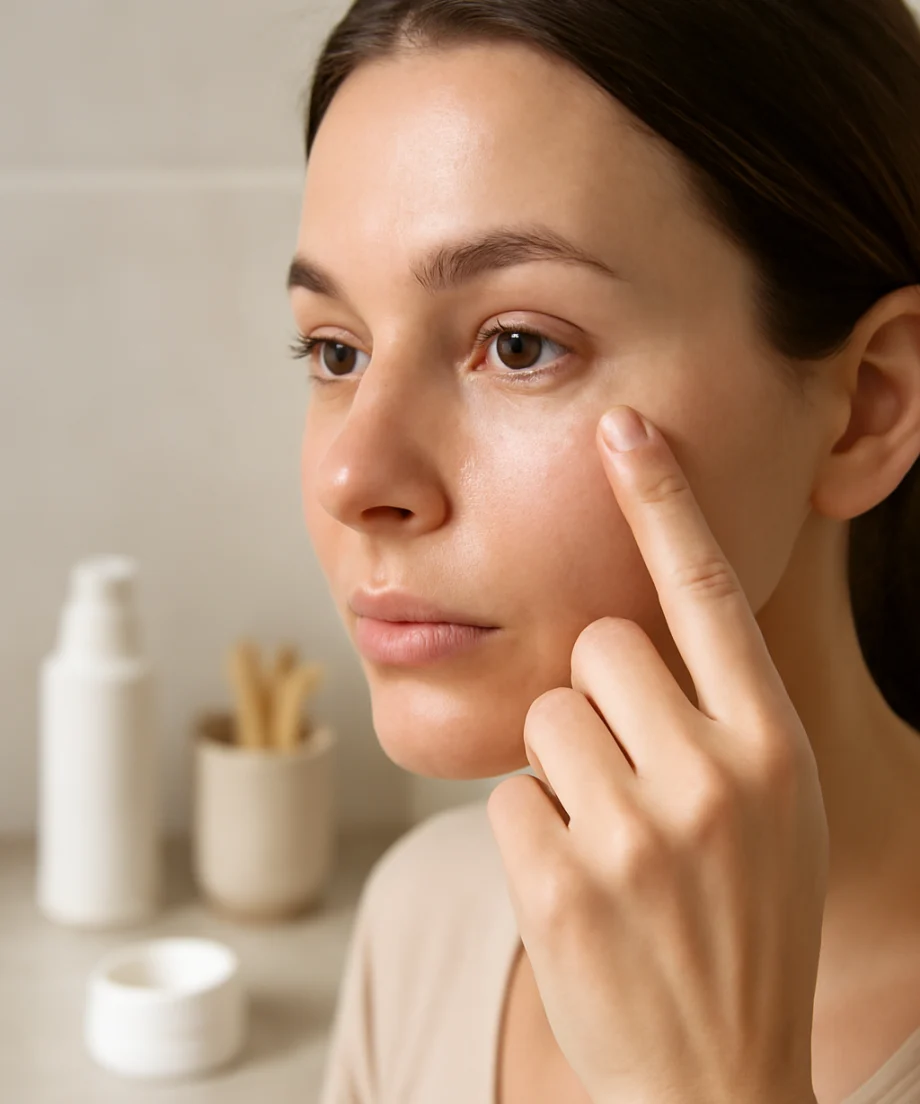
More eye cream does not necessarily provide more visible benefit. The skin around the eyes is a small area, so a large amount can remain on the surface. If the area still feels dry after the product has settled, you can reassess the formula or add a small amount rather than applying a heavy layer all at once.
Keep the product on the orbital area recommended by the label and avoid placing it directly into the eyes. If the package gives specific application instructions, follow those directions.
Apply eye cream with less friction
Instead of massaging continuously, gently tap the product onto the skin. Use light pressure and move around the orbital area without repeatedly sweeping back and forth. You do not need to work the product into the skin until it feels completely invisible.
A practical technique is to place small dots under each eye and lightly press them into place with your ring finger. Once the product looks evenly distributed, stop touching the area. Continued rubbing is one of the most common reasons a thin layer starts to roll.

If pilling appears only when you apply concealer, the makeup application may be contributing to the problem. Try pressing concealer on with a sponge or fingertip instead of dragging it across the skin. Clean tools also help reduce the chance of moving loose product around the eye area.
Give each layer time to settle
Layering several products in rapid succession can create a crowded surface. After applying eye cream, wait until it no longer feels wet or slippery before adding moisturizer, sunscreen, primer, or makeup. The appropriate waiting time depends on the product texture, the amount used, humidity, and your skin.
You do not need to follow a complicated schedule. The key is to watch how the layer feels. If it is still visibly wet, tacky, or prone to movement, give it more time. If your routine begins to pill after adding a particular product, apply that product later or test a simpler combination.
In the morning, sunscreen is generally the final skincare step before makeup. Keep sunscreen application consistent and follow its label directions. Because sunscreen formulas vary, check how the current product layers with your eye cream rather than assuming every combination will behave the same way.
Simplify the routine to identify the problem
When you cannot tell which product is causing the pilling, temporarily simplify the routine. Use a gentle cleanser, one eye product, and the other basic steps you need. Add products back one at a time so you can observe which layer changes the texture.
For example, if eye cream pills only when used with a particular serum, primer, or sunscreen, the combination may be the issue. That does not mean either product is universally unsuitable. It may simply mean the formulas do not work well together on your skin or require a different application order.
Keep notes about the product order, amount, and whether your skin was damp or dry. Small changes can make a noticeable difference. You can also use the under-eye routine builder to think through a simpler routine based on your concerns and skin type.
Consider the texture of your eye cream
Light gels, creams, emulsions, and balms can all be appropriate choices, but they may behave differently under makeup. A rich formula may feel comfortable on dry skin yet remain more noticeable beneath concealer. A lightweight gel may layer easily for some people but feel less nourishing if the skin is very dry.
Choose a texture based on how your skin feels and how you plan to use it. If pilling happens mainly in the morning, consider using a lighter layer or reserving a richer product for nighttime, provided the product label supports that use. If you have sensitive or dry skin, make changes gradually rather than replacing several products at once.
Product descriptions and ingredient lists can change. Before relying on a specific formula, check the current packaging or the manufacturer’s ingredient list. Our eye cream ingredient guide can also help you understand common skincare ingredients without treating any ingredient as a guaranteed solution for a particular concern.
Adjust your routine for dry or flaky under-eye skin
When the under-eye area is visibly flaky, pilling may be a combination of loose skin and product buildup. Avoid scrubbing, picking, or using a harsh exfoliant near the eyes. The area is delicate, and aggressive friction can make discomfort and visible dryness worse.
Instead, use a gentle cleanser and apply a modest amount of moisturizer or eye cream. If you use an active such as retinol, an exfoliating acid, or a strong vitamin C product, follow the product label carefully. These ingredients can be irritating for some people, particularly around the eyes. Introduce potentially irritating products cautiously, consider a patch test when appropriate, and stop using a product if you develop burning, persistent redness, swelling, or other irritation.
For more routine ideas, see guidance for sensitive skin or dry skin. Persistent irritation, significant swelling, pain, or changes in vision should be discussed with a qualified medical professional rather than managed only with cosmetic products.
What to do when pilling starts during the day
If the product has already begun to pill, avoid adding more cream on top. First, gently press the area with a clean fingertip or soft tissue to lift loose residue. Do not scrub the skin. If makeup is involved, you may need to carefully remove the affected area and reapply a very thin layer of skincare after the skin is clean.
For a quick adjustment, use less eye cream the next time and allow it to settle longer. You can also apply concealer only where you want coverage rather than layering it across the entire under-eye area. This reduces the amount of product that must blend together.
When should you replace an eye cream?
Pilling alone does not automatically mean a product has gone bad. However, a noticeable change in smell, color, texture, or performance may be a reason to stop and review the product’s storage and expiration guidance. Do not use a product that causes irritation or appears contaminated.
Store eye cream as directed on the packaging and keep the container clean. Avoid introducing water or other products into the container. Since formulas and packaging can change, verify the current label and manufacturer information when product-specific details matter.
A simple anti-pilling application order
- Cleanse gently and pat the skin dry, unless the product label recommends another approach.
- Apply any watery skincare products that you intend to use around the eyes.
- Use a small amount of eye cream and distribute it with light tapping motions.
- Stop touching the area once the product is evenly spread.
- Allow the layer to settle before applying moisturizer, sunscreen, primer, or makeup.
- Press makeup onto the skin instead of dragging it across the under-eye area.
If pilling continues, remove one product from the sequence and test the routine again. This process can help you determine whether the issue is the amount, order, waiting time, texture, or combination of products. A smoother finish often comes from using fewer layers and less friction—not from applying more product.




Comments
0No comments yet. Be the first to share a helpful note or question.
Leave a Comment
Your email address will not be published. Comments are reviewed before appearing on the site.