
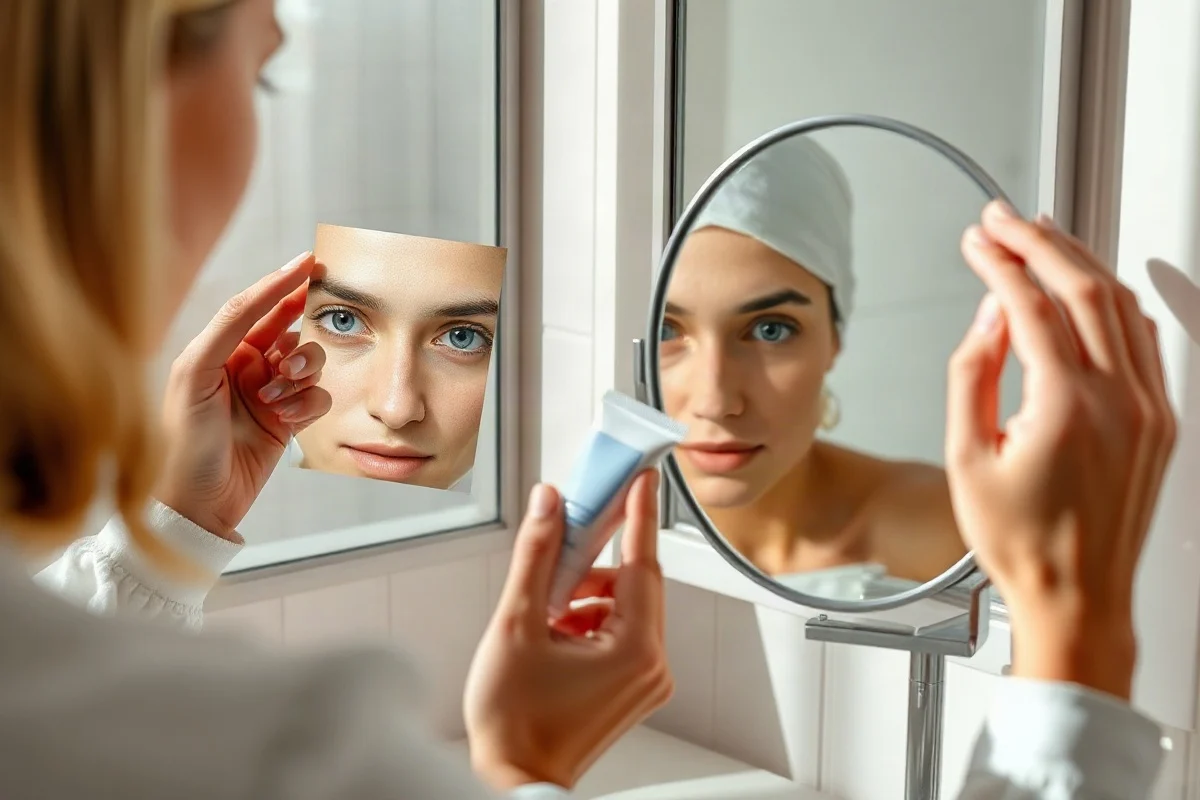
An eye cream is probably working when the specific concern you chose it for looks or feels modestly improved over time—not simply when the area feels slippery immediately after application. To evaluate it fairly, identify whether you are targeting dryness, puffiness, the appearance of dark circles, or fine lines; take consistent comparison photos; use the product as directed; and give the routine enough time to show a pattern. Eye creams can improve the look of the skin, but they cannot guarantee that every type of dark circle, bag, or line will disappear.
Start with the concern you actually want to change
“Eye cream” is a broad product category, not a single treatment for every under-eye concern. The most useful first step is to name the visible change you hope to see. A formula that makes dry skin look smoother may not noticeably affect brown discoloration. A lightweight product that feels comfortable in the morning may do little for structural puffiness. If your goal is unclear, it becomes easy to switch products too quickly or judge a formula against a benefit it was never designed to provide.
Dryness and a rough, crepey appearance
Signs of improvement may include less tightness, reduced flaking, and a smoother look when you apply concealer. Hydrating ingredients can temporarily make fine dehydration lines appear less noticeable by increasing the skin’s surface moisture. That is a cosmetic effect, and it may fade if you stop using the product or if the surrounding routine remains drying.
Fine lines
Look for a gradual improvement in how lines appear when the area is relaxed, rather than expecting them to vanish. Moisturizers may soften the look of lines caused partly by dryness. Ingredients such as retinoids may support changes in the appearance and texture of skin over a longer period, but they can also irritate the delicate eye area. Follow the product label carefully, introduce potentially irritating actives cautiously, and stop using the product if you develop persistent burning, redness, swelling, or significant discomfort.
Dark circles
Dark circles have more than one possible visual cause. The appearance may be influenced by pigmentation, visible blood vessels, shadows from facial structure, thin-looking skin, dryness, or temporary fatigue. An eye cream may make the area look more hydrated or brighter without changing the underlying reason for the darkness. For background information, see our guide to dark circles.
Puffiness
Morning puffiness can change naturally from day to day, so it is one of the hardest concerns to judge from a single glance. A cool application, gentle massage, or a formula that temporarily tightens the feel of the skin may make the area look less swollen for a while. That does not necessarily mean the product has changed the longer-term cause of the puffiness. Compare the area under similar conditions before deciding whether the effect is consistent.
Separate an immediate effect from a lasting-looking pattern
Some changes can be noticed within minutes. A moisturizing formula may reduce the look of dryness, while a reflective or smoothing texture may make the under-eye area appear more even. These are legitimate cosmetic effects, but they are not the same as a lasting change in pigmentation, skin texture, or puffiness.
Other changes require repeated use. Skin-supporting ingredients generally need time before you can assess whether they are making a meaningful difference in appearance. The appropriate timeline depends on the formula, the concern, your skin, and how consistently you use it. Rather than relying on a promised number of days, look for a gradual trend across several weeks and follow the product’s directions.
A useful test is to ask two questions: Does the area look better shortly after application? And does it still look better at a consistent point later in the day or week? If the answer is yes only immediately after application, the product may be providing temporary hydration, smoothing, or light-reflecting benefits rather than a more sustained visible change.
Use a simple comparison method
Memory is unreliable, especially for changes that happen slowly. A basic tracking method can make your evaluation more objective without turning skincare into a laboratory experiment.
- Take a baseline photo before starting, using the same room, lighting, camera distance, and facial expression.
- Photograph the area at a consistent interval rather than checking it repeatedly throughout the day.
- Keep the rest of your routine as stable as reasonably possible while you evaluate the eye cream.
- Record relevant factors such as poor sleep, seasonal dryness, allergies, sun exposure, or unusually salty meals.
- Note both benefits and drawbacks, including stinging, watering, milia-like bumps, pilling, or makeup separation.
Do not take photos immediately after applying a product if you are trying to assess its broader effect. Occlusive ingredients, shine, and temporary surface hydration can make the area look different for reasons that may not persist. Comparing clean, dry skin under similar lighting is usually more informative.
Check whether your application habits are affecting the result
Using more product does not automatically produce a better result. A small amount is often enough for both eyes, but the correct amount depends on the product directions and texture. Applying too much can lead to migration into the eyes, pilling, greasiness, or concealer that settles into lines.
Apply the product only where the label recommends. Unless the instructions say otherwise, avoid placing it directly into the eye, on the lash line, or on irritated or broken skin. Use a light touch instead of rubbing the area. Vigorous rubbing can increase discomfort and may make temporary redness more noticeable.
Order can also matter for comfort and appearance. Water-light products are commonly applied before thicker creams, while sunscreen should be used during the daytime as directed. If you layer several products around the eyes, introduce them one at a time so you can identify which product is helping or causing a reaction.
Look at the ingredient category, not just the front label
Product names can suggest a goal, but the ingredient list gives you more useful information about what the formula is intended to do. Hydrators and emollients may help reduce the look of dryness. Caffeine-containing products are often chosen for the temporary appearance of morning puffiness, although the experience can vary. Brightening ingredients may be included for the appearance of uneven tone, while retinoid products are generally selected for the look of fine lines and texture.
These categories are not guarantees. An ingredient’s position on the ingredient list does not tell you everything about the finished formula, and the same ingredient can feel different depending on the product’s overall composition. Formulas can change, so verify the current packaging and manufacturer ingredient list when a specific ingredient or product detail matters to your decision. Our eye cream ingredient guide can help you compare common categories without treating any one ingredient as a universal solution.
Know when an eye cream may not be the right answer
An eye cream may have limited visible impact when the main concern is a pronounced shadow from facial structure, a persistent pocket of puffiness, or discoloration that does not respond to a cosmetic routine. It may also be difficult to see a difference if the product is used irregularly, if another source of irritation is present, or if expectations are based on heavily edited images.
Sun protection is also relevant to the appearance of uneven tone and signs of aging. Use a broad-spectrum sunscreen as directed on suitable surrounding skin, and use sunglasses or other sun-protective habits when appropriate. Be careful around the eyes, since many sunscreens can sting or migrate. A separate eye cream cannot compensate for every part of an inconsistent skincare routine.
If the area becomes suddenly swollen, painful, very itchy, develops a rash, affects vision, or changes in a way that concerns you, do not try to diagnose the problem with skincare. Stop products that appear to worsen the reaction and seek advice from a qualified medical professional. Cosmetic guidance is not a substitute for evaluation of a new or persistent eye-area symptom.
Signs you should reconsider the product
A product is not a good fit simply because it is popular or expensive. Reconsider it if it repeatedly causes burning, itching, scaling, redness, watering, or swelling. Fragrance, exfoliating acids, retinoids, and other active ingredients may be more challenging for sensitive skin, though any formula can cause a reaction. Follow the label, patch test when appropriate, and introduce one new product at a time. If irritation develops, stop using the product rather than trying to push through it.
Also reconsider a formula that consistently pills, interferes with sunscreen or makeup, feels uncomfortable, or leaves the area drier. A product you can use comfortably and consistently may be more useful than one with an appealing ingredient list that you cannot tolerate.
How to make a fair final decision
After using the product according to its directions for a reasonable evaluation period, review your original goal. Is the change visible in consistent photos? Does the benefit last beyond the first few minutes? Is the improvement large enough to matter to you? Are there unwanted effects that outweigh the benefit?
If the answer is no, that does not automatically mean the eye cream is defective. It may be aimed at a different concern, or your particular under-eye appearance may not be especially responsive to a topical cosmetic product. You can compare another formula, simplify your routine, or choose to keep the product only if you like its immediate moisturizing or smoothing effect. For help organizing products around a specific concern, use an under-eye routine builder.
The most realistic definition of “working” is not a dramatic transformation. It is a repeatable, visible improvement in the concern you selected, with a texture and application experience you can tolerate. Consistent observation, realistic expectations, and attention to comfort will tell you more than a bold promise on a package.

I’d be interested in reading more about the difference between shadows from puffiness and actual skin discoloration.