
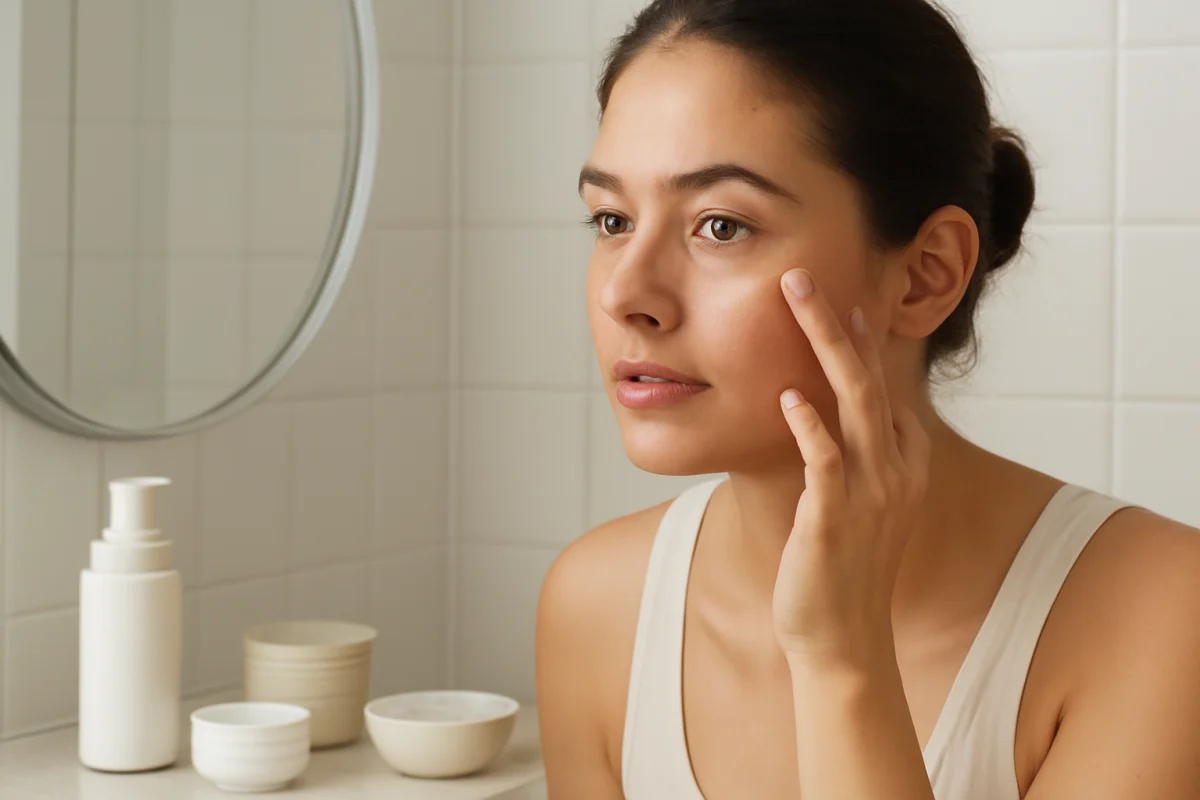
Apply caffeine eye cream in a small amount to clean, dry skin around the orbital area, usually before moisturizer and sunscreen in the morning. Use your ring finger to gently tap the product along the under-eye area without rubbing, pulling, or applying it too close to the eyes. Caffeine eye cream may temporarily make puffiness look less noticeable and can help hydrate the delicate skin, but it cannot permanently remove dark circles or diagnose and treat the reasons they appear.
What caffeine eye cream can and cannot do
Caffeine is commonly used in eye-area skincare because it has a temporarily constricting effect on blood vessels at the skin’s surface. In practical terms, a caffeine product may make some under-eye puffiness look reduced for a while, particularly when puffiness is most noticeable after waking. The visible effect can vary from person to person and may depend on the rest of the formula, the cause of the discoloration, and how much swelling is present.
An eye cream may also improve the look of the under-eye area by adding moisture. Hydrated skin can appear smoother and make fine lines look less pronounced temporarily. That is a cosmetic appearance benefit, not the same as changing the underlying structure of the skin.
Dark circles have several possible contributors, including visible blood vessels, shadows from facial structure, pigmentation, thin or dry skin, and temporary congestion. Caffeine is not a universal solution for all of these concerns. It is also not a treatment for a medical condition, an allergy, an infection, or another cause of persistent swelling or discoloration. For more background, see our guide to dark circles.
When to use caffeine eye cream
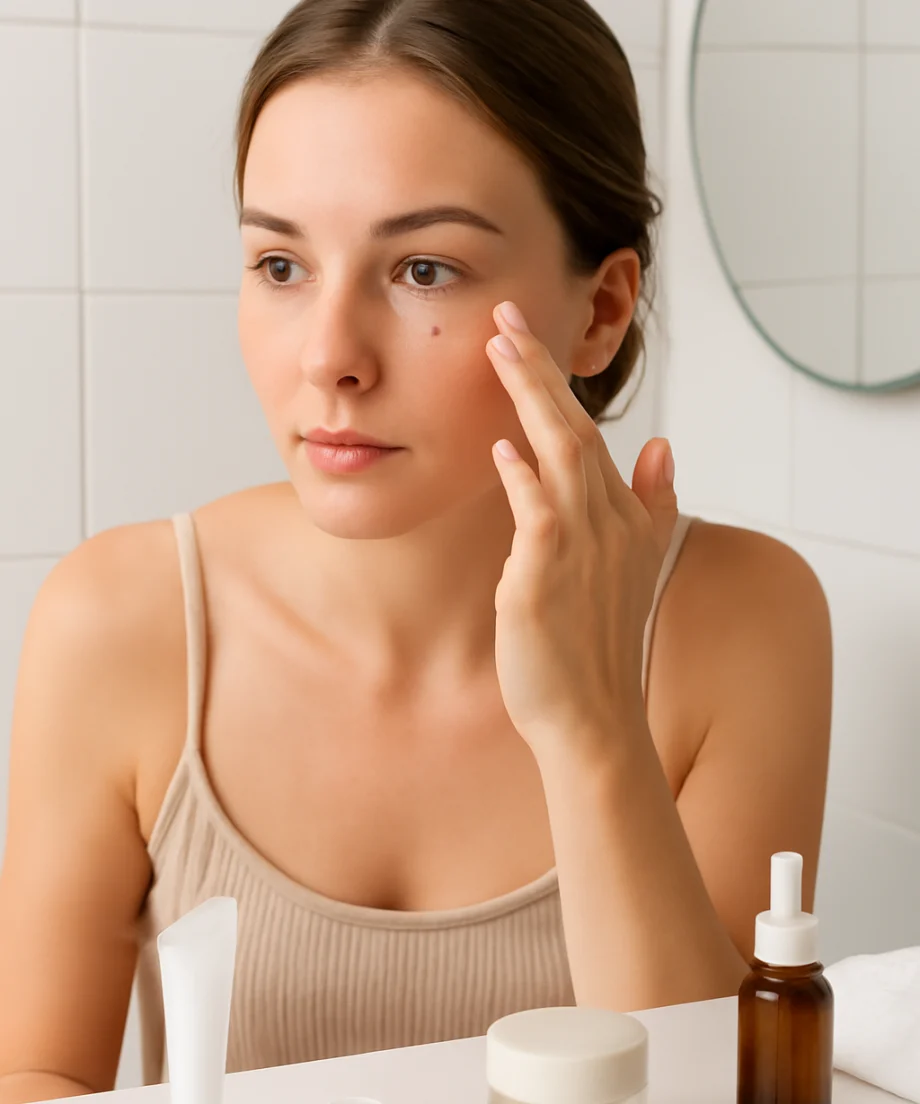
Many people choose to use caffeine eye cream in the morning, when under-eye puffiness may be more noticeable. Morning application also makes it easier to pair the product with a broad-spectrum sunscreen intended for use around the eyes, while avoiding direct contact with the eyes.
Some caffeine eye creams are labeled for use once or twice daily. Follow the directions on the current product label rather than assuming that more frequent application will produce better results. The formula may contain additional ingredients that affect when and how often it should be used.
If the product is intended for both morning and evening use, you can apply it after cleansing and before heavier skincare. If the label recommends morning use only, keep it in that part of your routine. A separate evening eye cream may be more appropriate if your main nighttime concern is dryness or fine lines.
How to apply caffeine eye cream step by step
1. Cleanse your face gently
Start with clean skin and dry your face by patting, not scrubbing. If you use a cleanser that leaves the eye area feeling tight or stinging, consider a gentler option and avoid getting cleanser directly into the eyes. Applying skincare to irritated skin can make discomfort more likely.
2. Use a small amount
Eye creams are applied to a relatively small area, so begin with less than you think you need. A thin layer is generally sufficient to cover the under-eye area. The product’s instructions should take priority, especially if the packaging specifies a particular amount.
Using too much can leave the skin feeling greasy, increase the chance of product migration into the eyes, or cause concealer to slide and crease. If the product pills, allow each layer of skincare to settle before adding the next one and try using a smaller amount.
3. Place it around the orbital area
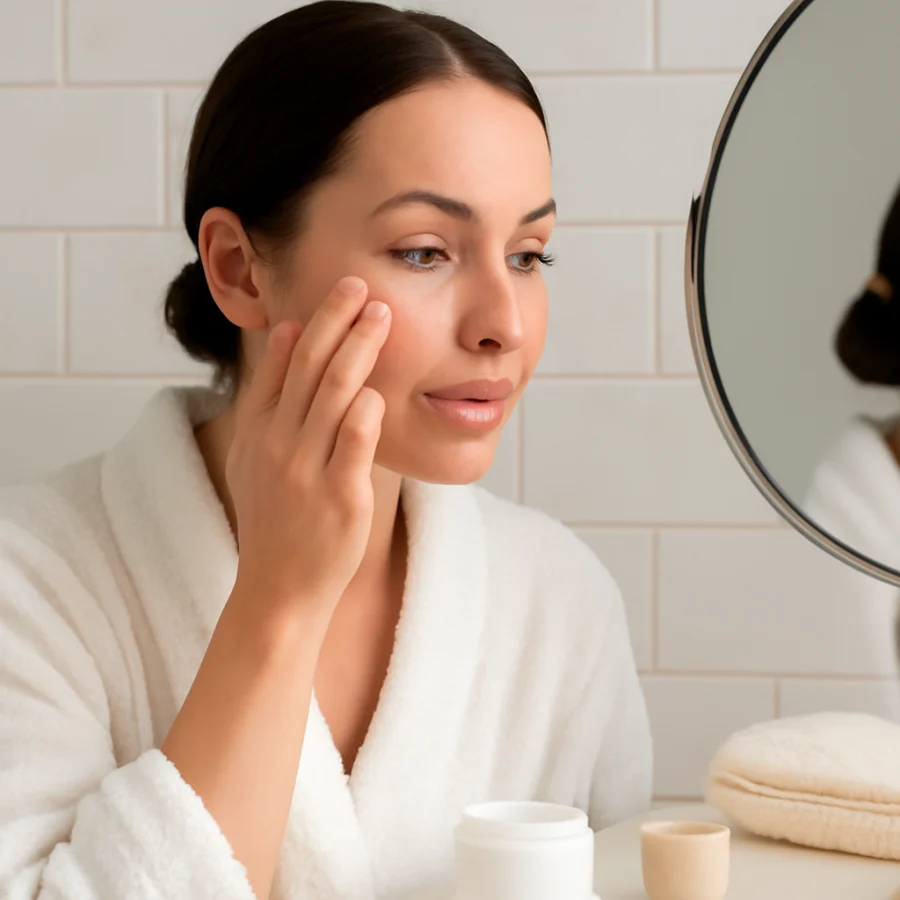
Dot the eye cream along the orbital bone beneath the eye rather than applying it directly to the lower lash line or eyelid unless the label specifically says it is suitable there. Keep the product away from the eye itself. Skincare labeled for the eye area is not automatically safe to use inside the eye.
4. Tap gently with your ring finger
Use your ring finger or another finger that allows a light touch to gently pat the product into the skin. Avoid dragging the skin back and forth. The goal is to distribute a thin layer, not to massage forcefully or create friction.
If you notice that tapping causes the area to become red or uncomfortable, use less pressure and less product. Persistent discomfort is a reason to stop rather than push through the reaction.
5. Finish with moisturizer and sunscreen
Apply moisturizer as needed, taking care not to layer products so close to the eye that they migrate into it. In the morning, use sunscreen according to its label and follow the product’s eye-area directions. Sunglasses and a hat can also help limit squinting and sun exposure, although they do not replace sunscreen where sunscreen is appropriate.
Where caffeine eye cream fits in a routine
A simple morning routine might look like this:
- Gentle cleanser, if needed
- Hydrating serum, if you use one and it is suitable for the eye area
- Caffeine eye cream
- Facial moisturizer
- Broad-spectrum sunscreen
Not every product needs to be applied around the eyes. Check each label before using a facial serum or active treatment in this area. The skin around the eyes can be more reactive than other parts of the face, and products designed for the cheeks or forehead may be unsuitable near the eyes.
If you use makeup, allow the skincare to settle before applying concealer. Rubbing or layering too quickly can cause pilling and may increase irritation. A thin layer of eye cream is usually easier to wear under makeup than a heavy application.
How to choose a caffeine eye cream
Start with the concern you want to address. If your main issue is morning puffiness, look for a lightweight product with clear directions for the eye area. If dryness makes the area look creased, a formula that also provides comfortable hydration may be more useful than focusing on caffeine alone.
Read the entire ingredient list and the use instructions. Caffeine may appear alongside humectants, emollients, soothing ingredients, or other active ingredients. Formula details can change, so verify the current packaging or the manufacturer’s ingredient list before buying or using a product. Do not rely on an older product description if the exact formula matters to you.
People with sensitive skin may prefer a shorter, simpler routine and may want to avoid products with ingredients they already know cause a reaction. Fragrance and certain preservatives are tolerated by many people but can bother some users. If you need help planning a gentler routine, see our guide to eye creams for sensitive skin.
Patch testing and irritation precautions
Before applying a new eye cream close to the eyes, consider testing a small amount on another area of skin according to the product’s directions. A patch test cannot guarantee that a product will not irritate the eye area, but it can help you notice an obvious reaction before full use.
Follow the label, avoid applying the product to broken or irritated skin, and wash your hands before application. Stop using the product if you develop burning, persistent redness, itching, swelling, a rash, or worsening discomfort. If product gets into the eye, rinse with clean water. Seek medical advice for severe, persistent, or concerning symptoms.
Do not use caffeine eye cream as a substitute for evaluation of sudden, painful, one-sided, or persistent swelling. Skincare can address appearance, but it cannot determine why a symptom is occurring.
Common mistakes to avoid
Applying it too close to the eye
Eye creams can spread with warmth, movement, and blinking. Applying a little farther from the lash line can reduce the chance of migration into the eye. Follow the label if it gives a specific application area.
Rubbing the skin
Rubbing does not make caffeine work faster. It can create unnecessary friction and may make the area look temporarily red. Gentle tapping is enough.
Expecting caffeine to erase every type of dark circle
Caffeine may temporarily improve the appearance of some puffiness, but dark circles caused by pigmentation, facial shadows, visible vessels, or inherited features may not respond noticeably. A product that helps one concern may do little for another.
Using several strong actives at once
Some eye products combine caffeine with ingredients such as retinoids, exfoliating acids, or brightening agents. These ingredients may have different precautions and may increase the chance of irritation when layered carelessly. Introduce one new active at a time, follow the label, and avoid adding multiple unfamiliar products at once.
How long should you use it?
You may notice a cosmetic change in puffiness after application, but the timing and degree of any visible effect are not guaranteed. Hydration-related improvements can also vary depending on the formula and your skin’s condition. Use the product consistently as directed and assess whether the area looks and feels better over time rather than applying extra product.
If you see no benefit after reasonable, label-directed use, the product may simply not match your main concern. You could review other routine options with our under-eye routine builder or compare ingredients using our eye cream ingredient guide.
What to expect realistically
Caffeine eye cream is best viewed as an optional cosmetic step for temporarily refreshing the appearance of the under-eye area. It may be most useful for people who notice occasional puffiness and want a lightweight product that fits into a morning routine. It is less likely to transform dark circles that are primarily related to pigmentation, anatomy, or long-standing skin changes.
Apply it gently, use the amount directed, protect the area from unnecessary irritation, and judge the product by realistic cosmetic expectations. If swelling or discoloration is new, persistent, painful, or accompanied by other symptoms, skincare alone is not the right way to investigate it.




Comments
0No comments yet. Be the first to share a helpful note or question.
Leave a Comment
Your email address will not be published. Comments are reviewed before appearing on the site.