
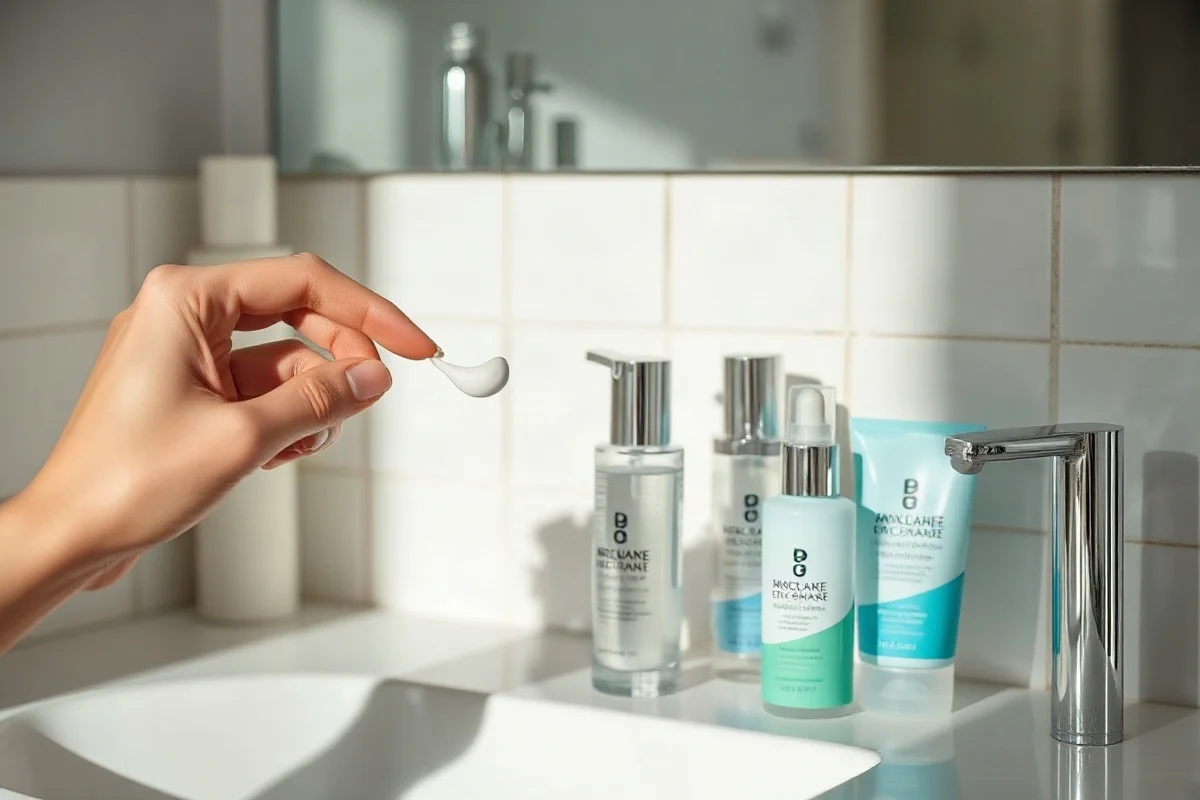
The gentlest way to introduce a new eye cream is to add only one product at a time, start with a small amount on a limited schedule, and watch your skin for several days before increasing use. Patch testing can help you identify obvious irritation, but it cannot guarantee that a product will feel comfortable around the eyes. If burning, persistent redness, swelling, rash, or worsening discomfort develops, stop using the product and avoid adding other new products until your skin settles.
The skin around the eyes is often more delicate than the skin on the rest of the face. Blinking, rubbing, makeup removal, dry air, and exposure to multiple products can all make this area feel easily overwhelmed. A careful introduction is especially useful if your routine already includes potentially irritating ingredients or if you have a history of sensitivity.
Start with a simple routine
Before adding an eye cream, keep the rest of your routine as predictable as possible. This makes it easier to notice whether the new product is contributing to a reaction. For several days, use familiar products that your skin already tolerates, such as a gentle cleanser, a basic moisturizer, and daytime sun protection if appropriate for your routine.
Avoid introducing a new eye cream at the same time as a new cleanser, serum, exfoliant, makeup remover, or sunscreen. If several products change at once, it becomes difficult to identify the source of dryness, stinging, or redness.
You may also want to avoid testing a new product immediately before an event, trip, or change in climate. Give yourself enough time to observe your skin without feeling pressured to continue if the product does not feel right.
Read the label before applying
An eye cream is not automatically gentle simply because it is marketed for the eye area. The formula may contain ingredients intended to improve the appearance of fine lines, uneven tone, puffiness, or dryness, and some of those ingredients may be more challenging for sensitive skin.
Look for the product’s directions, warnings, recommended frequency, and storage instructions. If the formula contains a potentially irritating active, follow the label rather than using it more often in hopes of seeing faster cosmetic changes. Formulas can change, so check the current package and, when product-specific details matter, verify the latest ingredient list from the manufacturer.
For more background on common ingredients, you can browse the eye cream ingredient guide. Ingredient names alone do not predict exactly how a product will feel, because the overall formula, concentration, packaging, and your own skin can all affect tolerability.
Patch test cautiously
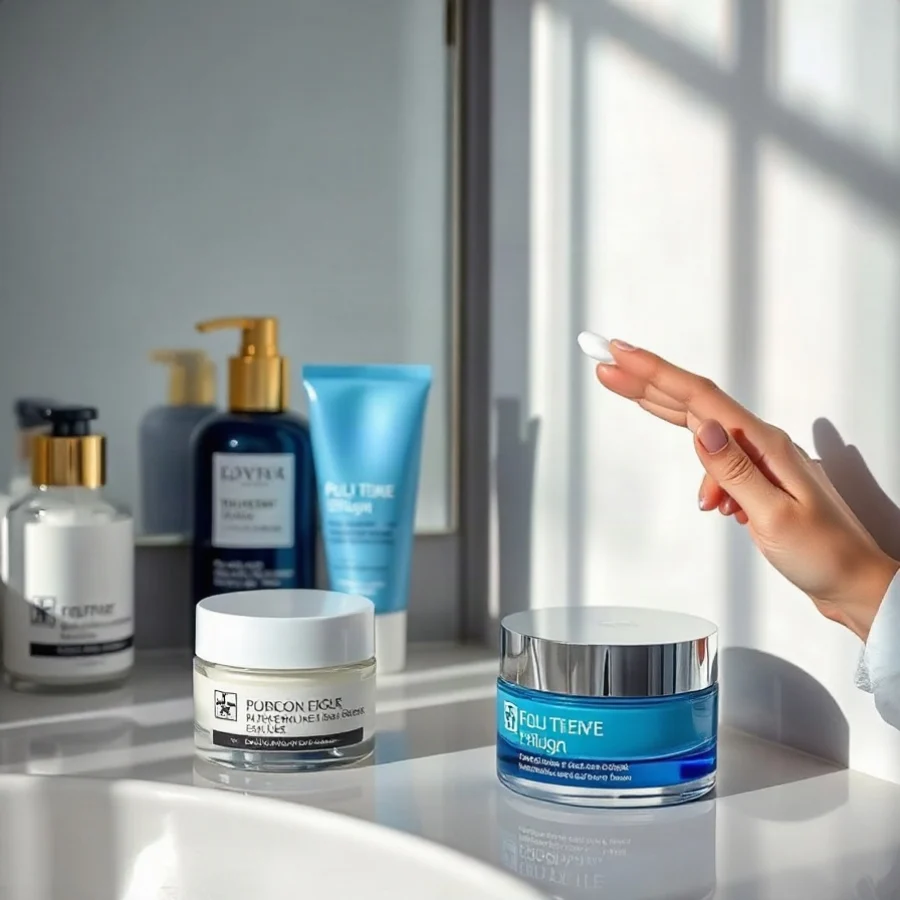
A patch test is a screening step, not a guarantee of safety. To test a new eye cream, apply a small amount to an inconspicuous area where the skin is relatively similar but not directly on the eyelid or close to the eye. The inner forearm or a small area near the jaw may be practical options, depending on the product directions.
Use the product according to the label and observe the area over the period recommended by the manufacturer. Watch for itching, burning, persistent redness, swelling, bumps, or a rash. If a reaction appears, wash the area gently if needed and stop using the product. Do not apply a product near the eyes if it has already caused a concerning reaction elsewhere.
A patch test may not reproduce the conditions around your eyes. The eyelid area can be more reactive, and products may migrate with sweat, rubbing, or normal movement. When you begin using the product around your eyes, use an especially small amount and keep it away from the lash line and the eye itself unless the label specifically directs otherwise.
Introduce the product gradually
Once the patch test is reassuring, begin with a small amount on one or both sides as directed. Many eye creams require only a thin layer. Applying more does not necessarily improve the cosmetic effect and may increase the chance of migration into the eyes or contact with surrounding skin.
A cautious first-week approach
- First use: Apply a small amount to clean, dry skin, following the product’s directions.
- Next few applications: If your skin remains comfortable, use it on a limited schedule rather than immediately applying it morning and night.
- After several comfortable uses: Consider increasing frequency only if the label allows it and your skin shows no signs of irritation.
There is no universal schedule that works for every formula or every person. A basic hydrating eye cream may be easier to introduce than one containing a retinoid, exfoliating acid, or another active designed to address the appearance of texture or discoloration. When in doubt, choose the more conservative schedule.
Choose application timing carefully
Nighttime can be a convenient starting point because it reduces the number of products layered over the eye area. However, some people prefer morning use, particularly when the eye cream is mainly intended to add hydration or create a smoother base for makeup. The best timing depends on the product directions and what your skin tolerates.
Apply eye cream after lighter water-based products and before a moisturizer, unless the product directions suggest another order. If you use a potentially irritating active elsewhere on your face, avoid automatically extending it to the eye area. The skin around the eyes may need a separate, more cautious approach.
Keep active eye products away from the immediate eyelid margin unless specifically labeled for that area. Avoid getting any eye cream in the eye. If accidental contact causes significant discomfort, rinse with clean water and seek appropriate medical advice if symptoms persist or vision is affected.
Be selective with active ingredients
The right ingredient depends on your goal, but “stronger” does not always mean better for sensitive skin. Consider the type of cosmetic concern you want to address and whether a simple moisturizing formula may be enough.
For dryness and a tight feeling
Look for a formula focused on hydration and barrier support. Ingredients such as humectants, emollients, and occlusive agents may help the skin feel softer and look temporarily smoother by improving its moisture balance. These effects are cosmetic and may be most noticeable when dryness is contributing to a crepey or tired appearance.
For the appearance of puffiness
Some eye creams include caffeine or other ingredients marketed for a fresher-looking eye area. Results can vary, and puffiness may fluctuate with sleep, allergies, crying, salt intake, fluid shifts, and genetics. An eye cream should not be treated as a diagnosis or treatment for persistent swelling. You can learn more through the site’s coverage of puffiness and eye bags.
For the appearance of fine lines
Hydration can temporarily make fine lines look less noticeable. Some formulas use retinoids or other active ingredients aimed at improving the look of texture over time, but these ingredients may be more likely to cause dryness or irritation. Introduce them slowly, follow the label, and do not combine multiple potentially irritating products around the eyes without a clear reason.
For uneven-looking tone
Brightening ingredients are often included in products for the appearance of dark circles. Dark circles can have multiple visible contributors, including shadowing, pigmentation, blood-vessel visibility, and the structure of the under-eye area. A cosmetic product may improve the look of some contributors without eliminating every type of dark circle. For broader context, see the dark circles guide.
Use less product than you think
One of the most common introduction mistakes is applying too much. A thin layer is usually sufficient for the under-eye area. Use a clean finger, apply with light tapping rather than rubbing, and distribute the product along the orbital area as directed. Vigorous rubbing can add unnecessary friction and may make the area look temporarily red or irritated.
If the product pills, feels heavy, or migrates into your eyes, reduce the amount and allow each layer to settle before applying the next one. If the problem continues, the formula or product combination may not suit your routine.
Know when to pause
Stop using the new eye cream if you develop burning, persistent stinging, significant dryness, redness, itching, swelling, scaling, or a rash. Do not try to push through a reaction because you hope the product will eventually work. Return to familiar products that your skin tolerates and avoid adding another active until the area feels normal again.
Seek medical care for severe swelling, pain, blistering, breathing difficulty, changes in vision, or symptoms that do not improve after stopping the product. Persistent or sudden changes around the eyes can have causes that skincare cannot address, so an eye cream should not replace professional evaluation.
Assess the product realistically
Give a new eye cream enough time for you to evaluate comfort and consistency, but do not treat a long adjustment period as proof that irritation is necessary. Hydration and temporary smoothing may be visible relatively quickly, while other cosmetic changes may be subtle and take longer. Some concerns may not respond noticeably to topical skincare because of their underlying cause or anatomy.
Take note of how your skin feels, whether makeup applies differently, and whether the product causes dryness or watering. You do not need to keep a product simply because it is popular or expensive. Comfort, compatibility, and realistic expectations matter more than a complicated routine.
Build the rest of your routine around tolerance
After you have introduced the eye cream successfully, resist the urge to add several more products immediately. A simple routine is easier to maintain and easier to troubleshoot. If you want help organizing products by skin type and concern, the under-eye routine builder can provide a starting framework.
Finally, remember that an eye cream is a cosmetic product intended to improve the appearance or feel of the skin. It may help with hydration, temporary smoothness, or a fresher-looking appearance, but it cannot guarantee that dark circles, puffiness, or fine lines will disappear. A slow introduction lets you judge the product on its actual performance while giving sensitive skin the best chance of staying comfortable.

Comments
0No comments yet. Be the first to share a helpful note or question.
Leave a Comment
Your email address will not be published. Comments are reviewed before appearing on the site.