

The best moisturizer for dry sensitive skin is usually a simple, fragrance-free formula that helps reduce moisture loss without adding unnecessary potential irritants. Look for barrier-supporting ingredients such as ceramides, glycerin, squalane, and petrolatum, and choose a texture that feels comfortable rather than aggressively treating every concern at once. For the delicate under-eye area, a gentle moisturizer may improve the appearance of dryness and fine lines caused by dehydration, but it will not erase dark circles or diagnose the reason for them.
Dryness and sensitivity often make product selection more complicated. A moisturizer can feel rich enough to relieve tightness but still sting, trigger redness, or cause watery eyes if it contains an ingredient your skin does not tolerate. The goal is not to find the most active formula. It is to find a predictable product that supports comfort and fits into a consistent routine.
Why dry sensitive skin needs a simpler approach
When skin is dry, it may lose water more easily and feel rough, tight, flaky, or uncomfortable. Sensitive skin may react with stinging, redness, itching, or burning after exposure to products, weather changes, friction, or overuse of active ingredients. These descriptions are not a medical diagnosis, and persistent or severe symptoms may need evaluation by a qualified health professional.
Using several new products at once can make it difficult to identify what caused a reaction. It can also encourage a cycle of adding stronger products to solve discomfort that may actually be related to over-cleansing or an impaired-feeling skin barrier. A short routine with a gentle cleanser, moisturizer, and daytime sun protection is often easier to assess than a routine filled with multiple exfoliants and treatments.
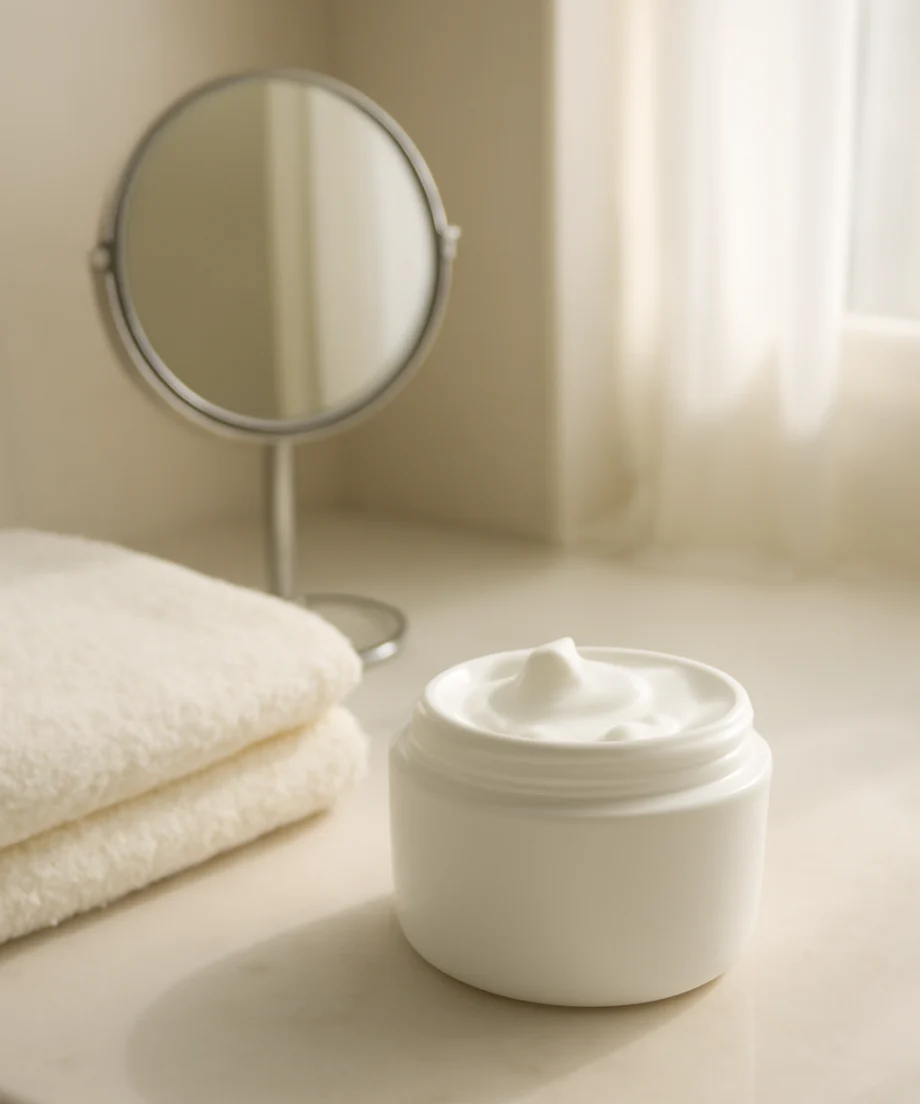
The under-eye area deserves additional caution. Skin there can be especially delicate, and products may migrate into the eyes. A face moisturizer may be suitable around the orbital area, but not every formula is designed for that use. Follow the product label, apply a small amount, and keep it away from the eye itself.
Ingredients that can support dry skin
No single ingredient works for everyone, but several ingredient groups are commonly used to improve the feel and appearance of dry skin.
Humectants
Humectants help attract water to the outer layers of skin. Glycerin, hyaluronic acid, panthenol, and urea are examples that may appear in moisturizers. Their performance depends on the complete formula and the surrounding environment. A humectant-rich product may feel more comfortable when followed by an emollient or occlusive layer that helps reduce water loss.
Some people with very reactive skin may find that particular humectant-heavy formulas feel sticky or uncomfortable. Texture matters because a product you dislike using regularly is unlikely to become a useful part of your routine.
Emollients
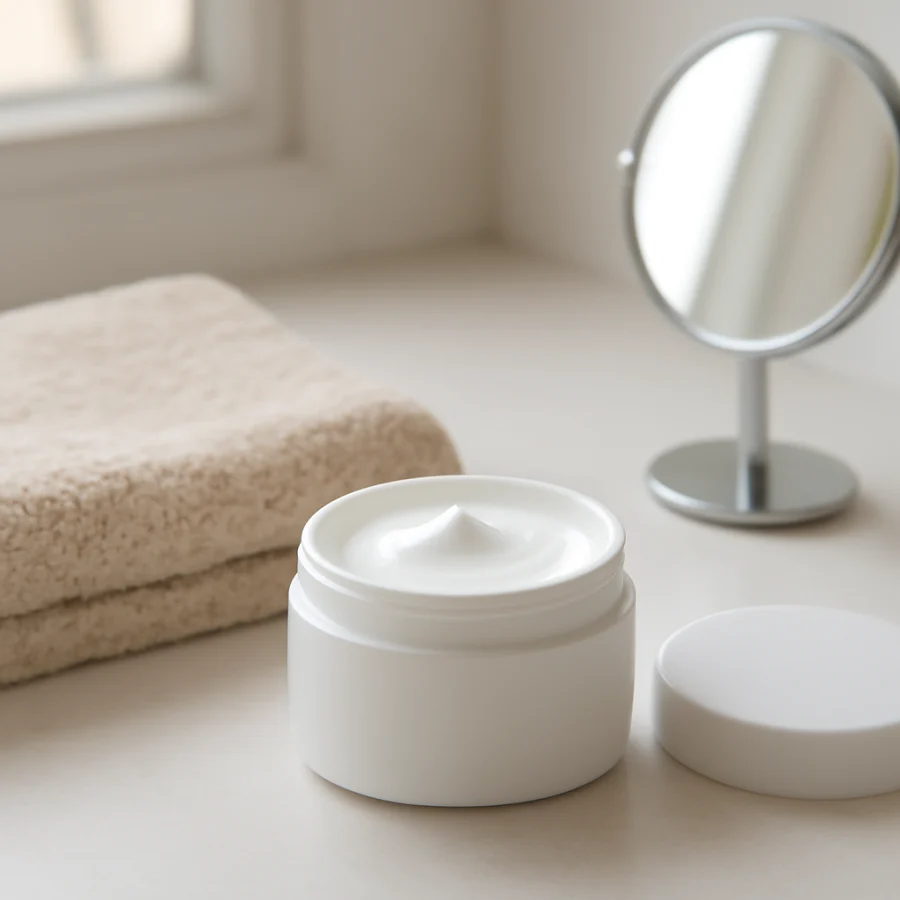
Emollients help soften and smooth rough-feeling skin by filling spaces between surface skin cells. Squalane, fatty alcohols, triglycerides, shea butter, and various plant oils may serve this role. “Fatty alcohol” does not mean the same thing as drying alcohol; ingredients such as cetyl alcohol and cetearyl alcohol are commonly used to give creams structure and a softer feel.
Plant oils can be comfortable for some people, but natural does not automatically mean non-irritating. If you are prone to reactions, evaluate the whole ingredient list rather than assuming an ingredient is gentle because it is botanical.
Occlusives and barrier-supporting ingredients
Occlusives form a surface layer that helps slow water loss. Petrolatum, dimethicone, mineral oil, and waxes are examples. These ingredients can be especially helpful when skin feels tight or rough, although richer textures may feel heavy or may not suit everyone.
Ceramides, cholesterol, and fatty acids are often included in formulas designed to support the skin barrier. Their presence does not guarantee that a product will work for your skin, and the complete formulation matters more than one highlighted ingredient. Product formulas can change, so check the current package or the manufacturer’s ingredient list when a specific formula detail is important to you.
For a broader explanation of common skincare ingredients, see our eye cream ingredient guide.
Ingredients and features to approach carefully
Fragrance is a common concern for reactive skin, particularly around the eyes. Fragrance ingredients and essential oils may make a product smell appealing, but they can also be a source of irritation for some users. “Fragrance-free” and “unscented” are not always interchangeable terms, so read the label carefully.
Other features that may be challenging include high concentrations of exfoliating acids, retinoids, strong vitamin C products, cooling agents, and products with a long list of botanical extracts. These ingredients are not automatically unsuitable, but they can add complexity when your skin is already uncomfortable. If you use an active product, follow its directions, introduce it gradually, and stop using it if burning, swelling, or worsening irritation develops.
Preservatives are necessary in many water-based products to help protect the formula from contamination. Avoiding every preservative is not a practical way to choose a moisturizer. Instead, focus on your known sensitivities and observe how your skin responds. If you have a history of significant allergic reactions, a clinician can help you investigate potential triggers.
How to choose the right texture
Creams and balms
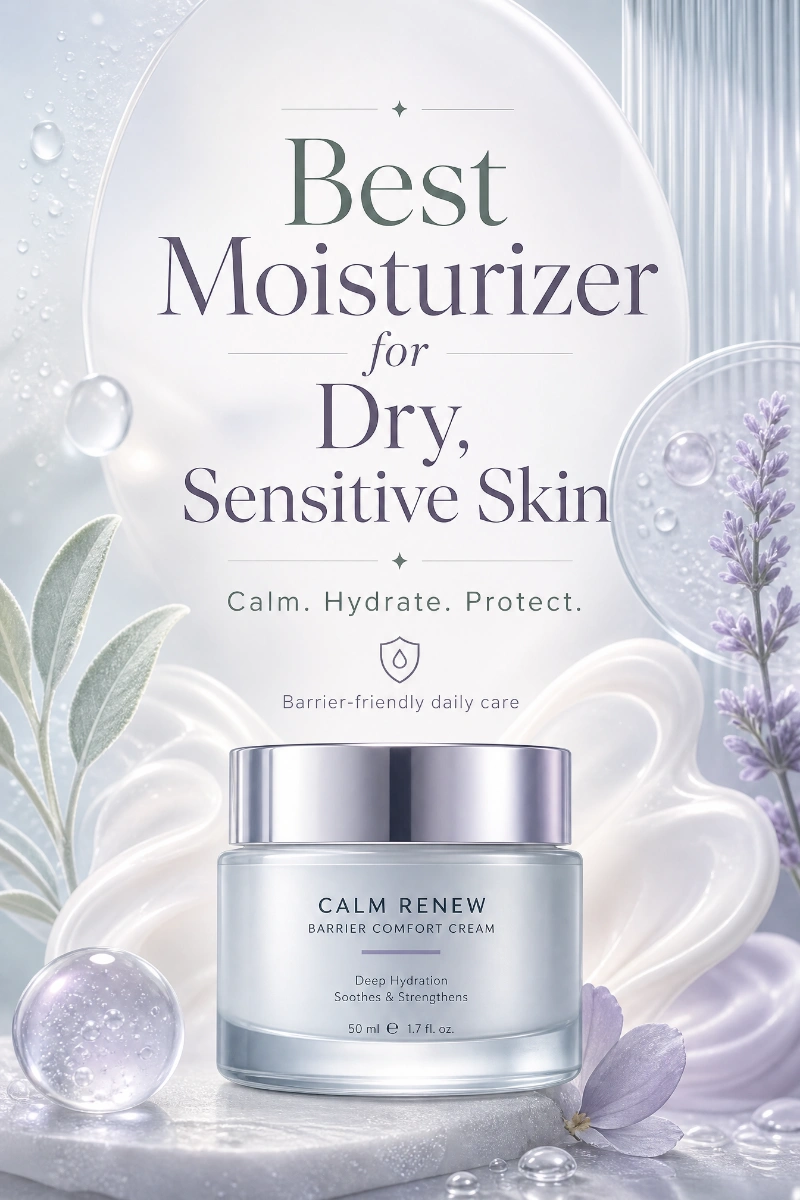
Rich creams and balms may suit skin that feels persistently tight, rough, or flaky. They can be useful at night or during cold, dry weather. Around the eyes, use only a small amount because excess product can migrate and cause temporary watering or blurred vision.
Lotions and lightweight creams
Lotions and light creams may be more comfortable for combination skin or for use during warmer weather. They can also work well under sunscreen and makeup. If a lightweight product leaves your skin feeling tight soon after application, you may need a richer formula or a second thin layer rather than a large amount applied all at once.
Ointment-like products
Very occlusive products can help protect areas that are especially dry, but they may feel greasy and are not necessarily appropriate for the entire face. A thin layer on particularly dry patches may be more comfortable than covering the whole under-eye area.
How to apply moisturizer without irritating sensitive skin
- Cleanse gently. Use lukewarm water and avoid scrubbing, washcloth friction, and cleansers that leave your skin feeling stripped.
- Apply while skin is slightly damp. A moisturizer can help hold onto some of the water already on the skin’s surface.
- Use a small amount. More product is not always better. Start with a thin layer and add more only where needed.
- Pat around the eyes. Avoid rubbing or pulling the skin. Apply along the orbital bone rather than directly against the lash line unless the product label gives different instructions.
- Introduce one new product at a time. This makes it easier to identify a problem if irritation occurs.
- Use daytime sun protection. Sun exposure can contribute to visible uneven tone and premature-looking skin changes. Choose a sunscreen you can tolerate and follow its label directions.
Before applying a new moisturizer broadly, consider testing a small amount on an inconspicuous area according to the product’s directions. A patch test cannot guarantee that a product will not cause a reaction, but it may provide useful information. Stop using the product if you develop significant irritation, swelling, or discomfort.
What moisturizer can and cannot do for the under-eye area
Moisturizer can temporarily make dry, crepey-looking skin appear smoother and more comfortable. By reducing surface roughness, it may also make fine lines caused partly by dehydration look less noticeable. These are cosmetic appearance benefits, not permanent changes to the structure of the skin.
Dark circles have different possible contributors, including visible blood vessels, natural shadowing, pigmentation, thin-looking skin, lack of sleep, allergies, and inherited features. A moisturizer may improve dryness around the area, but it cannot determine or treat the underlying cause. Similarly, it is not a reliable solution for every type of puffiness or under-eye bag.
If your main concern is uneven tone, swelling, or persistent discomfort, choose products based on that specific concern instead of expecting one moisturizer to address everything. Our guides to dark circles and puffiness and eye bags can help separate appearance-related goals from general moisturization.
A practical routine for dry sensitive skin
Morning: Rinse or cleanse gently if needed, apply moisturizer to slightly damp skin, and finish with sunscreen. If you use makeup, allow the moisturizer to settle before applying concealer.
Evening: Remove makeup without rubbing, cleanse gently, and apply moisturizer. If your skin is very dry, use a richer layer on the driest areas rather than adding several new treatments.
Keep the routine stable for long enough to judge comfort and tolerability. Visible changes in dryness can vary, and a moisturizer is best assessed by practical signs: less tightness, improved softness, fewer dry patches, and a texture you can use consistently without irritation.
When to seek professional advice
Consider speaking with a qualified medical professional if redness, itching, scaling, swelling, cracking, pain, or burning persists; if symptoms are severe; or if the skin around your eyes reacts repeatedly to products. Sudden swelling, eye pain, vision changes, or breathing problems require prompt medical attention. Skincare advice cannot replace diagnosis or treatment for a skin or eye condition.
The most sensible moisturizer for dry sensitive skin is usually the one with a straightforward formula, a tolerable texture, and instructions you can follow consistently. Start with barrier-supportive basics, avoid introducing several actives at once, and verify the current ingredient list before buying because formulas may change.

Comments
0No comments yet. Be the first to share a helpful note or question.
Leave a Comment
Your email address will not be published. Comments are reviewed before appearing on the site.