
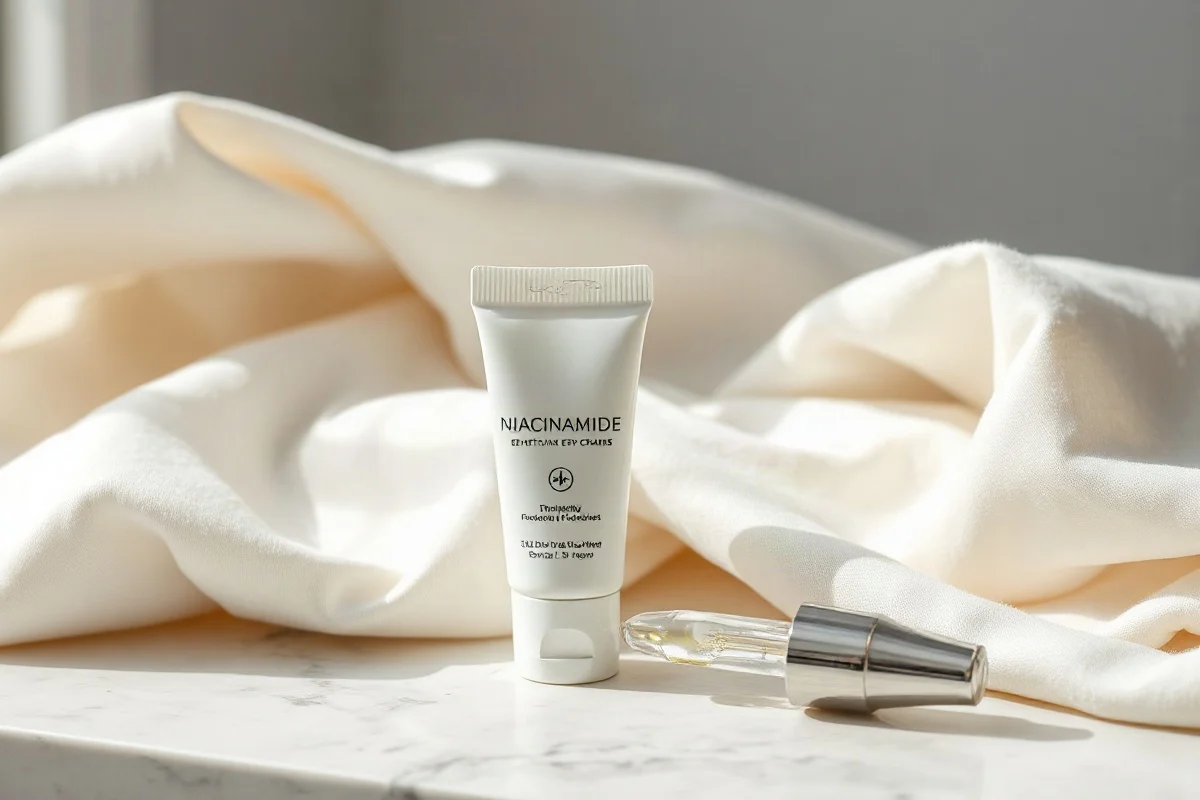
Niacinamide can be a useful eye cream ingredient for improving the look of uneven tone, dryness, and rough texture, especially when the under-eye area needs gentle barrier support. It is not a universal solution for dark circles, puffiness, or fine lines, and it cannot change structural shadows, visible blood vessels, or inherited facial features. The most realistic way to view niacinamide is as a supportive ingredient that may help the skin look healthier and more even over time when used consistently.
What is niacinamide?
Niacinamide is a form of vitamin B3 used in many skin-care products. Unlike exfoliating acids or retinoids, it is generally considered a barrier-supporting and tone-supporting ingredient rather than a resurfacing active. It appears in products designed for the face, body, and eye area, including moisturizers, serums, and eye creams.
Because the skin around the eyes is thin and can be more easily irritated than skin elsewhere on the face, formulators often include niacinamide alongside moisturizing and soothing ingredients. However, every formula is different. The product’s full ingredient list, texture, preservatives, fragrance, and other active ingredients can affect how comfortable it feels.
What can niacinamide do for the under-eye area?
Support the skin barrier
A healthy skin barrier helps the skin hold on to moisture and remain more resilient against everyday environmental stressors. When the under-eye area is dry or compromised, fine lines can look more noticeable and concealer may settle unevenly. By supporting the barrier, niacinamide may help the area look smoother and less dehydrated.
This is a cosmetic appearance benefit, not a treatment for a skin disorder. Persistent burning, redness, scaling, swelling, or itching deserves medical attention rather than continued experimentation with eye creams.
Improve the look of uneven tone
Niacinamide is often included in products intended to improve the appearance of discoloration. With regular use, it may help the under-eye area look more even-toned, particularly when dullness or mild surface discoloration contributes to the appearance of dark circles.
Results depend on why the area looks dark in the first place. Dark circles can reflect a combination of factors, including visible blood vessels, natural pigmentation, thin skin, tear-trough shadows, dehydration, rubbing, and facial anatomy. A topical cosmetic product may have limited influence over some of these factors.
Make rough texture look smoother
Dryness can emphasize tiny lines and uneven texture. Niacinamide’s barrier-supporting role may make the skin look more comfortable and conditioned, particularly when it is used in a well-moisturizing formula. The effect may be most noticeable as improved softness and surface appearance rather than a dramatic change in the underlying structure of the skin.
Complement a simple eye-care routine
Niacinamide can fit into a straightforward routine because it is commonly paired with ingredients such as humectants, emollients, and occlusives. These ingredients help attract, soften, or seal in moisture. A simple formula may be more useful than a crowded routine if your main concern is dryness or sensitivity.
For broader ingredient background, see our eye cream ingredient guide.
What niacinamide cannot do
It cannot erase every type of dark circle
The phrase “dark circles” describes an appearance, not one single condition. Brown or gray discoloration may have a different contributing factor than blue or purple-looking shadows. A hollow beneath the eye can also create darkness through natural shadowing, even when the skin itself is not significantly discolored.
Niacinamide may be worth considering when uneven tone or dryness is part of the picture, but it should not be expected to erase hereditary features, deep shadows, or visible vessels. Be cautious of any product language promising permanent removal or guaranteed correction.
It is not a substitute for sun protection
Daily sun protection can help reduce the impact of ultraviolet exposure on visible skin aging and uneven tone. The eye area requires careful application, and sunscreen should be used according to its label while avoiding direct contact with the eyes. Sunglasses and a hat can provide additional practical protection.
Sun protection will not make existing dark circles disappear, but skipping it may make it harder to maintain a more even-looking complexion. If sunscreen stings around your eyes, look for an option designed for that area and stop using any product that causes persistent irritation.
It does not replace medical evaluation
An eye cream is not designed to diagnose or treat medical causes of discoloration or swelling. Seek professional advice if darkening or puffiness appears suddenly, affects one side, is accompanied by pain or vision changes, or continues with significant irritation. A clinician can determine whether a concern needs evaluation beyond cosmetic skin care.
How to choose a niacinamide eye cream
Start with the whole formula
Do not judge an eye cream by niacinamide alone. Consider whether the product also contains moisturizing ingredients that match your needs. A dry under-eye area may benefit from a richer cream, while someone prone to milia-like bumps or a heavy feeling may prefer a lighter texture. Neither texture is automatically better.
Check the current packaging and manufacturer ingredient list before purchasing. Formulas can change, and online retailer pages may not always reflect the most recent version. Pay attention to fragrance and essential oils if your eye area tends to sting, water, or react easily.
Keep your concern in perspective
If your primary concern is dehydration and mild uneven tone, niacinamide may be a reasonable ingredient to try. If puffiness is your main concern, temporary changes in fluid retention, sleep, allergies, rubbing, or morning swelling may be more relevant than tone-supporting ingredients. You can learn more in our guide to puffiness and eye bags.
For fine lines, moisturizing can soften their appearance by improving surface hydration, but no eye cream can guarantee that lines will disappear. If your concern is mostly shadowing from a hollow or facial structure, a topical product may have limited visible impact.
Choose packaging that supports hygienic use
Eye products are used close to the eyes, so clean application matters. A pump or squeeze tube can reduce repeated contact with the product compared with dipping fingers into a jar, although packaging alone does not determine whether a product is suitable. Follow storage and use instructions, and do not share eye-area products.
How to use niacinamide around the eyes
Apply a small amount to clean, dry skin, following the product’s instructions. Gently tap the product along the orbital area rather than rubbing aggressively. Avoid applying it directly to the eye, lash line, or any area that is cracked or already irritated unless the label specifically directs otherwise.
Use the product consistently for a reasonable period rather than applying a large amount. More product does not necessarily produce better results and may increase the chance of pilling, heaviness, or irritation. If you use several eye-area products, introduce them one at a time so you can identify the source of a reaction.
People with sensitive skin should consider a small patch test before applying a new product near the eyes. Follow the label’s directions, and stop using the product if you develop burning, persistent redness, swelling, itching, or worsening discomfort. If symptoms do not settle, seek medical advice.
Can niacinamide be used with other eye-care ingredients?
Niacinamide is commonly used in routines that also include moisturizers and other supportive ingredients. Combining products is not automatically better, however. Layering several active products can make it harder to identify irritation and may be unnecessary for a simple concern.
Retinoids, exfoliating acids, and some forms of vitamin C can be more irritating for certain people, especially around the eyes. If you use one of these ingredients, follow the product instructions carefully and introduce it gradually rather than adding several new actives at once. Our under-eye routine builder can help organize a simpler approach.
When a product combines niacinamide with other actives, read the current label instead of relying on a product description or an older review. Ingredient lists and packaging may change.
How long should you use it?
Cosmetic skin-care changes are usually gradual, and individual response varies. Look for improved comfort, reduced dryness, or a more even-looking surface rather than expecting a dramatic transformation in a few applications. If there is no improvement after consistent use, reconsider whether niacinamide matches the main reason your under-eye area looks dark.
Taking occasional photos in similar lighting can make subtle changes easier to assess, but avoid comparing images taken under different angles or with different makeup. Lighting, sleep, hydration, facial expression, and camera processing can all change how the eye area appears.
The practical takeaway
Niacinamide is a sensible ingredient to consider when you want an eye cream that supports the look of the skin barrier, dryness, uneven tone, and surface texture. Its limitations matter just as much as its potential benefits: it cannot guarantee correction of dark circles, remove structural shadows, or treat a medical cause of discoloration or swelling.
Choose the formula based on your skin’s tolerance and your main concern, verify the current ingredient list, apply it gently, and give the routine time. If the problem is persistent, sudden, painful, or associated with other symptoms, cosmetic products are not the right substitute for professional evaluation.

Comments
0No comments yet. Be the first to share a helpful note or question.
Leave a Comment
Your email address will not be published. Comments are reviewed before appearing on the site.