
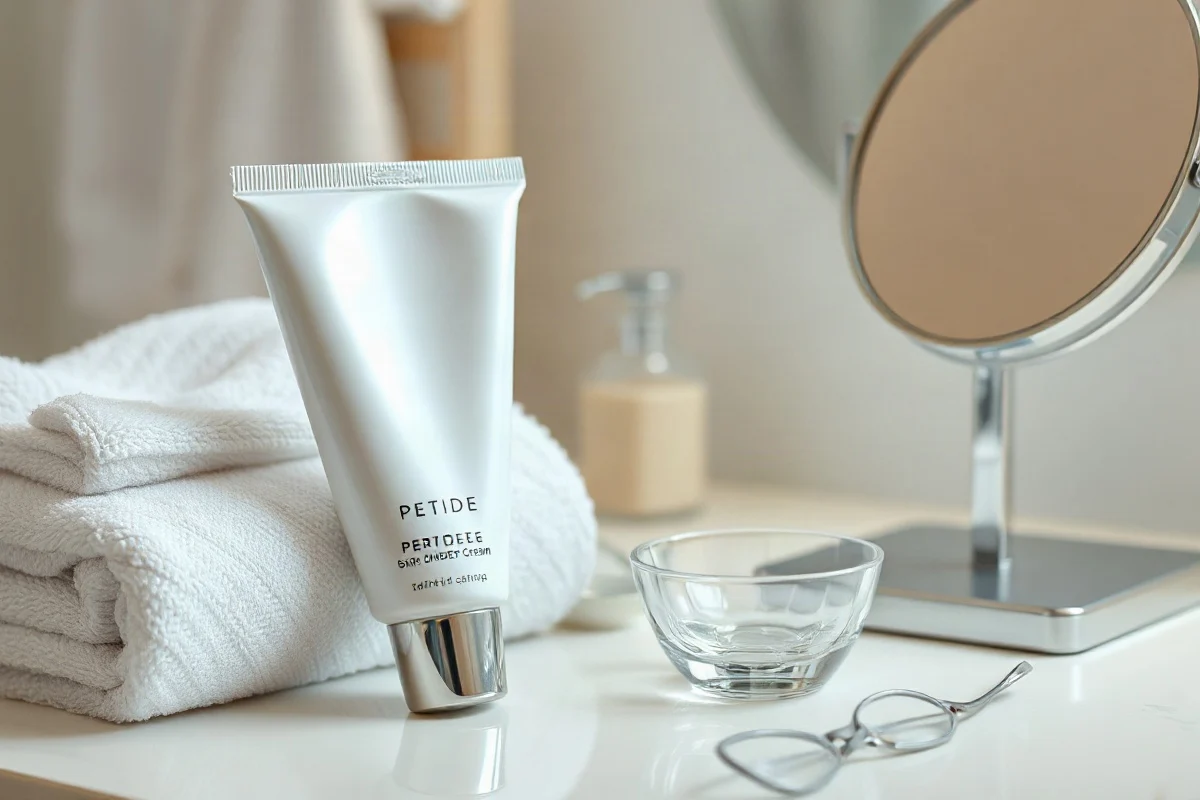
Peptides can be a reasonable ingredient to consider if you want the under-eye area to look smoother, softer, or more hydrated. They may support the skin’s appearance by helping condition the surface and, depending on the type, signaling processes involved in the skin’s structure. However, peptides are not a guaranteed solution for dark circles, puffiness, or fine lines, and the results of an eye product depend on its complete formula, concentration, packaging, consistency, and your individual skin.
The term “peptides” covers a broad group of short chains of amino acids rather than one single ingredient. Different peptides can serve different cosmetic roles, and product labels do not always make those roles easy to compare. A peptide eye cream may be most useful as part of a simple routine focused on hydration and barrier support, rather than as a stand-alone answer to every under-eye concern.
What are peptides in skin care?
Peptides are small chains made from amino acids, the building blocks of proteins. In skin care, they are generally used in formulas intended to condition the skin or support a smoother-looking appearance. Some are described as signal peptides, while others may be included for moisturizing, film-forming, or skin-conditioning purposes.
That distinction matters because “peptide” on a product label does not automatically tell you how the formula will perform. The individual peptide, the amount used, the delivery system, the surrounding ingredients, and the stability of the formula can all affect its cosmetic contribution. Without complete formula information and appropriate testing, it is not possible to predict a specific result from the word peptide alone.
Peptides are also different from prescription treatments and should not be treated as medical therapies. A cosmetic peptide product may help the eye area look more moisturized or refined, but it does not diagnose or treat a cause of discoloration, swelling, or a skin condition.
What can peptides do for the under-eye area?
They may improve the look of dryness and texture
When the thin skin around the eyes is dry, fine lines can appear more noticeable. A peptide formula that also contains humectants, emollients, or occlusive ingredients may make the surface feel more comfortable and temporarily look smoother by improving hydration. In this situation, the visible change may come from the formula as a whole rather than from the peptide alone.
Hydration can soften the appearance of some fine lines, but it does not permanently remove wrinkles or change the underlying structure of the eye area. If dryness is the main issue, a gentle moisturizer with a well-tolerated texture may be just as relevant as a product marketed specifically around peptides.
They may support a firmer-looking appearance
Some peptides are formulated to send cosmetic “signals” associated with the skin’s supportive matrix. This is one reason they are commonly marketed for firmness and visible signs of aging. The evidence for peptide products varies by ingredient and formula, so it is more realistic to expect a gradual, subtle improvement in the look or feel of the skin than a dramatic tightening effect.
The eye area is especially prone to movement, dryness, and changes caused by light exposure and natural aging. A topical product may improve the appearance of the surface, but it cannot reproduce the effects of a medical procedure or guarantee a change in deeper tissue.
They are not a universal dark-circle ingredient
Dark circles have more than one possible visual cause. They may be influenced by visible blood vessels, shadows from facial structure, pigmentation, thin or translucent-looking skin, dryness, irritation, or a combination of factors. Peptides may support overall skin quality, but they are not known as a universal way to address every type of under-eye darkness.
If discoloration is the primary concern, daily broad-spectrum sunscreen on the surrounding facial skin, sunglasses, gentle skin care, and ingredients selected for the specific appearance you want to address may be more relevant. Sunscreen should be used according to its label, and care is needed around the eyes to avoid stinging. You can explore related ingredient information in this eye cream ingredient guide.
Peptides and common under-eye concerns
Dark circles
Peptides may make the eye area look more hydrated and rested, which can soften the overall appearance of tired-looking skin. That is different from eliminating dark circles. If the darkness is caused mainly by shadowing, volume changes, or naturally visible vessels, a topical peptide product may have limited visible impact.
Persistent or suddenly changing discoloration deserves more attention than a cosmetic product alone. If you are concerned about a new change, significant irritation, swelling, pain, or symptoms affecting vision, seek advice from a qualified health professional rather than trying to manage the issue only with eye cream.
Puffiness and eye bags
Peptides are not the most direct ingredient category for temporary puffiness. A cool product, adequate sleep, and avoiding known irritants may affect how the area looks on a particular day, but these measures do not address every reason swelling may occur. Caffeine is another ingredient commonly discussed for the temporary appearance of puffiness, although product results can vary. See our guide to puffiness and eye bags for a broader look at this concern.
Under-eye bags related to anatomy or longer-term tissue changes may not respond noticeably to a topical formula. An eye cream can moisturize the skin around a bag without changing the structure creating the shadow or bulge.
Fine lines
Peptides may be worth considering when your goal is a smoother-looking, better-conditioned eye area. Hydration can temporarily make fine lines less prominent, and a consistent routine may help the skin look more comfortable over time. Still, no cosmetic peptide product should be presented as a guarantee to erase wrinkles or prevent natural aging.
Sun protection is an important part of an appearance-focused routine because repeated ultraviolet exposure can contribute to visible changes in the skin. Avoid rubbing the eye area, and apply products with light pressure rather than pulling the skin.
How to choose a peptide eye product
Look beyond the front label
Check the current ingredient list and the product’s stated directions. A formula may contain one peptide or several, along with ingredients that support hydration and comfort. The ingredient list does not always reveal the exact amount of each component, and a higher position on the list is not a guarantee of better performance for a peptide.
Formulas can change. For product-specific details, verify the current packaging or the manufacturer’s ingredient information before buying or using a product. Avoid relying on an old product description, retailer listing, or a marketing phrase that does not identify the actual formula.
Choose a texture you will use consistently
A comfortable cream, gel, or serum is more likely to fit into a routine than a product that feels heavy, pills under sunscreen, or causes watering. For dry skin, a richer formula may feel more supportive. For combination or oilier skin, a lighter texture may be easier to layer. These are preference-based choices, not guarantees about results.
Fragrance, essential oils, and certain preservatives are tolerated by many people but may bother sensitive skin. If your eyes water easily or the skin barrier is already irritated, a shorter and simpler routine may be easier to manage. Our sensitive-skin eye care guidance offers additional selection considerations.
Consider the packaging
Packaging can matter for ingredients that may be sensitive to air, light, or repeated contamination. An airless pump or other protective container may be preferable to an open jar, but packaging alone does not prove that a product will work better. Store the product as directed and avoid sharing eye-area products.
How to use peptides around the eyes
Apply the product according to its label, usually to clean skin and in a small amount. Keep it on the orbital area or other placement recommended by the manufacturer, and avoid putting it directly into the eye. More product is not necessarily more effective and may increase the chance of migration into the eyes, especially if the formula is rich or applied too close to the lash line.
If you are introducing a new product, patch testing can help you identify obvious irritation before applying it more broadly. This does not guarantee that the eye area will tolerate it. Use extra caution if the product also contains potentially irritating actives, such as retinoids, exfoliating acids, or strong fragrance. Follow the label, introduce new products gradually when appropriate, and stop using the product if you develop burning, persistent redness, swelling, rash, or worsening discomfort.
Do not apply peptide eye products over broken or actively irritated skin unless a qualified health professional has advised you to do so. If a product gets into your eye and discomfort continues after rinsing, seek medical guidance.
Can peptides be used with other eye-area ingredients?
Peptides are often included in routines alongside moisturizing ingredients and may be compatible with many common skin-care products. Compatibility depends on the actual formula, not just the ingredient category. If you use multiple active products, introducing them one at a time makes it easier to identify a source of irritation.
A simple routine might include gentle cleansing if needed, a peptide product, moisturizer, and daytime sun protection for the surrounding skin. Some people may also use a separate product containing retinoids, vitamin C, or caffeine, but combining several actives around the eyes can increase complexity and irritation risk. There is no need to use every popular ingredient at once. You can use our under-eye routine builder to organize choices around your main concern and skin tolerance.
What results should you realistically expect?
Think in terms of appearance and comfort rather than a permanent transformation. A peptide product may help the skin feel moisturized and look temporarily smoother, while any longer-term visible change will depend on the formula and consistent use. Some people may see little difference, particularly if their main concern is structural shadowing, pronounced puffiness, or a type of pigmentation that peptides do not specifically target.
Take a baseline photo in similar lighting if you want to judge gradual cosmetic changes, but avoid evaluating the product from one day to the next. Sleep, allergies, hydration, facial expression, lighting, and application technique can all alter how the eye area looks. Give a routine enough consistent use to assess it according to the product’s directions, and stop if it causes irritation.
Peptides make the most sense as one option within a balanced under-eye routine: moisturize appropriately, protect the surrounding skin from sun exposure, avoid rubbing, and choose products based on your actual concern. They may support a smoother-looking eye area, but they should be viewed as a potentially helpful cosmetic ingredient—not a guaranteed fix or a treatment for an underlying medical problem.

Comments
0No comments yet. Be the first to share a helpful note or question.
Leave a Comment
Your email address will not be published. Comments are reviewed before appearing on the site.