
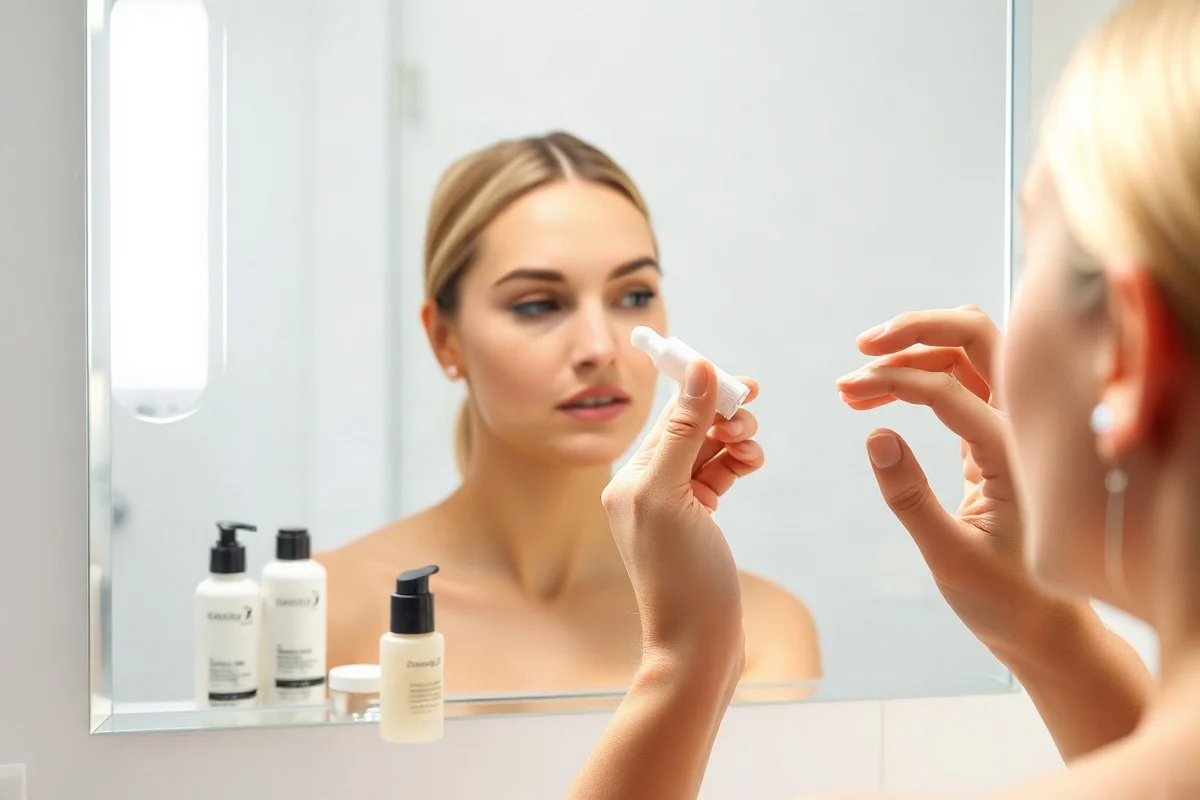
Retinol may help improve the appearance of fine lines, uneven texture, and some forms of discoloration around the eyes, but it cannot address every cause of dark circles. Under-eye darkness can be related to visible blood vessels, skin transparency, shadows from hollowness, sun-related pigmentation, puffiness, or a combination of factors. Because retinol can irritate the delicate eye area, the best approach is to choose a product specifically labeled for that region, introduce it slowly, and keep expectations realistic.
Retinol is a cosmetic form of vitamin A. It is commonly used in skincare because it can encourage smoother-looking skin over time and support a more even-looking surface. However, an eye cream containing retinol is not a diagnosis or treatment for an underlying medical condition, and it is not guaranteed to remove dark circles. If darkness, swelling, redness, pain, or irritation appears suddenly or affects only one eye, consider contacting a qualified health professional for advice.
What retinol can and cannot do for dark circles
“Dark circles” describes an appearance rather than one single skin concern. This matters because an ingredient may be more relevant to one type of darkness than another.
When retinol may be useful cosmetically
Retinol may be worth considering when the under-eye area looks dull or uneven and when fine lines or rough texture make the area appear more shadowed. By supporting a smoother-looking surface, it may make the skin look more refined over time. If pigmentation contributes to the appearance of darkness, a retinol product may also be part of a broader cosmetic routine designed to promote a more even-looking complexion.
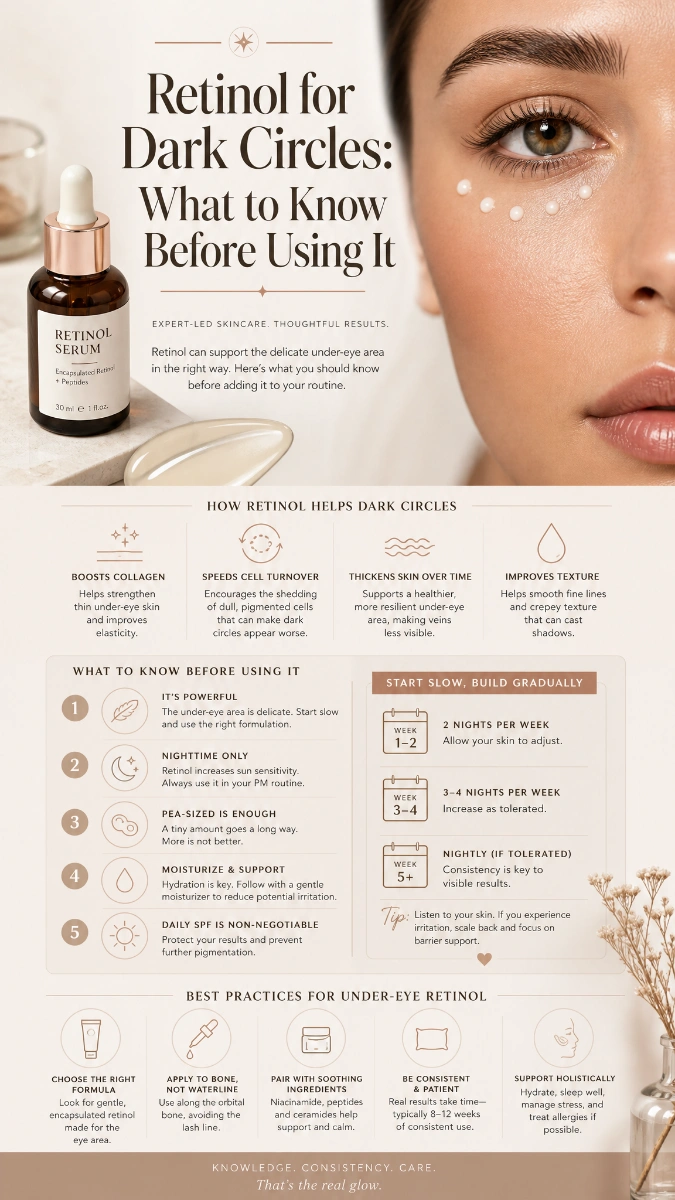
These effects are gradual and variable. The result may be subtle, and it may be difficult to notice if the primary cause of darkness is structural shadowing or visible vessels beneath thin skin. Retinol also does not replace sunscreen, which is important for limiting ongoing sun-related discoloration and protecting the surrounding skin.
When retinol may have limited impact
Retinol is unlikely to make a hollow under-eye contour disappear. If darkness is mainly caused by a natural indentation, the resulting shadow may remain even when the skin’s texture improves. Similarly, puffiness can change the way light falls on the area, creating a darker-looking impression that a retinol cream may not correct.
Blue, purple, or reddish tones may be related to visible vessels or the thinness of the skin. Retinol is not a guaranteed solution for these appearances. Genetic factors, allergies, rubbing, dehydration, fatigue, and normal changes in facial structure can also influence how the under-eye area looks. For a broader overview, explore the dark circles guide.
Why the eye area needs a careful approach
The skin around the eyes is often more delicate and more reactive than skin on other parts of the face. Products can migrate during blinking, sweating, or sleep, so applying a strong facial retinol close to the lash line may be uncomfortable even when the same product is tolerated elsewhere.
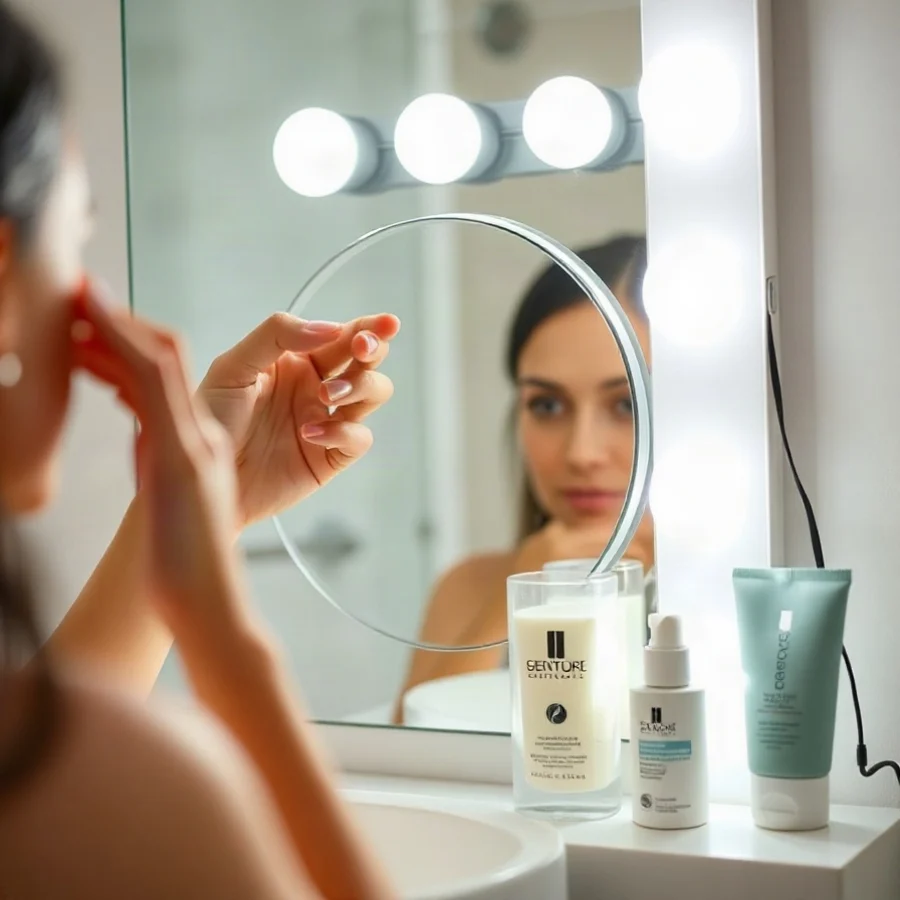
Possible signs of irritation include stinging, burning, persistent dryness, redness, flaking, tightness, or increased sensitivity. Irritation can temporarily make the area look worse and may encourage rubbing, which can further disturb the skin’s appearance. A product designed for the eye area may use a different texture or delivery approach, but the current packaging and ingredient list should always be checked because formulas can change.
How to choose a retinol eye product
Start with the label rather than assuming that every product containing a vitamin A ingredient is interchangeable. Look for directions that specifically mention use around the eyes. Follow the stated application area, frequency, and storage instructions.
Other practical factors include:
- A simple, comfortable formula: If your skin is sensitive, a shorter ingredient list may make it easier to identify what is causing a reaction, although simplicity does not guarantee tolerance.
- A supportive moisturizer: A comfortable, non-irritating moisturizer can help reduce the feeling of dryness that sometimes accompanies retinol use.
- Packaging that limits exposure: Retinol can be sensitive to light and air, so follow the product’s storage directions and keep the container closed when not in use.
- Clear instructions: Avoid products that encourage applying more than directed or using the product more frequently to speed up results.
Do not rely on an older review, retailer description, or product image for current formula details. Check the packaging or the manufacturer’s current ingredient list before buying or using a specific product. For more ingredient background, see the site’s eye cream ingredient guide.
How to introduce retinol around the eyes
A cautious routine is usually more useful than an aggressive one. If you have a history of sensitivity, ask a qualified medical professional or skincare professional whether a retinol product is appropriate for you before starting.
1. Patch test first
Apply a small amount to a limited area according to the product directions, rather than immediately using it across both under-eyes. A patch test cannot predict every reaction, but it can provide an additional layer of caution. Do not apply retinol to broken, freshly irritated, sunburned, or inflamed skin.
2. Use a small amount
More product does not necessarily mean better results. Apply only the amount recommended on the label, keeping a safe distance from the lash line and avoiding the eyelids unless the product specifically says it is suitable there. Wash your hands after application if the directions call for it, and avoid getting the product in your eyes.
3. Begin gradually
If the label permits, begin with occasional use rather than applying the product every night. Give your skin time to show how it responds before considering a more frequent schedule. Avoid introducing several potentially irritating active ingredients at the same time, since doing so can make it harder to identify the source of a reaction.
4. Support the routine
Use a gentle cleanser and a moisturizer that your skin already tolerates. During the day, apply broad-spectrum sunscreen to the surrounding face and other exposed areas, taking care to follow the sunscreen’s directions and avoid eye contact. Sunglasses and physical shade can also reduce direct sun exposure.
5. Stop if irritation develops
If you experience persistent burning, swelling, significant redness, peeling, or discomfort, stop using the product and allow the area to recover. Seek medical advice if symptoms are severe, do not improve, or involve the eye itself. Never use retinol as a way to push through substantial irritation.
Who should be especially cautious?
People with very sensitive skin, eczema-prone skin, a damaged skin barrier, or a history of reactions to retinoids may need a more conservative plan. Those who are pregnant, trying to become pregnant, or breastfeeding should ask a qualified healthcare professional about whether retinol is appropriate for them rather than relying on general skincare advice.
If you regularly experience watery eyes, eyelid inflammation, severe dryness, or an eye condition, an eye-area retinol product may not be the right first step. A healthcare professional can help distinguish a cosmetic concern from a problem that requires medical attention.
Common mistakes to avoid
- Applying facial retinol directly to the lash line: The eye area can be more reactive, and product migration may increase discomfort.
- Starting nightly: Frequent application at the beginning can make irritation more likely.
- Combining too many actives: Using retinol alongside multiple exfoliating acids or other strong ingredients may be unnecessarily harsh.
- Skipping sun protection: Without daily sun protection, discoloration and sensitivity may be harder to manage cosmetically.
- Expecting structural changes: A topical product cannot be expected to remove hollowness or permanently change the shape of the under-eye area.
- Rubbing the eyes: Friction can worsen the look of redness and darkness and may aggravate sensitive skin.
How long should you give it?
Retinol is not a quick cosmetic fix. Skin texture and fine lines may take time to appear different, and the timeline can vary with the product, routine, skin tolerance, and the type of concern being addressed. If the area becomes irritated, continuing longer will not necessarily improve the outcome.
Take occasional photos in consistent lighting if you want to monitor subtle changes, but avoid judging progress from day to day. Under-eye appearance can shift with sleep, allergies, hydration, facial expression, and lighting. A routine should be evaluated based on comfort as well as appearance.
When another approach may make more sense
If puffiness is your primary concern, you may find it more useful to review strategies in the guide to puffiness and eye bags. If fine lines and texture are the main concern, the fine lines and wrinkles section offers a more focused starting point.
A complete routine may include gentle cleansing, moisturizer, sun protection, and one carefully chosen active rather than several aggressive products. Caffeine, brightening ingredients, or a well-formulated moisturizer may be relevant to some cosmetic goals, but each option has limitations and can still cause sensitivity. Choose based on the appearance you want to address, your skin’s tolerance, and the product’s current instructions.
Retinol can be a reasonable option for improving the look of under-eye texture and fine lines, and it may contribute to a more even-looking appearance in some routines. It is not a universal answer for dark circles, and it should not be used to diagnose or treat a medical concern. Introduce it slowly, keep it away from the eye itself, use sun protection, verify the current label, and stop if the area becomes irritated.

Comments
0No comments yet. Be the first to share a helpful note or question.
Leave a Comment
Your email address will not be published. Comments are reviewed before appearing on the site.