
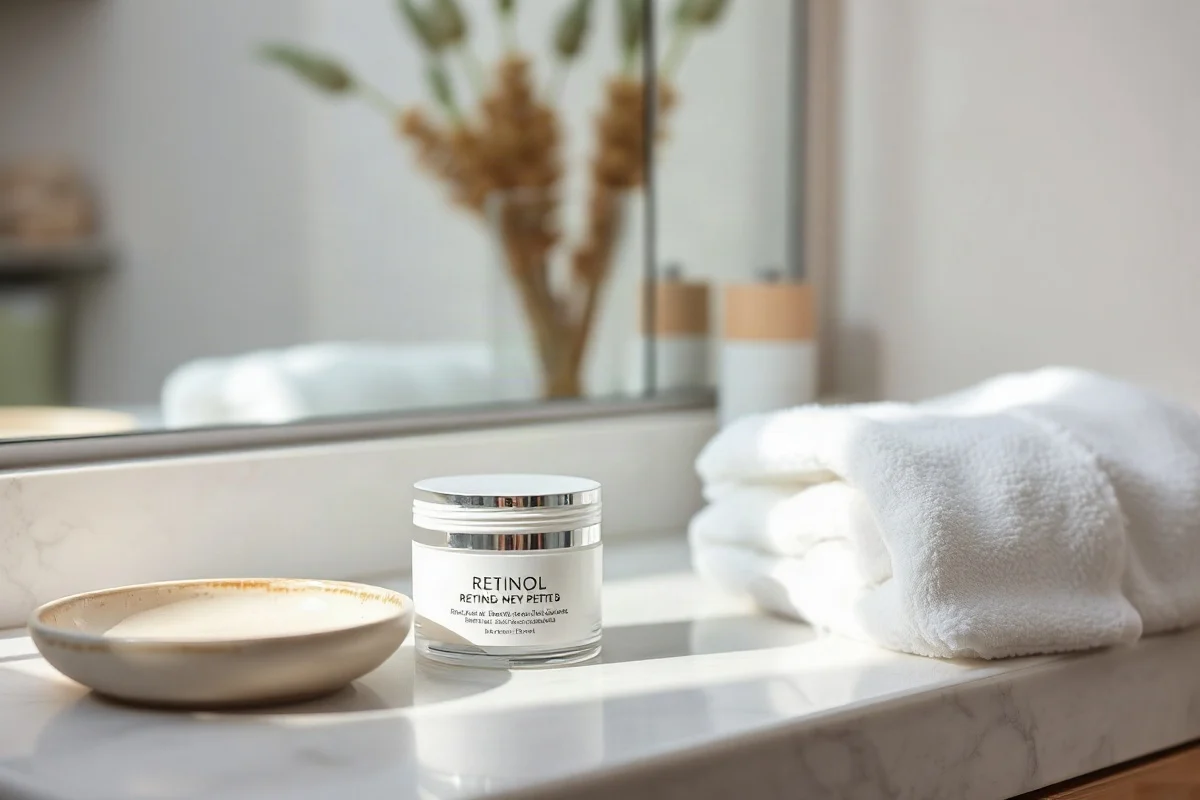
If your main concern is the appearance of fine lines around the eyes, retinol is generally the more active option, while peptides are usually the gentler choice. Retinol may help skin look smoother over time by encouraging surface renewal, but it can cause dryness or irritation, especially in the delicate eye area. Peptides are typically easier to tolerate and can support a hydrated, conditioned appearance, although their visible effects may be more subtle. The better ingredient depends on your skin’s sensitivity, your current routine, and how much patience you have for gradual cosmetic changes.
Neither ingredient can erase wrinkles or permanently change the structure of the skin. Fine lines are a normal part of facial expression, aging, and repeated movement around the eyes. Eye creams may improve the way these lines look by supporting hydration, smoothing the surface, and helping the skin appear more conditioned. They do not diagnose or treat the medical causes of changes around the eyes.
How retinol and peptides differ
Retinol and peptides work in different ways and bring different trade-offs to an eye-care routine. Retinol is a vitamin A derivative used in cosmetic skincare. It is considered a more intensive active because it can increase skin-cell turnover and influence the way skin appears over time. This activity is also why some people experience dryness, flaking, stinging, or redness when introducing it.
Peptides are short chains of amino acids used in skincare formulas. Depending on the specific peptide and formula, they may help condition the skin and support a smoother-looking surface. “Peptides” is a broad category rather than a single ingredient with one predictable effect, so products containing them can vary considerably. A peptide eye cream may also include moisturizers, humectants, antioxidants, or other ingredients that contribute to its overall feel and appearance benefits.
For a broader overview of cosmetic ingredients used in eye products, see our eye cream ingredient guide.
Retinol for the look of fine lines
Retinol may be appealing if fine lines are your primary concern and your skin can tolerate a more active routine. By promoting surface renewal, retinol can help the skin look more even and refined over time. It may also make texture appear smoother, particularly when dryness and uneven surface buildup make lines look more noticeable.
The eye area requires extra care because the skin is relatively thin and easily exposed to products that migrate during blinking or sleep. A product made specifically for the eye area may be formulated with that use in mind, but it should still be applied carefully and according to its label. A face product containing retinol is not automatically appropriate for the eyelids or under-eye area.
Potential advantages of retinol
- It is the more active choice for people focused on visible fine lines and uneven texture.
- It may provide a gradual smoothing effect when used consistently and tolerated well.
- It can fit into a focused nighttime routine without requiring several additional active ingredients.
Potential drawbacks of retinol
- It may cause dryness, peeling, burning, or redness, particularly when used too often or applied too close to the eyes.
- It may not be a good starting point for someone with a damaged or highly reactive skin barrier.
- It requires a slower introduction than a basic moisturizing eye cream.
Retinol is not a guaranteed solution for fine lines, and visible changes can be gradual. If irritation makes the area look dry or inflamed, lines may temporarily appear more noticeable rather than less. This is one reason a cautious schedule is more useful than applying a stronger product more frequently.
Peptides for a gentler eye-care routine
Peptides may suit people who want to focus on hydration, comfort, and a smoother-looking eye area without beginning with a potentially irritating active. A peptide formula can help the skin feel moisturized and look more supple, especially when it also contains ingredients such as glycerin, hyaluronic acid, or emollients. Those supporting ingredients often matter as much as the peptide itself when the goal is to soften the appearance of dehydration lines.
Because “peptide” can describe many different cosmetic ingredients, do not assume that every peptide product will perform in the same way. Check the current ingredient list and the manufacturer’s directions before buying or using a product. Formulas can change, and product names alone do not reveal how much of an ingredient is present or how the complete formula will feel on your skin.
Potential advantages of peptides
- They are often a practical option for sensitive or easily dehydrated skin.
- They can support a comfortable, moisturized, smoother-looking appearance.
- They are generally easier to combine with other routine steps than a stronger exfoliating or retinoid product.
Potential limitations of peptides
- Results may be subtle and may depend heavily on the rest of the formula.
- They are not necessarily the best choice if your only priority is a more intensive approach to visible texture.
- They cannot compensate for an overly drying routine or inconsistent sun protection.
Peptides may be especially useful when fine lines look more pronounced because of dryness. Improving hydration can temporarily make the skin surface look fuller and more comfortable, but that cosmetic effect is different from changing the underlying wrinkle.
Which ingredient should you choose?
Choose retinol if you want a more active approach
Retinol may be worth considering if you have used basic moisturizers without enough improvement in the appearance of fine lines and your skin is not currently irritated. Start with a product designed for the eye area, follow the label, and use a small amount. Applying more will not necessarily speed up results and may increase the chance of discomfort.
A simple approach is to begin infrequently at night rather than using retinol every evening immediately. Give your skin time to adjust before considering more frequent use. Keep the product away from the lash line and avoid applying it to irritated, cracked, or freshly exfoliated skin. If persistent burning, swelling, or significant redness develops, stop using it and consider asking a qualified medical professional for guidance.
Choose peptides if comfort and tolerance come first
Peptides may be the better starting point if your eye area is dry, reactive, or prone to stinging. They can also be useful if you already use other active ingredients elsewhere in your routine and want an eye product with a lower irritation burden. Look for a formula that provides comfortable hydration and does not leave the area tight or flaky.
People with sensitive skin can review our guidance on eye care for sensitive skin before adding a new product. Patch testing is a sensible precaution, although a small test area cannot guarantee that a product will never irritate the under-eye area.
Can you use retinol and peptides together?
Some routines can include both ingredients, but combining them is not required. A peptide product may be used at one time of day and a retinol eye product at another, or the ingredients may appear together in a single formula. Whether that combination is appropriate depends on the complete ingredient list and how your skin responds.
When introducing a new retinol product, keeping the rest of the routine simple can make it easier to identify the cause of irritation. Use a gentle cleanser, a bland moisturizer if needed, and avoid adding several new actives at once. If a peptide product is already comfortable, there may be no reason to discontinue it, but avoid assuming that layering more products will produce faster results.
Daily broad-spectrum sunscreen on the surrounding exposed skin is also important for a comprehensive appearance-focused routine. Use it as directed and take care not to get it in the eyes. Sunglasses and physical shade can provide additional protection from squinting and sun exposure, both of which can affect how the area looks over time.
Application tips for either ingredient
- Read the current package directions and ingredient list before use.
- Apply a small amount to clean, dry skin unless the product label says otherwise.
- Use your ring finger or another gentle touch instead of rubbing the area.
- Keep products out of the eyes and avoid applying too close to the lash line.
- Introduce one new active at a time so you can monitor your skin’s response.
- Stop using the product if it causes ongoing irritation, and seek professional advice for severe or persistent symptoms.
For a routine organized around your skin type and concerns, the under-eye routine builder can help you think through product categories and application priorities.
What results can you realistically expect?
Both retinol and peptides are cosmetic skincare options, not guarantees. Retinol may offer a more noticeable texture-focused approach for some users, but tolerance and consistency are essential. Peptides may make the area look more hydrated and conditioned, with a generally gentler experience, but the change may be less dramatic.
Fine lines can also look different from day to day because of sleep, dehydration, facial expression, lighting, allergies, and temporary puffiness. If the concern is accompanied by sudden swelling, pain, major color changes, vision symptoms, or a persistent rash, an eye-care product is not the appropriate way to investigate it. Consider consulting a qualified healthcare professional.
In practical terms, choose retinol when you want a gradual, more active strategy and are prepared to manage possible irritation. Choose peptides when you prioritize comfort, hydration, and routine simplicity. Whichever option you select, verify the current packaging and manufacturer information, introduce the product cautiously, and judge progress over time rather than expecting an immediate transformation.

Comments
0No comments yet. Be the first to share a helpful note or question.
Leave a Comment
Your email address will not be published. Comments are reviewed before appearing on the site.