
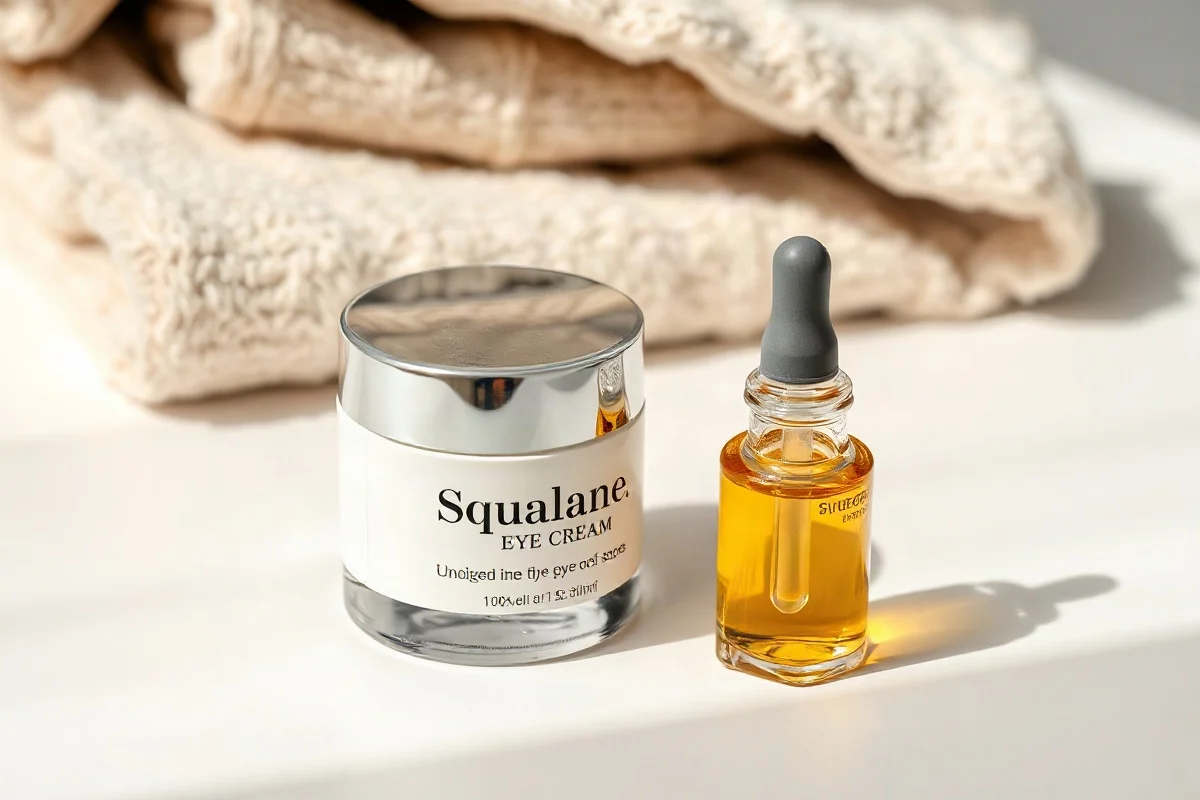
Squalane is used in eye cream primarily as a lightweight moisturizing ingredient that helps soften dry-feeling under-eye skin and reduce the look of flakiness or tightness. It may make the area appear smoother and more comfortable, but it does not remove every type of dark circle, puffiness, or fine line. Its main role is supporting the skin barrier and improving the appearance of dryness rather than treating an underlying medical condition.
Because the skin around the eyes is delicate and often exposed to cleansing, makeup removal, weather, and friction, a simple emollient can be useful. Squalane is one option for adding slip and softness without the heavier feel some people associate with traditional occlusive creams.
What is squalane?
Squalane is a skin-conditioning ingredient used in moisturizers, serums, and eye creams. It is the hydrogenated form of squalene, a naturally occurring lipid associated with the skin’s surface. Hydrogenation improves stability, which helps make squalane more suitable for cosmetic formulas and storage.
Modern cosmetic squalane is commonly derived from plant sources, although the source can vary by product. If vegan suitability or the ingredient’s origin matters to you, check the current product packaging or the manufacturer’s information rather than assuming based on the ingredient name alone.
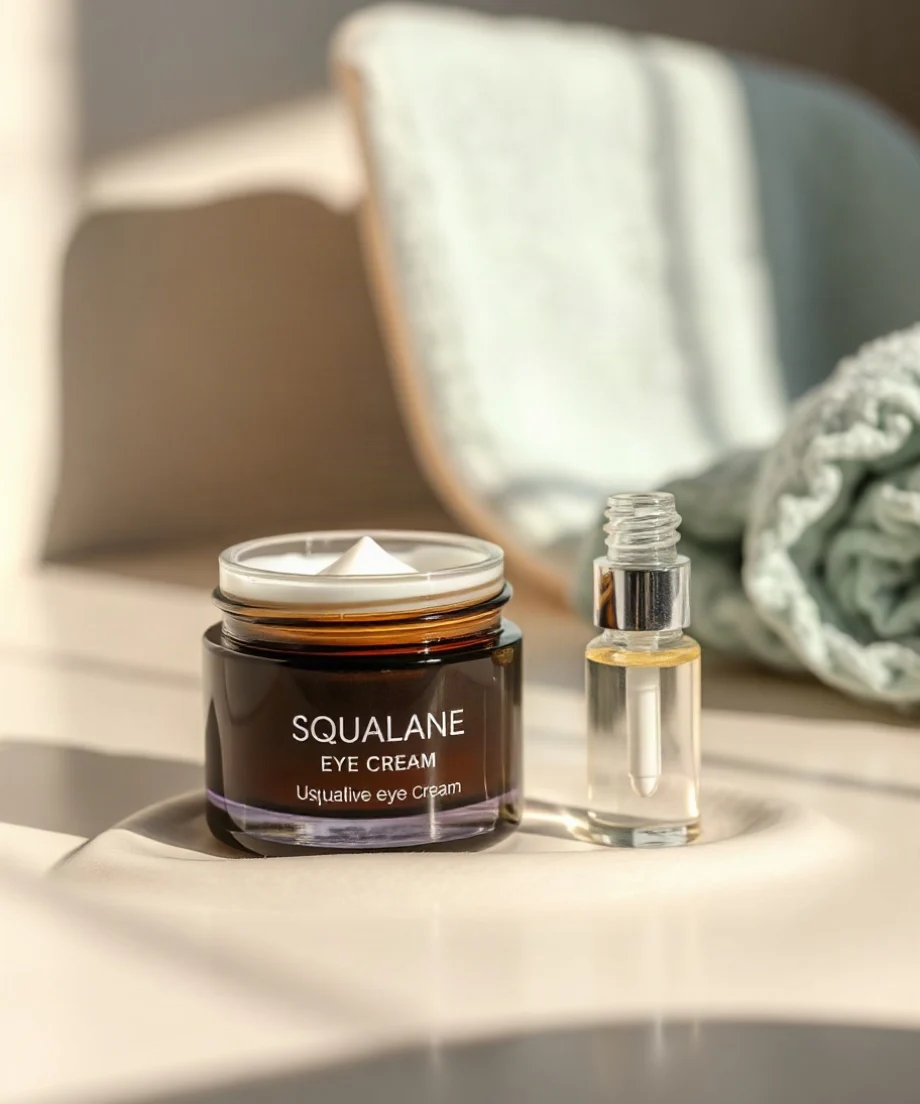
In a formula, squalane generally functions as an emollient. Emollients help fill in some of the roughness between skin cells, creating a softer and smoother feel. They can also reduce the sensation of dryness by helping the skin retain a more comfortable surface balance when used as part of a moisturizer.
Why is squalane used around the eyes?
The under-eye area can look dry even when the rest of the face does not. This may be related to environmental exposure, frequent washing, makeup removal, low humidity, or a routine that contains ingredients the skin does not tolerate well. When the surface becomes rough or dehydrated, fine lines may look more noticeable and concealer may settle into creases.
Squalane can be useful in this context because it provides a smooth, cushiony feel and helps reduce the look of surface dryness. A well-moisturized under-eye area may appear more supple, which can make texture and fine lines look less emphasized temporarily. That is a cosmetic appearance benefit, not proof that squalane has changed the structure of the skin or permanently removed wrinkles.
It is also often chosen because it feels lighter than some richer plant oils or balms. Texture preferences vary, however. A product’s complete formula—not one ingredient alone—determines whether it feels greasy, absorbs quickly, layers well under makeup, or causes irritation.
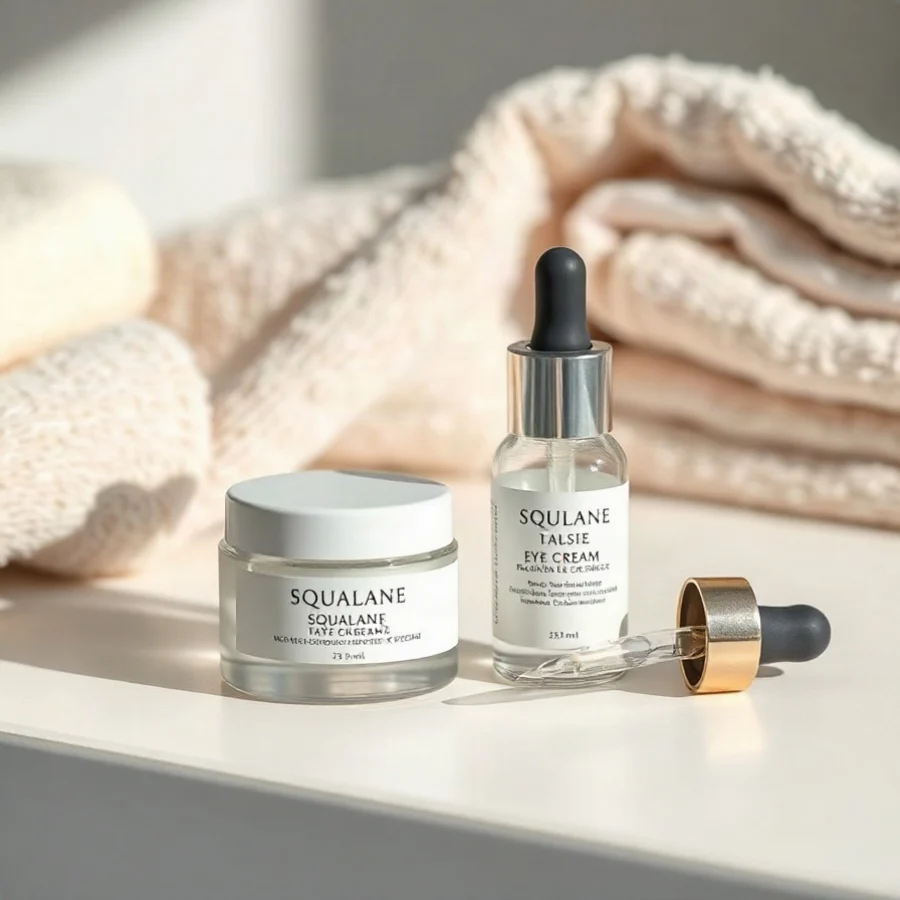
What can squalane do for dry under-eye skin?
It can improve the feel of dryness
When the skin feels tight, rough, or uncomfortable, an emollient eye cream may make it feel softer. Squalane can contribute to that effect by smoothing the skin’s surface and adding a moisturizing layer. The result may be especially noticeable when the under-eye area is dry from cold weather, indoor heating, or frequent cleansing.
It can make texture look smoother
Moisture can temporarily make fine surface texture appear less pronounced. If dryness is causing small flakes or emphasizing creases, applying a gentle moisturizer containing squalane may create a more even-looking surface. This does not mean the ingredient has erased fine lines. The effect may lessen when the product is no longer used or when the skin becomes dry again.
It may support a more comfortable routine
A simple moisturizing step can make it easier to use other products without overloading the area. For example, someone using a concealer may find that a comfortable eye cream helps makeup apply more evenly. The product should be allowed to settle before makeup, and only a small amount is usually needed to avoid excess slip or migration into the eyes.
What squalane cannot do for dark circles
Dark circles have different possible contributors, including visible blood vessels, shadows created by facial structure, natural pigmentation, and the appearance of thin or dry skin. Squalane mainly addresses moisture and surface feel. It is not a universal dark-circle ingredient and should not be expected to correct every cause of under-eye darkness.
If dryness is making the area look dull or emphasizing shadows, improved moisturization may make the overall appearance look fresher. However, squalane should not be described as bleaching, removing, curing, or permanently eliminating dark circles. It also is not a treatment for allergies, eczema, infection, or another medical condition.
Similarly, squalane is not a dedicated de-puffing ingredient. It may make the skin feel smoother, but it does not automatically reduce fluid-related swelling or change the anatomy that contributes to under-eye bags. For broader information, see our guides to dark circles and puffiness and eye bags.
Who may want to try a squalane eye cream?
Squalane may be worth considering if your under-eye skin feels dry, tight, rough, or easily stressed by cold air and frequent makeup removal. It can also suit people who prefer a lightweight, non-watery moisturizing texture. Those with mature-looking skin may appreciate the way a moisturizing formula temporarily softens the appearance of surface texture, although the ingredient does not reverse age-related changes.
People with sensitive skin may also look for uncomplicated formulas that focus on moisturization. Still, “gentle” cannot be guaranteed from the presence of squalane alone. Fragrance, preservatives, botanical extracts, exfoliating acids, retinoids, and other ingredients may affect how a product feels on your skin.
If you are already using an eye cream that keeps the area comfortable and does not cause dryness, adding another squalane product may not provide a meaningful benefit. Ingredient lists are more useful when considered alongside the formula’s texture, packaging, and your actual skin concerns.
How to choose a squalane eye cream
Look at the complete ingredient list
Squalane may appear near the beginning or later in an ingredient list depending on the formula. Its position alone does not tell you how the product will perform, and ingredient lists generally do not provide a complete picture of texture or tolerability. Look for other supportive moisturizing ingredients if dry skin is your main concern, such as humectants and additional emollients.
Check the current packaging or manufacturer’s ingredient list before purchasing. Cosmetic formulas can change, and product pages or retailer listings may not always reflect the latest packaging.
Consider the finish
A richer cream may feel more comfortable at night, while a lighter lotion or gel-cream may work better under concealer. If your eyes water easily, avoid applying too much product close to the lash line. A formula that migrates into the eyes can cause discomfort even if the ingredients are generally well tolerated on facial skin.
Be cautious with added actives
Some squalane eye creams also contain ingredients intended to target other concerns, such as retinoids, vitamin C derivatives, exfoliating acids, or fragrance. These additions are not automatically problematic, but they may be more relevant to irritation risk than the squalane itself. Follow the product label, introduce new products gradually, and avoid combining several potentially irritating products around the eyes at once.
How to apply squalane eye cream
Apply the product according to its label, usually after cleansing and before or instead of a heavier moisturizer. Use a small amount for both eyes and gently pat it along the orbital area rather than rubbing the skin. Keep the product out of the eyes and do not apply it to broken or irritated skin unless a qualified medical professional has advised you to do so.
If you use the product during the day, sunscreen on the surrounding face can help protect exposed skin from ultraviolet radiation. Sunscreen should be applied carefully according to its directions, since some formulas may sting when placed too close to the eyes.
For a new product, consider a small-area patch test before applying it near the eyes. A patch test cannot predict every reaction, but it can provide an additional precaution. Stop using the product if you develop burning, persistent redness, swelling, rash, or worsening discomfort. Seek medical advice for severe or ongoing symptoms, changes affecting vision, or swelling that concerns you.
Squalane compared with other moisturizing ingredients
Squalane is an emollient, so it is most closely associated with softening and smoothing. Humectants, such as glycerin, help attract and hold water in the outer layers of skin. Occlusive ingredients form a more substantial surface barrier that can reduce water loss. Many well-designed eye creams combine several types of moisturizing ingredients rather than relying on one ingredient.
This distinction can help explain why one product works better for you than another. If your skin feels tight but not rough, a formula with humectants may feel helpful. If it feels flaky or easily irritated by dry air, an emollient and a more protective finish may be preferable. If the area is very dry, you may benefit from layering products carefully, provided the routine remains comfortable and does not cause stinging.
For more ingredient explanations, visit our eye cream ingredient guide. You can also use the under-eye routine builder to organize a routine around dryness, dark circles, puffiness, or other cosmetic concerns.
The realistic takeaway
Squalane can be a practical choice when your main goal is making dry under-eye skin feel softer and look more comfortable. Its benefits are primarily cosmetic: smoothing the appearance of surface texture, reducing the look of flakiness, and helping makeup sit more evenly. It is not a guaranteed solution for dark circles, eye bags, or wrinkles, and it does not diagnose or treat the reasons behind those concerns.
Choose the complete formula based on your skin’s needs, introduce new products carefully, and verify current ingredient information before buying. If persistent dryness, redness, itching, swelling, or discomfort does not improve with a basic gentle routine, consider speaking with a qualified health professional rather than continuing to add cosmetic products.

Comments
0No comments yet. Be the first to share a helpful note or question.
Leave a Comment
Your email address will not be published. Comments are reviewed before appearing on the site.