
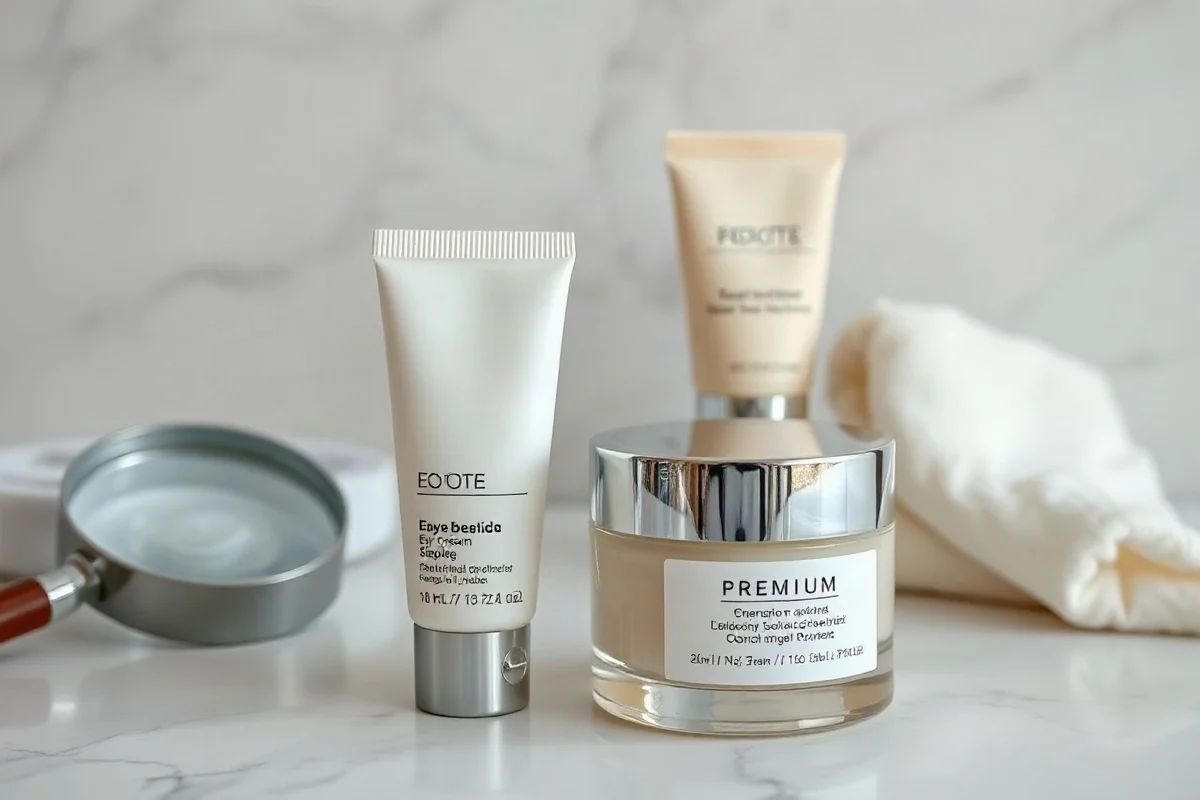
Store-brand eye creams are not automatically different from name-brand products in a way that makes one category universally better. Both can contain familiar ingredients for moisturizing the under-eye area and improving the appearance of dryness, dullness, puffiness, or fine lines. The meaningful differences usually come down to the specific formula, ingredient order, packaging, texture, fragrance, tolerability, and how well the product fits your routine—not simply whether the label is widely recognized.
That does not mean every store-brand eye cream is equivalent to every name-brand option. Products can vary substantially, even when they appear to target the same concern. A careful comparison of the current ingredient list and product directions is more useful than comparing brand reputation alone.
What “store-brand” and “name-brand” actually mean
A store-brand eye cream is generally sold under a retailer’s private-label name or an affiliated brand. A name-brand eye cream is marketed under a brand with broader consumer recognition. These labels describe how a product is marketed and distributed; they do not, by themselves, describe the product’s quality, safety, concentration, or expected cosmetic effect.
Private-label products may be developed through outside manufacturers, just as many branded products are produced by manufacturing partners. However, the existence of a shared manufacturer does not prove that two products have the same formula. Manufacturing arrangements, ingredient sourcing, packaging, and specifications can differ.
Formulas can also change over time. Before buying or comparing a product, check the current package and, when available, the manufacturer’s ingredient list. Older reviews, retailer pages, and comparison posts may not reflect the product currently on the shelf.
Where store-brand eye creams may be similar
Many eye creams, regardless of branding, rely on a relatively familiar group of cosmetic ingredients. Humectants such as glycerin can help attract water to the skin’s surface. Emollients and lightweight oils can help make dry skin feel smoother, while occlusive ingredients can reduce the sensation of moisture loss. Ingredients such as hyaluronic acid, peptides, niacinamide, caffeine, vitamin C derivatives, or retinoids may appear in products designed around particular cosmetic concerns.
The presence of an ingredient does not guarantee a specific result. Its position in the ingredient list, the complete formula, packaging, stability, application instructions, and individual skin response all matter. Ingredient names can also appear in different forms, and products with the same highlighted ingredient may feel completely different on the skin.
If you are comparing formulas, our eye cream ingredient guide can help explain what common ingredients are generally used for without treating them as guaranteed solutions.
Key differences to check before choosing
Ingredient list and formula design
Start with the full ingredient list rather than the front of the package. Look for ingredients that support your immediate goal, but also note potential irritants or ingredients you already know your skin does not tolerate. A product promoted for brightening may still be mostly a moisturizer. Another product with a more modest front-label claim may provide a richer texture that works better for dry under-eyes.
Ingredient order can offer useful context, but it does not tell you everything about performance. You usually will not know the exact percentage of each ingredient unless the brand discloses it, and a higher position does not automatically mean a better product. Avoid assuming that a longer ingredient list is more advanced or that a shorter one is necessarily gentler.
Packaging and formula stability
Packaging can affect how well a formula is protected from air, light, moisture, and repeated contact with fingers. This can be especially relevant for products containing ingredients that may be sensitive to environmental exposure. A tube, pump, or opaque container may offer a different user experience from a jar, but packaging alone does not prove that one product will work better.
Pay attention to changes in color, odor, or texture. If a product seems noticeably different from when it was first opened, or if the label directs you to discard it after a certain period, follow the product instructions. Store eye creams as directed and avoid using products that cause persistent discomfort.
Texture and finish
The best eye cream is often the one you can apply comfortably and consistently. Store-brand products may include lightweight gels, richer creams, balms, or formulas designed to sit under makeup. Name-brand products may offer more texture options, but recognition does not guarantee that a formula will suit your skin.
For dry skin, a richer cream may make the area look temporarily smoother by reducing the appearance of surface dryness. For oily or combination skin, a lighter lotion or gel may feel more comfortable and may be less likely to interfere with concealer. If makeup pills, separates, or gathers in lines, try using less product and allowing it to settle before applying cosmetics.
Fragrance and potential irritants
The under-eye area can be more reactive than other parts of the face because the skin is delicate and the eyes are easily irritated. Fragrance, essential oils, certain preservatives, and active ingredients may be tolerated by some people but uncomfortable for others. “Natural” does not automatically mean non-irritating, and “store-brand” does not automatically mean harsher.
If your skin is sensitive, compare the full label and consider choosing a simpler, fragrance-free formula when appropriate. Apply a small amount away from the lash line, follow the package directions, and consider a patch test before regular use. Stop using the product if you develop burning, swelling, a rash, significant redness, or other concerning irritation. Seek medical advice for persistent or severe symptoms.
How common eye cream ingredients fit into the comparison
Moisturizing ingredients
Moisturizers can temporarily improve the look of fine lines that are emphasized by dryness. They may also make the under-eye area feel softer and more comfortable. These effects are cosmetic and temporary; they do not permanently remove lines or change the underlying structure of the skin.
Caffeine
Caffeine is often included in products marketed for a more refreshed-looking eye area. A topical formula may provide a temporary cosmetic improvement in the look of puffiness for some users, but it should not be treated as a medical treatment for eye bags or swelling. Results can depend on the cause and timing of puffiness, as well as the complete formula.
Niacinamide and vitamin C derivatives
These ingredients may be used in products intended to support a brighter, more even-looking appearance. Dark circles have multiple possible visual contributors, including shadows, visible blood vessels, pigmentation, thin skin, and facial structure. A cosmetic product may have limited impact when the main contributor is not surface pigmentation or dryness.
Retinoids and other active ingredients
Retinoid-based eye products may be marketed for the appearance of fine lines and uneven texture. Because retinoids can be irritating, use them only as directed on the label and introduce them cautiously. Avoid applying too close to the eye itself. If you are pregnant, breastfeeding, managing a skin condition, or unsure whether an active ingredient is appropriate for you, ask a qualified health professional.
For a broader overview of concerns and ingredient categories, you can browse the site’s eye care ingredient coverage or compare products by concern in the comparison section.
Do name brands offer better results?
Brand recognition may reflect larger marketing budgets, more extensive product lines, distinctive packaging, or a longer history with consumers. It does not establish that a name-brand eye cream will produce a better cosmetic result for every person. A higher price can also reflect packaging, retail positioning, advertising, distribution, or other business costs rather than a guaranteed advantage in the formula.
Similarly, a lower-priced store-brand product is not automatically a bargain. It may be a good fit if its ingredients, texture, packaging, and directions match your needs. It may be a poor fit if it contains fragrance you avoid, feels too heavy, causes pilling, or includes an active ingredient your skin does not tolerate.
When a store-brand eye cream may make sense
A store-brand option may be worth considering when you want basic hydration, a simple texture, or an affordable way to see whether a particular type of product fits your routine. It can also be practical if you prefer buying from a nearby retailer and the current label meets your requirements.
Before purchasing, ask:
- What specific cosmetic concern am I trying to address?
- Does the current ingredient list fit my skin and known sensitivities?
- Is the texture suitable for daytime, nighttime, or use under makeup?
- Does the packaging make sense for the formula and how often I will use it?
- Are the directions clear about frequency and application?
- Can I check the current manufacturer information if product details matter?
How to use either type of eye cream
Use a small amount and apply it gently with a clean finger, staying on the orbital area unless the product label says otherwise. Avoid rubbing, pulling, or applying directly into the eye. More product is not necessarily more effective and may increase the chance of migration, residue, or irritation.
Introduce one new eye product at a time so you can better identify the source of a reaction. If the product contains a potentially irritating active, follow the label carefully rather than increasing use because you want faster results. Daily sunscreen on the surrounding face can also be an important part of a routine focused on the appearance of uneven tone and premature-looking aging, provided the product is suitable for the eye area and used as directed.
An under-eye routine builder can help organize product choices around skin type, concern, and preferred routine length.
When an eye cream may not address the main concern
Eye cream can support the appearance and feel of the skin, but it cannot explain every cause of dark circles or puffiness. Shadows from facial structure, naturally visible vessels, pigmentation, temporary fluid retention, allergies, irritation, fatigue, and other factors can look similar in a mirror. Cosmetic products may have limited results when the primary contributor is not something a topical moisturizer can visibly change.
Sudden, one-sided, painful, persistent, or pronounced swelling is not a reason to keep switching eye creams. Changes involving vision, severe irritation, or other concerning symptoms warrant medical attention. An eye cream publication can offer cosmetic guidance, but it cannot diagnose the cause of a symptom or provide medical treatment.
What matters most in the final choice
Store-brand and name-brand eye creams can both be reasonable choices. Instead of assuming that one category is superior, compare the current formula, texture, packaging, directions, and your own tolerance. Choose a product that addresses your cosmetic goal realistically, fits your budget and routine, and does not make your skin uncomfortable.
The most useful comparison is not “store brand versus name brand.” It is “which current formula is appropriate for my under-eye area, and what can it realistically do?” That question keeps the focus on evidence available from the label and on consistent, cautious use rather than marketing familiarity.

Comments
0No comments yet. Be the first to share a helpful note or question.
Leave a Comment
Your email address will not be published. Comments are reviewed before appearing on the site.