
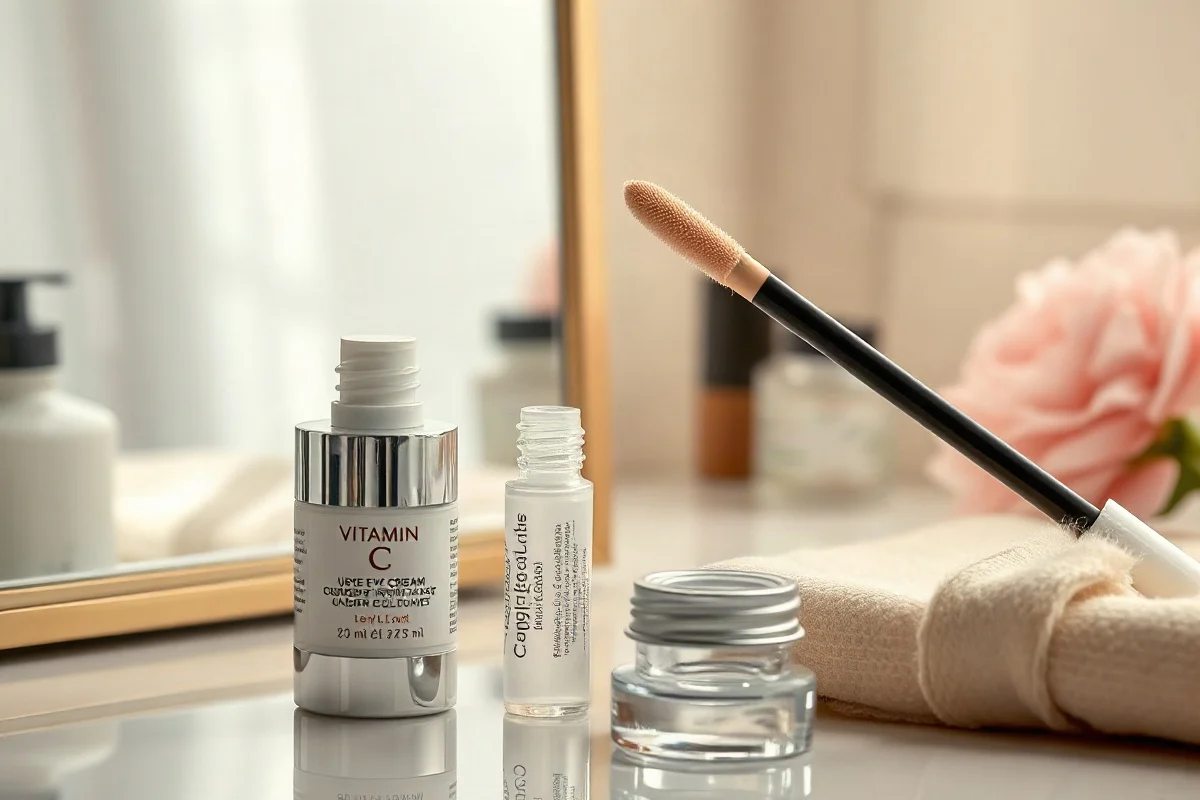
Yes, you can use vitamin C eye cream under concealer, but the order, amount, and formula texture matter. Apply a small amount of eye cream to clean, dry skin, allow it to settle, and then use a thin layer of concealer. This approach may help the under-eye area look more hydrated and smoother, but vitamin C eye cream is not a guaranteed way to remove dark circles, puffiness, or fine lines.
Under-eye skin can be more delicate than other areas of the face, and makeup can make dryness, flaking, or texture more noticeable. A simple routine is usually more reliable than applying several active products before concealer. If you are comparing formulas, our vitamin C eye cream guide can help you think through ingredient and texture considerations.
How to layer vitamin C eye cream and concealer
A practical morning order is cleansing, vitamin C eye cream, moisturizer if needed, sunscreen for the rest of the face, and concealer. Keep sunscreen away from the immediate eye area unless the product label specifically indicates that it is suitable there, and take care to avoid getting products in the eyes.
1. Start with clean, dry skin
Gently cleanse the face or rinse away overnight residue, then pat the skin dry. Rubbing the under-eye area can increase temporary redness and may make makeup application less comfortable. You do not need to apply a large number of products before eye cream.
2. Use a very small amount
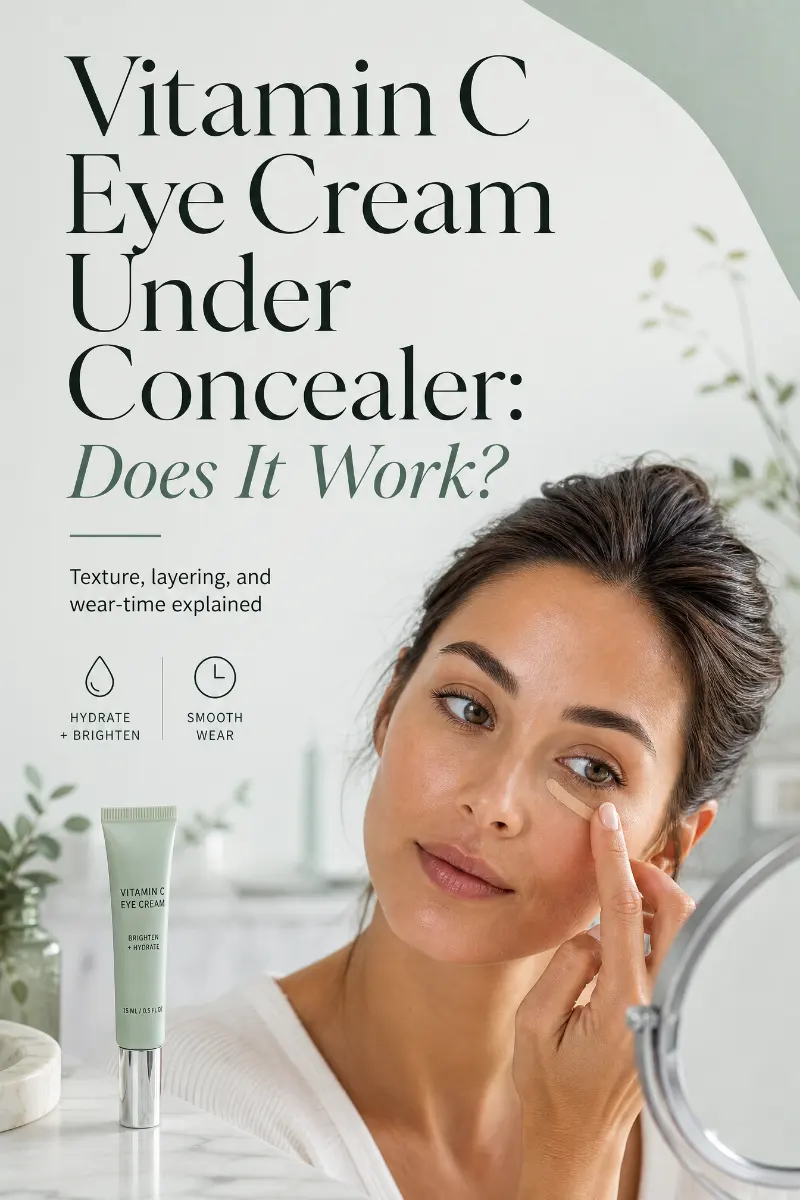
Dispense only the amount recommended on the product label. If the label does not give detailed instructions, begin with a small amount for both eyes rather than applying a thick layer. Dot the product along the orbital area, where the skin feels firm around the eye, and gently tap it in with a clean finger. Avoid placing it directly on the lash line or too close to the eye.
More eye cream is not necessarily better under makeup. A thick layer can remain slippery, mix with concealer, or create small rolls known as pilling. It may also make concealer slide into creases more quickly.
3. Give the product time to settle
Wait until the eye cream no longer feels wet or distinctly slippery before applying concealer. The amount of time varies by formula, climate, and how much you used. If the area still feels coated, lightly press it with a clean fingertip instead of adding more product or immediately covering it with makeup.
4. Apply concealer in a thin layer
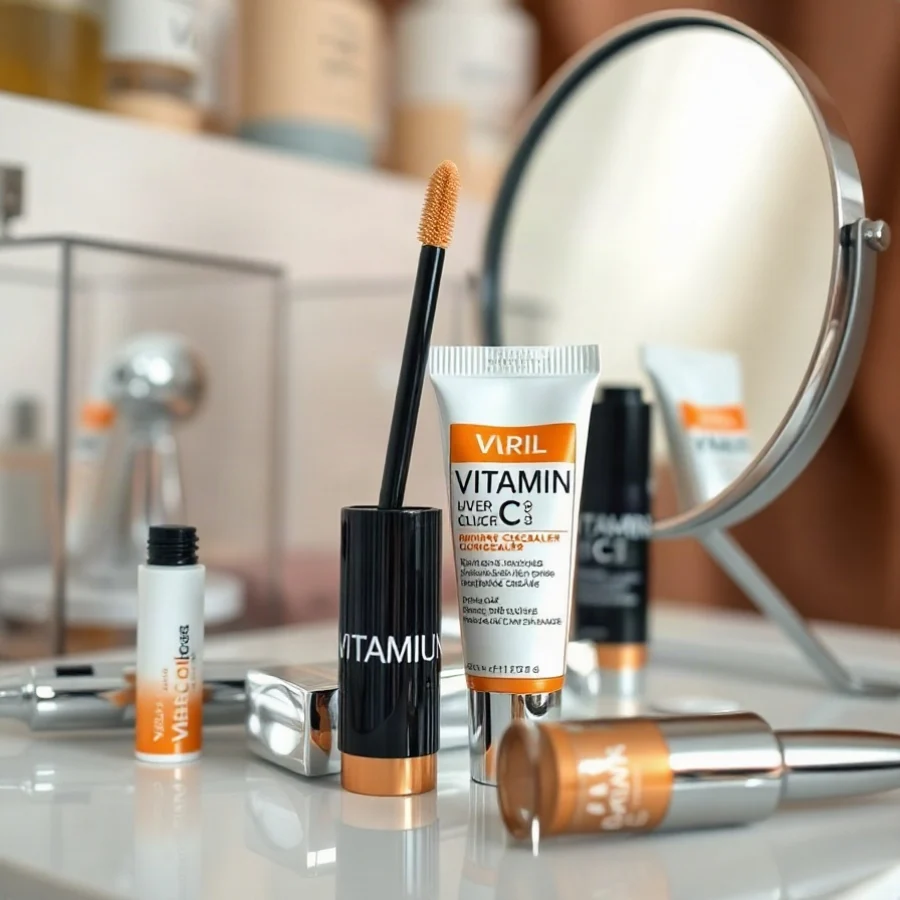
Use concealer only where you want coverage. A thin layer often looks more natural than a heavy application across the entire under-eye area. Tap the product into place rather than rubbing it back and forth. If more coverage is needed, build it gradually after the first layer has settled.
5. Set selectively
Powder can help reduce movement, but too much powder may emphasize dryness and fine lines. If you use it, apply a minimal amount only where creasing or transfer is a concern. You may not need powder if the concealer sets comfortably on its own.
Why vitamin C is used in under-eye products
Vitamin C is a broad ingredient category that includes several forms with different stability and texture characteristics. In cosmetic skincare, vitamin C products are commonly used to support a brighter-looking, more even appearance. Some formulas may also be designed to provide antioxidant support, although the experience and performance can vary by the vitamin C form, the rest of the formula, storage conditions, and individual skin response.
That does not mean a vitamin C eye cream will correct every cause of dark-looking under-eye skin. The appearance of dark circles can be influenced by visible blood vessels, natural shadows from facial structure, pigmentation, thin or dry-looking skin, and temporary changes in fluid retention. A cosmetic product may improve the look of hydration or brightness without addressing every factor behind the appearance.
For a broader explanation of common eye-area ingredients, see the site’s eye cream ingredient guide. Product formulas can change, so check the current package and manufacturer ingredient list when a specific vitamin C form or other ingredient matters to your routine.
Choosing a formula that works under makeup
The best under-concealer eye cream is not necessarily the richest or most active formula. Texture and tolerance are especially important when makeup will be layered on top.
Look for a finish that settles
A lightweight cream, gel-cream, or lotion-like texture may be easier to wear under concealer than a very oily balm. However, texture names are not standardized, and the same description can feel different from one product to another. Reading the directions and considering the ingredient list can give you useful clues, but personal tolerance still matters.
Consider your skin’s moisture needs
If your under-eye area is dry, a more emollient formula may make concealer look less rough or flaky. If your skin is prone to makeup movement, a lighter product may be more comfortable. You can learn more about adjusting products for different needs in the guide to sensitive skin or the guide to dry skin.
Pay attention to the rest of the formula
Vitamin C is not the only ingredient that affects how an eye cream feels. Humectants can contribute to a hydrated feel, while emollients and occlusive ingredients can make a formula feel richer. Fragrance, essential oils, exfoliating ingredients, and other potentially irritating components may not suit everyone, especially around the eyes. The label and current ingredient list are more reliable than a product’s marketing category alone.
How to prevent pilling and creasing
Pilling can happen when layers do not combine well, when too much product is used, or when products are rubbed repeatedly. It is not always a sign that the eye cream is ineffective; it is usually a sign that the combination or application method is not working well for your makeup routine.
- Use less eye cream and spread it in a thin layer.
- Allow each layer to settle before applying the next one.
- Press products into the skin instead of vigorously rubbing them.
- Try the eye cream with your concealer on a different day before relying on the combination for an event.
- Apply moisturizer around, rather than heavily over, the area if the eye cream already feels sufficiently hydrating.
- Use a compatible concealer texture; a very emollient eye cream and a very creamy concealer may move more than a lighter pairing.
If a product consistently pills, you can reserve it for evenings or use it on mornings when you are not wearing concealer. A routine does not have to include every product at every time of day.
Safety considerations for the eye area
Vitamin C products can feel irritating for some people, particularly when the formula includes other active ingredients or when the skin barrier is already uncomfortable. Follow the product’s directions, avoid the eye itself, and consider a small patch test before applying a new product broadly. A patch test cannot predict every reaction, but it is a reasonable precaution.
If you notice persistent stinging, burning, swelling, redness, watering, or a rash, stop using the product. Do not continue trying to cover irritation with concealer. Seek medical advice for severe or persistent symptoms, eye pain, vision changes, or swelling that concerns you. This article addresses cosmetic layering and appearance; it is not a diagnosis or treatment plan for an eye or skin condition.
People with very sensitive skin may prefer introducing the product less often at first, if the label allows, rather than immediately using it every morning. Avoid combining multiple potentially irritating actives around the eyes until you know how your skin responds.
What results should you expect?
Vitamin C eye cream may make the area look temporarily more comfortable, moisturized, or refreshed, especially when dryness contributes to a dull or crepey appearance. Concealer can then look smoother because it is being applied over more flexible skin. These are cosmetic appearance effects, not proof that the underlying cause of dark circles has changed.
Some dark circles are more noticeable because of shadows, facial anatomy, pigmentation, or visible vessels. Eye cream and concealer may soften their appearance, but they cannot be expected to erase them completely. Puffiness can also vary with sleep, allergies, irritation, or other factors. If swelling is new, persistent, one-sided, painful, or accompanied by other symptoms, a qualified medical professional can help assess it.
Keep expectations realistic with fine lines as well. Hydration can temporarily make some lines look less pronounced, while makeup technique can reduce emphasis on texture. Neither effect should be interpreted as a permanent change.
A simple morning routine to try
- Cleanse gently or rinse the face, then pat dry.
- Apply a small amount of vitamin C eye cream according to the label.
- Keep the product out of the eyes and away from the immediate lash line.
- Wait until the cream has settled.
- Apply a thin layer of concealer and tap to blend.
- Add a small amount of powder only if needed.
- Check the finish in natural light and remove any excess product that has gathered in creases.
If this routine causes pilling, try reducing the amount of eye cream first. If it causes irritation, stop using the product rather than trying to solve the problem with more makeup. For help organizing products by concern and skin preference, you can also use the under-eye routine builder.
The takeaway for makeup wearers
Vitamin C eye cream can be worn under concealer when the formula agrees with your skin and has time to settle. The most dependable approach is a small amount, gentle application, a short pause, and thin layers of makeup. Choose products based on tolerance and texture rather than expecting vitamin C to eliminate dark circles or transform the under-eye area. Always verify the current packaging and manufacturer ingredient list, since formulas and directions may change.

Comments
0No comments yet. Be the first to share a helpful note or question.
Leave a Comment
Your email address will not be published. Comments are reviewed before appearing on the site.