
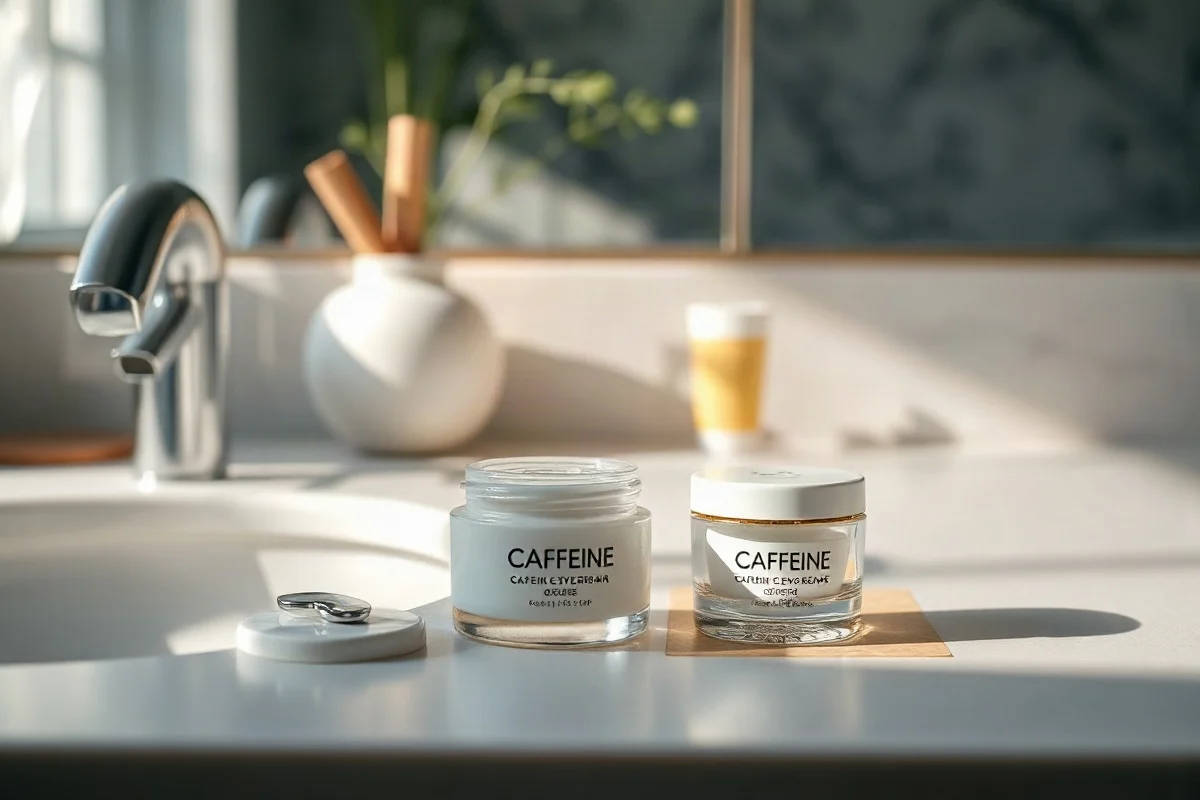
Caffeine eye cream may temporarily make the under-eye area look less puffy and more awake, especially when morning fluid retention contributes to a tired appearance. It may also provide hydration and a smoother-looking surface, depending on the rest of the formula. However, caffeine is not a universal solution for dark circles, and it does not diagnose, treat, or permanently remove the causes of discoloration, hollowness, visible veins, or under-eye bags.
That distinction matters because “dark circles” describes several different cosmetic concerns. Shadowing from facial structure, brown or gray discoloration, bluish tones from visible blood vessels, dryness, and puffiness can look similar in a mirror but may respond differently to skin care. Caffeine may be most relevant to temporary puffiness and a fatigued appearance. It is less likely to make a major difference when darkness is primarily caused by genetics, pigmentation, or volume loss.
How caffeine may affect the look of the under-eyes
Caffeine is a plant-derived stimulant commonly included in eye creams, gels, serums, and patches. In topical skin care, it is used mainly for its potential to create a temporarily more toned, less swollen-looking appearance. The eye area is delicate, and the skin there can show changes in fluid balance and blood-vessel visibility more noticeably than other areas of the face.
When an eye product containing caffeine is applied, the overall effect comes from the complete formula rather than caffeine alone. A lightweight gel may feel cooling and comfortable in the morning, while a cream with humectants and emollients may soften dry texture. Some products are packaged with metal or ceramic applicators that add a cooling sensation during use. That sensation can make the area feel refreshed, but it should not be confused with a permanent change to the underlying cause of puffiness or dark circles.
Temporary puffiness
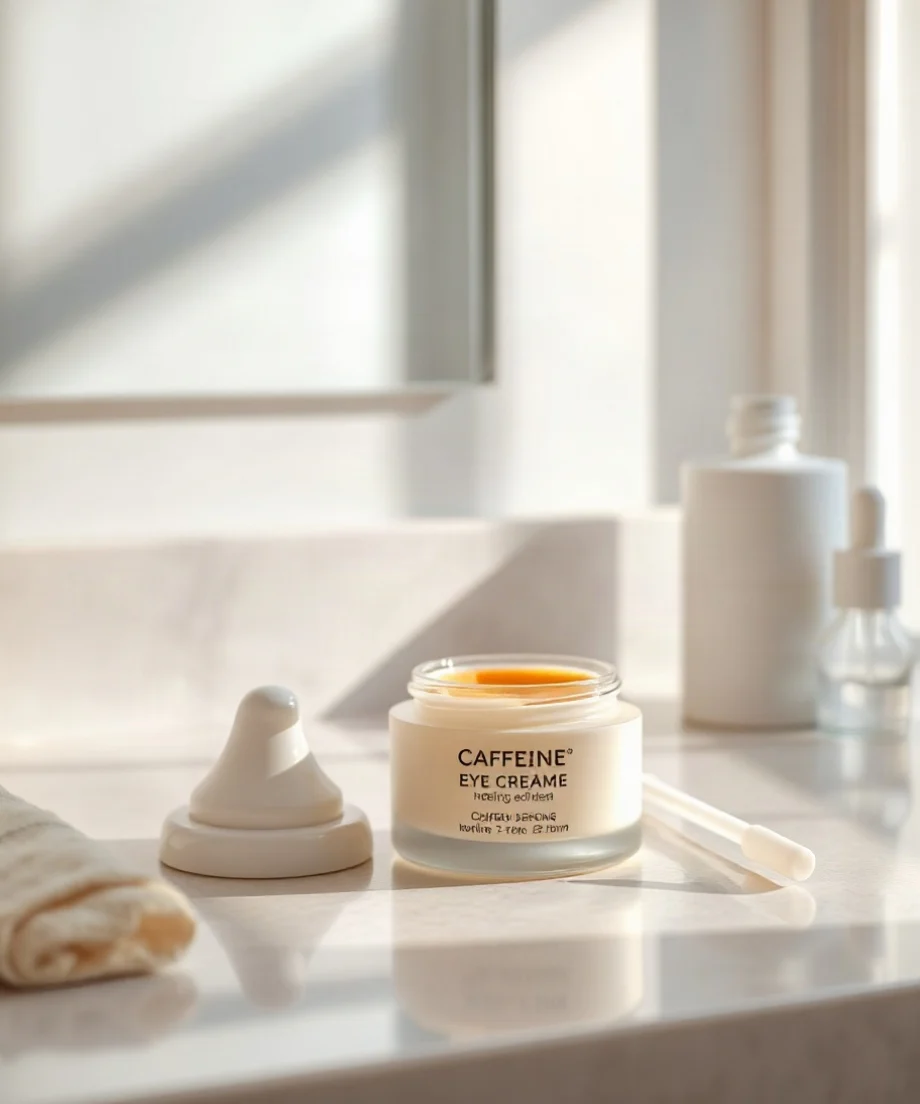
Caffeine may help reduce the appearance of mild, temporary puffiness for some people. This is often the type of swelling noticed after waking, sleeping poorly, crying, eating a particularly salty meal, or spending a long period lying down. The result, when it occurs, is generally cosmetic and short-lived.
An eye cream cannot be expected to change prominent under-eye bags caused by anatomy, persistent tissue changes, or age-related shifts. It also cannot determine why swelling is occurring. If swelling is new, severe, one-sided, painful, persistent, or accompanied by other symptoms, skin care is not a substitute for medical evaluation.
A tired-looking appearance
By making puffiness look less noticeable and adding moisture to dry skin, a caffeine product may help the eye area appear brighter or more rested. This effect can be especially noticeable when dryness emphasizes fine texture. Still, “brighter” usually means the surface looks smoother or less swollen; it does not necessarily mean that the product has changed the color of the skin.
What caffeine eye cream may not do
Caffeine is often marketed alongside broad claims about dark circles, but the ingredient has practical limits. It is unlikely to erase every type of under-eye darkness, and no topical product can guarantee the same result for every person.
It may not change inherited pigmentation
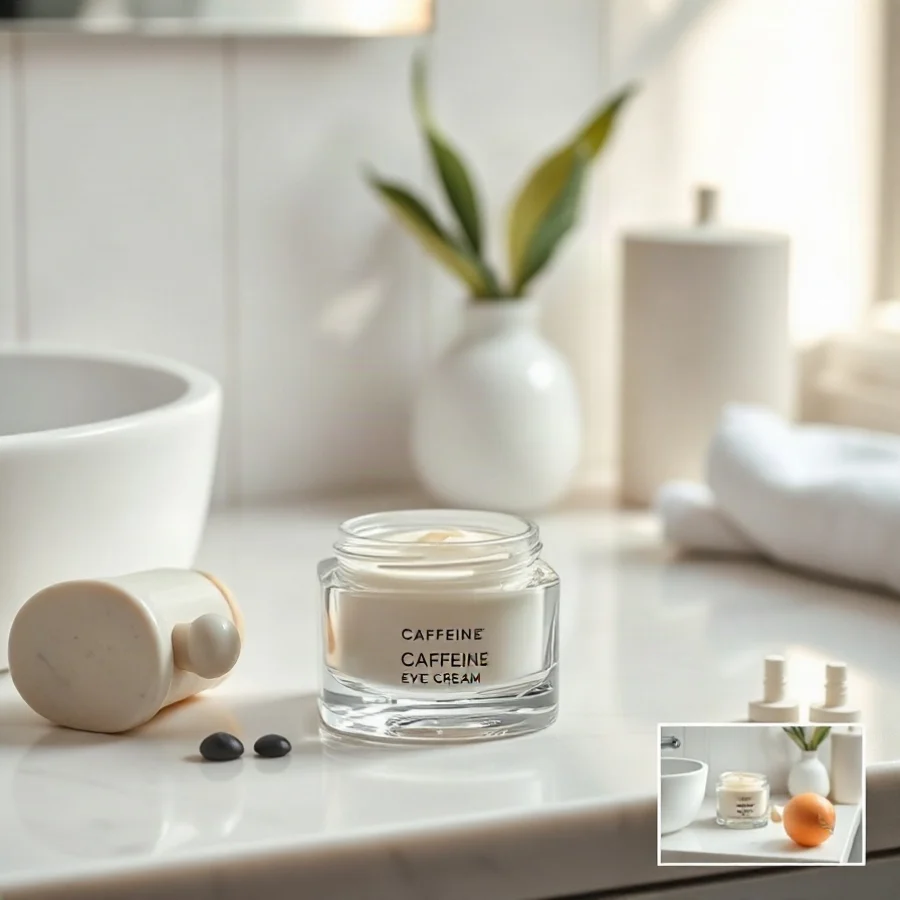
Some dark circles are related to melanin and may appear brown, tan, or gray-brown. These concerns may be influenced by genetics, sun exposure, irritation, or rubbing the eyes. Caffeine is not primarily a pigment-targeting ingredient, so it may not noticeably change this type of discoloration. Daily sun protection and a gentle routine may be more relevant, although persistent pigmentation can have many possible causes.
It may not remove blue or purple tones
Thin under-eye skin can make underlying blood vessels appear blue, purple, or reddish. The appearance may also vary with skin tone, lighting, fatigue, and hydration. A caffeine product may make the area look temporarily less congested or puffy, but it does not permanently conceal or remove visible vessels.
It cannot fill structural hollows
Sometimes what appears to be a dark circle is partly a shadow created by a tear trough or natural facial structure. Moisturizer can improve the look of dry texture around the hollow, but an eye cream cannot replace lost volume or alter bone structure. In this situation, changing lighting or using makeup may create a more noticeable visual difference than changing products.
It does not function like a sleep replacement
A morning eye gel may make the skin look more refreshed, but it cannot compensate for ongoing sleep deprivation, dehydration, allergies, or other factors that affect the appearance of the eye area. A product can support the surface of the skin while the broader cause remains unchanged.
Look at the entire formula, not just caffeine
The supporting ingredients often determine whether a caffeine eye cream feels useful in a daily routine. Because product formulas vary, check the current packaging or the manufacturer’s ingredient list before buying or relying on a specific product. Ingredient lists and packaging can change over time.
Hydrating ingredients
Humectants such as glycerin, hyaluronic acid, and certain forms of sugar-based ingredients can help attract water to the skin’s surface. This may temporarily make fine dehydration lines look less pronounced. Hydration does not remove wrinkles, but it can improve the look and feel of dry under-eye skin.
Barrier-supporting ingredients
Emollients, occlusive ingredients, and skin-supportive lipids can help reduce moisture loss. These ingredients may be helpful when the eye area feels tight, flaky, or easily irritated. A richer texture can be comfortable for dry skin, while a lighter gel may suit people who dislike a heavier finish or who experience morning puffiness.
Other active ingredients
Some caffeine products also include ingredients such as peptides, niacinamide, vitamin C derivatives, soothing agents, or retinoid-related ingredients. Their purposes and irritation risks differ. Do not assume that a product has the same benefits as caffeine alone, and do not infer a concentration or clinical effect unless the manufacturer clearly provides that information.
If you are comparing formulas, our eye cream ingredient guide can help you understand common ingredients without treating marketing language as a guarantee.
How to use a caffeine eye cream
Use the product according to its label, since application directions vary. In general, a small amount is enough for both eyes. Apply it gently around the orbital area rather than rubbing directly against the lash line or getting the product into the eyes. Tapping with a clean fingertip can reduce pulling on delicate skin.
Many people prefer caffeine products in the morning because temporary de-puffing and a refreshing texture fit naturally into a daytime routine. Some formulas can be used at night as well, but there is no universal requirement to apply caffeine at a particular time. If the product pills under sunscreen or makeup, try using less product, allowing it to settle, or choosing a different texture.
Eye cream is only one part of a routine. Gentle cleansing, adequate moisturization, and daytime sun protection can help maintain the appearance of the surrounding skin. Avoid applying multiple potentially irritating actives around the eyes at once unless you already know your skin tolerates them. Our under-eye routine builder can help organize product choices by concern and skin type.
Who might want to try one?
A caffeine eye cream may be worth considering if your main concern is occasional morning puffiness, a tired-looking appearance, or dry texture that makes the area look less smooth. It can also be a convenient cosmetic step before makeup when you prefer a lightweight product.
Expectations should be more modest if your main concern is long-standing pigmentation, deep hollows, prominent bags, or darkening that has not changed with basic skin care. In those cases, caffeine may still be pleasant to use, but it may not be the ingredient that makes the biggest visible difference.
People with sensitive skin should introduce any new eye product carefully. Follow the label, consider a patch test on an appropriate area, and stop using the product if you develop burning, persistent redness, swelling, itching, or a rash. Avoid using it on broken or irritated skin. If symptoms continue or affect the eye itself, seek appropriate medical advice.
How to judge whether it is helping
Evaluate the product based on the specific change you want to see. For example, ask whether your morning puffiness looks temporarily reduced, whether the skin feels more comfortable, or whether concealer applies more evenly. These are more realistic measures than expecting all dark circles to disappear.
Take a consistent approach when comparing products: use similar lighting, observe the area at similar times of day, and give your routine enough time to establish whether the texture and hydration suit you. Avoid treating a flattering light, temporary cooling sensation, or makeup coverage as proof that the underlying concern has been changed.
For more information about different causes and appearance patterns, explore our guide to dark circles. If puffiness is your primary concern, our coverage of puffiness and eye bags may be more relevant than a general dark-circle product category.
The practical takeaway
Caffeine eye cream is best viewed as a cosmetic tool for temporarily improving the look of mild puffiness and tired-looking under-eyes. Its value depends on the full formula, your skin’s tolerance, and the reason the area looks dark or swollen in the first place. It may support a smoother, more hydrated appearance, but it is not a guaranteed fix for pigmentation, visible vessels, structural shadows, or persistent under-eye bags.
Choose a formula that matches your skin type, follow the current product directions, and verify the manufacturer’s ingredient list because formulas can change. With realistic expectations, caffeine can be a useful part of an under-eye routine without being treated as a cure-all.




Comments
0No comments yet. Be the first to share a helpful note or question.
Leave a Comment
Your email address will not be published. Comments are reviewed before appearing on the site.