
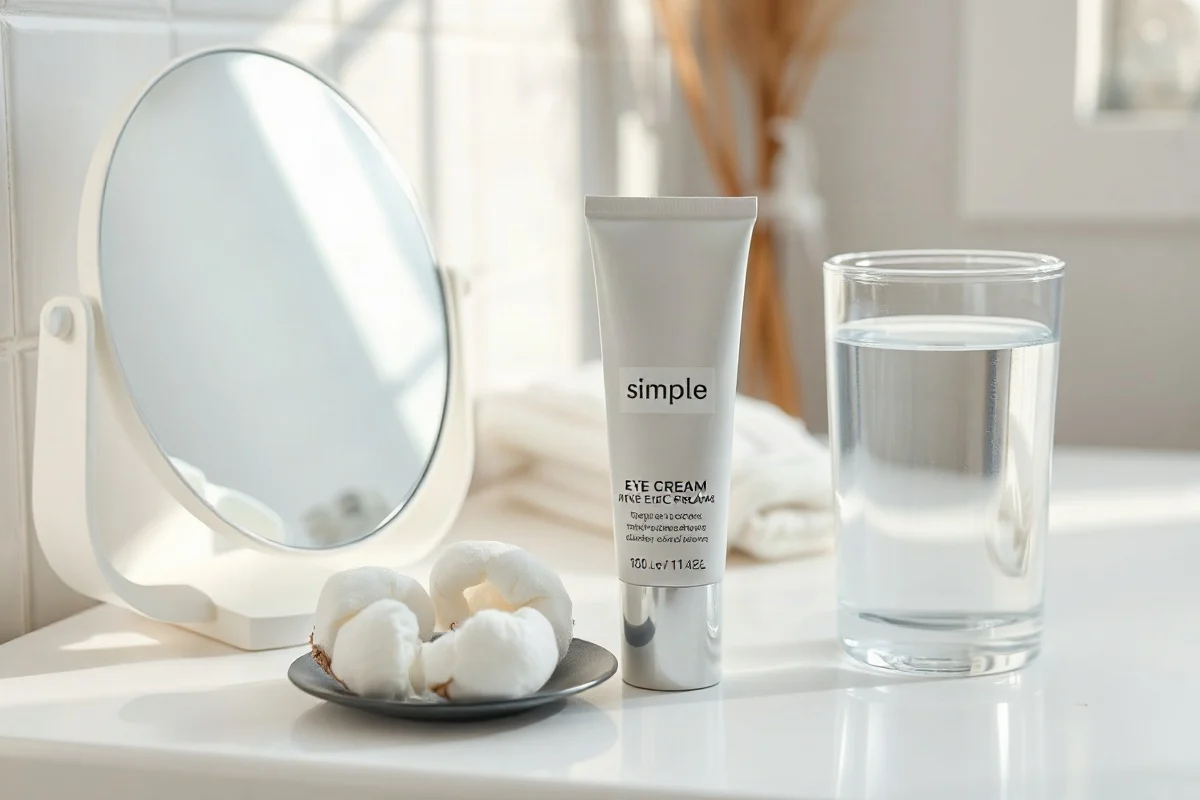
An eye cream is worth buying when it addresses a specific under-eye concern, suits your skin, fits comfortably into your routine, and makes realistic cosmetic claims. The best choice is not necessarily the most expensive product or the one with the longest ingredient list. It is the formula you can use consistently, tolerate comfortably, and evaluate fairly over time.
That sounds simple, but the under-eye area can make shopping confusing. Dark circles may look brown, blue, purple, or shadowed depending on skin tone, lighting, anatomy, and the position of the face. Puffiness can be temporary or persistent, while fine lines may appear more noticeable when the skin is dry. An eye cream can support hydration and improve the look of some of these concerns, but it cannot guarantee that every cause will respond to topical skincare.
Start with the concern you want to improve
A product is easier to judge when you know what you want it to do cosmetically. Instead of looking for a universal solution, choose an eye cream based on your main priority.
For dry-looking skin and fine lines
If the skin under your eyes feels tight, rough, or creased with makeup, hydration may be the most useful starting point. Ingredients such as humectants, emollients, and occlusive agents can help the skin hold onto water and feel more comfortable. Common examples include glycerin, hyaluronic acid, squalane, ceramides, and various plant-derived or synthetic emollients.
These ingredients may temporarily make fine lines look less pronounced by improving the skin’s surface hydration. That is a cosmetic appearance benefit, not a permanent removal of wrinkles. A richer cream may suit dry skin, while a lighter gel or lotion may feel better if you dislike a heavy finish.
For the look of puffiness
Some eye creams are designed to create a temporarily refreshed appearance. Caffeine is frequently used in products marketed for the look of puffiness, although the effect can vary by person and formula. Cooling applicators, lightweight textures, and gentle application may also make the area feel more awake without changing the underlying cause of swelling.
Skincare may have limited impact when puffiness is strongly influenced by anatomy, sleep disruption, allergies, fluid retention, or other health-related factors. Sudden, persistent, painful, or one-sided swelling deserves medical attention rather than a new cosmetic product.
For the appearance of dark circles
Dark circles are not one single cosmetic concern. They can be influenced by visible blood vessels, brown pigmentation, thin-looking skin, shadows from facial structure, dehydration, or a combination of factors. Because of that variety, no eye cream can reasonably promise the same result for everyone.
Brightening-focused formulas may contain ingredients such as vitamin C derivatives, niacinamide, licorice-derived ingredients, or other tone-supporting compounds. The exact formula matters, and product labels can change. Check the current packaging and the manufacturer’s ingredient list before buying, especially if you are comparing products based on a specific ingredient.
For more background on the different cosmetic patterns behind under-eye discoloration, see our guide to dark circles. The goal is to choose a product that may help the appearance of the concern you actually notice, rather than relying on a broad promise about all types of dark circles.
Look for a formula you can use consistently
Ingredient quality matters, but usability matters too. Even a thoughtfully formulated eye cream is unlikely to be useful if the texture pills under sunscreen, stings near the eyes, leaves a greasy film, or feels too difficult to apply.
Consider how the product fits into your normal routine. A lightweight formula may work well in the morning beneath concealer. A creamier formula may be more comfortable at night or for dry skin. If you wear contact lenses or have easily irritated eyes, avoid assuming that a product labeled “gentle” will work for you. Read the directions and stop using it if it causes burning, persistent redness, swelling, or other irritation.
Packaging can also affect the experience. A pump or squeeze tube may limit repeated contact with the formula, while a jar may be less convenient for some users. Packaging does not automatically determine whether a product is effective, but it can influence hygiene, portability, and how likely you are to use the product regularly.
Understand the role of active ingredients
An eye cream may include several types of ingredients, each with a different purpose. Learning those roles can help you compare products without treating the ingredient list as a guarantee.
Hydrating and barrier-supporting ingredients
Glycerin and hyaluronic acid are examples of humectants, which help attract and hold water at the skin’s surface. Ceramides, fatty acids, and emollients can support a smoother-feeling barrier, while occlusive ingredients help reduce water loss. These categories are often useful when the under-eye area looks dry or makeup emphasizes texture.
Brightening ingredients
Niacinamide, vitamin C derivatives, and licorice-derived ingredients may be included in formulas intended to improve the appearance of uneven tone. Different forms can behave differently, and the presence of an ingredient does not reveal its concentration, stability, or compatibility with the rest of the formula. Avoid assuming that a familiar ingredient will produce a predictable result in every product.
Retinoid-based formulas
Retinoid products are often selected for the appearance of fine lines and uneven texture. They can be irritating, particularly around the eyes, so follow the product’s directions and introduce the formula cautiously. Use only as directed, avoid applying too close to the eye if the label advises otherwise, and stop if irritation develops. Daytime sun protection is also an important part of a routine focused on visible signs of aging.
If you are considering this category, our eye cream ingredient guide can help you compare common ingredient groups and their typical cosmetic roles without treating them as guaranteed treatments.
Check the claims against what skincare can do
Marketing language can make a product sound more definitive than the evidence or the formula supports. Be cautious with claims that an eye cream will erase dark circles, permanently remove bags, cure puffiness, or eliminate wrinkles. Those promises do not account for the many factors that affect the eye area.
More realistic language includes “helps the look of,” “visibly smooths,” “hydrates,” or “temporarily reduces the appearance of.” Even these claims should be understood as product-specific and cosmetic. A smoother or brighter appearance may depend on regular use, skin condition, lighting, makeup, and individual response.
Do not treat an eye cream as a substitute for medical evaluation. Seek advice from a qualified health professional for new or changing discoloration, persistent irritation, significant swelling, pain, vision changes, or symptoms that concern you. Cosmetic skincare is intended to improve appearance and comfort; it is not a tool for diagnosing or treating an eye or skin condition.
Consider your skin type and sensitivity
Skin type can guide texture, but it should not be the only deciding factor. Dry skin may prefer a richer cream with barrier-supporting ingredients. Oily or combination skin may favor a lighter texture that layers easily. Sensitive skin may do better with a shorter, fragrance-free formula, although “fragrance-free” does not guarantee that irritation is impossible.
Potentially irritating ingredients deserve extra care around the eyes. Fragrance, essential oils, exfoliating acids, and retinoids may not suit everyone in this area. Follow the label, avoid getting the product directly into the eye, and consider a small patch test before applying it more broadly. A patch test cannot predict every reaction, but it is a reasonable precaution. If the skin becomes irritated, discontinue use rather than trying to push through the reaction.
You can find additional routine considerations in our guide to eye creams for sensitive skin. The most suitable product is often the one that gives you enough comfort and simplicity to keep using it.
Evaluate value beyond the price
Price alone does not tell you whether an eye cream is worthwhile. Compare the size, packaging, texture, ingredient priorities, and how often you expect to use it. A lower-cost formula may be a sensible choice if it meets your needs and does not cause irritation. A more expensive product may be reasonable if you prefer its texture or packaging, but a higher price is not proof of better results.
Read the full current ingredient list instead of relying only on front-label claims. Formulas can change, and online descriptions may not be updated at the same time as packaging. When a specific ingredient matters to your decision, verify the current label or the manufacturer’s information before purchasing.
Also consider whether you need a separate eye cream at all. A well-tolerated facial moisturizer may provide enough hydration for some people, provided the product’s directions support use near the eyes. An eye cream can still be worthwhile when you prefer its texture, packaging, or targeted ingredient selection, but it is not automatically necessary for everyone.
Apply it in a way that minimizes irritation
Use the amount directed on the label and apply it gently rather than rubbing the delicate skin. Many people prefer tapping a small amount around the orbital area, keeping the product away from the eye itself unless the instructions specifically say otherwise. More product is not automatically more effective and may increase the chance of migration into the eyes or pilling beneath makeup.
Introduce one new product at a time when possible. That makes it easier to identify the source of a reaction and prevents a crowded routine from making your skin feel overwhelmed. Give your routine enough time for a fair cosmetic assessment, while remembering that hydration can look different from gradual changes in the appearance of tone or texture.
A practical checklist before you buy
- What specific concern are you trying to improve: dryness, fine lines, puffiness, uneven tone, or several of these?
- Does the texture suit your routine, makeup habits, and skin type?
- Are the key ingredients appropriate for your tolerance level?
- Does the product make realistic appearance-focused claims?
- Have you checked the current packaging and manufacturer ingredient list?
- Can you use it consistently without stinging, pilling, or discomfort?
- Would a regular facial moisturizer meet the same need?
A worthwhile eye cream should earn its place through a sensible match between your concern, your skin, and your routine. Focus on comfort, transparent product information, and realistic expectations rather than dramatic promises. That approach will not guarantee a specific cosmetic outcome, but it can make your purchase more informed and your routine easier to maintain.

Comments
0No comments yet. Be the first to share a helpful note or question.
Leave a Comment
Your email address will not be published. Comments are reviewed before appearing on the site.