
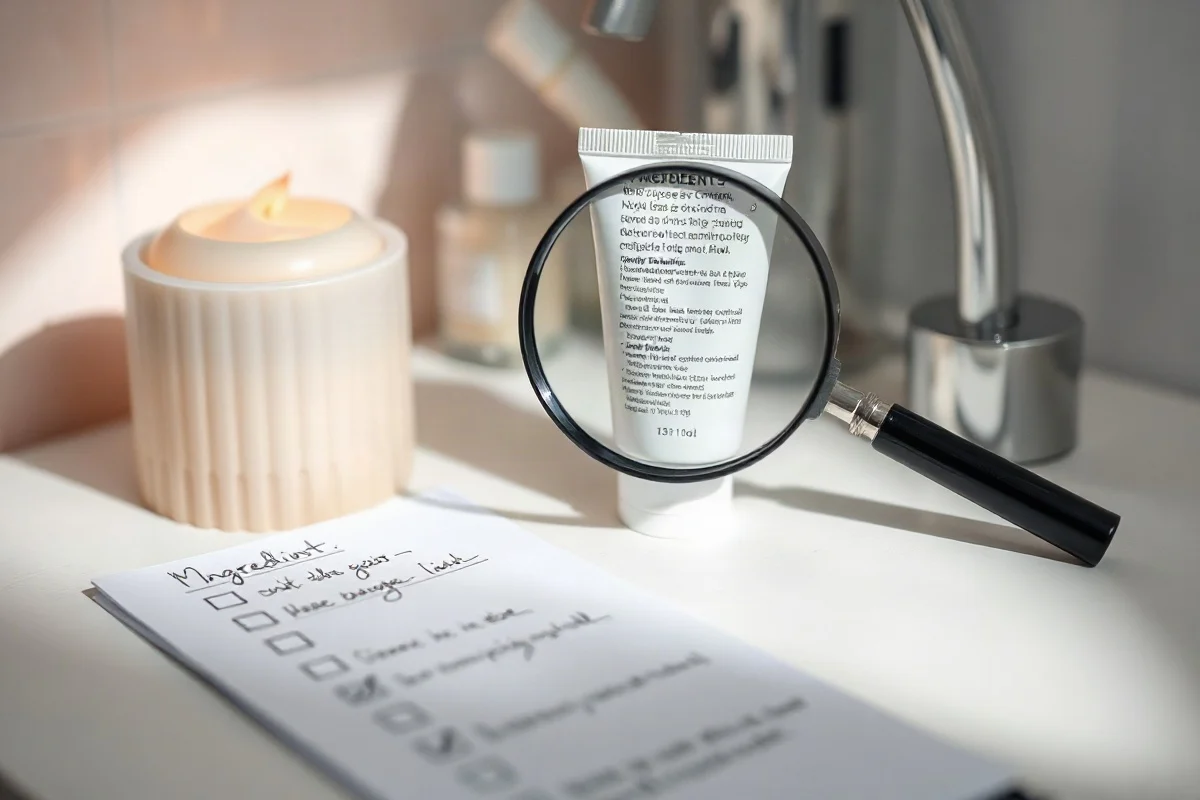
Before buying a budget eye cream, check the full ingredient list, intended use, packaging, potential irritants, and whether the formula fits your main concern. Look for ingredients that support hydration or temporarily improve the appearance of puffiness and dullness, but do not assume a low-cost product will erase dark circles, wrinkles, or other visible concerns. The best choice is usually the one you can use comfortably and consistently, with claims that match what the formula and label can reasonably support.
Eye creams are not automatically better than face moisturizers, and a higher price does not guarantee better results. Still, the skin around the eyes can be more sensitive than other areas, so reading the label matters. A few minutes of label-checking can help you avoid unnecessary fragrance, choose a texture that works for your routine, and identify ingredients that may be useful for your specific cosmetic goal.
Start with the product’s intended use
Read the front and back of the package before focusing on individual ingredients. Some products are labeled specifically for the eye area, while others are general face creams that suggest use around the eyes. A product marketed for the eye area may have directions and warnings that are more relevant to this location, but the label alone does not guarantee that it will suit every person.
Look for clear instructions about where to apply the product, how often to use it, and whether it should be kept away from the eye itself. The under-eye area is not the same as the eyelid or lash line. Unless the label says otherwise, avoid applying cream directly to the waterline or too close to the eye where it can migrate and cause discomfort.
Also consider the product’s primary purpose. A lightweight gel may be aimed at a fresh, cooling feel or temporary reduction in the look of puffiness. A richer cream may be more suitable for a dry-feeling under-eye area. Neither texture is automatically superior. The right option depends on how your skin feels and how the product behaves under sunscreen or makeup.
Read the full ingredient list, not just the front label
Front-of-package language can be useful, but it is usually selective. The full ingredient list gives you a better idea of the formula’s structure and helps you look for ingredients you already know your skin tolerates. Ingredient lists generally place ingredients in descending order by amount until the lower-concentration portion of the formula, although labeling conventions can vary.
Do not treat the ingredient list as a guarantee of performance. An ingredient’s presence does not reveal its concentration, stability, delivery system, or how your skin will respond. Product formulas can also change, so check the current packaging or the manufacturer’s current ingredient list when a specific detail matters.
If you want a broader explanation of common cosmetic ingredients, use the eye cream ingredient guide as a starting point. It can help you recognize familiar categories without turning one ingredient into a promise of a particular result.
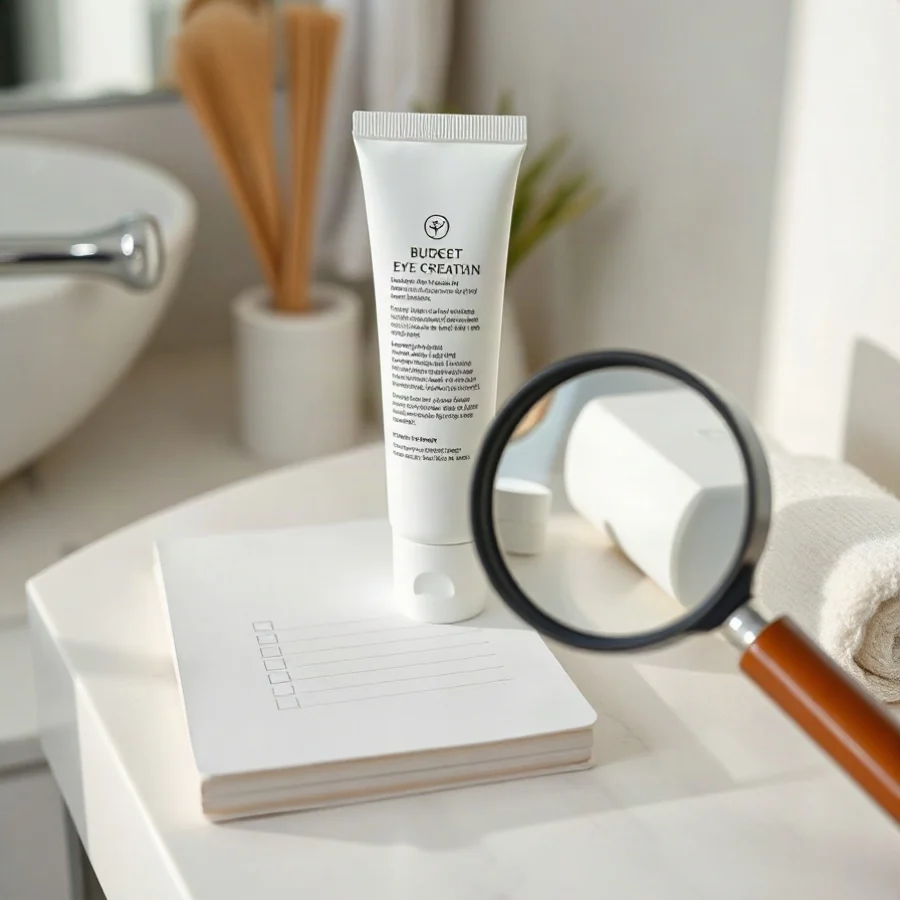
Look for ingredients that support hydration
For many people, a budget eye cream is most useful when it helps the under-eye area feel more comfortable and look temporarily smoother because of improved hydration. Ingredients commonly used for this purpose include humectants, emollients, and occlusive ingredients.
Humectants
Humectants help attract and hold water in the outer layers of the skin. Common examples include glycerin, hyaluronic acid, sodium hyaluronate, and panthenol. They may help dry-looking skin appear more supple, although the visible effect can be temporary and depends on the rest of the formula and the surrounding environment.
Emollients and occlusives
Emollients help soften the skin, while occlusive ingredients help reduce water loss by forming a protective layer. You may see ingredients such as plant oils, fatty alcohols, silicones, petrolatum, or mineral oil in these roles. These ingredients are not inherently undesirable. In an under-eye product, they can make the skin feel smoother and reduce the look of dryness-related texture.
If your under-eye area is dry, compare lightweight gels with creams that contain a broader mix of moisturizing ingredients. If you are prone to milia-like bumps or dislike a heavy finish, a rich texture may not be comfortable. Bumps around the eyes can have several possible causes, so do not try to diagnose them from a product label or assume an eye cream will resolve them.
Understand what popular active ingredients can and cannot do
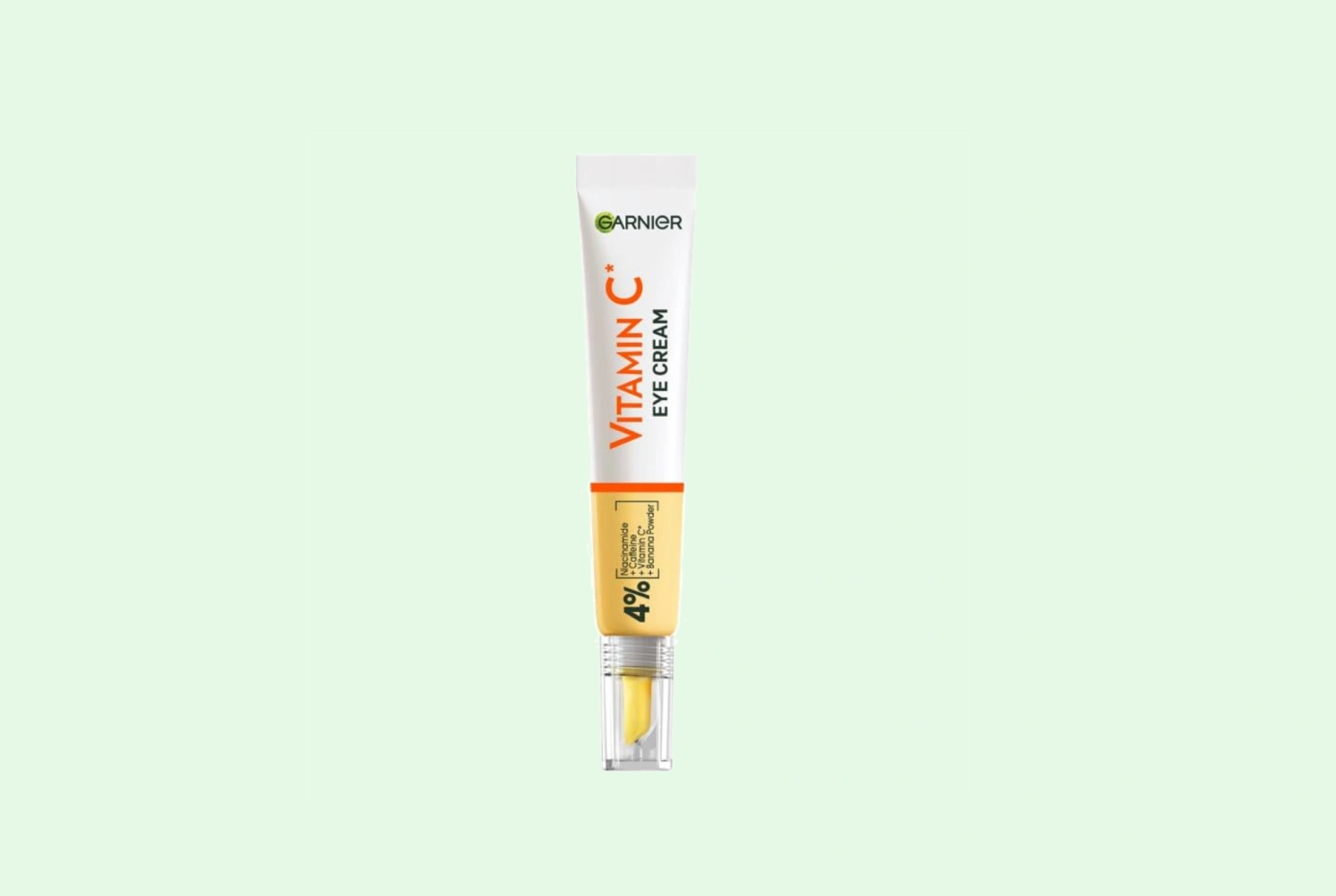
Budget formulas may feature familiar cosmetic actives, including caffeine, vitamin C derivatives, niacinamide, peptides, or retinoids. These ingredients can be reasonable options to investigate, but the label should not be read as proof that the product will produce a specific outcome.
Caffeine
Caffeine is commonly included in products designed to improve the temporary appearance of puffiness or tired-looking skin. If that is your main concern, focus on whether the formula feels comfortable and works well with your morning routine. It should not be treated as a permanent solution for under-eye bags or as a treatment for an underlying medical issue.
You can explore more products and ingredient information in our guide to caffeine eye cream.
Vitamin C and niacinamide
Vitamin C derivatives and niacinamide are often used in skincare for an overall brighter or more even-looking appearance. Their forms and formula stability can differ, and the label may not provide enough information to predict how effective or gentle a product will be. If the eye area is sensitive, introduce one new product at a time rather than layering several active formulas at once.
Retinoids
Retinol and related ingredients may appeal to shoppers concerned about the appearance of fine lines, but they can be irritating, especially in the delicate eye area. Follow the product’s directions carefully, use only the recommended amount, and avoid applying it to irritated or compromised skin. Start slowly if the label allows gradual introduction, and stop using the product if you experience persistent burning, swelling, significant redness, or worsening discomfort.
Retinoids are not appropriate for everyone or every routine. Read the product warnings and consider discussing questions with a qualified medical professional, particularly if you are pregnant, nursing, managing a skin condition, or using other potentially irritating products.
Check for fragrance and other potential irritants
Fragrance is not automatically harmful, but it can be an unnecessary source of irritation for some people, especially around the eyes. Look for terms such as “fragrance,” “parfum,” or listed fragrance components if you prefer to avoid added scent. Essential oils can also contribute fragrance and may not be the best choice for an easily reactive eye area.
Other ingredients may be perfectly acceptable for many users but irritating for some. Preservatives, botanical extracts, exfoliating acids, and active ingredients all have a role in cosmetic formulas, yet individual tolerance varies. A short ingredient list is not automatically safer, and a long ingredient list is not automatically problematic.
If you have sensitive skin, choose a simple routine and patch-test a new product according to general skincare safety guidance. Keep the product away from the eye itself, follow the package directions, and stop using it if irritation develops. Seek medical advice for persistent swelling, pain, vision changes, a rash, or symptoms that do not improve after stopping the product.
Pay attention to packaging and product hygiene
Packaging affects how easily you can use a product and how much contact it has with air, light, and your fingers. A pump or squeeze tube may be more convenient and hygienic than an open jar, although packaging alone does not determine formula quality. Choose a container that lets you dispense a small amount without repeatedly touching the product.
Check the seal before opening a new package. Do not use an eye product if the container is damaged, the product smells noticeably different from expected, or the texture has changed. Follow the period-after-opening symbol and storage instructions when provided. Avoid sharing eye products, and do not add water to a formula that has dried out.
Because formulas and packaging can change, verify current information on the product itself or the manufacturer’s website instead of relying on an older online listing. This is particularly important if you are avoiding a particular ingredient or have reacted to a similar product before.
Match the formula to your main concern
Dark circles are not one uniform issue. Their appearance may be influenced by visible pigmentation, shadows from facial structure, thin-looking skin, dryness, or a combination of factors. An eye cream may improve hydration and make the area look smoother, but it cannot be expected to address every reason the under-eye area appears darker.
Puffiness can also have multiple contributors, including temporary fluid retention, sleep disruption, allergies, or natural anatomy. A cooling gel may make the area feel refreshed, while a moisturizing formula may reduce the look of dryness. Neither should be described as a treatment for a medical condition.
Fine lines may look less noticeable when the skin is well moisturized, but cosmetic products do not provide a permanent eraser effect. If fine lines are your priority, compare texture, moisturizing ingredients, and your tolerance for potentially irritating actives rather than choosing a product based only on a bold claim.
For help organizing these choices, try an under-eye routine builder. It can help you think through skin type, goals, and how many products your routine realistically needs.
Use claims as clues, not proof
Words such as “brightening,” “firming,” “depuffing,” and “anti-aging” describe marketing positioning more than guaranteed outcomes. Treat them as prompts to inspect the ingredients, directions, and limitations. Be especially cautious of claims that promise to erase dark circles, remove bags permanently, rebuild skin, or deliver dramatic results quickly.
A budget eye cream does not need an impressive claim to be useful. A comfortable, well-tolerated moisturizer may be a sensible choice if your goal is to reduce the look of dryness. A product with a cooling texture may suit a morning routine if you enjoy how it feels. The practical value comes from fit, tolerability, and consistent use—not from the price or the boldest promise on the box.
Apply a small amount and keep expectations realistic
Use the amount and frequency listed on the package. More product is not necessarily more effective, and applying too much can increase the chance of migration into the eyes or create a heavy, pilled finish under makeup. Gently pat the product around the orbital area rather than rubbing aggressively.
Introduce one new eye product at a time so you can identify the likely cause if irritation occurs. Give your routine enough time to show whether the product is comfortable and cosmetically helpful, while remembering that visible changes may be subtle and temporary. If you dislike the texture, experience repeated irritation, or cannot use the product consistently, it may not be the right choice regardless of its ingredient list.
A quick label checklist
- Is the product labeled and directed for use around the eyes?
- Does the texture suit your skin type and makeup routine?
- Can you identify moisturizing ingredients that fit your goal?
- Does it contain fragrance or active ingredients you prefer to avoid?
- Are the directions, warnings, and storage instructions clear?
- Is the packaging sealed and practical to use hygienically?
- Have you checked the current ingredient list rather than an outdated listing?
- Do the claims sound cosmetic and realistic rather than medical or guaranteed?
Reading a budget eye cream label is less about finding one perfect ingredient and more about avoiding a poor match. Start with your main cosmetic concern, check the current formula, consider sensitivity and packaging, and choose a product you can use as directed. For more background, browse our coverage of drugstore eye creams and compare options with realistic expectations.

Comments
0No comments yet. Be the first to share a helpful note or question.
Leave a Comment
Your email address will not be published. Comments are reviewed before appearing on the site.