
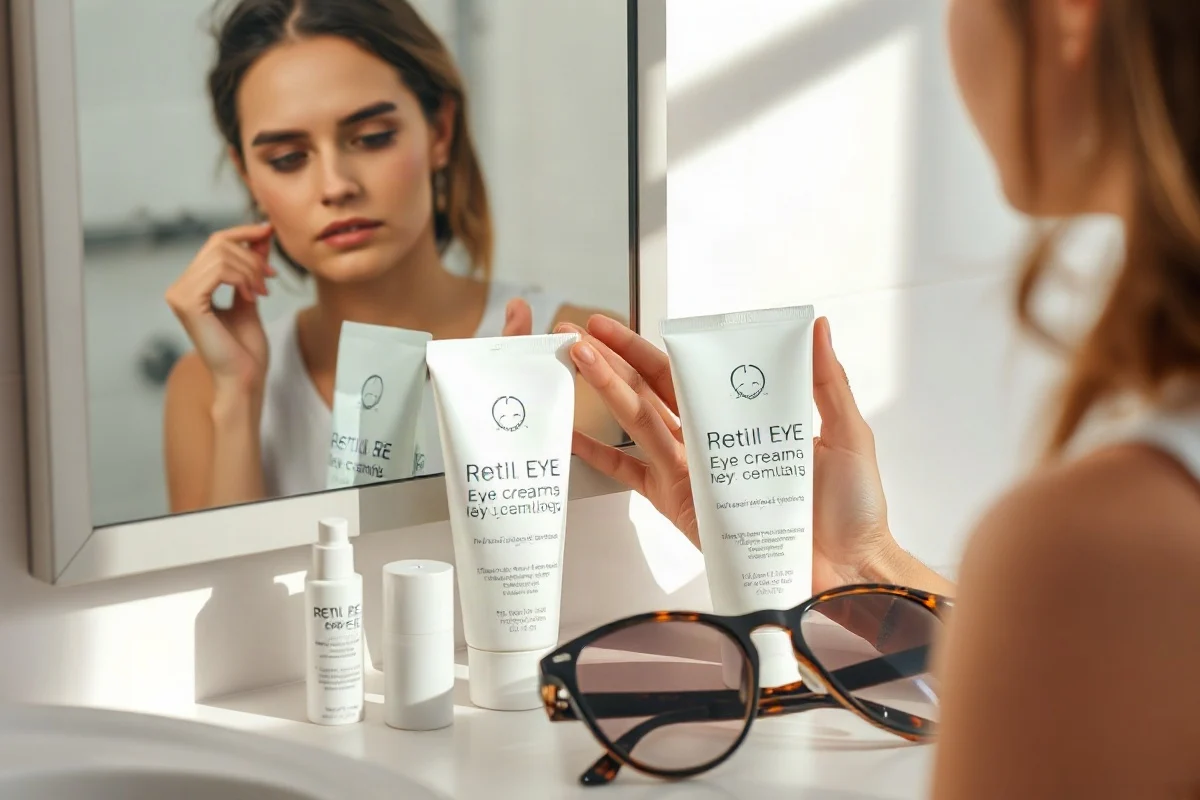
Before buying a retinol eye cream, look beyond the word “retinol.” Check the full ingredient list, packaging, texture, supporting ingredients, usage directions, and return policy, then consider whether your under-eye concern is mainly uneven-looking tone, puffiness, dryness, or fine lines. Retinol may help improve the appearance of skin texture and fine lines over time, but it can also cause irritation, especially around the eyes. A thoughtful choice should balance potential cosmetic benefits with tolerability.
It is also important to set realistic expectations. Under-eye darkness can have several visible contributors, including shadows from facial structure, visible blood vessels, uneven pigmentation, dryness, or temporary fatigue. A retinol eye cream may be relevant to some appearance concerns, but it is not a universal answer and does not diagnose or treat the underlying cause of dark circles.
Start with the concern you want to address
“Dark circles” describes an appearance rather than one single skin condition. Before comparing products, decide what you notice most when you look at the under-eye area.
- Fine lines and rough texture: Retinol is often considered when the goal is to improve the look of uneven texture and visible lines.
- Dryness and creasing: A formula with moisturizing and barrier-supporting ingredients may be more immediately useful for a dry, tight-looking eye area.
- Puffiness: Retinol is not primarily a de-puffing ingredient. A lightweight product and practical habits may be more relevant, although persistent or unusual swelling deserves medical attention.
- Brown-looking discoloration: Retinol may be part of a broader cosmetic routine, but sun protection and other brightening-focused ingredients may also matter.
- Blue, purple, or shadowed circles: These may not change substantially with a topical retinol product because visible color can be influenced by thin skin, blood vessels, or facial anatomy.
For more background on the different appearances and possible contributors, see our guide to dark circles. If the color or swelling is new, one-sided, painful, or accompanied by other symptoms, consider asking a qualified healthcare professional rather than treating it as a cosmetic issue alone.
Check which retinoid the product uses
Product labels may use several related terms, including retinol, retinal, retinyl esters, or broader wording such as “retinoid.” These ingredients are not interchangeable in practical use. They can differ in how they are converted in the skin, how a formula is designed, and how likely they are to cause dryness or irritation.
A product that simply highlights “vitamin A” may not give you enough information to understand which retinoid it contains. Read the current ingredient list and the directions on the package. If the label does not clearly identify the active or retinoid-related ingredient, contact the manufacturer or choose a product with more transparent labeling.
Do not assume that a stronger-sounding ingredient is automatically better for the thin, sensitive skin around the eyes. The most useful option is often one that you can use consistently without persistent discomfort. Ingredient lists and formulas can change, so verify the current packaging or manufacturer information before making a product-specific decision.
Look for a formula that supports the skin barrier
Retinol is only one part of an eye cream. Supporting ingredients can affect how comfortable the product feels and how well it fits into a routine. Depending on your skin type, you may want to look for moisturizing ingredients such as glycerin, hyaluronic acid, squalane, ceramides, or emollient oils. These ingredients do not make retinol irritation impossible, but they may help the formula feel less drying.
Panthenol and soothing ingredients may also be appealing when the goal is a more comfortable routine. However, “soothing” on a label is not a guarantee that a product will suit reactive skin. A long ingredient list can include additional botanical extracts, fragrance components, or essential oils that some people may prefer to avoid around the eyes.
For a closer look at common eye-care ingredients, use our eye cream ingredient guide. The ingredient list can help you compare products, but it cannot predict exactly how your skin will respond.
Consider fragrance and other potential irritants
The eye area is easily exposed to product migration, rubbing, tears, and frequent facial movement. If your skin is sensitive, a fragrance-free formula may be a sensible starting point. This does not mean every fragranced product will cause a problem, or that fragrance-free products are automatically irritation-proof. It simply removes one potential source of discomfort for people who know they react to fragrance.
Be cautious with products that combine retinol with several other potentially irritating actives. Exfoliating acids, strong fragrance, and multiple active ingredients may make it harder to identify what is causing redness or stinging. A simpler formula can make a new routine easier to evaluate.
If you have a history of eczema, contact dermatitis, or frequent reactions around the eyes, consider discussing new active skincare with a qualified healthcare professional. Stop using a product if you develop significant burning, swelling, rash, or persistent irritation, and seek medical advice when symptoms are severe or do not settle.
Pay attention to packaging and storage
Retinoids can be sensitive to environmental conditions, so packaging deserves more attention than it often receives. An opaque, air-restrictive tube or pump may help limit exposure to light and air compared with a wide-mouth jar, although packaging alone does not reveal how stable a specific formula is.
Follow the storage instructions on the label. Avoid leaving the product in a hot, humid place if the manufacturer advises otherwise, and close the container securely after use. Do not buy a product with damaged packaging, an unusual smell, or a changed color or texture unless the manufacturer confirms that the change is expected.
Because products can be reformulated, check the ingredient list on the actual package you receive. Older reviews, retailer descriptions, and search results may not reflect the current formula.
Choose a texture you can use carefully
A rich cream may feel more comfortable on dry skin, while a lighter lotion or gel-cream may suit people who dislike a heavy finish. Texture also affects how easily the product spreads and whether it is likely to migrate toward the eyes.
Apply only the amount directed on the label. More product does not necessarily mean faster visible improvement and may increase the chance of irritation. Keep the product on the orbital area recommended by the manufacturer rather than applying it directly to the eyelids, lash line, or inside the eye unless the label specifically says it is appropriate.
Using a small amount on dry skin can help reduce unnecessary spread. Wash your hands before application, and avoid rubbing the area. If you use moisturizer, follow the product directions; some people may prefer applying moisturizer before or after retinol to improve comfort, but the correct approach depends on the formula and their skin’s tolerance.
Plan a gradual introduction
If you are new to retinoids, start slowly and follow the product instructions rather than copying a routine designed for another person. A cautious introduction gives you time to notice dryness, flaking, redness, stinging, or watery eyes before increasing use.
Patch testing can be useful, but it has limits. Testing a small amount on an inconspicuous area may help identify an obvious reaction, yet it cannot guarantee that the under-eye area will tolerate the product. The skin around the eyes may respond differently from the skin on your arm or cheek.
During the adjustment period, avoid adding several new active products at once. If irritation occurs, stop using the retinol product and simplify your routine until your skin feels comfortable. Do not push through significant irritation in the hope of getting better cosmetic results.
Do not skip daytime sun protection
Retinol routines should be paired with sensible daytime sun protection. Use a broad-spectrum sunscreen as directed on areas that are exposed, and consider sunglasses or a hat for additional protection. Be careful around the eyes and follow the sunscreen label to avoid getting the product into them.
Sun protection is especially relevant when uneven-looking tone is one of your concerns. It can help reduce ongoing exposure that may make discoloration appear more noticeable, although it does not guarantee that existing dark circles will disappear.
Review the cautions before purchasing
Read the full label for warnings, usage limits, and any advice about pregnancy, breastfeeding, or combining the product with other treatments. Retinoid guidance can vary by product and by individual circumstances. If you are pregnant, trying to conceive, breastfeeding, taking prescription medication, or managing a skin condition, ask a qualified healthcare professional whether the product is appropriate for you.
Also consider whether you are already using retinol elsewhere on your face. Layering multiple retinoid products may increase the risk of dryness without being necessary. A routine builder such as our under-eye routine guide can help you think through product order and compatibility, but the product label should remain the primary source for use instructions.
What results can you reasonably expect?
Cosmetic skincare changes are usually gradual and vary from person to person. With consistent, tolerated use, a retinol eye cream may help some people see a smoother-looking texture or less noticeable fine lines. It may not significantly change circles caused mainly by shadows, hollowness, visible vessels, or genetics.
Moisturizing ingredients may make the skin look temporarily plumper or more comfortable, which can soften the appearance of dryness-related creasing. That effect should not be confused with a permanent structural change. Similarly, improved surface texture does not mean that wrinkles or dark circles have been erased.
Choose based on a realistic goal, a tolerable formula, clear directions, and packaging you trust. The best retinol eye cream is not necessarily the most expensive or the strongest-sounding option. It is the one whose ingredients, texture, precautions, and routine fit your skin and that you can use responsibly.

Comments
0No comments yet. Be the first to share a helpful note or question.
Leave a Comment
Your email address will not be published. Comments are reviewed before appearing on the site.