
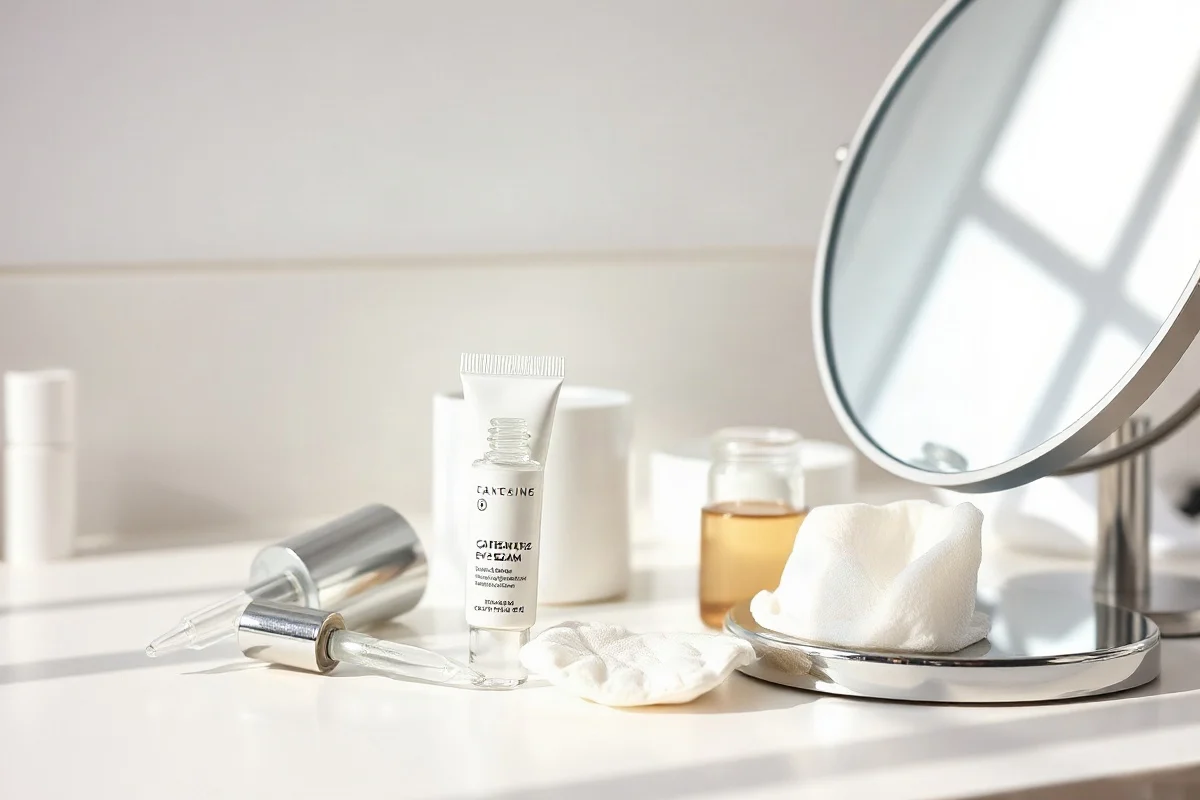
The best caffeine eye cream formula is not simply the one with caffeine listed on the front of the package. Look for a product with caffeine alongside well-tolerated hydrating and skin-supporting ingredients, a texture that suits your skin type, packaging that helps protect the formula, and instructions you can follow consistently. Caffeine may temporarily make the under-eye area look less puffy or tired, but it cannot address every type of dark circle or replace medical evaluation when symptoms are persistent or unusual.
Under-eye concerns have several possible cosmetic contributors, including visible blood vessels, shadows from facial structure, uneven pigmentation, dryness, and temporary fluid-related puffiness. A caffeine eye cream may be most relevant when your main concern is a tired-looking or puffy appearance. Choosing the rest of the formula carefully can help reduce the chance that the product leaves this delicate area dry, tight, or irritated.
What caffeine can and cannot do
Caffeine is commonly used in eye-area skincare because it has a temporary stimulating and tightening effect on the appearance of skin. In a cosmetic formula, it may help the eye area look more awake, particularly when puffiness is making shadows appear more noticeable. The visible effect can vary depending on the individual, the product’s complete formula, application habits, sleep, allergies, and the underlying reason for the concern.
This ingredient should be viewed as an appearance-supporting option rather than a treatment for dark circles. Caffeine does not guarantee that genetic pigmentation, sun-related discoloration, pronounced hollows, or naturally visible blood vessels will disappear. It also does not permanently remove puffiness or fine lines. For a broader overview of possible contributors, see our guide to dark circles.
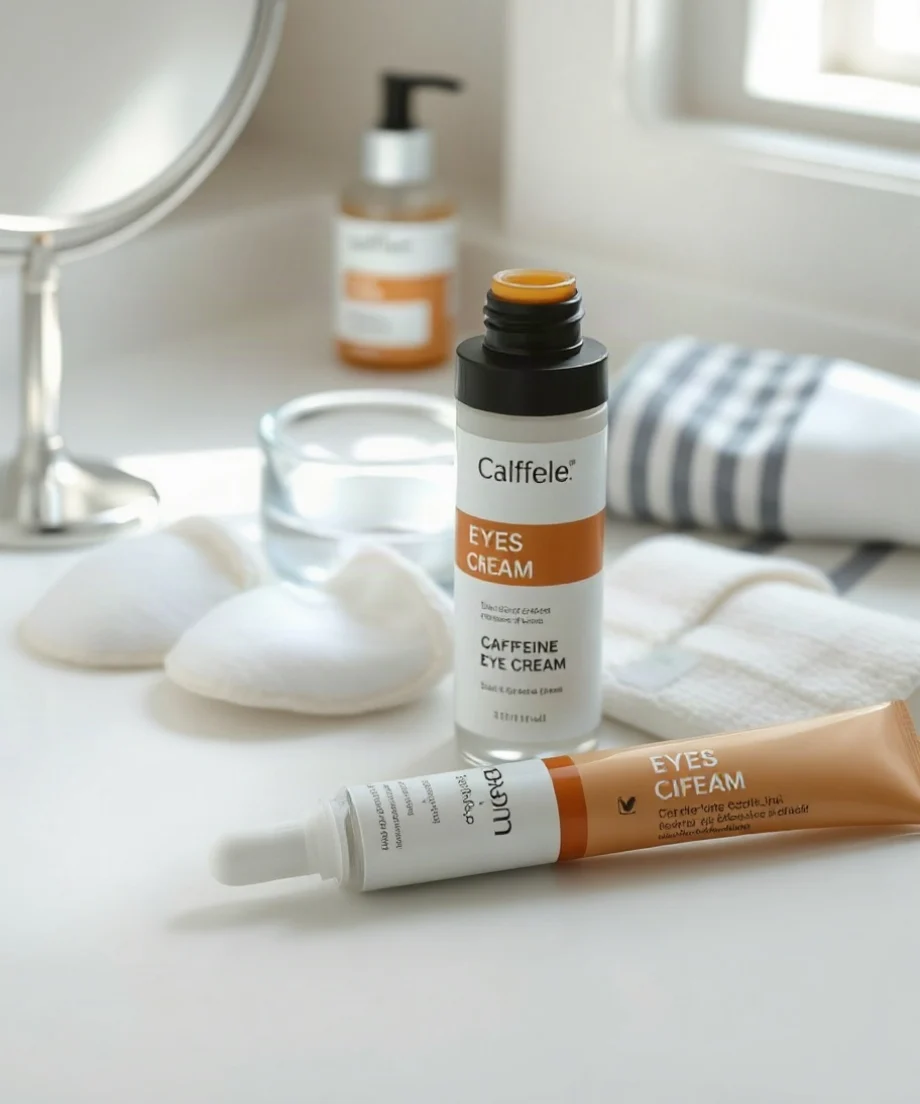
Ingredients that can complement caffeine
Caffeine is only one part of an eye cream formula. Supporting ingredients often determine whether a product feels comfortable and whether it addresses additional cosmetic concerns such as dryness or a rough-looking texture.
Humectants for lightweight hydration
Humectants attract and hold water near the skin’s surface. Common examples include glycerin, hyaluronic acid, sodium hyaluronate, and panthenol. These ingredients can make dry-looking under-eye skin feel more comfortable and temporarily appear smoother by improving surface hydration.
Hydration may soften the appearance of fine lines caused or emphasized by dryness, but it does not erase lines or change the structure of the skin. If you tend to dislike rich eye creams, a caffeine formula with humectants in a light gel or lotion may be a practical choice. If your skin is very dry, humectants may work better when paired with emollients and occlusive ingredients.
Emollients and barrier-supporting ingredients
Emollients help make the skin feel softer, while occlusive ingredients help reduce water loss from the surface. Depending on the product, you may see ingredients such as squalane, dimethicone, shea butter, plant oils, or fatty alcohols. These ingredients are not automatically too heavy for the eye area; the right choice depends on your skin type and how the product layers with sunscreen or makeup.
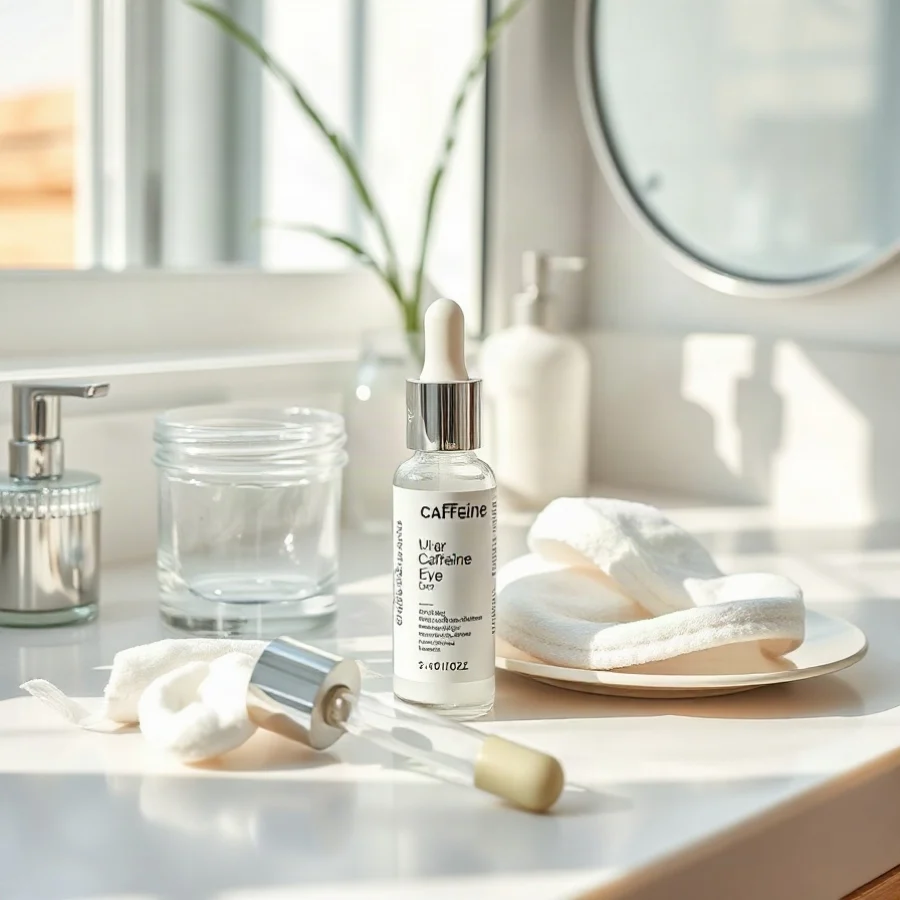
Barrier-supporting ingredients such as ceramides, cholesterol, and fatty acids may be useful in formulas designed for dry or easily irritated skin. Their presence does not guarantee that a product will suit everyone, but a simple, moisturizing formula may be more comfortable than a highly active product if your under-eye area frequently feels tight or flaky.
Antioxidant ingredients
Some caffeine eye creams also include antioxidants such as vitamin E, green tea, or vitamin C derivatives. Antioxidants can support a routine focused on protecting the appearance of skin from everyday environmental stressors. However, the type of antioxidant, the rest of the formula, and the product’s packaging all matter.
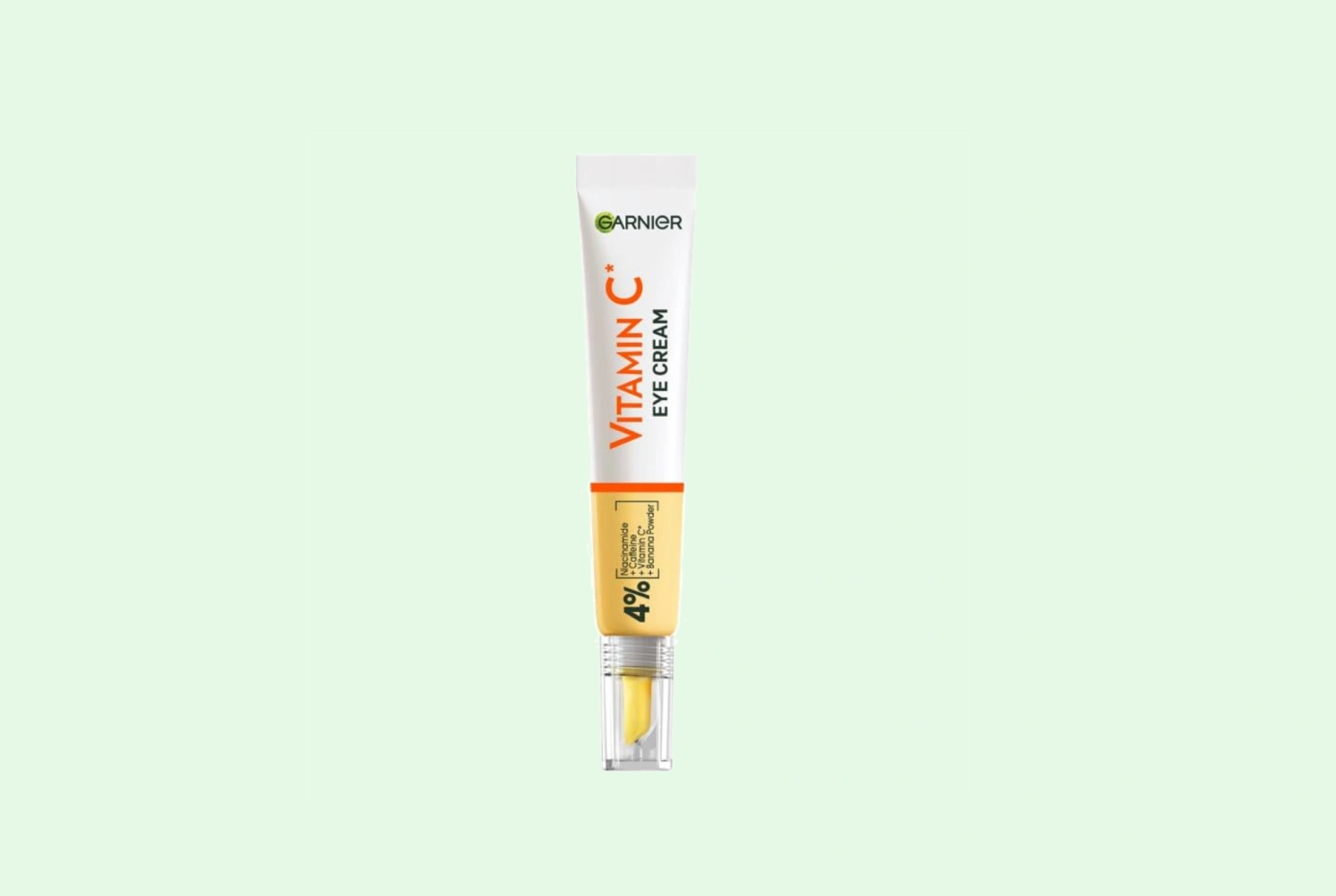
Vitamin C products can vary considerably in form and stability, so do not assume that every formula will behave the same way. If discoloration is your main concern, review the complete ingredient list and product directions rather than choosing a product based only on a front-label claim. You can compare the role of this ingredient with other options in our guide to vitamin C eye creams.
Soothing ingredients
Soothing ingredients may be helpful when an eye cream is intended for skin that feels easily stressed. Examples can include allantoin, colloidal oatmeal, aloe, or certain forms of centella asiatica. “Soothing” is not a guarantee that irritation is impossible, especially because individual reactions differ and a formula may contain other ingredients that do not suit you.
Formula details worth checking
Choose the texture for your skin type
A lightweight gel may feel comfortable on oily or combination skin and may layer easily under concealer. A lotion or cream may be preferable if the under-eye area feels dry or looks crepey. A balm-like texture can reduce the feeling of tightness, but it may also feel too rich for some people or cause makeup to move.
There is no universally best texture. The most useful option is one you can apply in a small amount without rubbing, pilling, or leaving the area uncomfortable. If you have dry skin, our dry-skin eye cream guidance can help you compare texture and moisturizing priorities.
Look at the full ingredient list
Ingredient lists are more informative than claims such as “de-puffing,” “brightening,” or “instant awake look.” Check whether caffeine appears in the current ingredient list, then look for hydrating, moisturizing, or soothing ingredients that match your needs. Also note whether the formula includes fragrance, essential oils, exfoliating acids, retinoids, or other ingredients you already know your skin does not tolerate.
Ingredient order can provide context, but it does not tell you everything about a product’s performance or suitability. Brands can also change formulas. Always verify the current packaging and, when product-specific details matter, consult the manufacturer’s current ingredient list before buying or using an eye cream.
Consider the packaging
Packaging can affect convenience and may influence how well a formula is protected from repeated exposure to air, light, and contact with fingers. An airless pump, tube, or other enclosed design may be easier to use hygienically than an open jar, although packaging alone does not prove that a product is more effective.
Choose a dispenser that lets you control the amount. Using more product does not necessarily produce better cosmetic results and can increase the likelihood of migration into the eyes or unwanted pilling under makeup.
How to use a caffeine eye cream
Follow the product label, since directions vary. In general, apply a small amount to clean, dry skin around the orbital area rather than placing product directly into the eye or along the wet inner rim. Use a gentle tapping motion with a clean fingertip, and avoid pulling or rubbing the skin.
If you use the product in the morning, allow it to settle before applying sunscreen and makeup. Sunscreen is particularly important when discoloration is part of your concern, although sunscreen does not guarantee that dark circles will fade. If you use several active products, introduce them gradually rather than applying multiple potentially irritating ingredients at once.
For a more organized routine, the under-eye routine builder can help you think through product order and skin concerns without treating every concern as a caffeine problem.
Who may want to be cautious
The eye area is delicate, and even familiar skincare ingredients can cause stinging, redness, dryness, or watering. If you have sensitive skin, start with a small amount and consider patch testing according to the product’s directions. Keep the product away from the eyes themselves, and stop using it if irritation develops or continues.
Be especially careful with formulas that combine caffeine with retinoids, exfoliating acids, strong fragrance, essential oils, or multiple active ingredients. These combinations are not automatically unsuitable, but they may be more difficult to tolerate. If you already use a retinoid or another active near the eyes, follow its directions and consider simplifying your routine when sensitivity appears. Our sensitive-skin eye cream guide covers additional selection considerations.
Anyone with a known allergy should review the complete ingredient list and follow advice from a qualified healthcare professional. Seek medical guidance for sudden swelling, significant pain, pronounced redness, vision changes, discharge, or symptoms that do not improve with basic care. Cosmetic eye creams are not intended to diagnose or treat eye conditions.
Set realistic expectations
A caffeine eye cream may be worth considering if you want a lightweight product that supports a temporarily less puffy, more refreshed-looking appearance. Results are often subtle and may be temporary. Consistency, gentle application, adequate moisturization, and daytime sun protection may matter more than choosing a product with the longest list of active ingredients.
If your main concern is structural shadowing, persistent pigmentation, or pronounced hollowness, a topical caffeine product may have limited visible impact. If fine lines and dryness are more noticeable, prioritize a comfortable moisturizing formula. If puffiness is occasional, consider whether sleep, seasonal irritation, crying, or other everyday factors are contributing to the appearance.
The most sensible choice is a caffeine eye cream whose full formula matches your skin’s needs, whose packaging and directions you understand, and whose expected benefit is modest and cosmetic. Review the current label, introduce the product carefully, and give your skin time to show whether the formula is comfortable enough to keep using.

Comments
0No comments yet. Be the first to share a helpful note or question.
Leave a Comment
Your email address will not be published. Comments are reviewed before appearing on the site.