
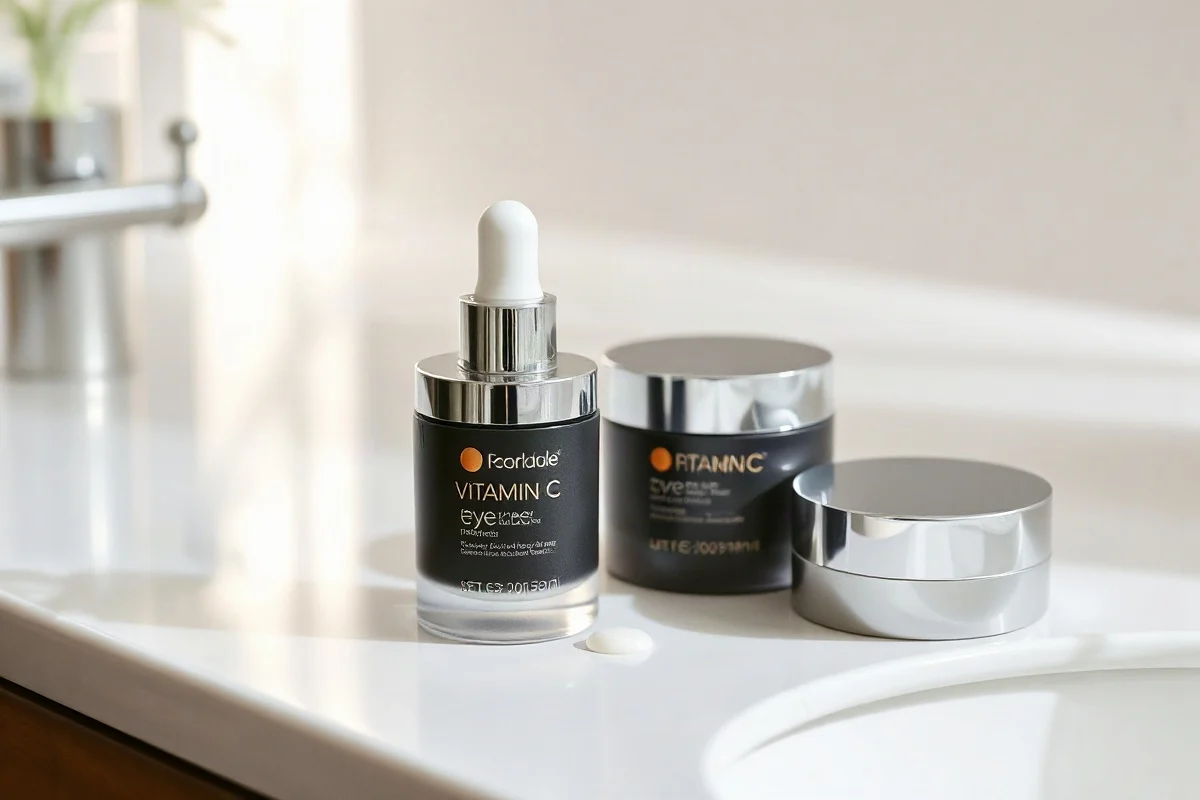
Airless pumps are used for some vitamin C eye products because the packaging can reduce repeated exposure to air and help dispense a controlled amount without requiring users to dip fingers into the formula. This may be useful for formulas containing vitamin C derivatives or other ingredients that are sensitive to handling and environmental exposure. However, an airless pump is not a guarantee that a product will work better, remain stable indefinitely, or improve the appearance of every type of dark circle.
The package is one part of a product’s design. The specific form of vitamin C, the rest of the ingredient list, the container materials, storage conditions, and the manufacturer’s instructions all matter as well. Because formulas and packaging can change, check the current product label and manufacturer information before relying on older product descriptions.
What an airless pump does
Unlike a conventional pump that draws product through a tube, an airless container generally uses a movable internal platform or pouch system. As the pump is pressed, the product is pushed upward toward the opening. The design aims to limit the amount of air that enters the main chamber as the product is used.
Airless does not mean that a package contains no air at all, and it does not make the formula completely isolated from its surroundings. The pump mechanism, cap, seals, and dispensing opening still influence how well the package protects the product. Even so, reducing repeated air exchange and direct contact can be a practical packaging goal, especially for products intended for the delicate eye area.
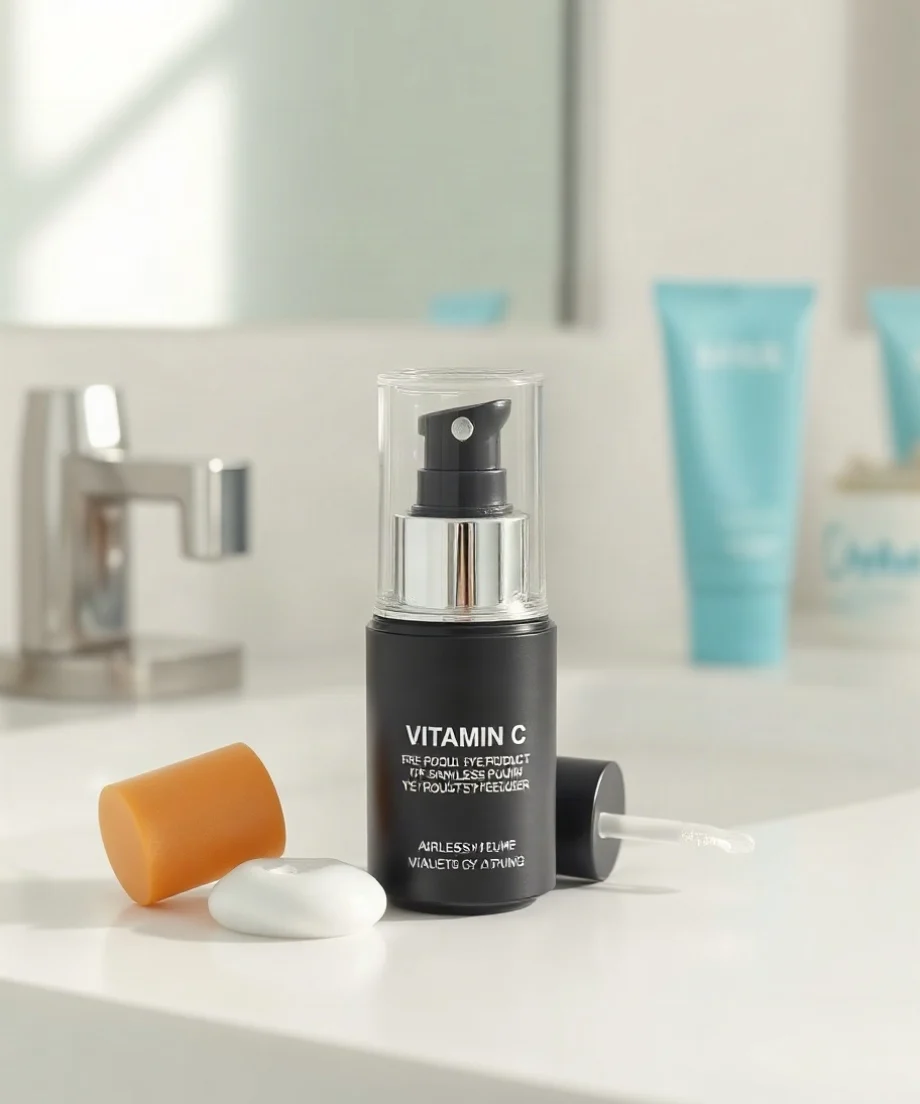
Less direct handling
A jar requires the user to open a wide container and usually scoop out product with a fingertip or a small tool. Each opening can expose the formula to air, and touching the product can introduce moisture or other material from the surrounding environment. A pump can provide a more enclosed way to dispense the product, although users should still keep the opening clean and replace the cap when the package includes one.
More controlled dispensing
Eye products are often used in small amounts. A pump may make it easier to dispense a modest portion rather than repeatedly dipping into a jar. The exact amount released per press varies by product and cannot be assumed from the package style. Start with the amount directed on the label instead of assuming that one full pump is appropriate for both eyes.
Why vitamin C packaging can matter
“Vitamin C” describes a group of ingredients rather than one single formula. Some products use ascorbic acid, while others use vitamin C derivatives. These ingredients can behave differently in a finished product, and a product’s stability depends on more than the name of the active ingredient.
Air, light, heat, water, and the formula’s overall environment can affect how a cosmetic product changes over time. Packaging may be designed to help limit some of these exposures, but it cannot replace appropriate formulation or storage. An airless pump may therefore be chosen as one way to support the intended product design, not as proof of a particular vitamin C concentration, performance level, or shelf life.
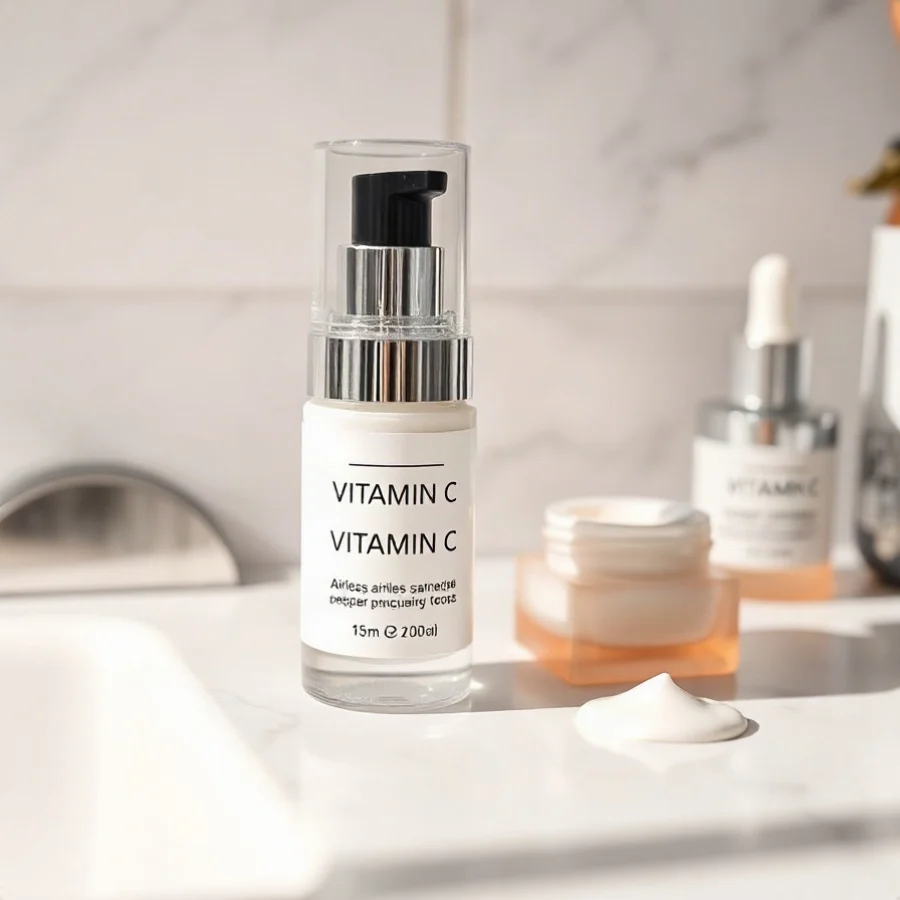
Changes in color, odor, texture, or dispensing behavior can be reasons to review the label and manufacturer guidance. A minor color difference may have different explanations depending on the formula, so it is not possible to judge every vitamin C product by appearance alone. If a product looks or smells noticeably different from when it was opened, or if it causes discomfort, consider stopping use and checking the current brand guidance.
What an airless pump may help with
- Limiting repeated air exchange: The container may reduce how often the bulk formula is exposed to newly introduced air.
- Reducing finger contact: A pump can help keep the main supply separate from hands and the bathroom environment.
- Supporting consistent use: A familiar dispensing system may make it easier to apply a small amount as directed.
- Protecting a carefully designed formula: Packaging can complement the manufacturer’s approach to handling ingredients that may be sensitive to environmental exposure.
These are packaging advantages, not promises about visible results. They also depend on the package functioning properly. If the pump stops working, leaks, becomes contaminated, or draws in visible air or debris, contact the manufacturer rather than trying to alter the container.
What an airless pump cannot tell you
Packaging alone cannot tell you whether a vitamin C eye product is suitable for your skin, whether it contains a specific form of vitamin C, or whether it has been evaluated for your particular concern. It also does not confirm that the formula is better than a product in a different type of container.
Dark circles can have different visible contributors, including shadowing from facial contours, differences in pigmentation, thin-looking skin, or the appearance of visible blood vessels. Puffiness and fine lines can also change how the under-eye area looks. A cosmetic product may help support a smoother, brighter, or more hydrated appearance for some people, but it cannot be expected to address every possible contributor.
For background on the different factors involved, see our guide to dark circles. If your concern is mainly swelling, the information in our puffiness and eye bags guide may be more relevant than choosing a product based only on its packaging.
How to evaluate a vitamin C eye product
Read the current ingredient list
Look for the current ingredient list on the package or the manufacturer’s product page. Product descriptions may use broad language such as “vitamin C,” while the ingredient list identifies the specific ingredients included in the formula. Because manufacturers can revise formulas, do not assume that an older review, retailer listing, or product photograph reflects the current version.
You can use our eye cream ingredient guide to review common ingredients and their cosmetic roles. The presence of vitamin C does not automatically indicate how strong, stable, or well tolerated a product will be.
Consider the rest of the formula
Vitamin C may appear alongside moisturizing ingredients, emollients, antioxidants, or other active ingredients. The complete formula affects the product’s texture and how comfortable it feels around the eyes. A product that is packaged in an airless pump may still feel too rich, too light, or irritating for a particular person.
If you already use retinoids, exfoliating acids, benzoyl peroxide, or other potentially irritating products near the eyes, adding another active product may increase the chance of discomfort. That does not mean the products cannot be used together by anyone, but it does make a gradual routine and careful observation more sensible.
Check the dispensing instructions
Some airless pumps need several presses before product reaches the opening, particularly when first opened. Follow the package directions rather than repeatedly pumping for a long period. Do not cut open or puncture an airless container to recover remaining product unless the manufacturer specifically advises a safe method. Altering the container can expose the formula and create a hygiene or handling problem.
Using a vitamin C eye product carefully
Apply the product according to its label, usually to clean, dry skin and in the small amount recommended by the manufacturer. Keep it away from the eye itself unless the product is specifically labeled for that use. Avoid placing it directly on the lash line or into the eye, where it may cause stinging or watering.
For sensitive skin, consider a patch test as directed by the manufacturer before applying a new product near the eyes. Introduce one new active at a time when possible so that it is easier to identify the source of a reaction. If you develop persistent burning, redness, itching, swelling, or other concerning symptoms, stop using the product. Seek medical advice for symptoms that are severe, affect vision, or do not improve after discontinuing the product.
Store the product according to the label. Keeping the container tightly closed, away from excessive heat and direct sunlight, may help preserve the product’s intended condition. Do not transfer the formula to another container, since the replacement packaging may not offer the same protection.
Is an airless pump worth prioritizing?
An airless pump can be a sensible feature to look for if you prefer enclosed dispensing, want to avoid dipping fingers into a jar, or are considering a formula designed with environmental exposure in mind. It should not be the only selection criterion. Comfort, the current ingredient list, clear usage directions, tolerability, and a realistic match for your cosmetic concern are at least as important.
Think of the pump as a potential packaging advantage rather than a performance guarantee. A well-designed product in another container may also be appropriate, while an airless package cannot compensate for a formula that irritates your skin or does not suit your preferences.
When comparing options, keep expectations focused on cosmetic appearance. A vitamin C eye product may support a brighter-looking or more even-looking under-eye area for some users, but results can vary and may be subtle. It will not diagnose or medically treat the cause of dark circles, puffiness, or changes in the skin. If an under-eye change is sudden, one-sided, painful, or accompanied by other symptoms, consult a qualified health professional rather than relying on cosmetic skincare.

Comments
0No comments yet. Be the first to share a helpful note or question.
Leave a Comment
Your email address will not be published. Comments are reviewed before appearing on the site.