
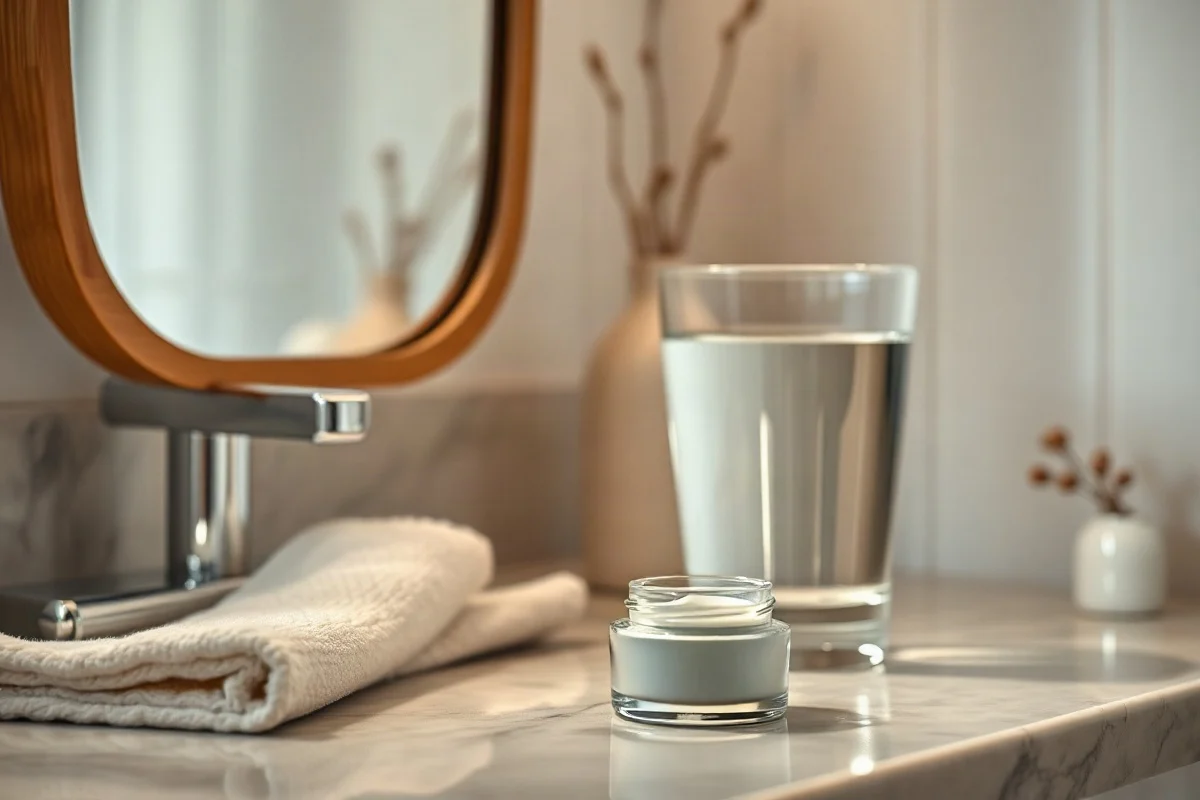
Eye cream can still leave your skin feeling dry because the product may not provide enough moisture, may contain ingredients that irritate your skin, or may be applied alongside other products that increase tightness. The under-eye area is delicate, but a product labeled for eyes is not automatically the best match for every dry or sensitive skin type. A simpler routine, gentler application, and a formula that combines water-binding ingredients with barrier-supporting emollients can often make the area feel more comfortable.
That uncomfortable feeling may show up as tightness, rough texture, flaking, stinging, or makeup that settles into fine lines. These signs do not necessarily mean that an eye cream is “working,” and they are not a reliable way to judge whether it is improving the appearance of dark circles or fine lines. Dryness can temporarily make texture look more noticeable, so it is worth addressing comfort and hydration before adding more active products.
A Quick Check Before Changing Your Eye Cream
If the skin around your eyes feels dry, think about when it started and whether anything else in your routine changed. Eye cream, makeup, sunscreen, cleanser, fragranced products, or rubbing the area may be worth reviewing. Noticing the timing can give you a clearer picture, though it can’t identify the cause on its own.
If you also have persistent redness, itching, swelling, stinging, or pain, check with a dermatologist or another healthcare professional instead of trying to diagnose the problem yourself.
For more information, see the Cleveland Clinic guide to eyelid dermatitis and the American Academy of Dermatology’s guide to eye problems related to eczema.
Why an eye cream may feel drying
The formula may not be moisturizing enough
Some eye creams are lightweight gels or fast-absorbing lotions designed to feel fresh rather than rich. They may contain humectants that attract water to the skin, but fewer emollients or occlusive ingredients to soften the surface and reduce moisture loss. If your under-eye area is already dry, a weightless texture may not be enough on its own.
Moisturization generally involves more than one type of ingredient. Humectants, such as glycerin or hyaluronic acid, help attract and hold water. Emollients help smooth rough-feeling areas by filling spaces between surface cells. Occlusive ingredients create a more protective layer that can slow water loss. A well-tolerated product does not need to contain every category, but very dry skin may benefit from a routine that supports more than one moisturizing function.

Potentially irritating ingredients may be involved
Dryness is not always caused by a lack of moisture. It can also follow irritation. Fragrance, essential oils, some preservatives, exfoliating acids, retinoids, and certain brightening ingredients may be uncomfortable for some people, especially when used close to the eyes. Sensitivity varies, and an ingredient that feels fine on the cheeks may still be too irritating for the thinner skin under the eyes.
Active ingredients can have a place in an eye-care routine, but introducing several at once makes it difficult to identify the source of discomfort. If a product causes persistent stinging, burning, redness, or peeling, stop using it rather than trying to push through the reaction. Follow the product label, and consider discussing ongoing or severe symptoms with a qualified health professional.
The rest of your routine may be contributing
An eye cream is only one part of the products that may reach the under-eye area. Cleanser, toner, serum, exfoliant, acne treatment, retinoid, and sunscreen can all affect how the skin feels. Applying a strong facial active too close to the eyes may leave the area tight even if the eye cream itself is gentle.
Over-cleansing can also contribute to dryness. Hot water, vigorous rubbing, makeup removal with repeated cotton-pad friction, and cleansing more often than necessary may weaken the skin’s comfortable feel. If the skin is dry, the goal is not to remove every trace of natural oil. A mild cleanser, lukewarm water, and gentle patting can be more supportive.
Ingredients that may help dry under-eyes feel more comfortable
When choosing an eye cream for dry skin, look beyond a single headline ingredient. The complete formula and your own tolerance matter more than a marketing category. Ingredient lists and formulas can change, so check the current packaging or the manufacturer’s ingredient list before buying or using a product.
- Glycerin: A common humectant that can help the skin attract and retain water.
- Hyaluronic acid: A water-binding ingredient used in many lightweight hydrating formulas. It may feel more comfortable when paired with ingredients that reduce moisture loss.
- Ceramides: Lipid-like ingredients often used in barrier-supporting products. Their presence does not guarantee that a formula will suit everyone, but they may be useful in a moisturizing routine.
- Squalane: An emollient that can give a smoother, softer feel without always feeling as heavy as a traditional balm.
- Shea butter and similar emollients: These can provide a richer texture that some dry skin types prefer, although richer formulas may not suit everyone.
- Dimethicone: A silicone-based ingredient that can help create a smooth, protective feel on the skin.
These ingredients are not guarantees of comfort or visible improvement. A formula may be hydrating but still irritate your skin, or it may feel pleasant while offering little lasting relief. For a broader overview of common eye-care ingredients, see our eye cream ingredient guide.
How to adjust your eye-care routine
Use less product and avoid rubbing
More eye cream is not necessarily more effective. A small amount spread gently across the orbital area may be enough, while applying a thick layer too close to the lash line can increase the chance of migration into the eyes. Use a light tapping or pressing motion with a clean finger instead of pulling the skin back and forth.
Apply the product to clean, slightly damp skin if the label allows it. This can make a hydrating formula feel more comfortable, but damp skin is not a substitute for an occlusive or emollient layer when your skin loses moisture quickly. Keep the product away from the eye itself and follow any directions supplied by the manufacturer.
Simplify before adding another active
If your under-eyes suddenly feel dry, pause nonessential actives around the area. This may include exfoliating acids, retinoids, strong vitamin C products, or fragranced treatments. Use a gentle cleanser, a bland moisturizer that your skin already tolerates, and daytime sun protection. Once the skin feels comfortable again, reintroduce one product at a time if you still want to use it.
Retinoids and exfoliating ingredients can be especially challenging near the eyes. If you choose one, use it only as directed and start cautiously rather than layering several potentially irritating products. Do not apply a facial product to the eye area unless its instructions specifically support that use. You can explore our sensitive-skin eye-care guidance for a more conservative approach.
Consider layering a moisturizer
Some people do better with a hydrating eye product followed by a small amount of a simple moisturizer. Others prefer one richer eye cream and no additional layer. The best option depends on texture preference, makeup use, climate, and how quickly your skin becomes tight.
If you layer products, apply the thinnest product first and give it a moment to settle. Avoid putting heavy amounts directly against the lash line. If makeup pills, feels greasy, or irritates the eyes, reduce the amount or change the order. Comfort and consistency are more useful than building a complicated routine.
How to choose an eye cream for dry skin
Start with your main concern and your skin’s tolerance. If dryness is the immediate problem, prioritize a fragrance-free or low-irritant formula with moisturizing ingredients before choosing a product focused on brightening or firming. If you also have puffiness, a lightweight texture may be more appealing in the morning, while a richer texture may work better at night. These are comfort and appearance preferences, not medical treatments.
Read the full ingredient list rather than relying only on front-label terms such as “hydrating,” “repairing,” or “for sensitive skin.” Those descriptions do not establish that a product will suit your skin. If a product contains an active you have not used before, follow the label and consider a small-area patch test. Keep in mind that a patch test cannot predict every reaction around the eyes.
When comparing products, look for practical details: whether the texture works under sunscreen or concealer, whether the packaging protects the formula, and whether the product has a clear ingredient list. Because formulas may be reformulated, verify current information on the package or manufacturer’s website. Our dry-skin eye cream coverage can help you organize these considerations without treating any single ingredient as a guaranteed solution.
Dryness, dark circles, and realistic expectations
Improving hydration may make the under-eye area look smoother and more comfortable, particularly when dryness has emphasized fine texture. It is unlikely to address every reason that dark circles appear. Under-eye darkness can be influenced by visible blood vessels, natural pigmentation, shadows from facial structure, and the appearance of thin or uneven skin. A cosmetic product may improve the look of one aspect without changing the others.
Similarly, an eye cream may soften the appearance of dryness-related lines while having limited effect on lines caused by movement or facial structure. Puffiness can also vary with sleep, allergies, fluid retention, and individual anatomy. Skincare can support the appearance and feel of the area, but it should not be presented as a diagnosis or treatment for an underlying condition.
When to stop using the product
Stop using an eye cream if it causes significant burning, swelling, persistent redness, worsening peeling, or other concerning symptoms. Do not apply it to broken or irritated skin unless a qualified professional tells you to do so. If discomfort continues after stopping, affects your vision, or involves marked swelling, seek appropriate medical advice.
For ordinary dryness without concerning symptoms, return to a short, gentle routine and give the skin time to settle. Once it feels comfortable, introduce only one new product at a time. That approach makes it easier to identify what helps, what does nothing, and what may be contributing to dryness.
A simpler way to think about eye cream
An eye cream that leaves skin feeling dry is not necessarily a sign that you need a stronger product. It may be the wrong texture, an irritating active, too much cleansing, rough application, or a mismatch between the product and your skin’s needs. Focus first on gentle handling and reliable moisture support. Then evaluate whether you actually need additional ingredients for concerns such as the appearance of dark circles, puffiness, or fine lines.
The most useful routine is usually the one you can use consistently without discomfort. Check the current label, patch test cautiously, follow directions, and stop if irritation develops. If you want to compare routine steps for different concerns, the under-eye routine builder can help you start with a more focused plan.
Looking for Eye Care Advice That Fits Your Skin?
Explore our practical guides to learn more about eye cream, dryness, ingredients, and choosing products for the delicate skin around your eyes.
Explore Our Eye Care Guides

Comments
0No comments yet. Be the first to share a helpful note or question.
Leave a Comment
Your email address will not be published. Comments are reviewed before appearing on the site.