
Fine lines often look worse when the skin around your eyes is dry because a lack of water and surface oils can make the area appear less smooth, less flexible, and more textured. Dehydrated surface cells can emphasize existing creases, while dryness-related flaking or tightness may create additional contrast around the lines. This is usually a change in appearance rather than proof that the skin has suddenly aged faster.
The under-eye area is especially likely to show these changes. Skin there is relatively delicate, facial movement is constant, and the area has fewer oil glands than many other parts of the face. When moisture is reduced, small creases may catch light more clearly. A suitable moisturizer can make the skin look temporarily plumper and more comfortable, but no topical product can erase every expression line or permanently reverse the aging process.
How dryness makes fine lines more visible
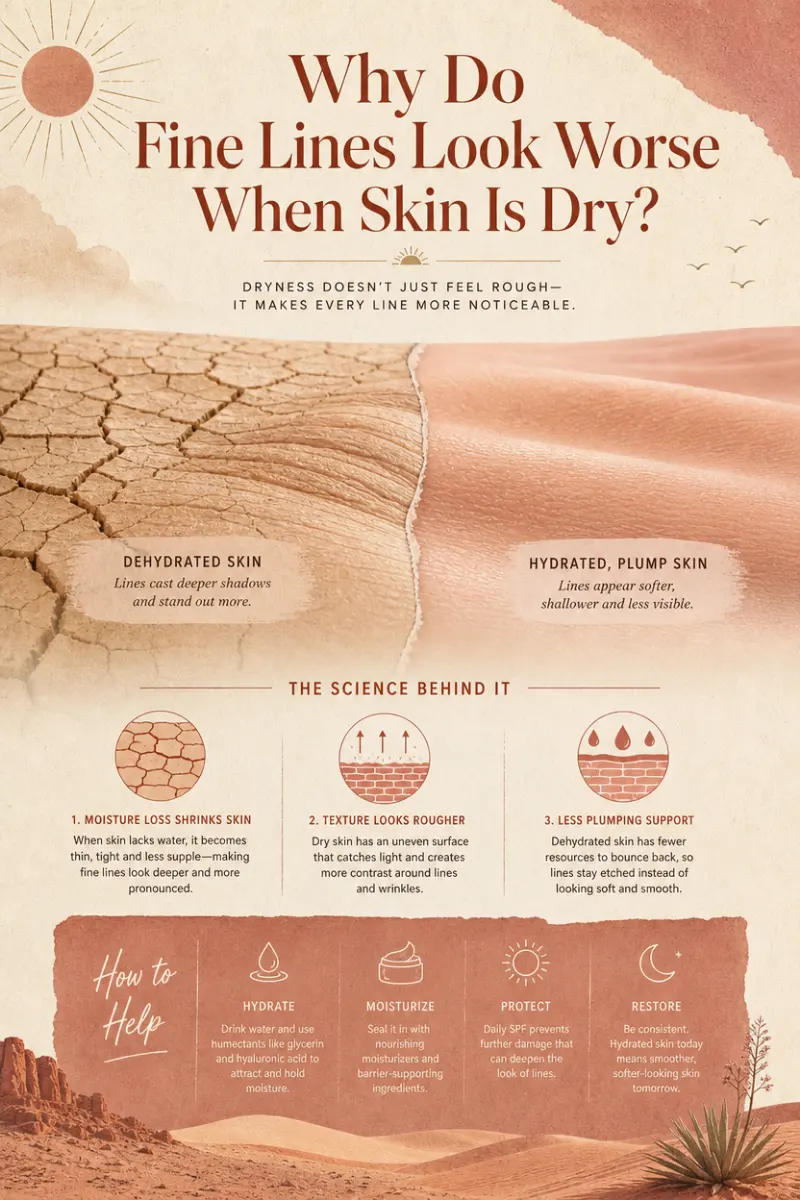
Healthy-looking skin has a balance of water, lipids, and natural structural support. The outermost layer helps limit water loss and gives the surface a smoother appearance. When that barrier is disrupted or the surrounding environment is dry, the skin may lose water more quickly. The result can be tightness, rough texture, dullness, or visible flaking.
Fine lines are shallow creases that may already be present because of facial movement, sun exposure, genetics, and the gradual changes that occur with age. Dryness does not necessarily create those lines from nothing. Instead, it can make their edges and shadows easier to see. A dry surface also reflects light unevenly, which may draw attention to texture that appears less noticeable when the skin is comfortably hydrated.
This effect can be temporary. If the skin becomes more hydrated and the barrier feels calmer, the area may look smoother for a while. The underlying line, however, may still be visible when you smile, squint, or move your face.
Dryness, dehydration, and the skin barrier
People often use “dry skin” and “dehydrated skin” interchangeably, but they can describe different experiences. Dry skin generally refers to a skin type or tendency to produce fewer surface oils. Dehydration refers to a temporary or ongoing lack of water in the outer layer. A person with oily or combination skin can still experience dehydration around the eyes.
The skin barrier helps keep water in and irritants out. Over-cleansing, very hot water, cold or windy weather, low indoor humidity, frequent rubbing, and products that feel irritating can all contribute to a less comfortable barrier. Not every cause is obvious, and persistent dryness can have several possible explanations. This article focuses on cosmetic appearance and routine choices, not medical diagnosis.
If the eye area is persistently itchy, painful, swollen, cracked, oozing, or significantly red, consider pausing new products and seeking advice from a qualified medical professional. Symptoms around the eyes can have causes that a cosmetic routine cannot identify or manage.
Ingredients that can improve the look of dry under-eyes
When fine lines look more pronounced because the surface is dry, a simple moisturizing formula may be more useful than adding several strong actives at once. Look for products designed for the eye area or for sensitive skin, and review the current ingredient list before buying. Formulas can change, so product details should always be confirmed on the packaging or the manufacturer’s website.
Humectants
Humectants attract and hold water in the outer layers of the skin. Common examples include glycerin, hyaluronic acid, panthenol, and certain forms of sugar-based ingredients. These ingredients can help the skin feel more comfortable and look temporarily smoother when paired with a suitable formula.
A humectant is not automatically better simply because it appears higher on a marketing page, and more ingredients are not always necessary. The overall formula and your skin’s tolerance matter. If a product leaves the area tight or stings, it may not be a good match, even if it contains a popular hydrating ingredient.
Emollients
Emollients help soften and smooth the skin’s surface. They may include lightweight esters, plant oils, fatty alcohols, or other conditioning ingredients. In an eye cream or moisturizer, emollients can reduce the rough feel that makes fine lines stand out.
Occlusive ingredients
Occlusives help reduce water loss by forming a protective layer over the skin. Petrolatum, dimethicone, and some waxes are examples. A product with an occlusive component may be helpful at night, especially when the under-eye area feels tight. However, a richer texture is not automatically appropriate for everyone. If a product migrates into the eyes or causes discomfort, use less, apply it farther from the lash line, or discontinue it.
For a broader overview of common skincare ingredients, see this eye cream ingredient guide. Ingredient names can be useful clues, but they do not tell you everything about texture, concentration, stability, or how your skin will respond.
How to choose a routine when fine lines look worse from dryness
Start with gentle cleansing
Avoid scrubbing the eye area or repeatedly wiping it to remove leftover makeup. Use a cleanser or makeup remover that feels comfortable, and follow its directions. If you wear long-lasting eye makeup, allow the remover to loosen it rather than pulling at the skin. Rubbing can temporarily increase redness and make texture more noticeable.
Apply moisturizer to slightly damp skin
After cleansing, apply a small amount of moisturizer while the skin is still slightly damp if that feels comfortable. This can help reduce the tight sensation associated with dryness. Use a gentle tapping motion instead of dragging the skin. More product is not necessarily more effective, and applying too much close to the eyes can increase the chance of migration and irritation.
Use sunscreen during the day
Daily broad-spectrum sunscreen on exposed skin is an important part of protecting the overall appearance of skin from environmental exposure. Because the eye area can be sensitive, choose a sunscreen that you can apply comfortably and follow its label directions. Sunglasses and a hat can also reduce squinting in bright conditions. Sunscreen should not be applied so close to the eyes that it causes stinging, and irritating products should be removed.
Keep the routine simple while the area is irritated
If the skin feels dry, tight, or reactive, temporarily avoid adding multiple exfoliants, retinoids, or fragranced products around the eyes. Some active ingredients may support the appearance of fine lines over time, but they can also cause dryness or irritation, particularly when introduced too quickly or used too close to the eye.
Follow the product label, introduce one new product at a time, and consider a patch test when appropriate. A patch test cannot guarantee that a product will not irritate the eye area, but it can provide useful information about general skin tolerance. Stop using a product if it causes burning, persistent redness, swelling, or other concerning irritation, and avoid getting active products in the eyes.
Can retinoids or exfoliants help?
Retinoids and exfoliating ingredients are often discussed in connection with fine lines and uneven texture. They may be appropriate for some people, but they are not the first step when the immediate issue is dryness. Introducing a potentially irritating active onto an already uncomfortable skin barrier can make lines appear more obvious temporarily by causing peeling, redness, or tightness.
If you decide to try an active intended for the eye area, select a product whose label clearly explains how to use it. Start slowly rather than combining several actives, keep the product away from the eye itself, and use moisturizer as needed. People who are pregnant, breastfeeding, managing a skin condition, or using prescription products should ask a qualified healthcare professional about ingredients that may not be suitable for them.
For product research, you can compare approaches in our coverage of retinol eye creams, but remember that a category label does not guarantee a particular strength, formula, or result. Always check the current product packaging and ingredient list.
Why fine lines may still be visible after moisturizing
Moisturizer can improve the look and feel of surface dryness, but it cannot change every factor that contributes to fine lines. Expression, natural aging, genetics, sun exposure, and changes in skin structure can all affect how lines appear. A well-hydrated surface may look more supple, while deeper or movement-related lines may remain visible.
Lighting also changes perception. Overhead light, a magnifying mirror, and close-up phone cameras can make texture look more prominent than it does in everyday conditions. Checking your skin under consistent, ordinary lighting can give you a more realistic sense of whether a routine is helping its comfort and appearance.
It is also possible to mistake irritation for ordinary dryness. New redness, burning, scaling, or sudden roughness after starting a product may indicate that the product is not agreeing with your skin. Simplifying the routine is often more sensible than adding another product to counteract the reaction.
A practical approach for smoother-looking under-eyes
- Cleanse gently and avoid rubbing or pulling at the eye area.
- Use a comfortable moisturizer with hydrating, smoothing, or barrier-supportive ingredients.
- Apply a small amount with light tapping, keeping products out of the eyes.
- Use sun protection on exposed skin during the day if you can do so comfortably.
- Introduce retinoids or exfoliants cautiously, one at a time, and follow the label.
- Pause irritating products if burning, swelling, persistent redness, or worsening discomfort develops.
- Verify current packaging and manufacturer ingredient lists because formulas may change.
For help organizing products by skin needs, the under-eye routine builder can provide a starting point. If your main concern is persistent discomfort rather than appearance, cosmetic advice may not be enough, and a healthcare professional can help determine what evaluation is appropriate.
When fine lines look worse during a dry spell, focus first on comfort and barrier-friendly hydration. That approach may soften the temporary emphasis created by rough, dehydrated skin without setting unrealistic expectations. Fine lines can remain part of your natural facial movement and skin texture, even when the surrounding skin looks healthier and more moisturized.

Comments
0No comments yet. Be the first to share a helpful note or question.
Leave a Comment
Your email address will not be published. Comments are reviewed before appearing on the site.