
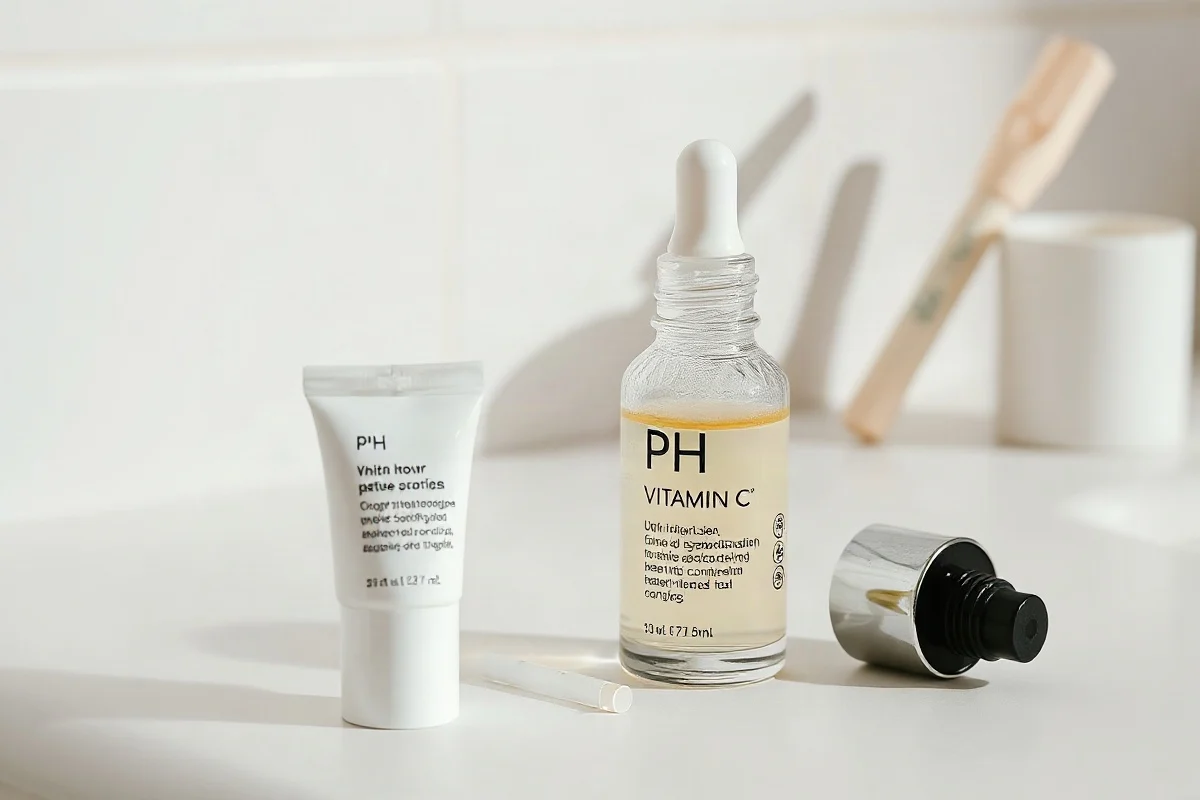
pH matters in some vitamin C eye formulas because it can affect the ingredient’s stability, performance, and feel on the delicate under-eye area. The impact depends on which form of vitamin C a product uses, how the rest of the formula is built, and how well your skin tolerates it. A lower-pH formula is not automatically better, and a product with a higher or more comfortable pH is not necessarily ineffective.
For most shoppers, the practical takeaway is simple: look beyond the words “vitamin C” on the front of the package. Check the ingredient list, follow the product’s directions, and consider whether your under-eye skin is easily irritated. pH is one part of product design, not a stand-alone measure of quality or a guarantee of visible improvement.
What pH means in skincare
pH describes how acidic or alkaline a water-based formula is. The scale runs from acidic to alkaline, with the middle point representing neutrality. Human skin has a naturally acidic surface environment, although its exact pH can vary between people and across different areas of the body.
The under-eye area is especially thin and often more reactive than the skin on the cheeks or forehead. That does not mean every acidic product will cause discomfort, but it does explain why a formula that feels fine elsewhere may sting near the eyes. The skin around the eyes also has less room for error: products can migrate toward the eyes, and rubbing or watering can make irritation feel worse.
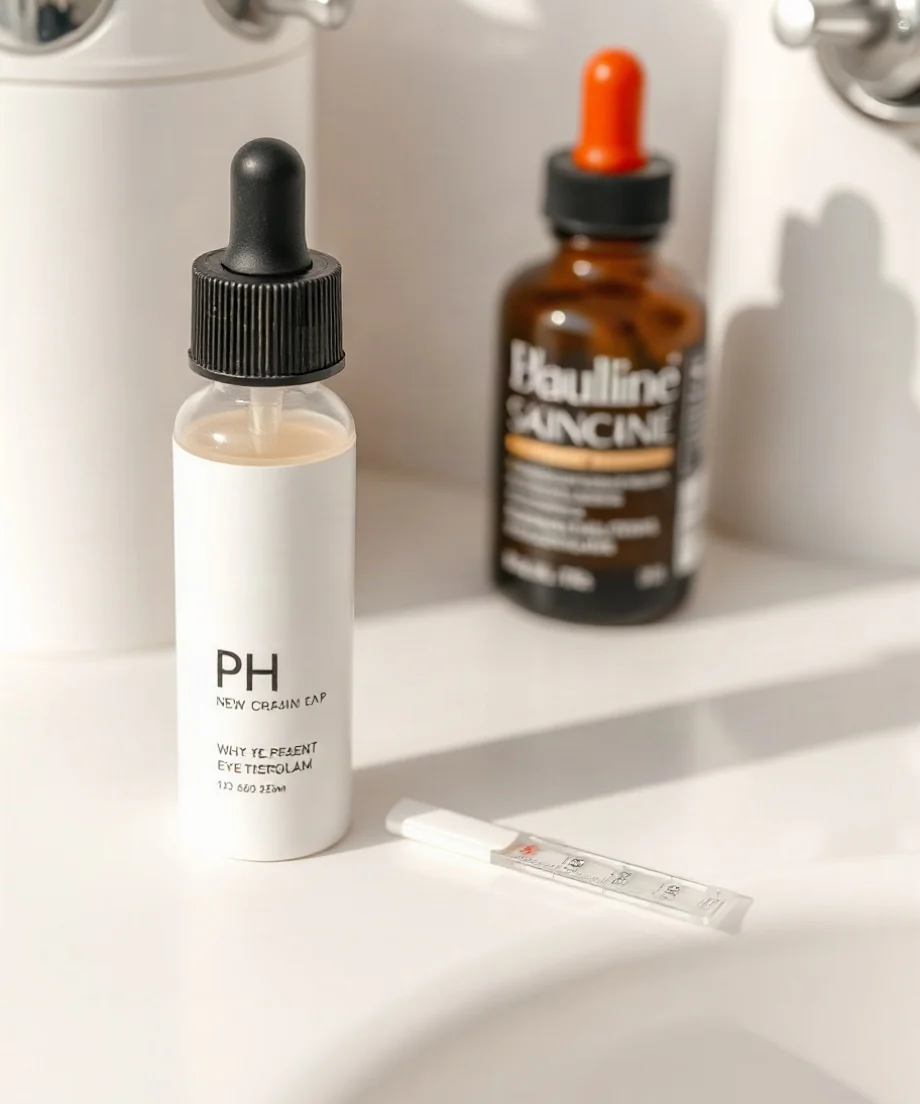
In a cosmetic formula, pH can influence more than comfort. It may affect how certain ingredients dissolve, how stable they remain over time, and how readily some ingredients interact with the outer layers of skin. Those effects vary according to the specific vitamin C derivative, concentration, packaging, preservatives, solvents, and other ingredients in the product.
Why the form of vitamin C changes the pH discussion
“Vitamin C” is a broad label. It may refer to pure ascorbic acid, also called L-ascorbic acid, or to a derivative designed to be more stable or easier to formulate. These forms do not behave identically.
Pure ascorbic acid
Pure ascorbic acid is an acidic ingredient. Formulas using it may be made at a lower pH so the ingredient can remain in a form intended for topical use. Lower-pH products can feel more active, but they may also produce tingling, stinging, redness, dryness, or increased sensitivity in some people, particularly around the eyes.
That does not mean every low-pH ascorbic acid formula will irritate everyone. Skin tolerance varies, and the formula as a whole matters. Still, shoppers with sensitive skin should avoid assuming that a stronger sensation means stronger results. A burning sensation is not a useful target for an eye product.

Vitamin C derivatives
Vitamin C derivatives are modified forms of the ingredient. Examples found in skincare may include names such as sodium ascorbyl phosphate, magnesium ascorbyl phosphate, ascorbyl glucoside, or tetrahexyldecyl ascorbate. Their formulation requirements can differ from those of pure ascorbic acid, and some are used in products designed to feel gentler or remain stable under different conditions.
It is important not to treat all derivatives as interchangeable. Their cosmetic behavior, supporting evidence, stability, and recommended formulation conditions can vary. A derivative in an eye cream may also be present alongside brightening, soothing, moisturizing, or antioxidant-supporting ingredients. Without the complete current formula and the manufacturer’s instructions, the ingredient name alone cannot predict exactly how a product will perform.
For a broader overview of ingredient categories, see our eye cream ingredient guide. Product formulas can change, so verify the current packaging and manufacturer ingredient list before making a decision based on a particular vitamin C form.
How pH may affect comfort around the eyes
Comfort is one of the most relevant pH considerations for an eye product. The under-eye area has a high visibility factor: even mild dryness or redness can make the area look more noticeable. Irritation may also encourage rubbing, which can temporarily make puffiness or discoloration appear more prominent.
Possible signs that a vitamin C eye formula is not agreeing with your skin include persistent stinging, burning, itching, redness, scaling, unusual tightness, or watering after application. A brief sensation is not always a sign of harm, but discomfort that continues or worsens deserves attention. Stop using the product if irritation develops, and seek medical advice for severe, persistent, or concerning symptoms.
pH is not the only factor involved. Fragrance, alcohol, exfoliating acids, retinoids, preservatives, and other active ingredients may contribute to sensitivity. The product’s texture and application method also matter. Applying too much, placing it too close to the lash line, or layering several potentially irritating products can make an otherwise tolerable routine feel harsh.
Can a lower pH make vitamin C work better?
That question does not have one answer for every vitamin C eye cream. A lower pH may be relevant to formulas containing pure ascorbic acid, but the ingredient’s behavior depends on the entire formula and its storage conditions. A lower number on a pH scale should not be used as a shortcut for judging effectiveness.
With vitamin C derivatives, the ideal formulation conditions may differ. Some products may be designed around a more skin-comfortable pH, while others may use additional technologies or supporting ingredients to address stability. Without reliable product-specific information, it would be misleading to rank one pH range as universally superior.
Visible changes in the appearance of dark circles can also be difficult to interpret. Under-eye darkness may be influenced by natural pigmentation, shadows from facial structure, visible blood vessels, dryness, or temporary fatigue-related changes. A cosmetic product may help the area look more hydrated, even-toned, or refreshed without addressing every possible reason for darkness. Vitamin C skincare should not be presented as a diagnosis or treatment for an underlying medical condition.
For more context on the different causes and appearances associated with dark circles, visit our dark circles guide.
How to choose a vitamin C eye formula
Identify the vitamin C ingredient
Look for the specific name in the ingredient list rather than relying only on front-label language. If the product does not clearly identify the form of vitamin C, check the manufacturer’s current product page or contact the company. Ingredient lists and formulas can change, so older reviews or retailer descriptions may not reflect the current product.
Consider your sensitivity history
If your skin reacts easily to active ingredients, a formula marketed for sensitive skin or a product using a gentler-feeling vitamin C derivative may be worth considering. That wording is not a guarantee of compatibility. Patch testing can help you introduce a new product cautiously, but it cannot predict every reaction near the eyes.
Apply a small amount as directed, keep the product out of the eyes, and avoid introducing several new actives at the same time. Follow the label’s instructions rather than applying more frequently in hopes of speeding up results.
Pay attention to the complete formula
Look for the presence of moisturizing and skin-conditioning ingredients if dryness is a concern. Also note whether the product contains additional active ingredients that may be irritating when combined with other products in your routine. A vitamin C eye cream may be more comfortable when used with a simple moisturizer, but the best combination depends on your skin and the product directions.
Review the packaging and storage guidance
Vitamin C formulas can be sensitive to environmental conditions, depending on the form used. Follow the manufacturer’s storage instructions and keep the container closed when not in use. Changes in color, smell, texture, or separation may be a reason to check the product information or replace the product, especially if the manufacturer provides specific guidance.
Where vitamin C fits in an under-eye routine
A basic routine often works better than an aggressive one for the eye area. Cleanse gently if needed, apply the vitamin C product according to its directions, and use a compatible moisturizer if your skin feels dry. During the day, broad-spectrum sunscreen on exposed surrounding skin can help reduce additional environmental exposure that may contribute to an uneven-looking complexion. Keep sunscreen out of the eyes and follow its label.
Introduce one new active at a time. If you already use a retinol eye product, exfoliating acids, or other brightening ingredients, layering them with vitamin C may increase the chance of irritation. Alternating products or using them at different times may be more comfortable, but product instructions and your skin’s response should guide the routine. Our under-eye routine builder can help organize product choices by concern and skin type.
What realistic results look like
Vitamin C eye formulas may be used to support a brighter, more even-looking, or refreshed appearance, but results are not guaranteed and may be subtle. Hydration can temporarily make fine lines look less noticeable, while a smoother surface may reflect light differently. Those cosmetic effects are not the same as permanently removing wrinkles or eliminating dark circles.
Expectations should also account for the source of the concern. A topical formula may be less likely to change darkness primarily caused by facial shadows or naturally visible vessels than it is to improve the look of dull or dry skin. If discoloration changes suddenly, appears with swelling or pain, or concerns you for medical reasons, a qualified health professional can help evaluate it.
The bottom line when comparing pH
pH is worth considering when choosing a vitamin C eye formula, especially if you are looking at pure ascorbic acid or have a history of sensitivity. But pH alone cannot tell you whether a product will suit your skin or produce a visible cosmetic benefit. The vitamin C form, full ingredient list, packaging, directions, and your own tolerance all matter.
Choose a formula you can use comfortably and consistently, introduce it gradually, and stop if irritation develops. Before relying on product-specific information, confirm the current label and manufacturer ingredient list. A thoughtful, low-irritation routine is generally a more practical goal than chasing the lowest pH or the strongest sensation.

Comments
0No comments yet. Be the first to share a helpful note or question.
Leave a Comment
Your email address will not be published. Comments are reviewed before appearing on the site.