
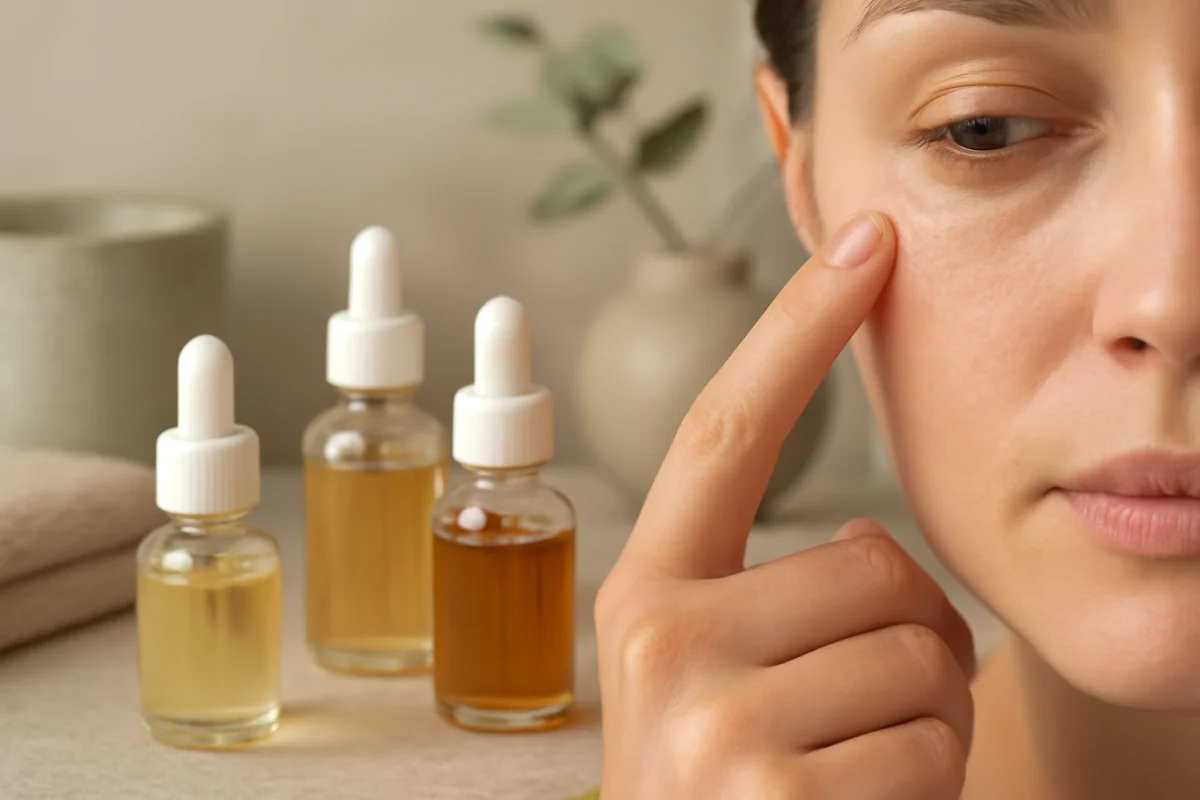
No natural oil can reliably fade dark circles fast, but a suitable facial oil may improve the appearance of dryness, rough texture, and fine lines that make the under-eye area look more tired. Squalane, jojoba oil, rosehip oil, argan oil, and carefully chosen plant oils can provide lightweight moisture and help the skin look smoother. They are less likely to change dark circles caused by genetics, visible blood vessels, hollowness, shadows, or persistent pigmentation.
The most useful way to think about oils is as moisturizing support, not a rapid dark-circle treatment. If your under-eyes look darker because they are dry or creased, adding an emollient may make the area appear more comfortable and reflective. If the color comes from pigment or the thinness of the skin, an oil alone is unlikely to make a major difference. You can learn more about the reasons this concern varies from person to person in our guide to what causes dark circles under the eyes.
What natural oils can and cannot do
Facial oils work mainly by reducing moisture loss and smoothing the feel of the skin. This can temporarily soften the look of flaky patches and make fine lines appear less noticeable because hydrated skin often has a smoother surface. Oils can also add slip, which may help reduce tugging during application.
That cosmetic effect is different from changing the underlying reason for dark circles. Oils do not replace sunscreen, correct a sun-related pigment concern overnight, or restore volume beneath the eyes. They also do not treat allergies, eczema, anemia, circulation problems, or other medical conditions. Dark circles that appear suddenly, affect one side, or occur with swelling, pain, a rash, or other concerning symptoms should be discussed with a qualified health professional.
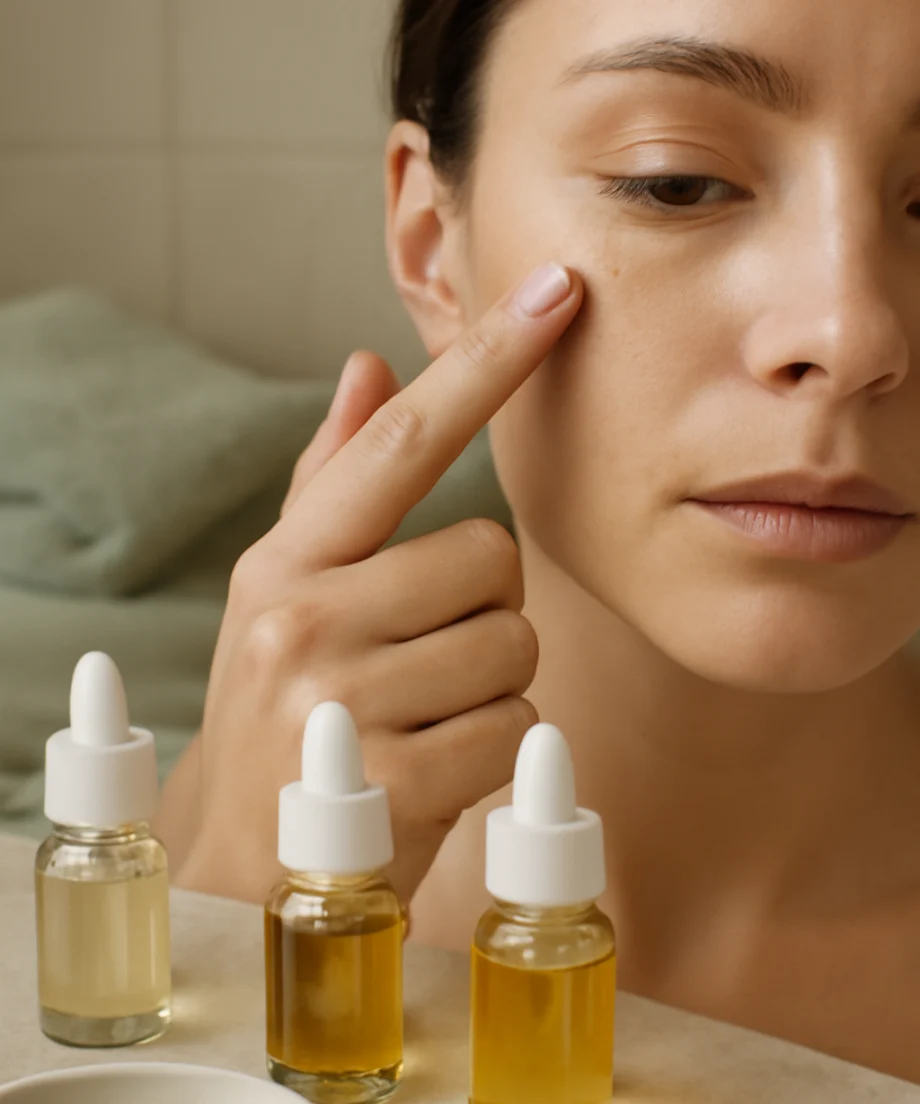
The best oils to consider for the under-eye area
Squalane
Squalane is a lightweight, oil-like emollient that is often easy to spread and comfortable for people who dislike a heavy or greasy finish. It may help reduce the feeling of tightness and improve the look of dry under-eye skin without requiring a large amount.
Despite its name, squalane is not the same as an exfoliating acid or a pigment-fading active. Its main role is moisturization and surface smoothing. Check the label to determine whether the product is plant-derived and whether it includes added fragrance or essential oils, since formulas vary.
Jojoba oil
Jojoba oil has a smooth, wax-like texture and can be useful for dry skin that needs a simple protective layer. A very small amount may help soften roughness around the orbital area. Because it is relatively rich compared with some lightweight emollients, people with milia-prone skin may prefer using it sparingly and observing how their skin responds.
Jojoba oil will not directly remove brown, blue, or purple coloration. It may make the area look less crepey when dryness is contributing to the problem, but that improvement should be viewed as a temporary cosmetic benefit rather than a permanent correction.
Rosehip oil
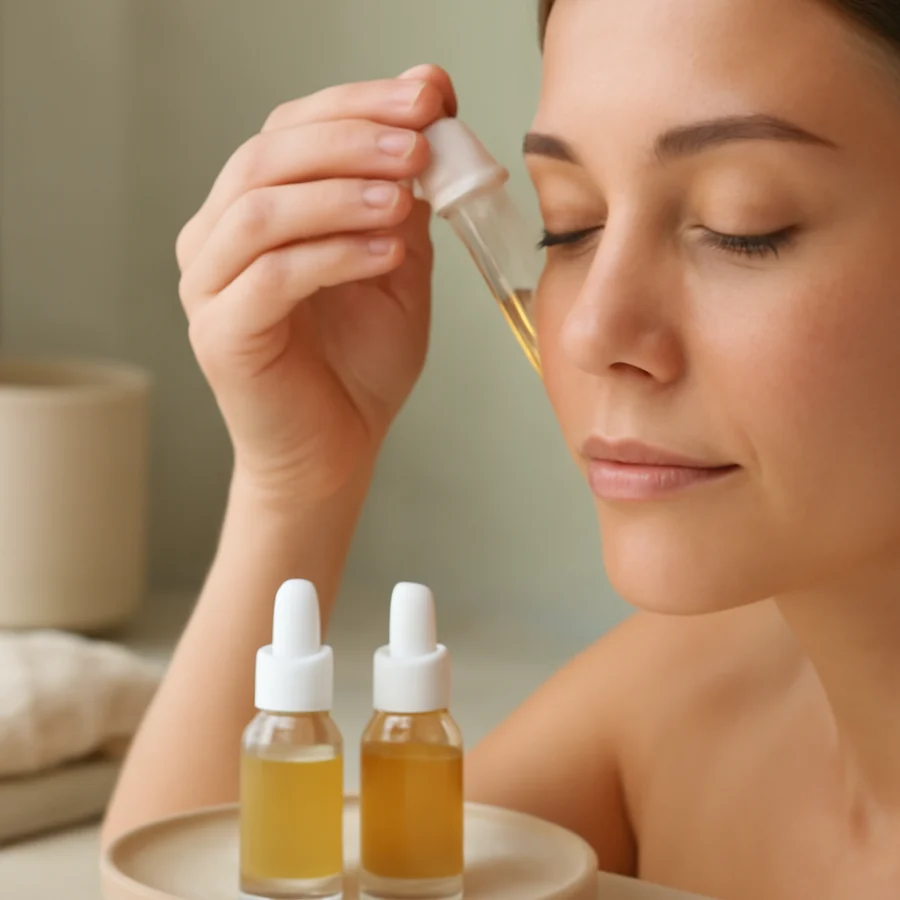
Rosehip oil contains fatty acids and naturally occurring plant compounds, and it is commonly used in facial skincare for softness and moisture. Some rosehip products may also contain naturally occurring or added vitamin A-related ingredients, so the exact label matters. Do not assume that every rosehip oil has the same composition or performance.
Under-eye skin can be sensitive, and a botanical oil may still cause irritation or allergy. Choose a product intended for facial use, avoid getting it into the eyes, and patch test before applying it near the eye area. If stinging, redness, itching, or swelling develops, stop using it.
Argan oil
Argan oil can provide a nourishing, comfortable feel for dry skin. It may be most appealing at night or for people whose under-eyes feel tight after cleansing. Its moisturizing action can improve the look of surface dryness, but it is not a fast brightening ingredient and should not be expected to fade established pigmentation by itself.
Use a product with a clear ingredient list and avoid applying enough to migrate into the eyes. More oil does not necessarily mean more benefit; excess product can feel heavy, interfere with makeup, or cause temporary blurring if it gets too close to the lash line.
Sweet almond oil
Sweet almond oil is another emollient option for dry skin, but it is not appropriate for everyone. People with an almond or tree-nut allergy should avoid it unless a medical professional has advised otherwise. As with any plant oil, confirm the current ingredient list and do not assume that a product labeled “natural” is automatically hypoallergenic.
Its potential benefit is softness, not rapid correction of dark circles. If your primary concern is discoloration rather than dryness, a purpose-formulated eye product may offer more targeted ingredients and a more predictable texture.
Oils to avoid around the eyes
Be especially cautious with undiluted essential oils. Tea tree, peppermint, eucalyptus, citrus, cinnamon, clove, and other essential oils can be irritating around the eyes, even when they smell pleasant or are marketed as natural. The skin in this area is thin, and irritation can make redness, watering, dryness, or dark-looking discoloration more noticeable.
DIY mixtures can also create avoidable problems. Lemon juice, apple cider vinegar, baking soda, and abrasive scrubs are not appropriate substitutes for a gentle eye-area routine. They can irritate the skin and do not offer a reliable shortcut to a brighter appearance. If a commercial product contains fragrance or essential oils, follow the product directions and discontinue use if irritation occurs.
How to use an oil safely
- Patch test first. Apply a small amount to an inconspicuous area according to the product directions. Wait and monitor for delayed irritation before using it near the eyes.
- Use a tiny amount. One small drop may be enough for both under-eye areas. Warm it between clean fingertips rather than pouring oil directly onto the skin.
- Tap, do not rub. Gently press the product along the orbital bone, staying away from the waterline and lash roots. Avoid pulling on the skin.
- Apply to slightly damp skin or over moisturizer. An oil can help seal in hydration, but it does not replace a water-based moisturizer if your skin needs one.
- Keep it out of the eyes. If the product enters the eye, rinse with clean water. Stop using it if you develop burning, persistent redness, itching, swelling, or a rash.
Nighttime is often the simplest time to try an oil because a shiny finish is less noticeable. In the morning, use less product if you plan to apply concealer. Allow skincare to settle before makeup, and avoid layering multiple new products at once so you can identify the source of any reaction.
Choose based on the type of dark circle
Dark circles are not one uniform concern. Brown-looking circles may be linked to visible pigmentation, while blue or purple tones can be more noticeable when thin skin allows underlying structures to show through. Hollowness can create a shadow that skincare cannot fully fill. Puffiness may cast a darker-looking line beneath the eye, and dryness can emphasize nearly all of these effects.
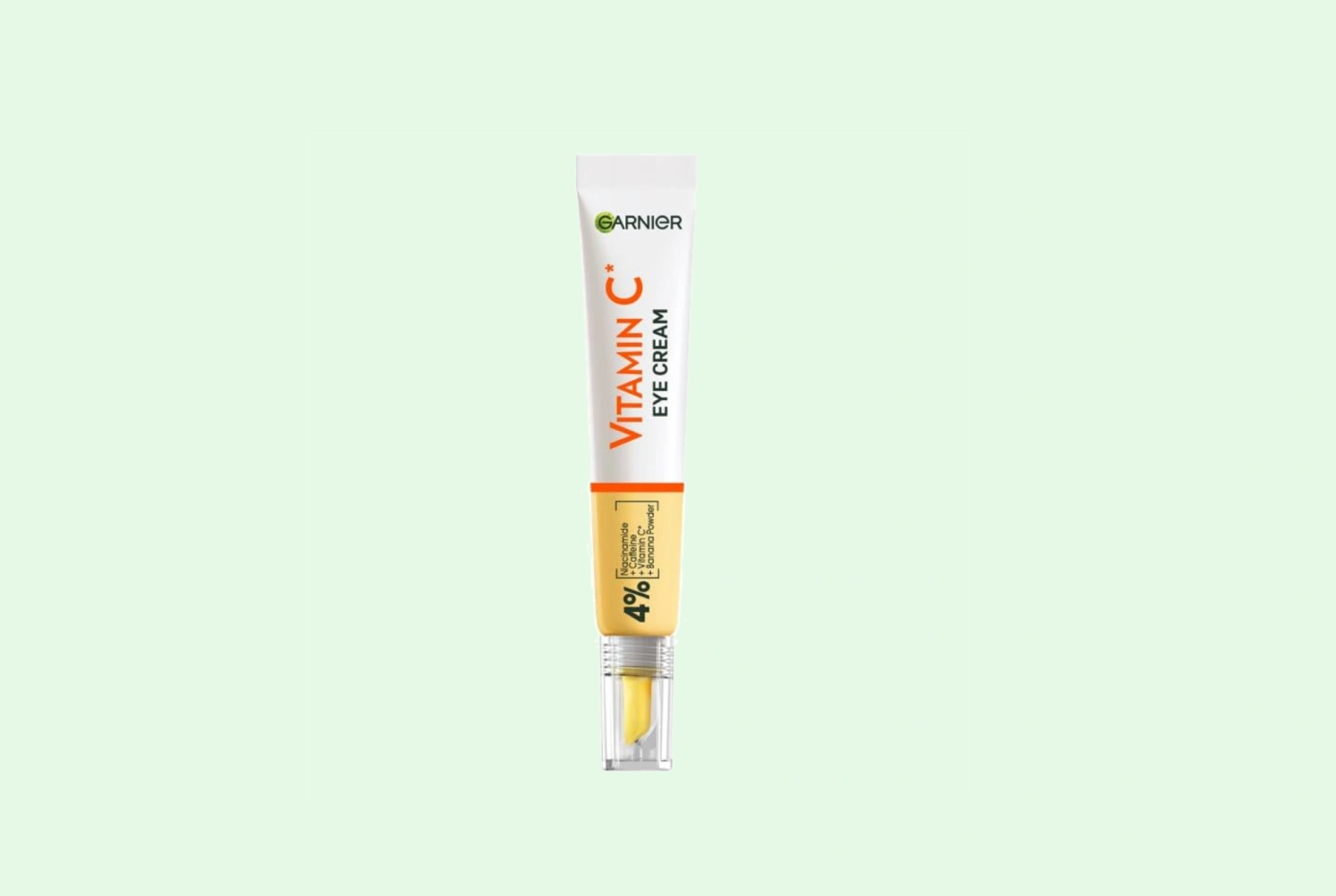
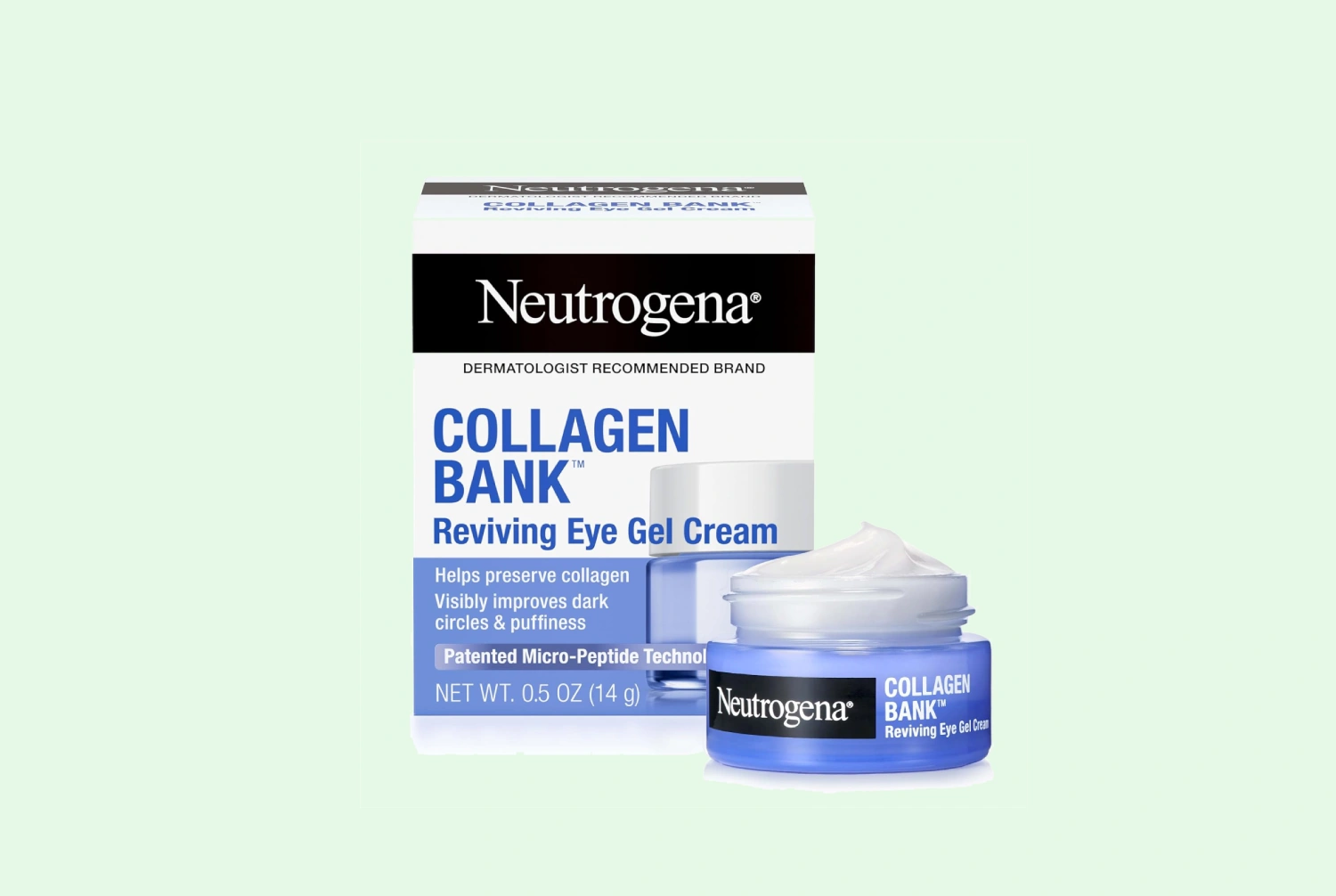
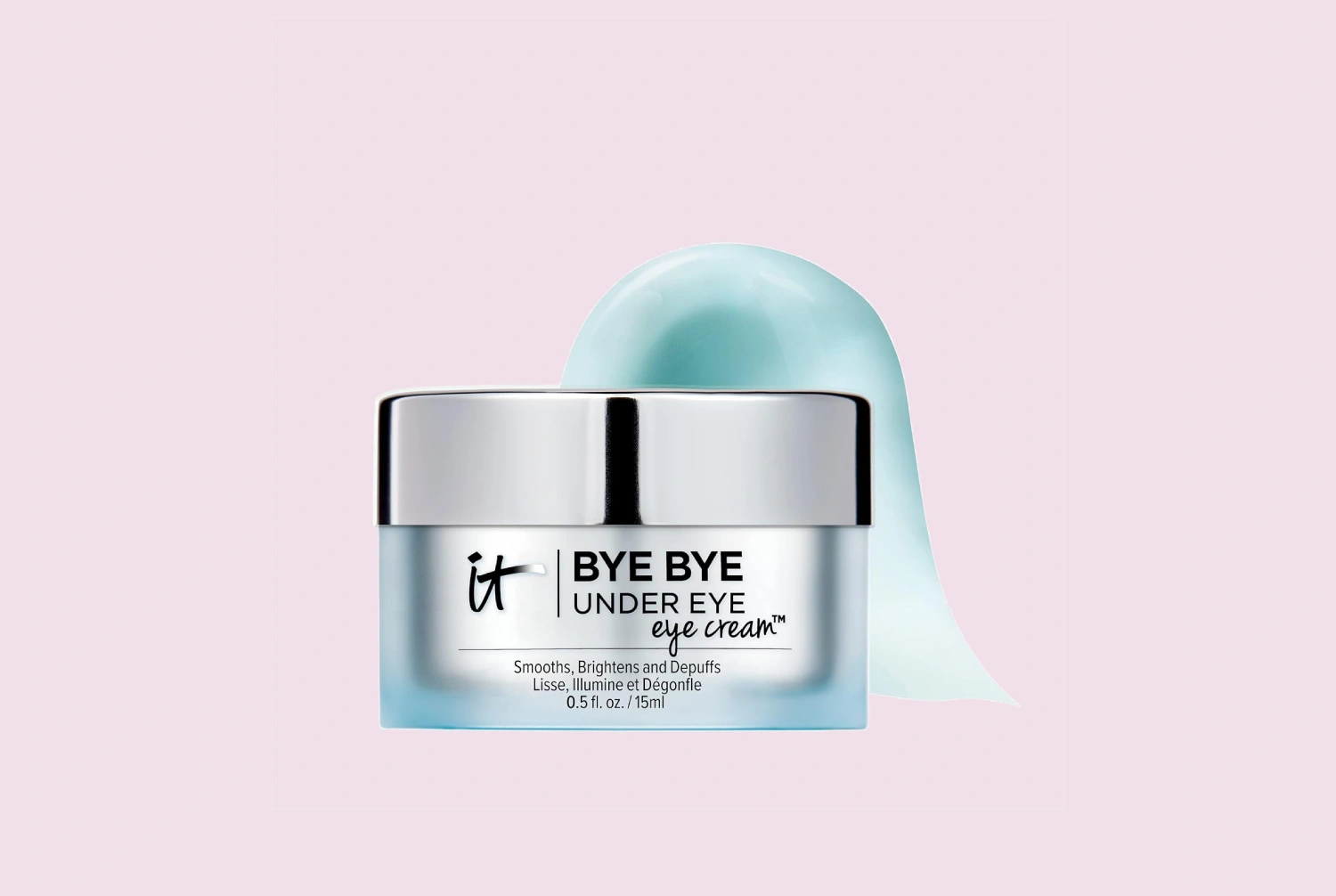
An oil is most likely to help when dryness, flaking, or a rough surface is making the area look dull. It is less likely to help when the main issue is a deep shadow, persistent discoloration, or prominent puffiness. For more targeted product decisions, use an eye cream ingredient guide and compare moisturizing ingredients with options such as caffeine, vitamin C, or retinoid products rather than assuming that “natural” means more effective.
What to pair with a facial oil
A basic routine often does more for the overall appearance of the eye area than adding several oils. Cleanse gently, apply a moisturizer suited to your skin, and use broad-spectrum sunscreen around the eyes as directed by the product label. Sunglasses and a hat can also reduce squinting and sun exposure. Keep sunscreen out of the eyes and choose an eye-area product that you can tolerate consistently.
If fine lines are your main concern, hydration can make them look softer, but an oil does not provide the same type of ingredient approach as a product formulated with a retinoid or another targeted active. If puffiness is the bigger issue, an oil may add comfort without changing the underlying swelling. Our guides to puffiness and eye bags and sensitive skin can help you build a more suitable routine.
How fast should you expect results?
You may notice a softer feel or a temporarily smoother appearance soon after applying an oil, especially if dryness was making the area look creased. That is a surface-level cosmetic change, not proof that the dark circle itself has faded. Pigmentation, shadows, and inherited features generally will not disappear quickly, and an oil may not change them at all.
Give one product enough time to show whether it is comfortable and useful for your skin, but do not keep using it through irritation. Take occasional photos in similar lighting if you want to compare appearance; changes in sleep, lighting, facial expression, allergies, and camera exposure can make under-eye color look different from day to day.
Bottom line for natural oils and dark circles
Squalane, jojoba, rosehip, argan, and some other facial oils can be reasonable choices for moisturizing dry under-eye skin. They may make the area look smoother and less crepey, but they are not fast, universal dark-circle fades and cannot correct every cause of under-eye darkness. Choose a simple, fragrance-conscious formula, use a very small amount, patch test first, and stop if irritation occurs. When dark circles persist despite a gentle routine, focus on identifying whether the main issue is pigment, visible vessels, shadows, puffiness, or dryness so your expectations and product choices stay realistic.

Comments
0No comments yet. Be the first to share a helpful note or question.
Leave a Comment
Your email address will not be published. Comments are reviewed before appearing on the site.