

Vitamin C eye cream may make the under-eye area look brighter and more awake, but it is not a dependable solution for every kind of puffiness. Vitamin C is mainly used for antioxidant support and the appearance of uneven tone; it does not directly remove fluid retention, change facial anatomy, or diagnose the reason your eyes look swollen. If puffiness is your main concern, ingredients such as caffeine, a cooling applicator, gentle hydration, sleep, and attention to possible triggers may be more relevant. Results are cosmetic and usually subtle rather than instant or permanent.
What Vitamin C Can and Cannot Do for Puffy Eyes
The phrase “puffy eyes” can describe several different appearances. Some people notice temporary swelling after poor sleep, crying, a salty meal, allergies, or sleeping with the head flat. Others have under-eye bags related to natural facial structure, age-related changes, or skin laxity. A third group may be noticing dark shadows or discoloration that makes the area look more tired, even when there is little actual swelling.
Vitamin C is more directly connected to the appearance of dullness and uneven tone than to swelling. With consistent use, a well-tolerated formula may help the skin look more radiant and may support a more even-looking complexion. That change can make the eye area appear less tired, but it should not be confused with reducing a structural under-eye bag or treating a medical cause of swelling.
Some eye creams combine vitamin C with moisturizing ingredients, caffeine, peptides, or light-reflecting components. In those products, the overall formula—not vitamin C alone—may influence how smooth, hydrated, or refreshed the area looks. Because formulas can change, check the current product packaging and the manufacturer’s ingredient list before relying on a specific ingredient combination.
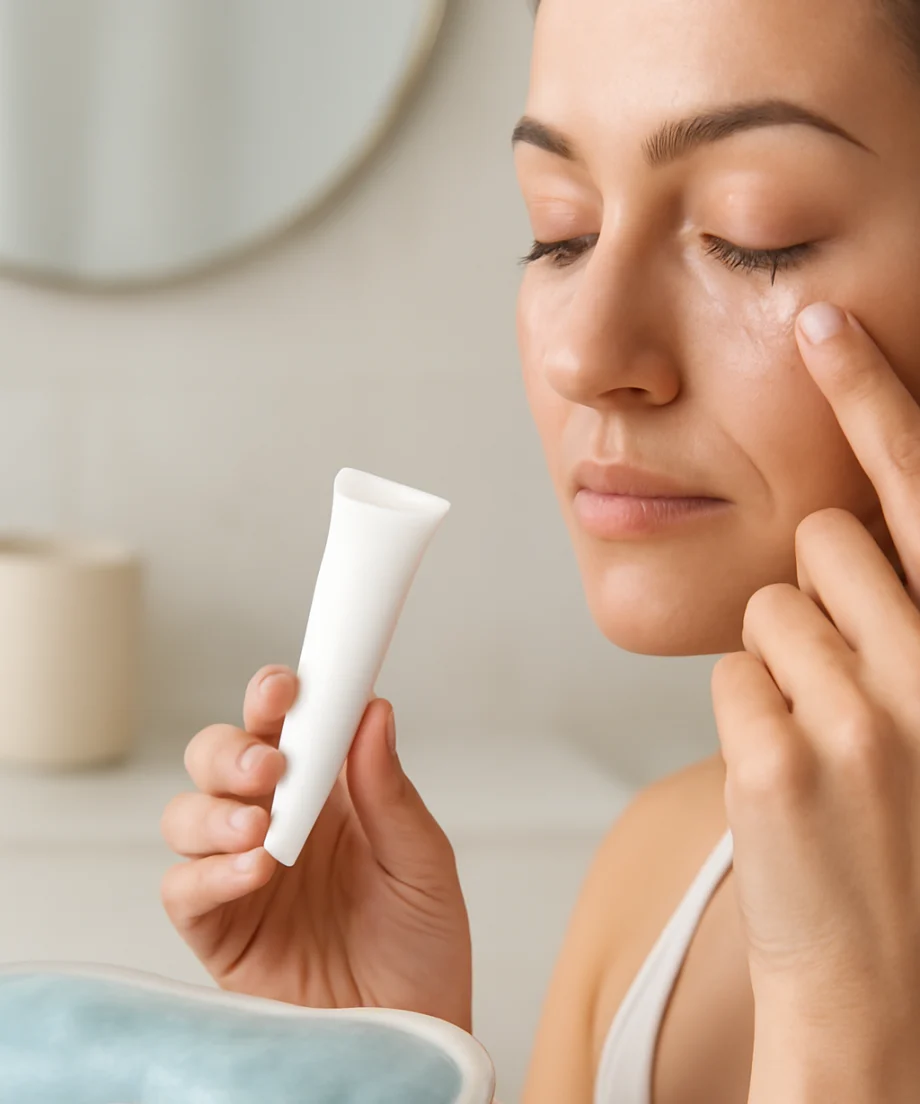
Why Puffy Eyes May Need a Different Approach
Temporary puffiness often reflects fluid movement or irritation rather than a lack of vitamin C. A cool compress, a gentle morning routine, and avoiding rubbing the eyes may help the area look calmer. If a product stings or causes redness, continuing to use it can make the eye area look more irritated and swollen.
Caffeine is commonly included in products designed for the appearance of puffiness. Topical caffeine may produce a temporarily more awake-looking appearance for some people, but it is not a guaranteed or permanent solution. You can learn more about how this category is positioned in our guide to caffeine eye cream.
When puffiness is accompanied by significant redness, pain, itching, discharge, vision changes, or swelling that persists or affects only one side, an eye-care professional or other qualified health professional can help determine whether medical evaluation is appropriate. An eye cream should not be used as a substitute for diagnosis or treatment.
Which Forms of Vitamin C May Appear in an Eye Cream?
“Vitamin C” is a broad label. Products may use pure L-ascorbic acid or a vitamin C derivative. These forms can differ in stability, texture, formulation requirements, and how likely they are to feel irritating around the eyes. A derivative may be chosen for a particular formula’s tolerability or shelf stability, while L-ascorbic acid is often discussed as a more direct form of topical vitamin C.

There is no single best form for every under-eye area. The most suitable option depends on the complete formula, packaging, your skin’s tolerance, and how consistently you can use it without discomfort. For a closer look at the distinction, see our comparison of L-ascorbic acid and vitamin C derivatives.
Do not assume that a product is appropriate for the eye area simply because it contains vitamin C. A face serum may be too strong, too acidic, heavily fragranced, or otherwise unsuitable for the thin skin around the eyes. Use products according to their labeling, and avoid applying them directly to the eyelids, lash line, or inside the eye unless the product specifically instructs you to do so.
What to Look for in a Vitamin C Eye Cream
A clearly identified vitamin C ingredient
Look for the specific form of vitamin C in the ingredient list rather than relying only on front-label language. Marketing terms can vary, and product names do not always tell you which form is present. If the product’s formula matters to your decision, verify the current ingredient list through the packaging or manufacturer because ingredients and packaging may change.
A formula suited to the under-eye area
The eye area often benefits from a simple, comfortable texture. If your skin is dry, a formula with humectants, emollients, or occlusive ingredients may reduce the look of dehydration-related fine lines. If your skin is easily irritated, you may prefer fewer potential irritants and a fragrance-free option, although “fragrance-free” does not guarantee that a product will suit everyone.
Packaging that limits unnecessary exposure
Some vitamin C formulas are sensitive to air, light, or time after opening. An opaque container or pump may help protect the formula, but packaging alone does not prove that a product will remain effective indefinitely. Close the container promptly, store it as directed, and pay attention to changes in color, smell, texture, or performance. When in doubt, follow the manufacturer’s guidance rather than guessing.
A realistic purpose
Choose a vitamin C eye cream if your goal is to support a brighter, more even-looking under-eye appearance and add lightweight hydration. Do not choose it with the expectation that it will erase bags, permanently remove dark circles, or reshape the area beneath the eyes.
How to Use Vitamin C Eye Cream Around Puffy Eyes
Start with clean, dry skin unless the label says otherwise. Use a small amount and gently tap it around the orbital area, keeping a safe distance from the eye itself. Rubbing can worsen temporary irritation and may contribute to a more swollen-looking appearance.
If you are new to the product, begin as directed on the label and consider using it less frequently while your skin becomes accustomed to the formula. There is no advantage to applying extra product. More product can increase the chance of stinging, pilling, or migration into the eyes.
Apply moisturizer if the area feels dry, and use sun protection during the day as appropriate for the product and your routine. Sunscreen should be applied carefully around the eyes without getting it in the eyes. Vitamin C does not replace sun protection.
Patch testing can be a sensible precaution, particularly for sensitive skin or when trying a formula containing several active ingredients. A patch test cannot predict every reaction around the eyes, so stop using the product if you develop burning, persistent redness, itching, swelling, or another concerning reaction. Rinse the area if necessary and seek professional advice if symptoms are severe or do not settle.
Can Vitamin C Eye Cream Make Puffiness Look Better?
It can, but usually indirectly. Better hydration may temporarily make crepey texture look smoother. A brighter-looking surface can reduce the contrast between the under-eye area and surrounding skin. Some formulas also contain ingredients that create a temporary smoothing or light-reflecting effect. These changes may make the eyes look more rested without reducing the underlying cause of puffiness.
Results depend on what you are seeing in the mirror. If the main issue is brown or gray discoloration, vitamin C may be a reasonable ingredient to consider as part of a broader routine. If the main issue is a morning fluid-related appearance, a product aimed at puffiness may be more relevant. If the “bag” is a stable contour that remains throughout the day, a topical cream may have limited visible impact.
For help separating these concerns, you can use our guides to dark circles and puffiness and eye bags. They address different appearance concerns, even though they often occur together.
Common Mistakes to Avoid
- Using a face vitamin C serum under the eyes without checking its directions: The eye area may be less tolerant than the rest of the face.
- Applying the product too close to the eye: Cream can migrate as you blink or move, especially in warm conditions.
- Expecting fast changes in structural bags: A topical product cannot reliably alter the underlying shape of the eye area.
- Ignoring irritation: Stinging, redness, and watering are reasons to pause rather than push through.
- Judging the formula only by its name: Review the current ingredient list and directions because product details can change.
- Layering too many active products: Combining several potentially irritating products may make it harder to identify what is causing discomfort.
Is Vitamin C Eye Cream Worth Trying?
Vitamin C eye cream may be worth trying if you want a product focused on a brighter, more even-looking under-eye appearance and your skin can tolerate it. It is less compelling as a stand-alone choice when puffiness is the only concern, especially if the swelling is persistent or caused by a factor that cosmetics cannot address.
The most practical approach is to choose an eye-area formula with clear directions, introduce it gradually, and evaluate the appearance of your skin under similar lighting over time. Keep expectations modest: improved hydration, a fresher-looking surface, or less noticeable dullness are more realistic goals than completely eliminating puffiness.
Vitamin C can be one useful part of an under-eye routine, but it is not a diagnosis, treatment, or guarantee. If swelling is new, pronounced, painful, persistent, or associated with other symptoms, skip the experiment with cosmetics and ask a qualified health professional for guidance.




Comments
0No comments yet. Be the first to share a helpful note or question.
Leave a Comment
Your email address will not be published. Comments are reviewed before appearing on the site.