
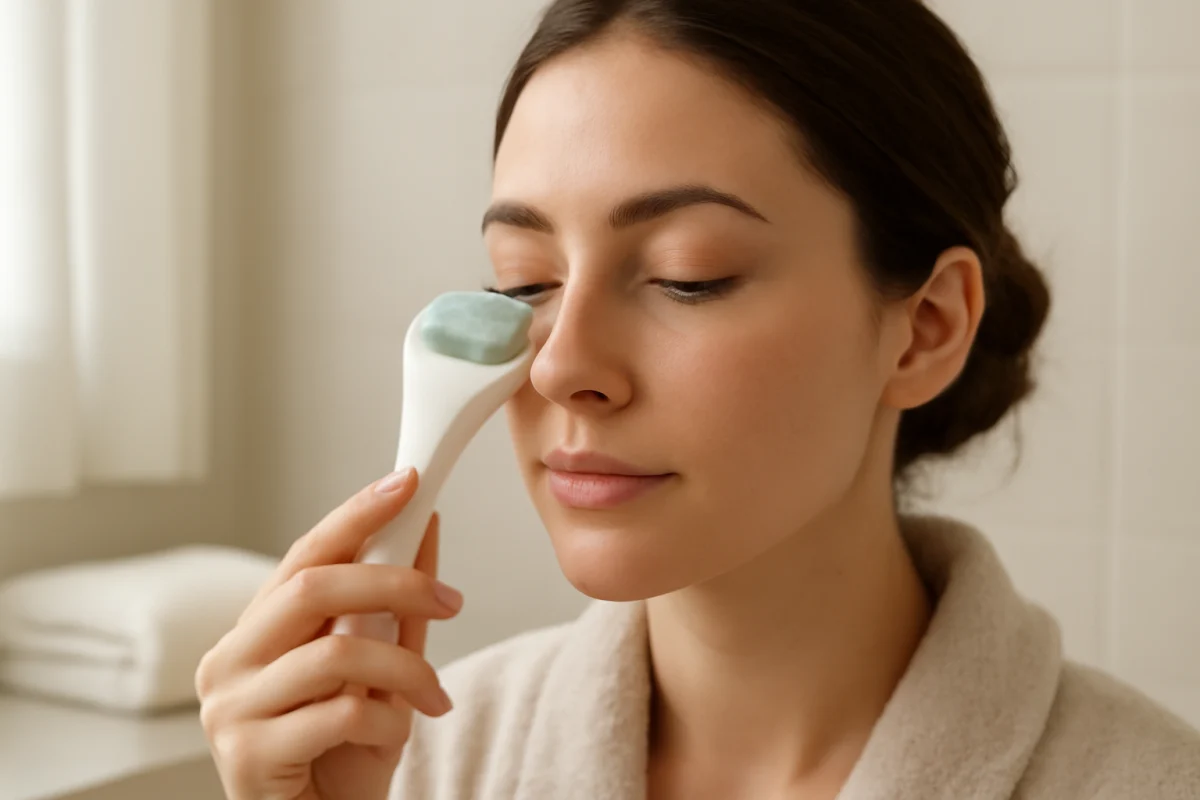
The best morning ice roller technique for puffy eyes is gentle, brief, and controlled: chill the roller according to its instructions, wrap or wipe it clean, then glide it lightly from the inner under-eye toward the temples without pressing on the eyeball. Use short passes for a few minutes rather than holding intense cold in one place. This can temporarily make morning puffiness look less noticeable, but it does not change the underlying structure of persistent eye bags or treat a medical condition.
Cold skincare tools are popular because they create an immediate cooling sensation and may temporarily reduce the appearance of fluid-related swelling. The effect is cosmetic and often short-lived. Your results may vary depending on why the area looks puffy, your skin’s sensitivity, the tool’s temperature, and how much pressure you use.
How to use an ice roller around the eyes
1. Start with a clean, intact tool
Wash your hands and check the roller before bringing it near your face. Clean the roller head according to the manufacturer’s directions, especially if more than one person uses it. Do not use a tool with cracks, rough edges, rust, leaking liquid, or a damaged handle. A damaged surface can tug at delicate skin or introduce unwanted contaminants.
If the roller is stored in a freezer, it may be too cold for direct contact with the thin skin around the eyes. Follow the product’s instructions, and allow the tool to warm slightly if it feels painfully cold or sticks to the skin. The goal is comfortable cooling, not numbness.
2. Prepare the skin
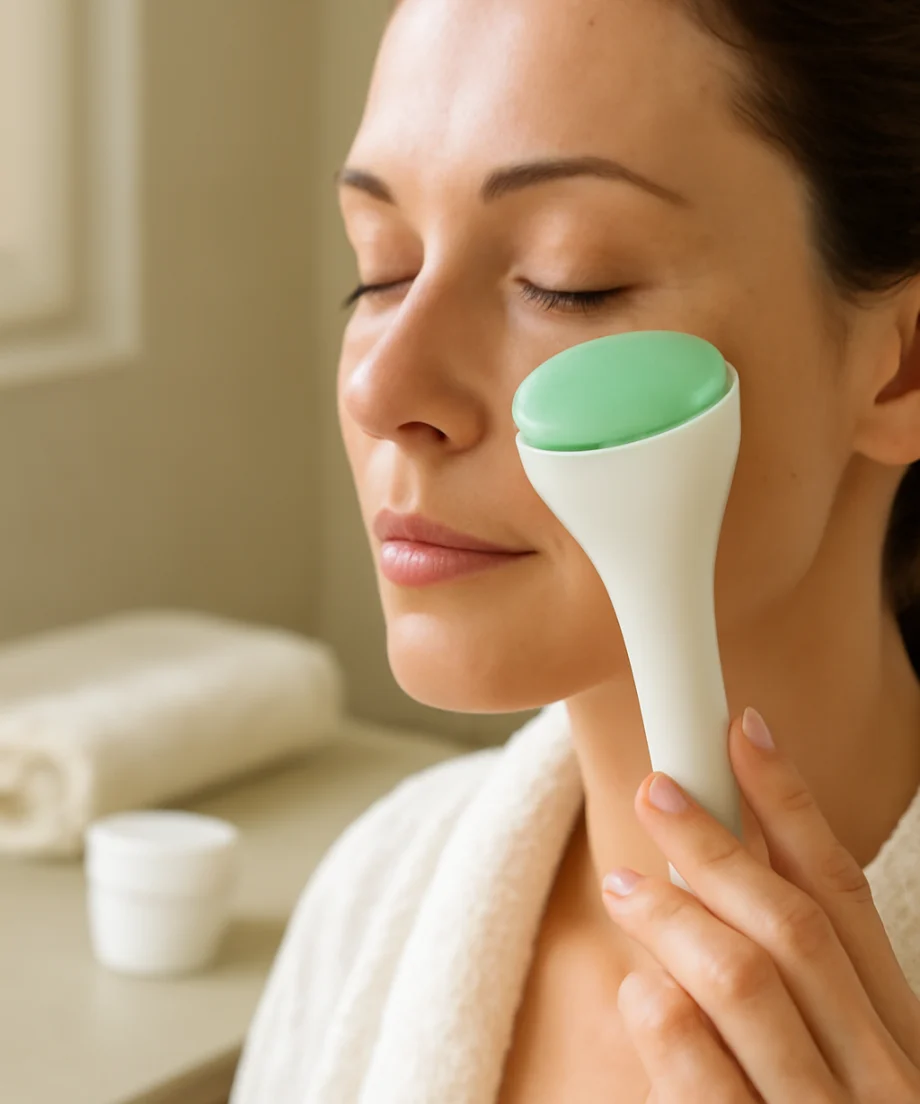
Use the roller on clean skin or over a simple, well-tolerated moisturizer. Avoid rolling over makeup, gritty exfoliants, or products that have not fully absorbed. If you apply an eye cream first, use only a small amount and avoid dragging the roller across a wet layer that could increase friction or cause product to migrate into the eyes.
For product guidance, the Eye Cream Ingredient Guide can help you compare common ingredients and their usual cosmetic purposes. A cold tool is not required for an eye cream to work, and it should not be used to push a product into the eye itself.
3. Use light, outward strokes
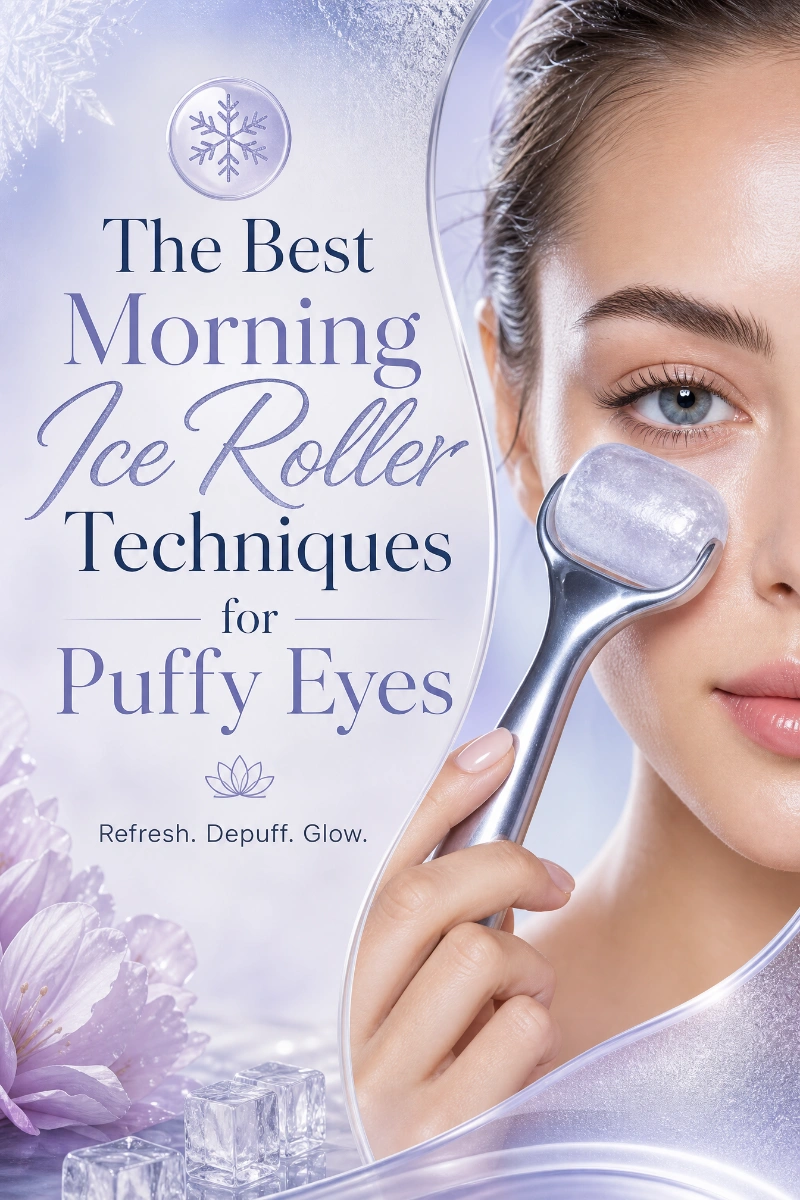
Begin near the inner corner of the under-eye area, leaving a small gap from the lash line, and glide outward toward the temple. Repeat two or three times, then move slightly lower along the upper cheekbone if that area also looks swollen. Keep the pressure light enough that the skin does not stretch, crease, or turn white from compression.
You can also make gentle passes across the brow bone, moving from the center outward. Avoid rolling directly over the eyelids when the eyes are closed unless the tool’s instructions specifically allow it and the motion feels comfortable. Never press the roller against the eyeball, lash line, or inner corner of the eye.
4. Keep the session short
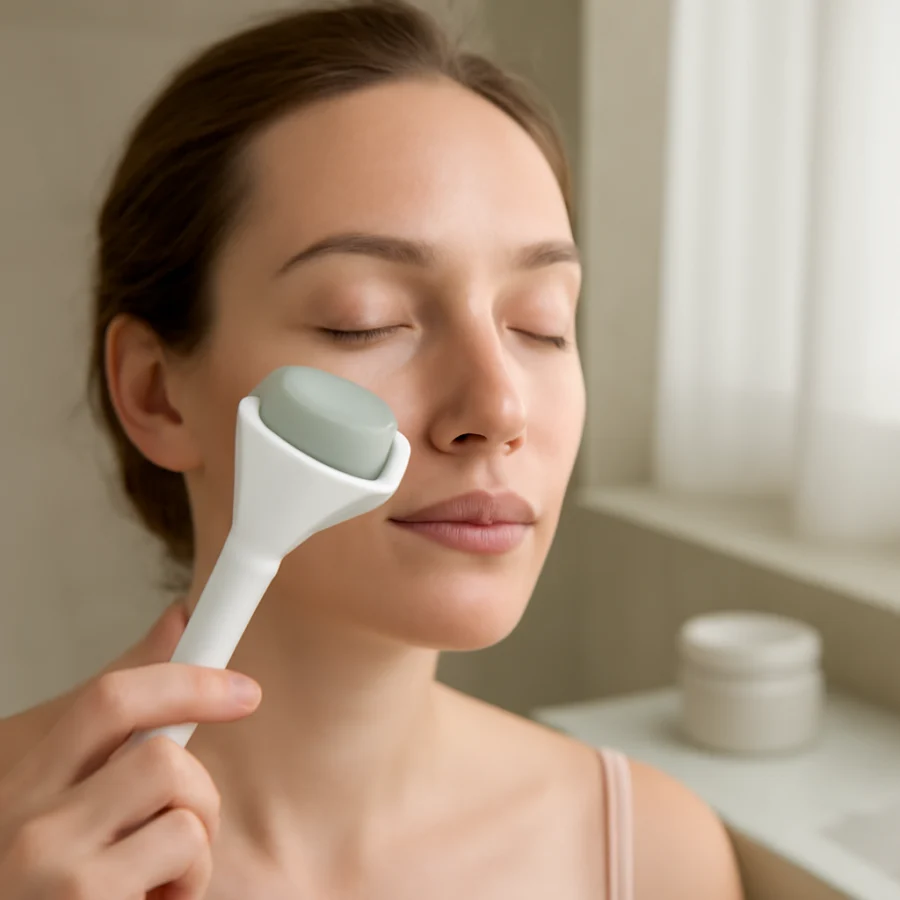
There is no need to keep rolling until the skin feels numb. A brief session is generally more practical than prolonged exposure to cold. Stop if you notice burning, stinging, pain, marked redness, blotchy discoloration, itching, or increased irritation. If the area remains uncomfortable after you stop, rinse gently with lukewarm water and avoid additional active products until the skin settles.
Which direction should you roll?
For a morning routine, outward and slightly downward strokes can feel comfortable and may make the area look temporarily less congested. The important factor is not a precise “drainage” pattern but avoiding aggressive rubbing. Under-eye skin is thin and mobile, so repeated pulling can cause irritation and make dryness or fine lines look more apparent.
Use one slow glide instead of rapidly moving back and forth. Lift the roller from the skin when returning to the starting point rather than dragging it back over the same area. A clean tool and gentle technique matter more than following a complicated sequence.
Should you use an ice roller before or after eye cream?
Either order can be reasonable, but rolling before eye cream is often the simplest choice. Cleanse, cool the area briefly, pat the skin dry, and then apply a small amount of eye cream with your ring finger. This avoids pulling a slippery layer of product across the skin and reduces the chance of moving cream into the eyes.
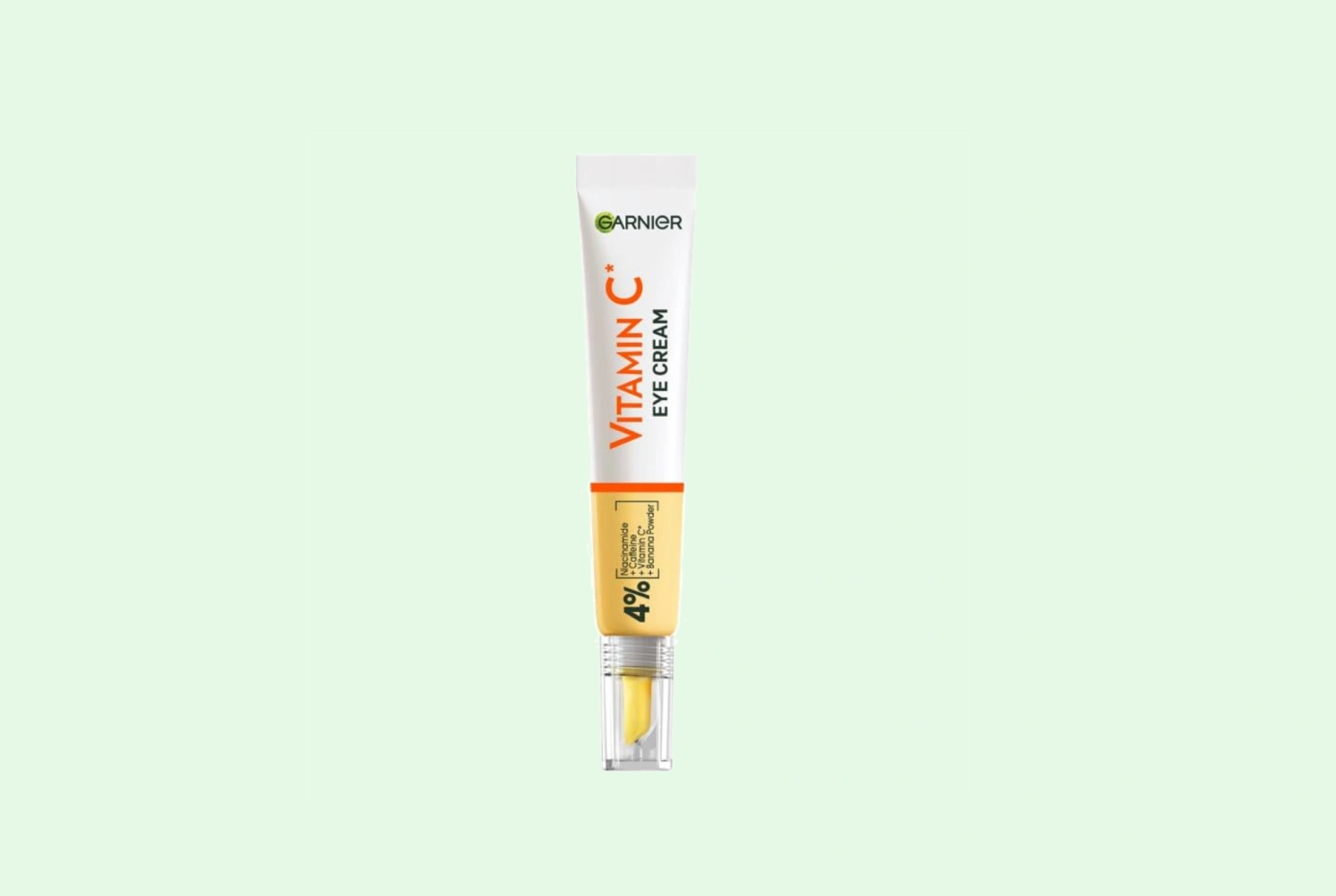
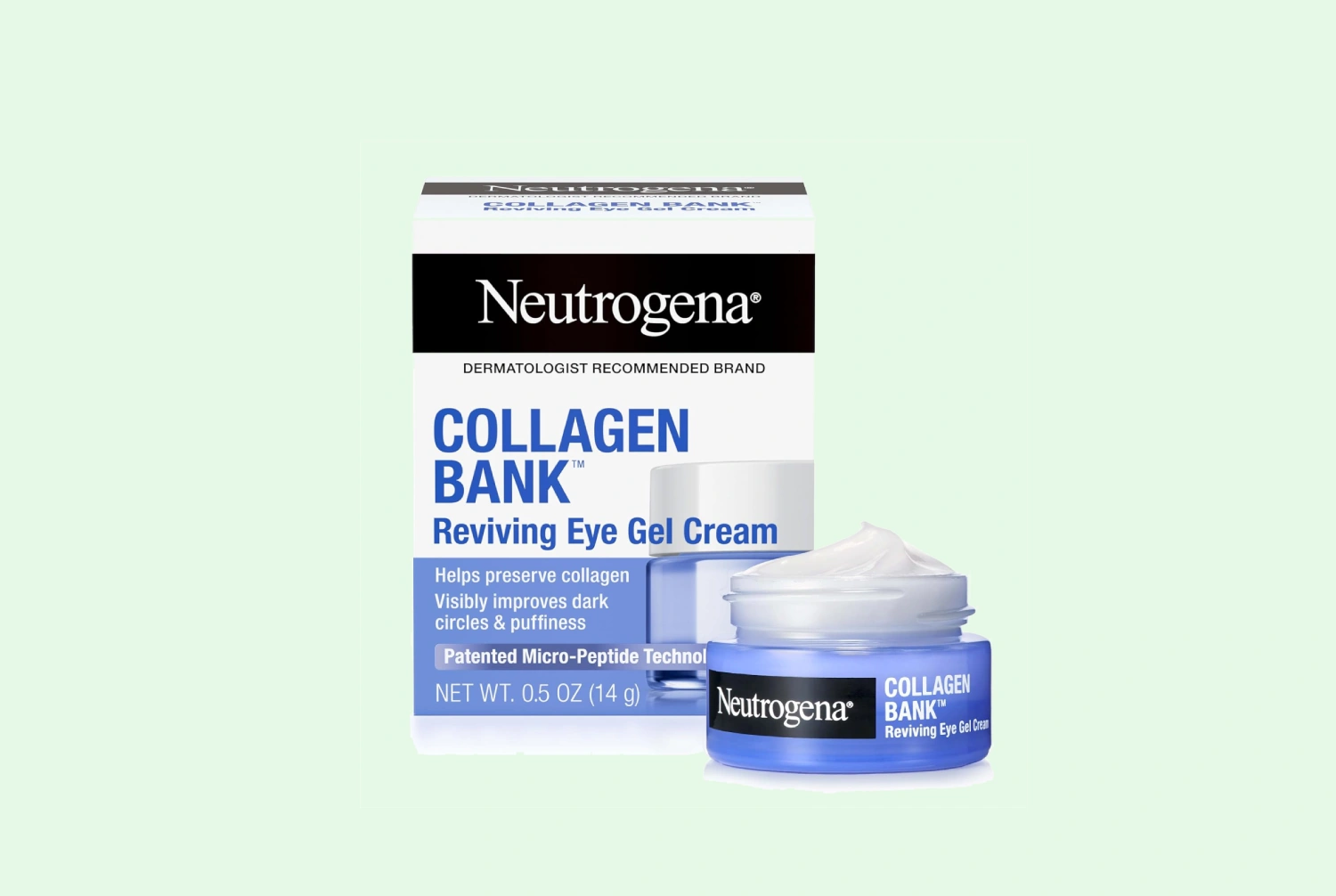
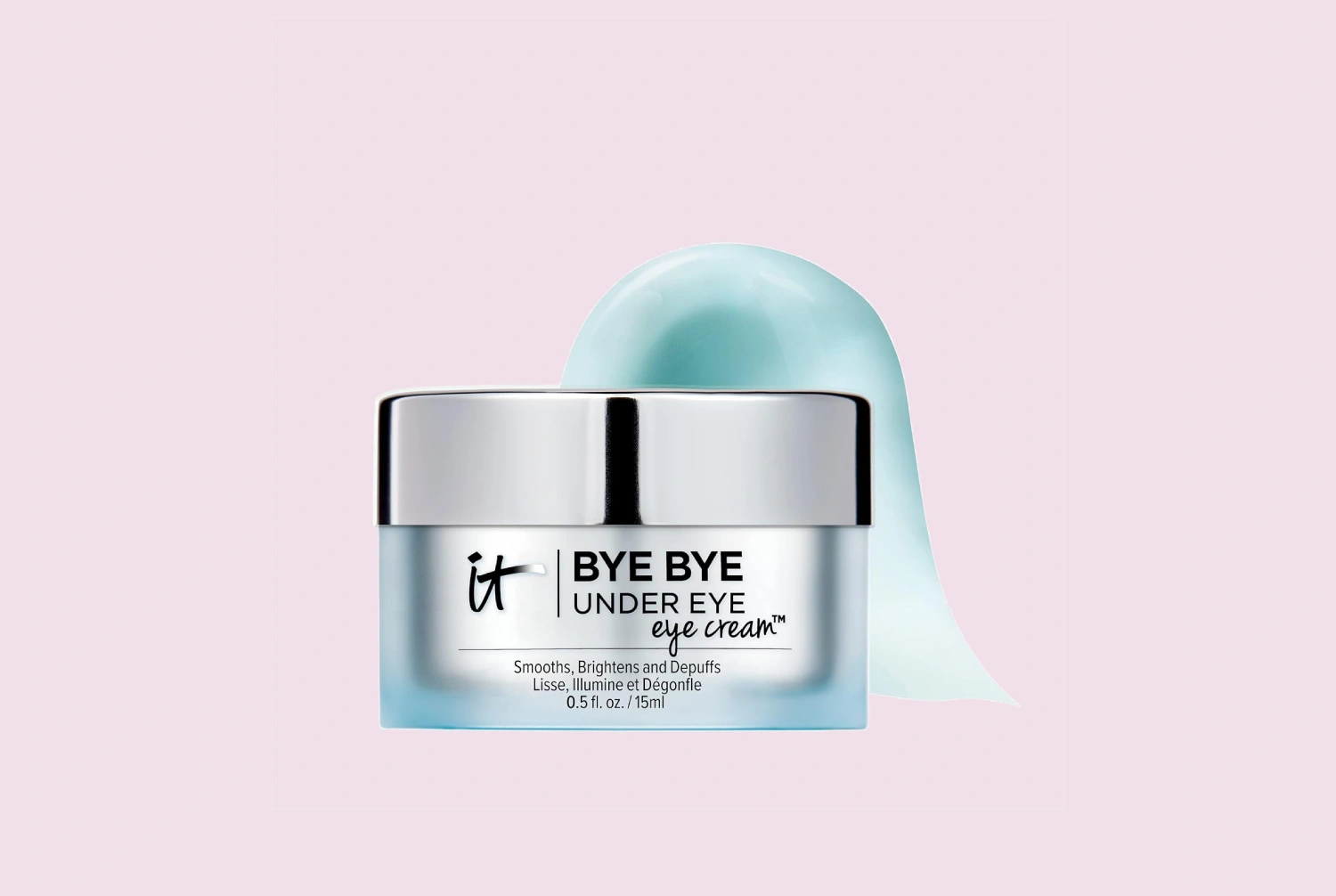
If you prefer to apply eye cream first, wait until the product has settled and use minimal pressure. Choose a formula based on your skin’s needs rather than assuming that a chilled product will provide a stronger result. For example, a basic moisturizing formula may be more comfortable for dry or sensitive skin, while formulas containing caffeine are often selected for the temporary cosmetic look of morning puffiness. Ingredient lists and formulas can change, so check the current packaging or manufacturer information before relying on product-specific details.
You can also use the Under-Eye Routine Builder to organize a routine around concerns such as puffiness, dryness, or fine lines.
How cold should an ice roller be?
The roller should feel cool and comfortable, not painfully cold. A very cold tool can cause temporary irritation, especially on thin, dry, recently exfoliated, or sensitive skin. If the tool has been frozen solid, follow its instructions before use rather than applying it immediately to the under-eye area.
Do not use an ice cube directly on the skin. Its uneven surface can tug at the area, and intense cold may be harder to control. A purpose-made roller, a cool compress, or a clean chilled spoon can provide a more manageable surface when used gently. For another option, see this guide to cold compresses for puffy eyes.
Who should be especially cautious?
Use extra care if you have sensitive skin, visible irritation, eczema-prone skin, rosacea-prone skin, or a history of reacting to cold. Avoid rolling over cuts, rashes, sunburn, active breakouts near the eyes, or recently treated skin unless a qualified medical professional has given you specific instructions.
If you are using potentially irritating skincare ingredients, follow the product label and introduce products cautiously. Retinoids, exfoliating acids, and some brightening formulas can make skin more reactive. Do not assume that cooling cancels out irritation. If a product stings, causes persistent redness, or makes the skin peel, stop using it and simplify your routine until the area recovers. A patch test can help identify whether a new product is tolerated, although it cannot guarantee that the under-eye area will not react.
People with cold sensitivity or conditions affected by cold exposure should ask a healthcare professional whether this type of tool is appropriate. If you have recently had eye surgery, cosmetic treatment, or an injury near the eye, follow the aftercare instructions you were given instead of starting a new massage technique.
What an ice roller can—and cannot—do
An ice roller may temporarily make mild morning puffiness look reduced by cooling the skin and creating a brief tightening sensation. It may also feel soothing after a night of poor sleep or after waking with fluid-related swelling. That visible change should not be interpreted as proof that the roller has removed an eye bag or corrected its cause.
Some under-eye fullness is related to the way fat, skin, and supporting tissues change over time. A roller cannot permanently reposition those structures. It also cannot reliably remove inherited pigmentation, shadows caused by facial contours, or discoloration from other causes. For background on the distinction between temporary swelling and more persistent fullness, read about eye bags versus puffiness.
Dark circles and puffiness can appear together, but they are not the same concern. Cold may have a more noticeable short-term visual effect on swelling than on brown, gray, blue, or purple discoloration. Concealer, sunscreen, and a consistent skincare routine may be more relevant to the appearance of discoloration, depending on the individual.
Simple morning routine for a puffy-looking eye area
- Cleanse gently. Remove overnight residue without scrubbing or using hot water around the eyes.
- Cool briefly. Use a clean, comfortably chilled roller with light outward strokes.
- Pat dry. Avoid rubbing the skin with a towel.
- Apply eye cream if desired. Use a small amount and keep it away from the eye itself.
- Protect exposed skin. Apply broad-spectrum sunscreen around the eye area if the product label permits, taking care to avoid direct contact with the eyes.
- Clean the tool again. Let it dry as directed before storing it.
If puffiness is frequent, consider the larger routine rather than relying on a roller alone. Sleep disruption, salty meals, sleeping position, dehydration, allergies, and irritation can all influence how the area looks from one morning to the next. These factors do not explain every case, but tracking patterns may help you identify triggers without treating the roller as a diagnostic tool.
When to seek medical advice
Cosmetic morning puffiness is common, but sudden, severe, painful, or persistent swelling deserves more attention. Seek medical guidance if swelling is accompanied by vision changes, significant redness, discharge, fever, injury, marked tenderness, or swelling that affects only one side and does not improve. Also ask a healthcare professional about recurring puffiness that concerns you or changes noticeably over time. An ice roller should not be used to delay evaluation of symptoms that may need medical attention.
For most people, the safest approach is simple: use a clean, comfortably cool tool, apply very little pressure, keep the session brief, and stop at the first sign of irritation. The result may be a temporary fresher-looking eye area, but realistic expectations and a gentle routine are more valuable than extreme cold or forceful massage.

Comments
0No comments yet. Be the first to share a helpful note or question.
Leave a Comment
Your email address will not be published. Comments are reviewed before appearing on the site.