
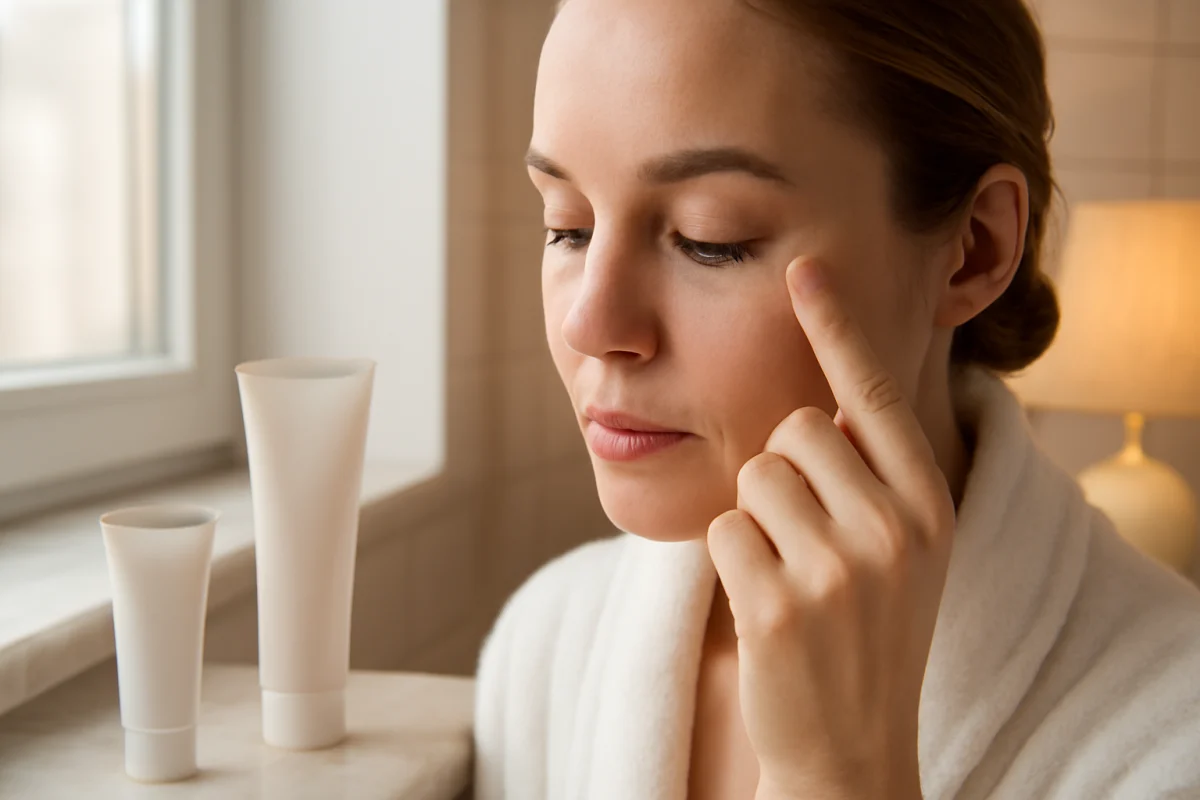
Yes, you can use retinol and vitamin C around the eyes in the same overall routine, but applying both at the same time is not necessary. Because the under-eye area is delicate and both ingredients may cause irritation, many people will find it more comfortable to use vitamin C in the morning and retinol at night, or to alternate them on different nights. Start slowly, follow each product’s directions, and stop if you develop persistent burning, redness, swelling, or peeling.
What each ingredient may do for the under-eye area
Retinol and vitamin C are often discussed together because they have different roles in a skincare routine. Neither ingredient can guarantee that dark circles, puffiness, or fine lines will disappear, and neither is a treatment for an underlying medical condition. Their potential benefits are mainly cosmetic: they may help skin look brighter, smoother, or more even over time when tolerated and used consistently.
Retinol
Retinol is a vitamin A derivative used in skincare. It can support the appearance of smoother-looking skin and may help soften the look of fine lines with continued use. Retinol may also make the skin more prone to dryness, sensitivity, and irritation, especially when someone applies too much, uses it too frequently, or combines it with other potentially irritating products.
Under-eye products made with retinol are generally intended for the orbital area rather than the eyelids or the immediate lash line. Product instructions vary, so check the current packaging before applying. Avoid getting retinol in the eyes themselves.

Vitamin C
Vitamin C is an antioxidant ingredient that can support a brighter, more even-looking appearance. Different products use different forms of vitamin C, and those forms can vary in texture, stability, and potential for irritation. A product containing a vitamin C derivative may feel different from one containing L-ascorbic acid, for example.
If you are comparing products or ingredients, our guide to L-ascorbic acid and vitamin C derivatives in eye creams can help explain why formulas may not behave the same way. Always verify the current ingredient list because formulas and packaging can change.
Why separate morning and evening use?
Using vitamin C in the morning and retinol at night is a practical way to separate two active ingredients without automatically giving up either one. This schedule may also make it easier to identify which product is causing a reaction if your skin becomes uncomfortable.
A simple routine might look like this:
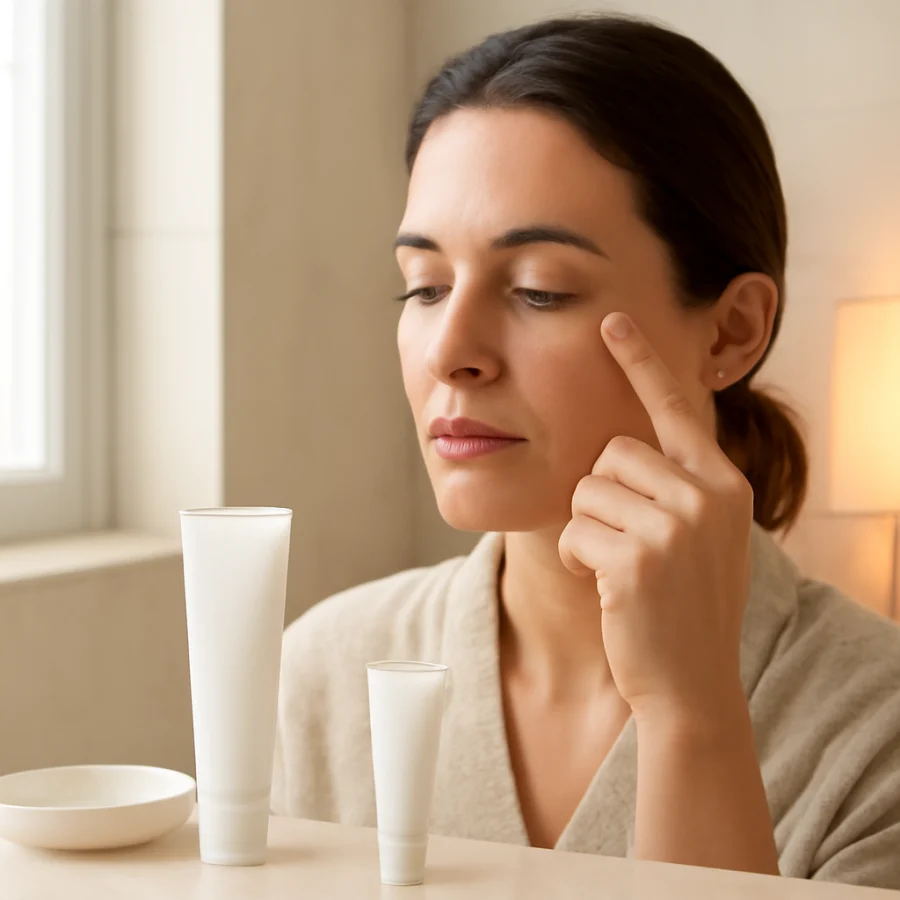
- Morning: Gentle cleanser, vitamin C eye product if tolerated, moisturizer, and broad-spectrum sunscreen used as directed on suitable surrounding skin.
- Evening: Gentle cleanser, moisturizer if needed, retinol eye product according to its label, and another layer of moisturizer if your skin feels dry.
This is only one approach. Some people may prefer to use vitamin C every other morning, while others may use retinol only once or twice weekly at first. The best schedule is the one your skin can tolerate and that you can follow consistently.
Can you apply both in the same routine?
There is no universal rule that vitamin C and retinol must never be used together. However, combining them in the same application can make irritation more likely for some people, particularly when the products are strong, the skin barrier is already stressed, or the user is new to active ingredients.
If you choose to use both in one routine, introduce them separately first. Use one product for several applications while monitoring your skin before adding the second. Apply small amounts only to the recommended area, keep products away from the eyes and lash line, and follow the label rather than assuming that more product will produce better results.
For many readers, separating the products is the more cautious choice. It also avoids a common mistake: changing several parts of a routine at once and then being unable to tell what caused dryness or stinging.
How to introduce retinol around the eyes
Begin with low frequency
Start with the frequency stated on the product label. If the directions allow flexibility, a cautious beginner may choose occasional evening use rather than applying retinol every night immediately. Give your skin time to respond before increasing use.
Use a small amount
More retinol is not automatically more effective. Use the amount directed by the manufacturer and spread it carefully over the intended area. Avoid the mobile eyelids, inner corners, and places where the product could migrate into the eye unless the product specifically says those areas are suitable.
Support the skin barrier
A gentle moisturizer can make a retinol routine feel more comfortable, especially for dry or sensitive skin. Some people prefer applying moisturizer before retinol, after retinol, or both, depending on the product directions and how their skin reacts. Avoid layering multiple exfoliating or irritating products around the eyes while you are adjusting to retinol.
How to use vitamin C more comfortably
Vitamin C products can vary considerably. A product may sting because of its vitamin C form, the overall formula, contact with compromised skin, or accidental migration into the eye. Mild, brief tingling is not a reason to ignore ongoing discomfort, and significant burning is a reason to remove the product.
Apply vitamin C to clean, dry skin if the label recommends it, and use only the amount directed. If your under-eye area is dry or reactive, consider introducing vitamin C less often rather than forcing daily use. You can also read our guide on why vitamin C eye cream can sting around the eyes for practical causes to consider.
Vitamin C does not replace sunscreen. Use sun protection according to product directions, while taking care around the eye area so sunscreen does not enter the eyes. Sunglasses and a hat can also help reduce direct sun exposure.

Who should be especially cautious?
Use extra care if you have a history of sensitive skin, eczema, frequent eyelid irritation, or a damaged skin barrier. The skin around the eyes may react differently from the skin on the cheeks, so a product that feels comfortable elsewhere may still be unsuitable for this area.
Patch testing can be useful, but it cannot guarantee that a product will not irritate the eye area. Follow the product’s instructions for testing and avoid testing directly in the eye. If you develop swelling, a rash, significant pain, vision changes, or symptoms that do not improve after stopping the product, seek advice from a qualified medical professional. This article cannot diagnose the cause of those symptoms.
People who are pregnant, trying to become pregnant, or breastfeeding should ask a qualified healthcare professional about retinoid skincare before use. Product labels and individual circumstances matter, so general internet advice should not replace personalized medical guidance.
What about dark circles, puffiness, and fine lines?
Dark circles have many possible visual contributors, including pigmentation, shadows from facial structure, visible blood vessels, and the appearance of thin or dry skin. Retinol and vitamin C may support a brighter or smoother-looking appearance, but they cannot address every cause of under-eye darkness.
Neither ingredient is a dependable solution for temporary puffiness caused by lack of sleep, crying, allergies, fluid shifts, or other factors. Persistent or one-sided swelling, pain, sudden changes, or changes affecting vision deserve medical attention rather than more skincare products.
If your primary concern is fine lines, focus on gentle application, moisturization, and daily sun protection in addition to considering an active ingredient. You can browse our information on retinol eye creams and vitamin C eye creams when comparing product categories.
A simple decision guide
- New to both ingredients: Introduce one product at a time and use vitamin C in the morning and retinol on occasional evenings.
- Dry or sensitive skin: Start less often, prioritize moisturizer, and avoid combining several active ingredients around the eyes.
- Comfortable with both products: Continue separating them if that routine works. There is no need to apply both at once.
- Frequent irritation: Stop the newest or most irritating product and return to a gentle routine until your skin settles.
The practical takeaway
Retinol and vitamin C can be part of the same under-eye skincare plan, but using them at different times is usually the simplest way to manage potential irritation. Vitamin C in the morning and retinol at night is a reasonable starting structure, not a requirement. Introduce each product gradually, use only products intended for the eye area, protect your skin from sun exposure, and check the current manufacturer instructions because formulas can change. Most importantly, judge the routine by comfort and realistic cosmetic improvement—not by promises of permanent or guaranteed results.




Comments
0No comments yet. Be the first to share a helpful note or question.
Leave a Comment
Your email address will not be published. Comments are reviewed before appearing on the site.