
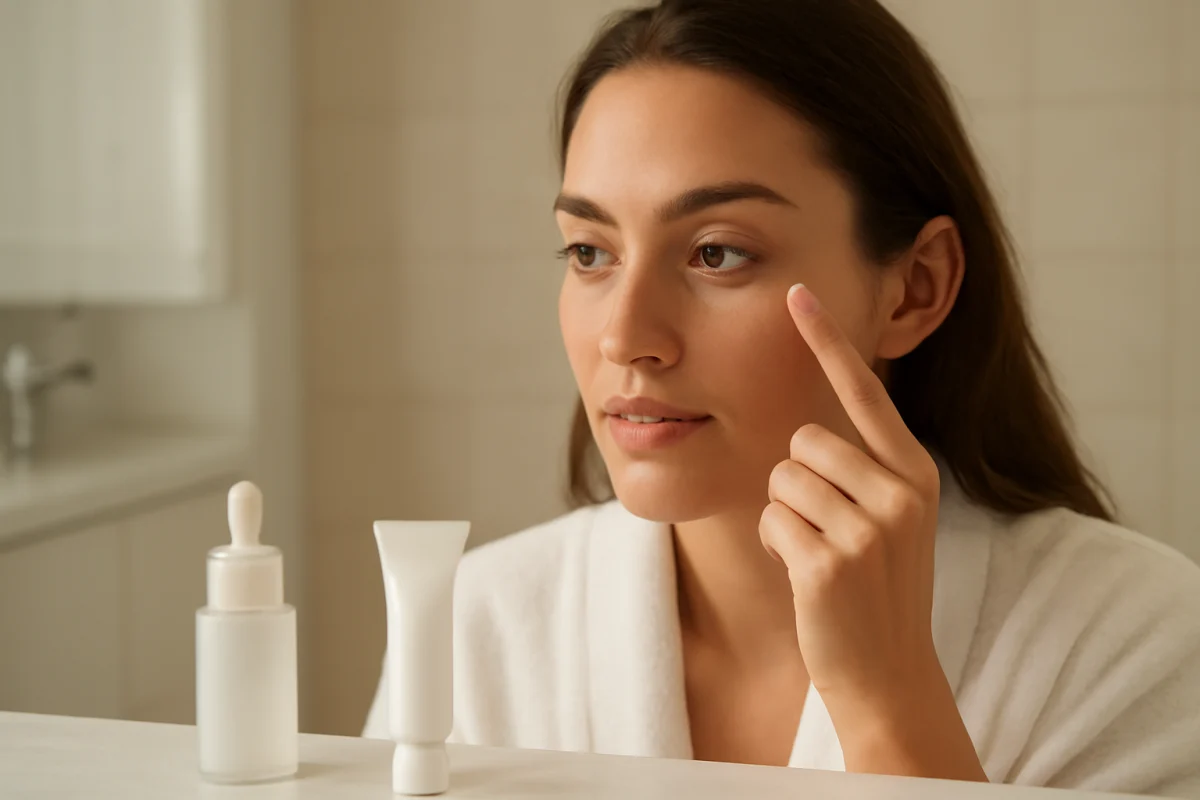
The simplest way to layer skincare for the appearance of dark circles is to apply products from thinnest to thickest, use targeted eye products after cleansing, and finish with sunscreen in the morning. Start with a gentle cleanser, apply a lightweight hydrating or treatment product, follow with eye cream, moisturize as needed, and use broad-spectrum sunscreen around—but not directly in—the eyes. At night, use the same general order, but introduce potentially irritating ingredients such as retinol carefully and only according to the product label.
Layering can help each product spread evenly and reduce the chance of applying too much near the eyes. It cannot change every factor that contributes to under-eye darkness. Dark circles may look brown, blue, purple, gray, or shadowed depending on skin tone, visible blood vessels, genetics, thin skin, pigmentation, puffiness, or the shape of the eye area. Skincare may improve hydration, brightness, texture, or the temporary appearance of puffiness, but it does not guarantee that dark circles will disappear.
The basic order for an under-eye skincare routine
A practical routine does not need many layers. Too many products can increase the risk of pilling, stinging, dryness, or accidental contact with the eyes. Use the following sequence as a starting point:
- Cleanser: Remove sunscreen, makeup, and surface residue with a gentle cleanser that does not leave the skin feeling tight.
- Hydrating serum or essence: If you use one, apply a lightweight, eye-area-compatible product before richer creams.
- Targeted eye treatment: Apply a small amount of an eye product containing ingredients selected for your main concern.
- Moisturizer: Use a face moisturizer around the orbital area if your skin needs additional comfort, unless your eye cream already provides enough moisture.
- Sunscreen in the morning: Apply a broad-spectrum sunscreen to the surrounding skin, taking care to avoid direct contact with the eyes.
In most routines, the eye cream does not have to be the first product after cleansing. It is usually more useful to place it after watery products and before heavier creams. However, product texture and label directions take priority. If a product specifically instructs you to apply it to clean, dry skin or use it at a particular step, follow those directions.
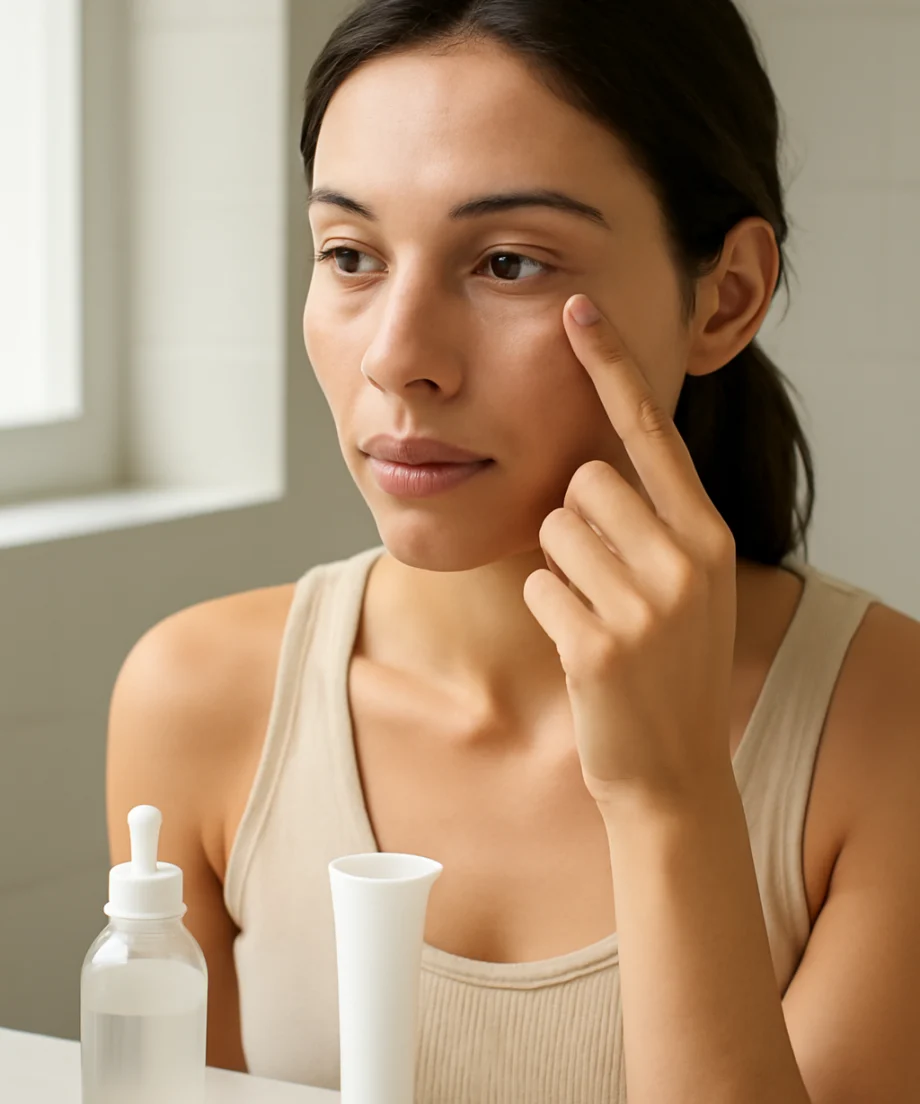
How to choose layers based on the type of dark circles
Not all dark circles have the same visible pattern, so the most sensible routine depends on what you notice. This is a cosmetic approach, not a way to diagnose the underlying cause.
For brown-looking discoloration
Brown or tan-looking darkness may be more noticeable as pigmentation. A routine can focus on gentle brightening support and consistent sun protection. Look for products formulated with ingredients such as vitamin C derivatives, niacinamide, or other brightening ingredients that are labeled for use around the eyes. These ingredients vary substantially by product, and their suitability for the eye area is not identical across formulas.
Apply a lightweight brightening product before a moisturizing eye cream if the label allows use near the eyes. Do not assume that a face serum is automatically appropriate for the eyelids or under-eye area. Some formulas may be too strong, fragranced, or irritating for this region. Morning sunscreen is also an important part of a routine because unprotected exposure can make the appearance of uneven pigmentation more difficult to manage.
For blue, purple, or red-looking darkness
Blue or purple tones can be more visible when the skin under the eyes is thin or when underlying vessels show through. Hydration and barrier-supportive ingredients may make the area look smoother and less crepey, which can soften the overall appearance. Caffeine is another commonly used eye-care ingredient, particularly in products marketed for a more refreshed-looking eye area. Its cosmetic effect may be temporary and should not be treated as a guaranteed solution.
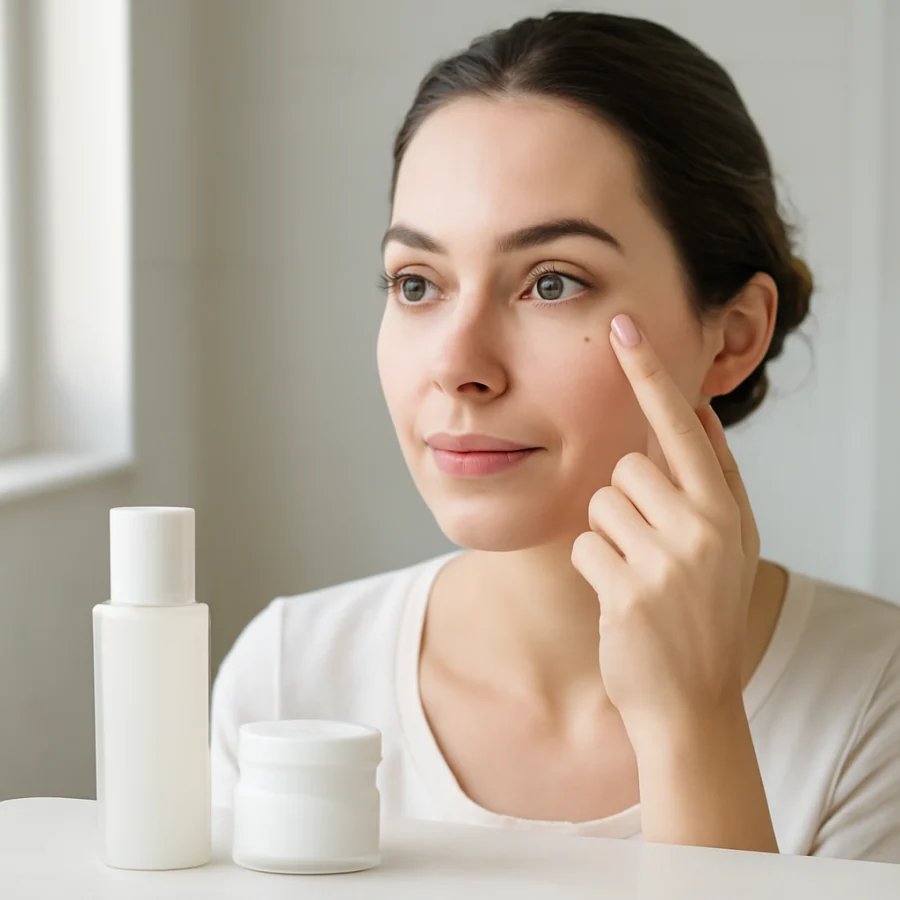
Use a hydrating layer first, then apply an eye cream with a comfortable texture. Avoid rubbing, pulling, or repeatedly wiping the skin, since friction can make the area feel irritated and may make discoloration look more noticeable.
For shadows caused by puffiness or contours
Some under-eye darkness is partly a shadow created by puffiness, hollowness, or the natural shape of the eye area. In that situation, a cream may improve surface hydration without removing the shadow itself. A lightweight product may feel more comfortable in the morning, while a richer formula may be preferable at night if dryness is the main concern.
For more guidance on this distinction, see our resource on dark circles versus under-eye shadows. Understanding what you are seeing can help you set more realistic expectations when choosing products.
Where common ingredients fit in the routine
Hydrating ingredients
Humectants and other moisturizing ingredients can help the under-eye area look temporarily plumper and smoother by supporting surface hydration. They are often easiest to layer because they are generally used before creams. Apply a small amount to slightly damp or clean skin if the product directions recommend it, then seal it with an eye cream or moisturizer.
Hydration may reduce the emphasis of fine, dry-looking lines, but it does not permanently remove wrinkles or change the structure of the under-eye area. If your skin feels tight or flaky after applying a product, simplify the routine rather than adding more active ingredients.
Vitamin C and other brightening ingredients
Vitamin C products can vary in form, strength, stability, and tolerance. Some are designed for the face, while others are specifically formulated for the eye area. Apply an eye-compatible product before moisturizer and sunscreen in the morning if the label permits. If you are already using multiple brightening products, adding another one may increase irritation without providing a clear benefit.
Because formulas can change, check the current packaging and manufacturer ingredient list before relying on a product-specific detail. Our guide to eye cream ingredients can help you compare ingredient categories without assuming that every product with the same headline ingredient will perform the same way.
Caffeine
Caffeine is often included in morning eye products intended to make the eye area look more awake. It is generally applied after cleansing and before moisturizer, although some caffeine products are already formulated as creams or gels. A cooling sensation does not necessarily indicate that a product is working, and temporary cosmetic effects should not be confused with treatment of a medical condition.
Retinol and retinoid-style ingredients
Retinol and related ingredients require more caution around the eyes. They may support a smoother-looking texture over time, but they can also cause dryness, peeling, redness, or stinging, especially when introduced too quickly. Use only a product labeled for the eye area or follow the manufacturer's directions carefully. Apply it at night, use a small amount, and avoid placing it directly on the lash line or eyelids unless the instructions specifically say to do so.
Do not begin a retinol eye product on the same night as several other potentially irritating actives. Start with the schedule provided on the label, and stop using it if you develop persistent irritation. Read more in our guide to retinol for dark circles.
How to layer products without irritating the eye area
The skin around the eyes is easy to overwhelm, especially when several products contain fragrance, exfoliating acids, retinoids, or brightening actives. Keep the amount small—usually a thin layer is enough—and gently pat products over the orbital area rather than dragging them across the skin. Leave enough time between layers for each product to spread comfortably, but you do not need to wait for a precise number of minutes.
Introduce one new product at a time. This makes it easier to identify the cause if you experience burning, itching, swelling, rash, excessive dryness, or watering. A patch test can be useful, but it does not guarantee that a product will not irritate the eye area. Follow the label, keep products out of the eyes, and stop using a product if irritation develops. Seek medical advice for severe, persistent, painful, or vision-related symptoms.
Morning and evening examples
A simple morning routine
Cleanse gently or rinse if cleansing is not needed. Apply a lightweight hydrating product if desired, followed by a caffeine or brightening eye product that is labeled for morning use. Add moisturizer if the area feels dry, then apply sunscreen to the surrounding skin. Makeup, including concealer, comes after skincare has settled. Avoid applying so much cream that concealer slips, gathers, or emphasizes texture.
A simple evening routine
Remove makeup and sunscreen without scrubbing. Apply a hydrating layer, followed by either a basic moisturizing eye cream or a targeted nighttime product. If using retinol, do not automatically layer it with exfoliating acids or other strong actives. Finish with moisturizer if needed. A shorter routine is often easier to maintain and may be better tolerated than an aggressive combination of treatments.
What results can realistically look like?
Well-layered skincare may help the under-eye area look more hydrated, comfortable, even-toned, or temporarily less puffy. Improvements can be subtle, and visible changes depend on the product, the concern, the consistency of use, and individual tolerance. A routine cannot guarantee results, and no topical product can address every genetic, structural, vascular, or pigmentation-related factor behind dark circles.
Take a photo in similar lighting if you want to monitor gradual cosmetic changes, but avoid judging your skin from day to day. Sleep, allergies, fluid retention, lighting, and facial expression can all affect how the area looks. If darkness appears suddenly, affects only one side, or occurs with marked swelling, pain, rash, or other concerning symptoms, consult a qualified healthcare professional rather than relying on skincare alone.
When to simplify your routine
If the eye area becomes dry, tight, itchy, or irritated, pause treatment-focused products and return to a gentle cleanser, bland moisturizer, and daytime sun protection as tolerated. Once the skin feels comfortable, reintroduce products one at a time. You may find that one well-tolerated eye cream is more useful than several overlapping layers.
The best layering routine is therefore not the one with the most products. It is the one that matches your visible concern, respects the sensitivity of the eye area, follows current product directions, and is simple enough to use consistently.




Comments
0No comments yet. Be the first to share a helpful note or question.
Leave a Comment
Your email address will not be published. Comments are reviewed before appearing on the site.