
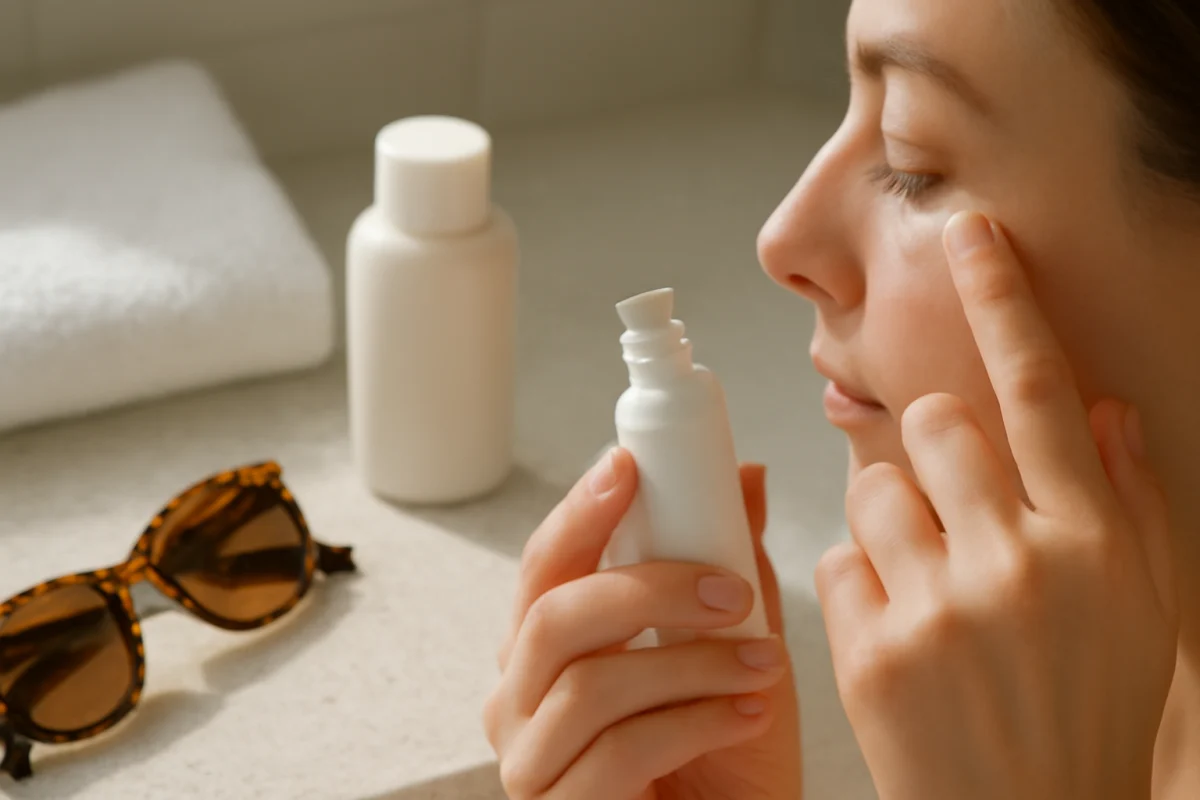
The most useful morning routine for helping prevent fine lines from looking more pronounced is simple: cleanse gently if needed, apply a hydrating product, use moisturizer when your skin needs it, and finish with broad-spectrum sunscreen around the eyes as directed on the label. Sunglasses, gentle application, and consistent habits also matter. No routine can stop natural skin aging, but reducing daily dryness, sun exposure, and tugging may help the eye area look smoother and more comfortable over time.
The skin around the eyes is thin and expressive, so lines can become more noticeable when the area is dry, irritated, or repeatedly exposed to ultraviolet light. Morning skincare should support the skin barrier without turning into an overly complicated series of strong actives. The goal is cosmetic: helping the area look hydrated and protected, not diagnosing or treating a medical condition.
Step 1: Start with a gentle cleanse—or skip it if your skin is dry
In the morning, cleansing is optional for many people. If your skin feels comfortable and you removed makeup and sunscreen thoroughly the night before, rinsing with lukewarm water may be enough. If you wake up oily, sweaty, or with product residue, use a mild cleanser and rinse without scrubbing.
Aggressive rubbing can temporarily make the under-eye area look red or irritated and may make fine lines stand out more. Avoid pulling the skin while drying your face. Instead, pat gently with a soft towel and leave the skin slightly damp before applying the next product.
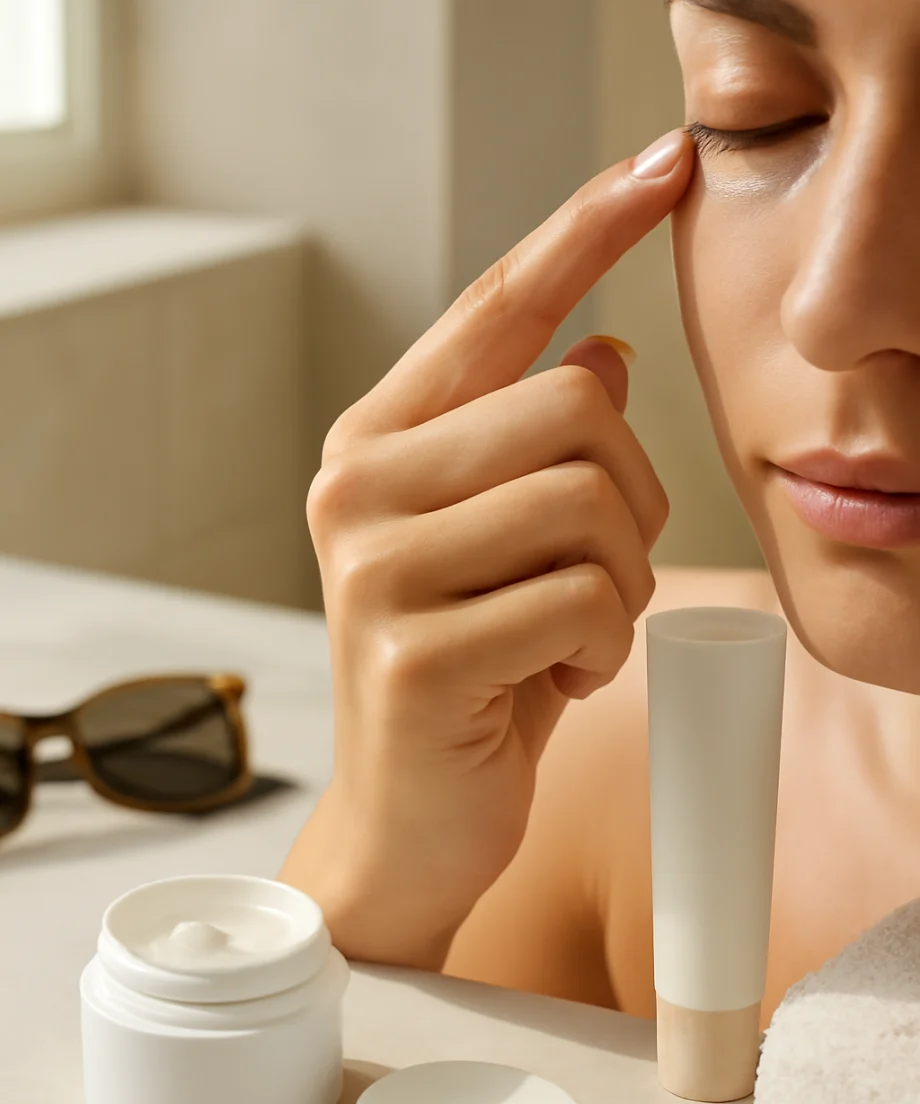
Step 2: Add lightweight hydration
Dehydrated skin can make small lines look more visible because the surface appears less smooth. A lightweight hydrating serum, lotion, or eye product may temporarily give the area a softer, more cushioned appearance. Ingredients such as glycerin, hyaluronic acid, panthenol, and certain moisturizing sugars can attract or help hold water in the outer layers of skin, depending on the formula.
Hydration does not permanently remove wrinkles. It mainly improves the way the surface reflects light and may reduce the crinkled look associated with dryness. For more context, see our guide to how hyaluronic acid can change the look of fine lines.
Apply a small amount around the orbital area rather than placing product directly into the eyes or too close to the lash line. The warmth of your skin can cause products to migrate, especially in the morning. If watering, stinging, or persistent redness develops, rinse the area and stop using the product until your skin feels comfortable again.
Step 3: Seal in comfort with moisturizer when needed
Moisturizer is particularly helpful if your under-eye skin feels tight, rough, or flaky. Look for a formula that feels comfortable and does not sting. Emollients can soften the appearance of rough texture, while occlusive ingredients can help reduce water loss from the skin’s surface. You do not necessarily need a separate eye cream if your regular moisturizer is labeled for use around the eyes and your skin tolerates it.
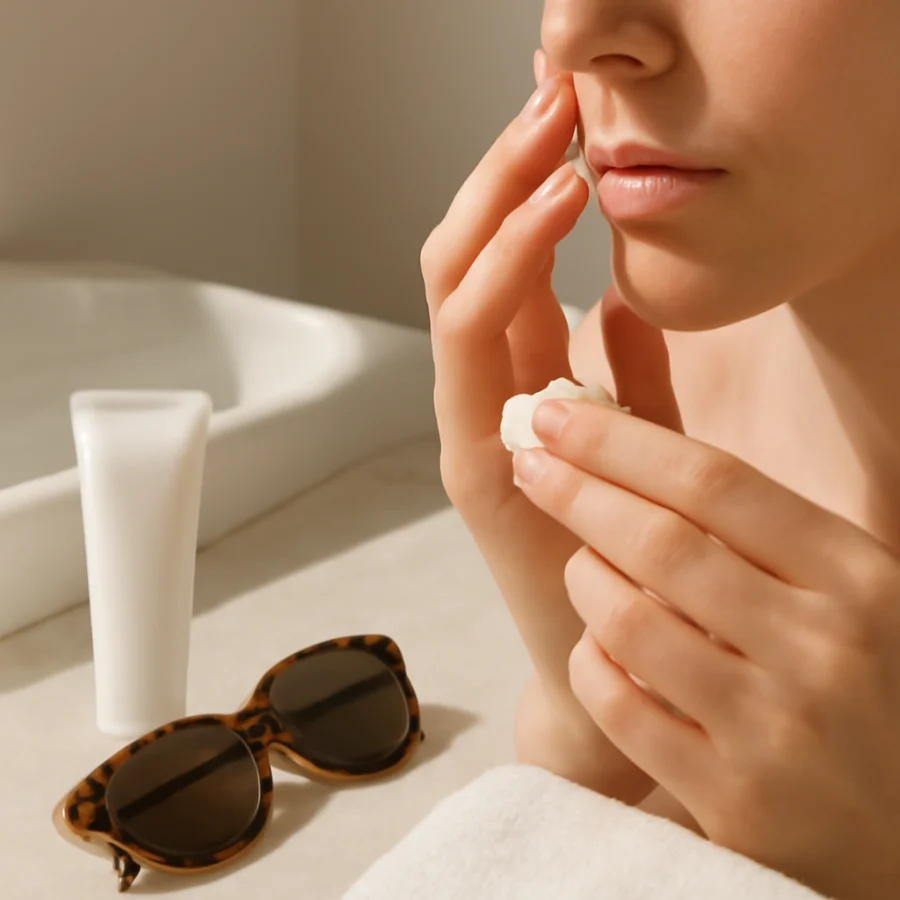
People with oily or combination skin may prefer a lighter lotion or gel texture. Those with dry or mature skin may find a richer cream more comfortable. A product made for one skin type is not automatically better for everyone, and a richer texture can sometimes feel heavy or migrate into the eyes. Our guides to eye products for dry skin and sensitive skin can help you compare priorities.
Step 4: Treat sunscreen as the main prevention step
Daily sun protection is the most important part of a morning routine focused on helping limit the visible effects of cumulative sun exposure. Use a broad-spectrum sunscreen according to its label and apply it to exposed areas of the face, including the skin around the eyes if the product directions allow it. Keep sunscreen out of the eyes themselves.
Mineral and chemical sunscreens can both be reasonable options; the best choice is one you can apply consistently and tolerate without burning or watering. If sunscreen stings, try keeping it slightly farther from the lash line, using sunglasses for additional protection, or selecting a product specifically labeled for sensitive skin. Do not assume that a product’s texture or marketing language guarantees that it will work well for your eye area.
Reapply as directed, especially after sweating, swimming, or extended outdoor exposure. Sunglasses with substantial coverage can also make bright conditions more comfortable and may reduce habitual squinting. Sunscreen cannot reverse existing lines, but consistent protection may help reduce some environmental contributors to visible premature skin aging. Read more about sunscreen and new eye wrinkles.
Step 5: Apply products without tugging
The application technique matters more than using a large amount of product. Use your ring finger or whichever finger allows the lightest touch. Dot product along the orbital bone and tap gently until it spreads. Avoid dragging the skin back and forth or pressing hard to force a product to absorb.
If you wear makeup, allow skincare to settle before applying concealer. Too much moisturizer or eye cream can leave a slippery layer that causes makeup to move or gather in lines. Use less product than you think you need, then add a small amount if the area still feels dry.
Should you use a morning active for fine lines?
Some people include antioxidant products, peptides, or other targeted ingredients in the morning. These may support a skincare routine, but their effects vary by formula, concentration, stability, application, and individual tolerance. Avoid building a routine around the assumption that one ingredient will erase wrinkles.
Vitamin C and antioxidants
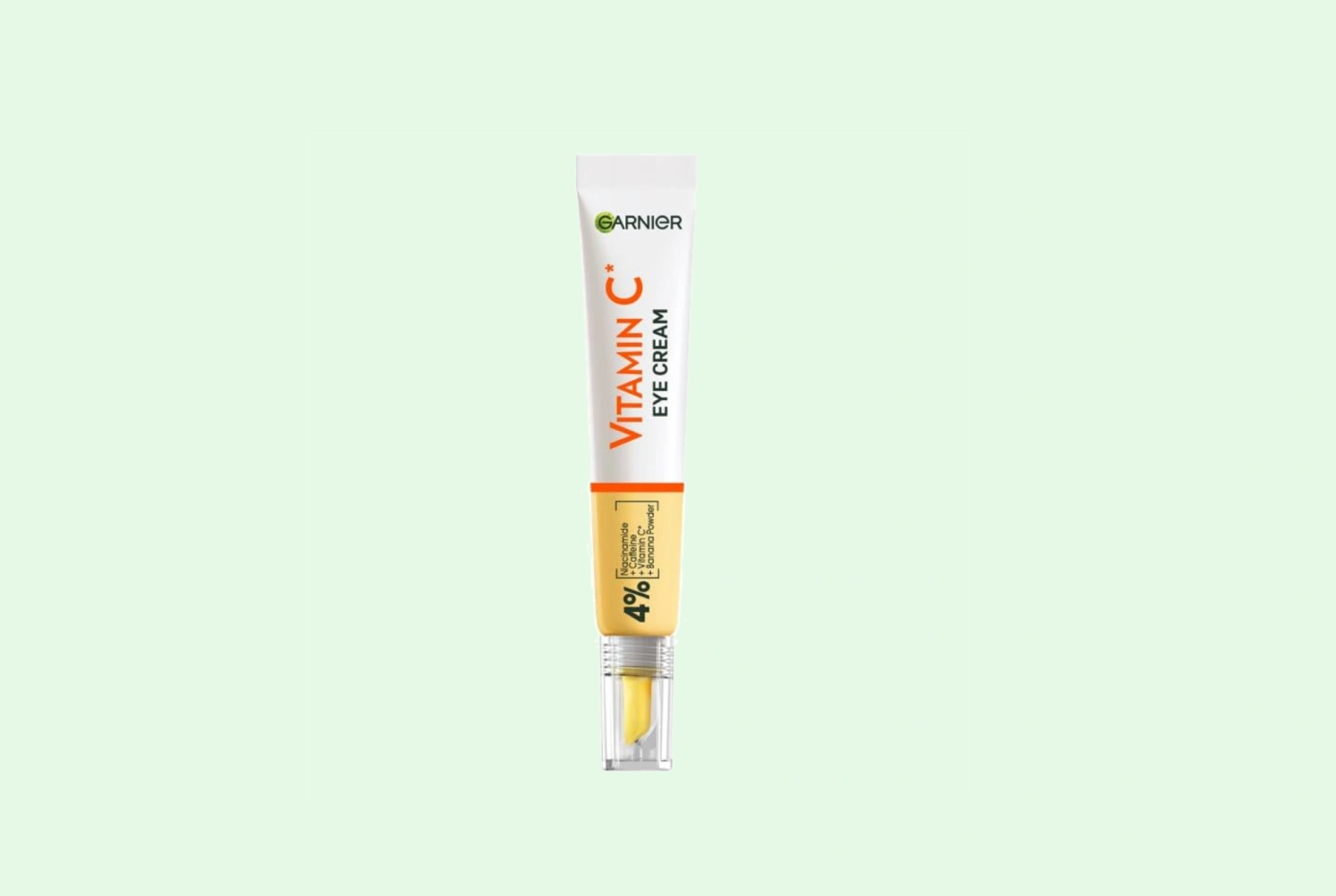
Vitamin C products are often used in morning routines because antioxidants can complement a broader sun-protection strategy. However, vitamin C formulas differ considerably, and some versions may sting sensitive skin. Check the current product label, follow its directions, and introduce it gradually if your skin is reactive. Sunscreen remains essential; an antioxidant product is not a substitute for it.
Peptides
Peptides appear in many eye creams and moisturizers intended to improve the appearance of fine lines. They may be a reasonable option if you prefer a generally gentle, hydrating product, but results are not guaranteed and product formulas vary. Consider texture, fragrance, packaging, and overall tolerability rather than choosing an ingredient based only on its name.
Retinoids
Retinoids are commonly discussed for visible signs of skin aging, but they can be irritating, especially around the eyes. Unless a product is specifically labeled for the eye area, avoid improvising with a facial retinoid close to the eyes. Follow the label carefully, use a small amount, and introduce it slowly if appropriate for you. Stop if you develop burning, swelling, significant redness, or ongoing discomfort. People who are pregnant, trying to become pregnant, or nursing should ask a qualified health professional about retinoid use.
For a focused overview, read what to know about retinol for under-eye fine lines. This is general skincare information, not a diagnosis or treatment plan.
A sample morning routine by skin concern
For dry or tight under-eye skin
Rinse or cleanse gently, apply a hydrating product to damp skin, follow with a comfortable moisturizer, and finish with sunscreen. If concealer emphasizes texture, reduce the amount of powder and use thinner layers of makeup.
For sensitive or easily irritated skin
Keep the routine short: gentle cleansing if necessary, a bland moisturizer, and a well-tolerated sunscreen. Introduce only one new product at a time. A patch test can help identify obvious irritation, although it cannot guarantee that a product will be comfortable near the eyes. Avoid fragranced or strongly active products if they repeatedly cause discomfort.
For oily or combination skin
Choose lightweight, non-greasy textures and apply only enough moisturizer to prevent tightness. Sunscreen can provide a comfortable final layer, but select a formula that does not make your eyes water or your makeup slide. Oily skin still benefits from hydration; skipping all moisturizer can leave some people feeling dry or tight.
Common morning mistakes that make lines look worse
- Skipping sunscreen: Moisturizer alone does not provide the same labeled protection as sunscreen.
- Using too many actives: Layering several potentially irritating ingredients can damage comfort and make texture more noticeable.
- Applying too much product: Excess cream may migrate into the eyes or cause makeup to crease.
- Rubbing during makeup application: Repeated tugging can temporarily increase redness and irritation.
- Changing products too often: Frequent switches make it difficult to identify what your skin tolerates.
- Expecting immediate structural change: Hydration can improve the look of lines relatively quickly, but lasting changes in appearance are not guaranteed.
How to choose a morning eye product
Start with your actual concern. If dryness makes lines more visible, prioritize hydration and a comfortable barrier-supporting texture. If sunscreen tends to sting, prioritize eye-area tolerability and careful placement. If puffiness is your main concern, remember that morning swelling can have many causes, and a cosmetic product may offer only a temporary appearance benefit.
Read the ingredient list and directions on the current packaging. Formulas can change, and online descriptions may not reflect the latest version. Fragrance, preservatives, botanical extracts, and active ingredients can all be relevant to people with sensitive skin. If a product causes persistent irritation, stop using it rather than trying to push through the reaction.
What this routine can—and cannot—do
A consistent morning routine can help the under-eye area look more hydrated, smoother, and better protected from everyday environmental exposure. It may also make makeup sit more comfortably. It cannot stop natural facial movement, permanently remove established lines, or guarantee that new lines will not appear. Genetics, age, facial expression, sun exposure, skin dryness, and other factors all influence how the eye area changes.
If you have persistent swelling, pain, marked redness, vision changes, a rash, or a sudden change around the eyes, skincare is not the right place to seek an explanation. Consider contacting a qualified health professional. For ordinary cosmetic concerns, the most dependable approach is usually the least complicated one: gentle handling, adequate moisture, consistent sun protection, and realistic expectations.

Comments
0No comments yet. Be the first to share a helpful note or question.
Leave a Comment
Your email address will not be published. Comments are reviewed before appearing on the site.