

Blue light from screens is not proven to directly age the skin around your eyes, but long periods of screen use can make the eye area look more tired and lined. Staring at a phone or computer often reduces blinking, encourages squinting, increases eye rubbing, and can interfere with sleep. Those habits may temporarily emphasize dryness, puffiness, and fine lines. For long-term skin aging, ultraviolet exposure has stronger, more established relevance than ordinary screen light.
That distinction matters if you are choosing an eye cream or changing your routine. A product cannot erase lines caused by facial movement, sun exposure, or natural aging. However, gentle hydration, daily sun protection, better screen habits, and adequate rest may help the under-eye area look smoother and less fatigued.
What blue light can and cannot tell us about eye aging
Blue light is a portion of visible light with relatively short wavelengths. Phones, tablets, computers, televisions, and LED lighting can emit it, but the amount and exposure pattern vary by device and setting. Because blue light is associated with screen use, it is often blamed for every visible change around the eyes.
At this point, it is more accurate to separate direct skin effects from indirect effects. Claims that ordinary screen exposure alone causes visible wrinkles or permanently breaks down the skin should be treated cautiously. Evidence about blue light and skin biology is still developing, and laboratory or specialized light-exposure findings do not automatically represent everyday phone use.

Screen time can still affect appearance indirectly. When you concentrate on a small display, you may blink less often or incompletely. The tear film can become less comfortable, leading to dryness, burning, or a gritty sensation. Dry skin and dry eyes can make fine lines appear more noticeable, especially later in the day. If you narrow your eyes to read small text or see glare, repeated facial movement may temporarily deepen the look of expression lines.
For a broader explanation of why this area is especially prone to visible lines, see our guide to why fine lines show up earlier around the eyes.
Why screens can make fine lines look worse
Reduced blinking and surface dryness
Focused screen viewing can change normal blinking patterns. Less frequent blinking may contribute to a dry or strained feeling, while the surrounding skin may look less plump when it is not well moisturized. This does not mean screen use has permanently aged the area. It means temporary dehydration and fatigue can make existing texture easier to see.
A simple moisturizer or eye cream may improve the appearance of dryness by adding water-binding and skin-softening ingredients. Look for a texture that feels comfortable and does not migrate into the eyes. Ingredient lists vary, so check the current packaging and manufacturer information rather than relying on an old product description. Our eye cream ingredient guide can help you compare common moisturizing ingredients.
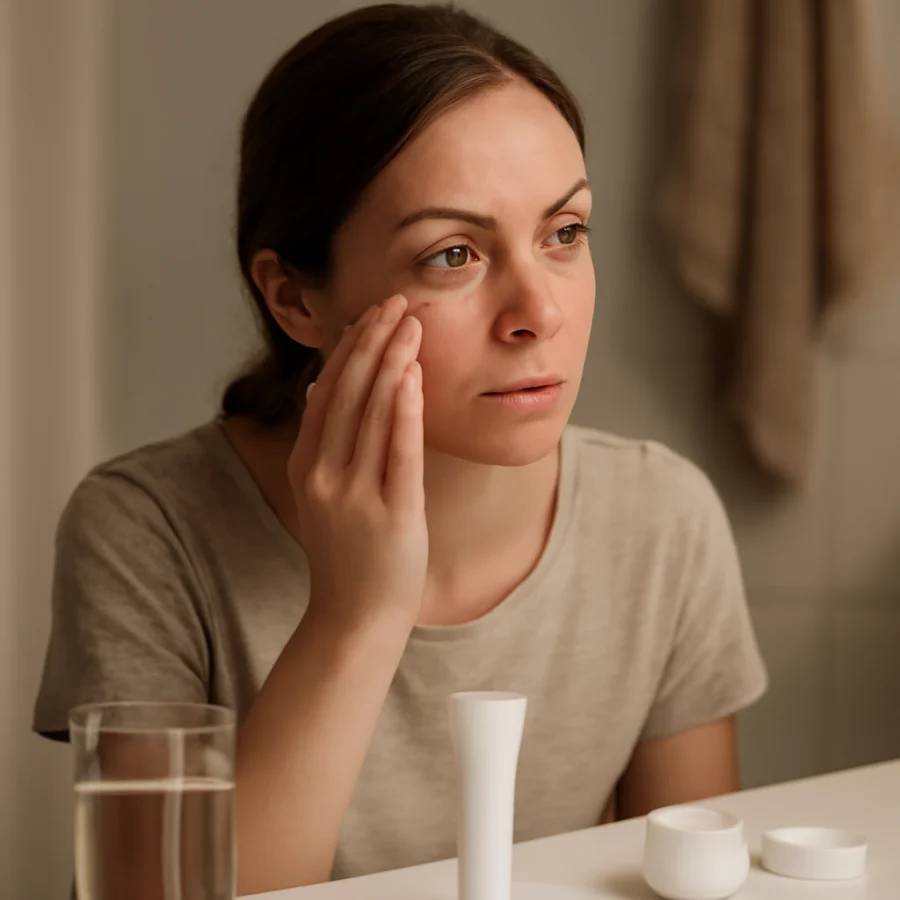
Squinting and facial tension
Glare, small text, an incorrect prescription, or a screen positioned too far away can encourage squinting. Repeated movement around the eyes may make crow’s-feet and other expression lines more visible during the day. Relaxing your face will not remove established wrinkles, but reducing unnecessary squinting can make the area look less tense.
Increase text size, adjust contrast, reduce glare, and position the screen so you are not leaning forward to read. If you regularly experience blurred vision, headaches, persistent eye discomfort, or difficulty focusing, an eye-care professional can assess those symptoms. Cosmetic skincare should not be used as a substitute for an eye examination.
Rubbing and touching
Dryness, itching, and fatigue can lead to rubbing. Repeated rubbing may temporarily increase redness and puffiness and can irritate delicate skin. It can also spread makeup, sunscreen, or skincare into the eyes.
Try blinking deliberately, taking short visual breaks, and using a clean, cool compress if the area feels temporarily puffy. Avoid pressing or dragging the skin when applying products. If you have ongoing itching, swelling, pain, discharge, or vision changes, seek appropriate medical guidance rather than assuming the cause is screen exposure.
Sleep may matter more than blue light itself
Late-night screen use may be relevant because of timing and sleep, not simply because a display shines blue light onto your face. Screen habits can keep you mentally engaged, and bright evening light may affect the body’s sleep-wake cues. Poor or irregular sleep can make the under-eye area look dull, puffy, or darker the next morning.
These visible changes are not necessarily permanent aging. Fluid shifts, fatigue, dehydration, and shadows can alter how the area looks from one day to the next. A consistent sleep schedule, a calmer bedtime routine, and reducing stimulating screen use before bed may support a less tired appearance. Results will vary, and no skincare product can compensate for every sleep problem.
Ingredients that may support a smoother-looking eye area
An eye cream is best viewed as a cosmetic support step. Its purpose may be to moisturize, soften the look of dryness, or temporarily improve the appearance of texture. It is not a treatment for a medical eye condition and cannot guarantee that wrinkles, dark circles, or puffiness will disappear.
Humectants and moisturizers
Humectants such as glycerin or hyaluronic acid can help attract water to the outer layers of skin. Emollients and occlusive ingredients can help leave the surface feeling softer and reduce the look of dry texture. These effects may make fine lines look less pronounced when dryness is contributing to their appearance.
Apply a small amount to the orbital area according to the product directions. Avoid placing skincare directly into the eye or too close to the lash line if the label does not recommend it. If your skin is sensitive, choose a simple formula and introduce one new product at a time.
Peptides and antioxidant ingredients
Peptides and antioxidant ingredients are common in products designed for the appearance of fine lines. Their effects depend on the specific ingredient, formula, concentration, packaging, and consistent use. Marketing language can be broader than the evidence for any individual product, so avoid assuming that an ingredient will produce a guaranteed or permanent change.
Retinoids and other potentially irritating actives
Some eye products contain retinol or related vitamin A ingredients. These can be irritating, particularly on thin or sensitive skin, and they are not necessary for everyone. Follow the product label, start cautiously if the directions allow, and use sun protection during the day. Patch testing can help identify obvious irritation, although it cannot predict every reaction. Stop using the product if burning, significant redness, swelling, or persistent discomfort develops.
Do not apply a facial active to the eye area simply because it works elsewhere on your face. The skin around the eyes may tolerate less frequent use or a different formula. People who are pregnant, breastfeeding, treating a skin condition, or using prescription products should ask a qualified healthcare professional about ingredients that concern them.
Practical screen habits for the eye area
- Use a comfortable text size so you do not need to squint.
- Reduce glare by changing the screen angle or room lighting.
- Take regular distance-viewing breaks instead of staring continuously at one focal point.
- Make a conscious effort to blink fully when concentrating.
- Keep screens at a comfortable distance and avoid hunching toward them.
- Clean glasses and screens if smudges are contributing to glare.
- Avoid rubbing the eye area, especially with unwashed hands.
- Build a consistent nighttime routine if evening screen use affects sleep.
These habits may reduce the tired, dry, or tense appearance associated with long screen sessions. They do not replace professional care for persistent symptoms.
Sun protection still deserves priority
If your concern is long-term visible skin aging, daily broad-spectrum sunscreen and physical protection deserve more attention than blue-light marketing. Sunglasses, hats, shade, and sunscreen applied carefully around the eyes can help limit ultraviolet exposure. Choose a product that is intended for the area and follow its directions. If sunscreen stings or causes watering, keep it farther from the lash line, consider a different formulation, and avoid forcing yourself to use a product that irritates your eyes.
Sun protection does not reverse existing wrinkles, and it cannot prevent every change related to aging. It is one part of a realistic routine, along with gentle cleansing, moisturizer, and avoiding unnecessary friction. You can read more about the cosmetic role of sunscreen in our guide to sunscreen and new eye wrinkles.
How to choose an eye product for screen-related dryness or lines
Start with the concern you can actually observe. If the area feels tight or looks crepey late in the day, a fragrance-free moisturizing formula may be a reasonable place to begin. If puffiness is the main issue, remember that screen time, sleep, allergies, fluid shifts, and anatomy can all affect appearance. An eye cream may provide a temporary cosmetic improvement, but it cannot identify or treat the underlying cause.
Check whether the product is intended for the eye area, read the complete current ingredient list, and verify the label before buying. Formulas can change. Be cautious with heavily fragranced products or strong active ingredients if your skin is reactive. Introduce new products gradually, avoid layering several potentially irritating actives at once, and discontinue use if irritation occurs.
For help organizing products around your concerns and tolerance, try the under-eye routine builder.
What to expect from a realistic routine
A well-chosen moisturizer may make dry-looking lines appear softer, while a consistent routine can help the area look more comfortable and rested. Those are cosmetic changes, not proof that screen-related aging has been reversed. Fine lines can reflect facial movement, genetics, sun exposure, skin structure, and natural aging. Dark circles and puffiness may also have causes that skincare cannot address.
The most useful approach is to treat screen time as one part of the picture. Improve viewing comfort, protect sleep, avoid rubbing, moisturize when needed, and prioritize sun protection. If eye symptoms persist or interfere with daily life, seek medical advice. If the concern is mainly appearance, choose gentle products with realistic expectations and verify current product information before use.




Comments
0No comments yet. Be the first to share a helpful note or question.
Leave a Comment
Your email address will not be published. Comments are reviewed before appearing on the site.