
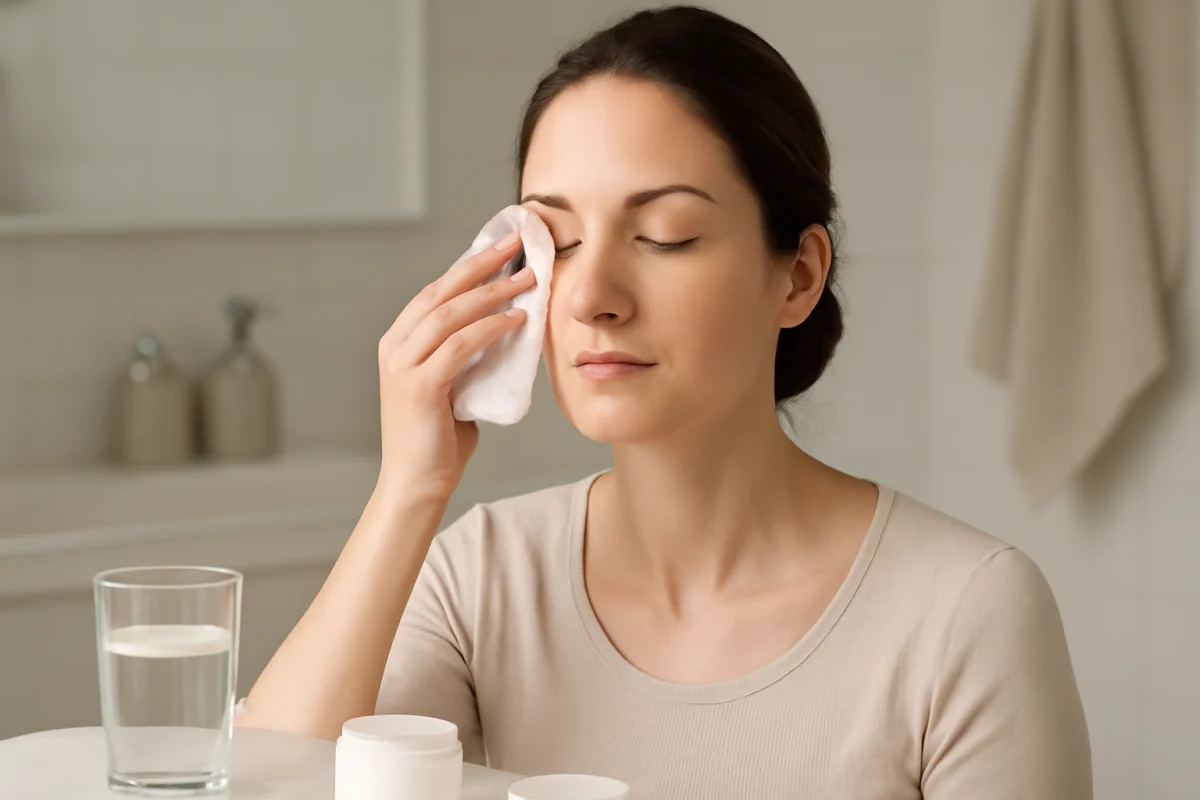
The quickest low-risk way to make puffy eyes look less noticeable is to apply a cool, clean compress for several minutes, keep your head elevated, and avoid rubbing the area. A chilled washcloth or reusable eye mask can temporarily reduce the appearance of swelling by cooling the skin and narrowing superficial blood vessels. Gentle habits such as drinking normally, limiting salty foods before bed, and addressing irritation may also help, although no DIY remedy can permanently remove under-eye bags or change the underlying structure of the eye area.
Under-eye puffiness can be more visible after poor sleep, crying, a salty meal, seasonal irritation, prolonged screen use, or sleeping with your face pressed into a pillow. The appearance may also reflect normal anatomy, fluid movement, or age-related changes rather than something a home remedy can reverse. The suggestions below focus on short-term cosmetic improvement and comfort, not diagnosis or treatment.
1. Use a cool, clean compress
A cool compress is usually the simplest place to start. Wet a clean, soft washcloth with cool water, wring it out, and rest it gently over closed eyes for a few minutes. You can re-cool the cloth as needed. A clean gel eye mask or chilled eye mask may work similarly, provided it is wrapped or used according to its instructions.
Keep the temperature comfortably cool rather than painfully cold. Do not place ice directly on the skin, and do not press firmly on the eyelids. The under-eye area is thin and easily irritated, so a light touch is enough. Any temporary improvement generally comes from cooling and reduced visible fluid-related swelling; it should not be viewed as a permanent change.
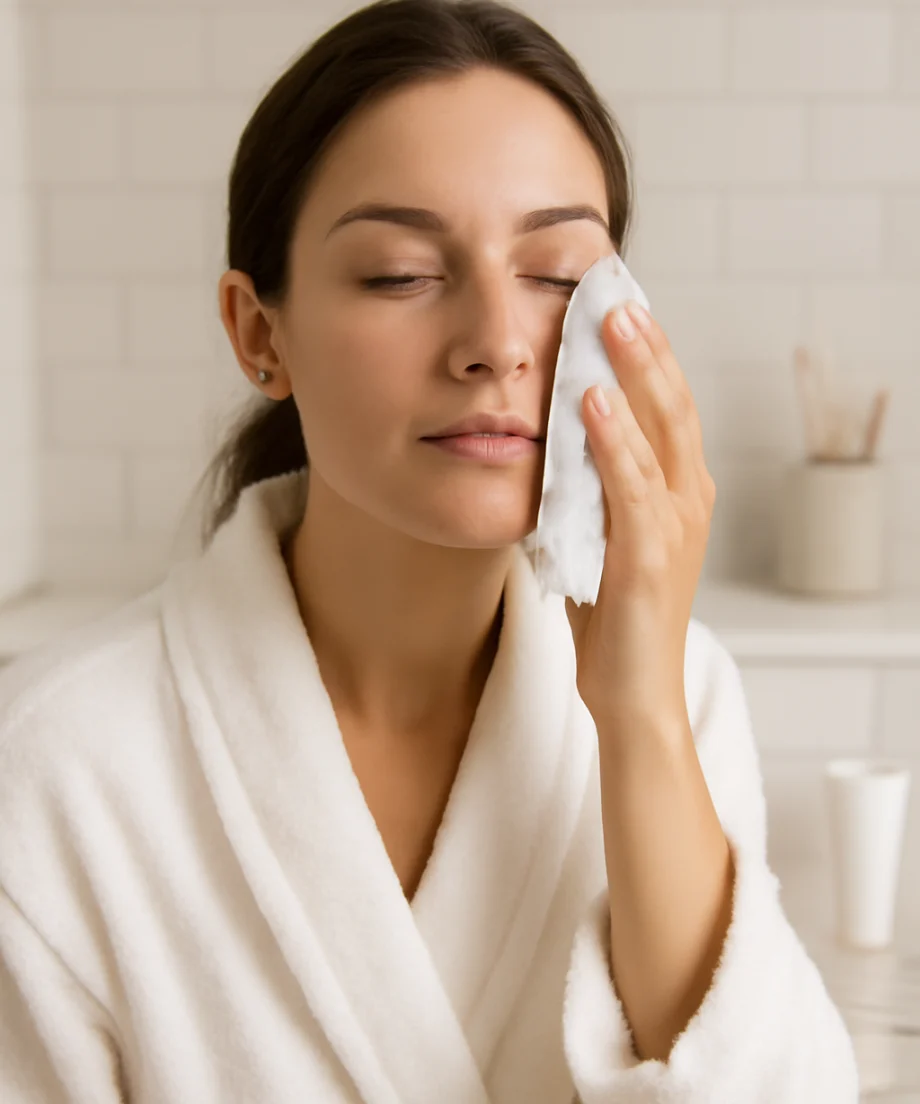
For more detail on how this approach works and how to use it safely, see our guide to cold compresses for puffy eyes.
2. Try a chilled spoon carefully
A clean spoon cooled in the refrigerator can provide a smooth, cool surface for the under-eye area. Place the back of the spoon lightly beneath the eye for a short period, then move to the other side. The spoon should feel cool, not painfully cold, and it should never be forced against the skin.
Wash the spoon before and after use, especially if it will be shared. Avoid this method if the metal causes discomfort, if you have irritated skin, or if the spoon has been chilled to the point that it feels numb. A soft washcloth is often easier to control and may be more comfortable for sensitive skin.
3. Elevate your head for a few minutes
Keeping your head slightly elevated may help fluid move away from the eye area rather than collecting beneath it. Sit upright while applying a compress, or rest against pillows instead of lying completely flat. This is a practical step when puffiness is most noticeable after waking.
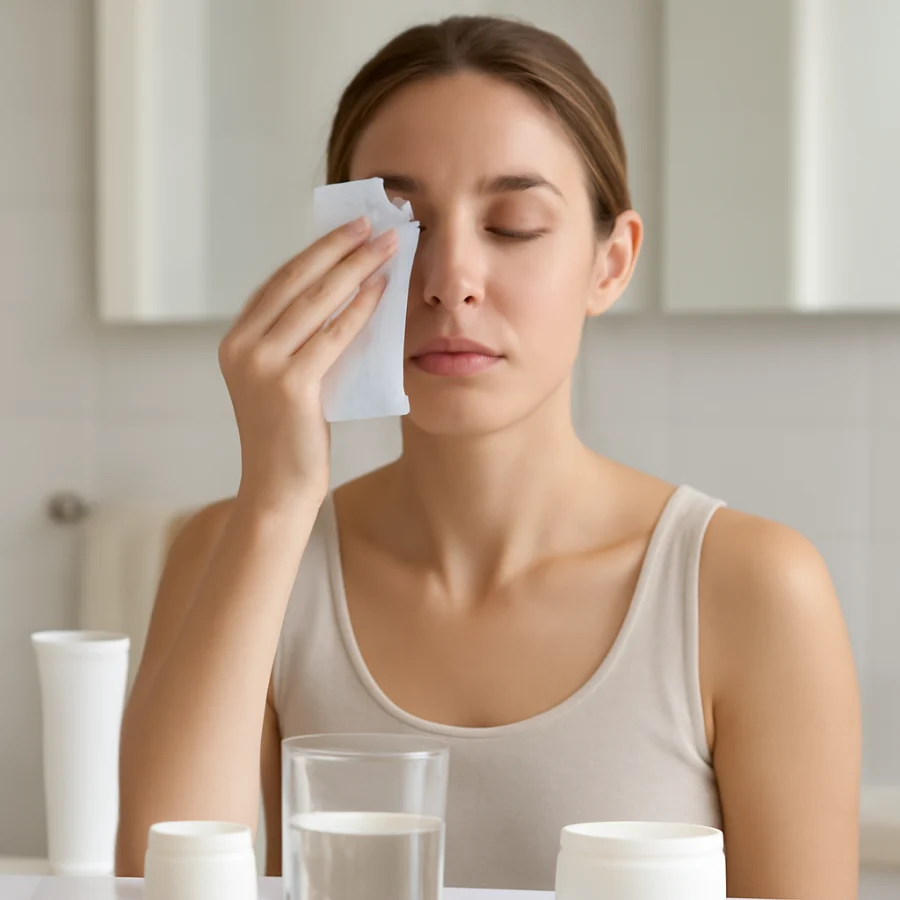
Elevation is not a substitute for sleep or medical care, and it will not remove permanent under-eye bags. If you are going back to bed, use a comfortable sleeping position and avoid stacking pillows so high that your neck feels strained. For related routine ideas, read about how sleeping position can affect puffy eyes.
4. Use a very gentle touch
If the area feels comfortable and there is no irritation, lightly tapping or smoothing outward beneath the eyes may make a morning routine feel soothing. Use your ring finger or another finger that allows a light touch, and glide over moisturizer rather than pulling dry skin. Keep movements gentle and stop if the skin becomes red, sore, itchy, or more swollen.
Do not massage a painful, hot, infected-looking, or significantly irritated area. Avoid pressing on the eyeball or dragging the eyelid. More pressure does not mean better drainage, and vigorous rubbing can make redness and swelling look worse.
5. Consider a simple, fragrance-free moisturizer
Dry or tight skin can make texture and fine lines more noticeable around the eyes. A bland, fragrance-free moisturizer formulated for the face or eye area may improve the look of dryness while the skin settles. Apply a small amount along the orbital area, staying away from the lash line and avoiding direct contact with the eyes.
Moisturizer will not remove fluid-related puffiness, but it may make the surrounding skin look smoother and more comfortable. If you are prone to sensitivity, choose a short ingredient list and follow the product label. Patch testing a new product on another small area first can help you avoid introducing an irritating formula immediately before an important event.
6. Try a prepared eye product with caffeine
Some eye products contain caffeine, an ingredient commonly used in formulas designed for the appearance of puffiness. A caffeine eye product may provide a temporary cosmetic effect for some people, but results depend on the formula, skin, application, and cause of the swelling. Caffeine cannot correct structural eye bags or guarantee that puffiness will disappear.
Apply only as directed, use a small amount, and keep the product out of the eyes. Do not assume that a homemade mixture containing coffee, tea, or caffeine is equivalent to a tested cosmetic formula. Kitchen ingredients can contain particles, contaminants, or additional compounds that may irritate the eye area. For a broader ingredient overview, visit our eye cream ingredient guide.
Product formulas can change, so check the current packaging and the manufacturer’s ingredient list when a specific ingredient matters to you. If a product stings, burns, causes redness, or increases watering, rinse it away if appropriate and stop using it.

7. Use cool tea bags only with caution
Some people place cooled tea bags over closed eyes because the cool temperature may feel soothing. However, this DIY method has drawbacks. Tea bags can shed particles, the liquid may contain compounds that irritate sensitive skin, and placing any non-sterile material close to the eyes carries a hygiene concern.
If you choose to try it, use clean, cooled—not hot—tea bags, keep your eyes closed, and avoid letting liquid enter the eyes. Do not use tea bags on broken, eczema-prone, or actively irritated skin. Never use essential oils, lemon juice, baking soda, raw foods, or other acidic or abrasive kitchen ingredients near the eyes. These approaches can cause irritation without offering a reliable cosmetic benefit.
8. Remove likely irritants from your routine
Rubbing is a common reason puffiness and redness look worse. Try to avoid touching your eyes, and remove makeup with a gentle product rather than scrubbing. Wash pillowcases, towels, and reusable eye masks regularly, especially if you are prone to irritation. Check whether a new cleanser, eye cream, makeup product, or hair product may be getting near the eye area.
If itching, sneezing, watery eyes, or nasal symptoms accompany puffiness, an environmental or seasonal trigger may be involved. A home remedy cannot determine the cause. Avoid rubbing and consider discussing persistent symptoms with a qualified health professional. Our article on allergies and under-eye puffiness explains why these symptoms can overlap.
What not to put on puffy eyes
- Do not apply ice directly to the skin.
- Do not use lemon juice, vinegar, baking soda, toothpaste, or undiluted essential oils.
- Do not place salt, sugar, raw potato, or raw egg mixtures near the eyes.
- Do not use expired makeup or products with an unusual smell, color, or texture.
- Do not share eye products, towels, or applicators.
- Do not rub, pinch, or aggressively massage swollen skin.
Natural does not automatically mean gentle or safe for the eye area. The skin around the eyes has limited tolerance for irritating ingredients, and the eyes themselves are especially vulnerable to contamination and chemical exposure.
How to build a quick morning routine
- Wash your hands before touching your face.
- Hold a cool, clean compress over closed eyes for several minutes.
- Sit upright and avoid rubbing while the area settles.
- Apply a small amount of bland moisturizer if the skin feels dry.
- Use makeup only after the skin is comfortable and no longer wet.
If you use an eye cream, apply it according to the label and keep it on the surrounding orbital area rather than directly on the eyelids or in the eyes unless the product specifically instructs otherwise. People with sensitive skin may want to introduce one new product at a time, patch test when practical, and stop using it if irritation develops. You can also use our under-eye routine builder to organize product choices by concern and skin needs.
When puffiness needs professional attention
Occasional morning puffiness is often a cosmetic concern, but not every change should be managed with home remedies. Seek prompt medical advice for sudden or severe swelling, swelling after an injury, significant pain, vision changes, marked redness or warmth, discharge, fever, or swelling that is strongly one-sided. Recurrent or persistent puffiness may also deserve professional evaluation, particularly when it occurs with other symptoms.
A home remedy may temporarily improve the way the area looks, especially when coolness and rest are helpful. It cannot identify the reason for swelling or treat an underlying condition. If puffiness keeps returning despite basic care, focus on a gentle routine and ask a qualified clinician whether further evaluation is appropriate.




Comments
0No comments yet. Be the first to share a helpful note or question.
Leave a Comment
Your email address will not be published. Comments are reviewed before appearing on the site.