
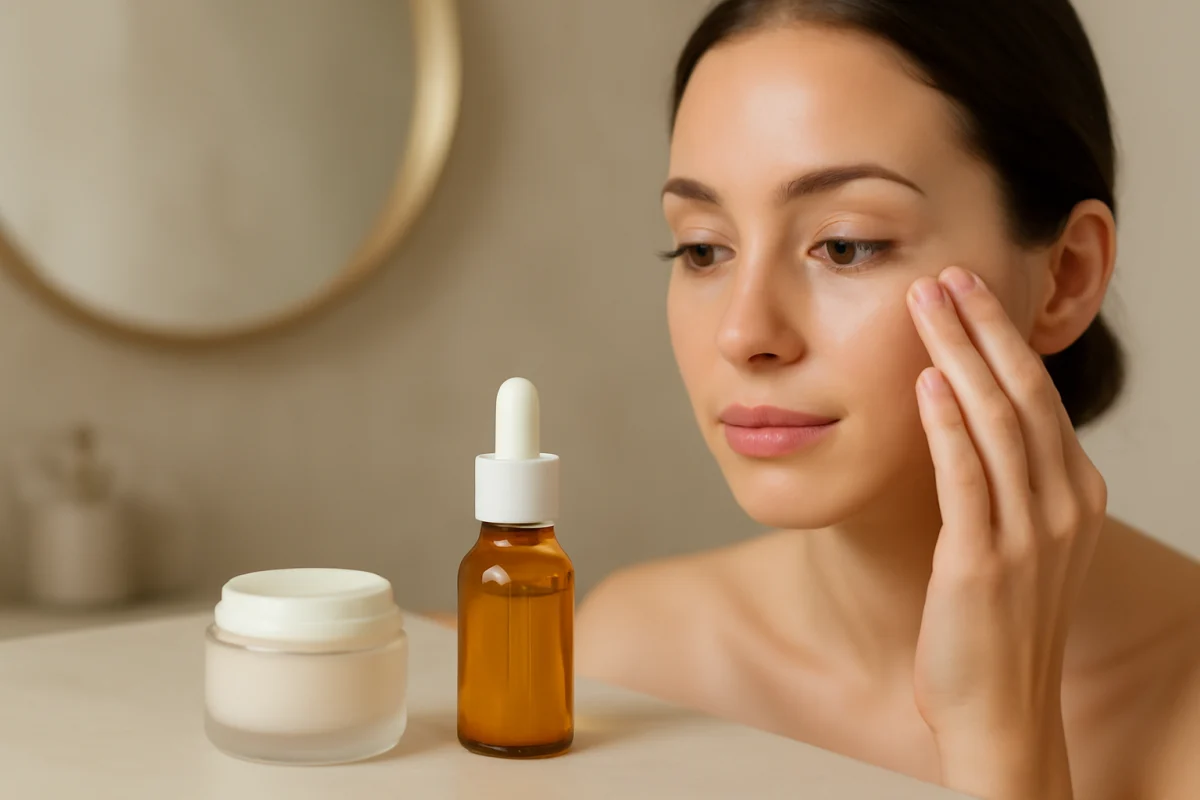
For most people, a vitamin C eye cream is the more practical choice for the under-eye area because it is designed for targeted application and often has a texture intended for thinner, more delicate skin. A facial vitamin C serum may also be used near the eyes in some routines, but only when the product label permits it and the formula feels comfortable there. The best option depends on the product’s instructions, your skin’s tolerance, and whether your main concern is the appearance of discoloration, dryness, fine lines, or puffiness.
Neither product can guarantee that dark circles will disappear. Under-eye darkness can have several visible contributors, including natural pigmentation, shadows from the eye area’s structure, visible blood vessels, dryness, and temporary tired-looking skin. Skincare may help improve the look of some concerns, but it cannot diagnose or resolve every cause.
What is the difference between an eye cream and a facial serum?
The main difference is not simply the word “cream” or “serum.” It is the entire formula, including the type of vitamin C, the supporting ingredients, the texture, the packaging, and the area the manufacturer says it is intended for.
A vitamin C eye cream is usually made for smaller, more precise application around the orbital area. Depending on the formula, it may include moisturizing or conditioning ingredients that make the product feel more comfortable on dry under-eye skin. Its texture may also be less fluid than a facial serum, which can make it easier to keep away from the lash line.
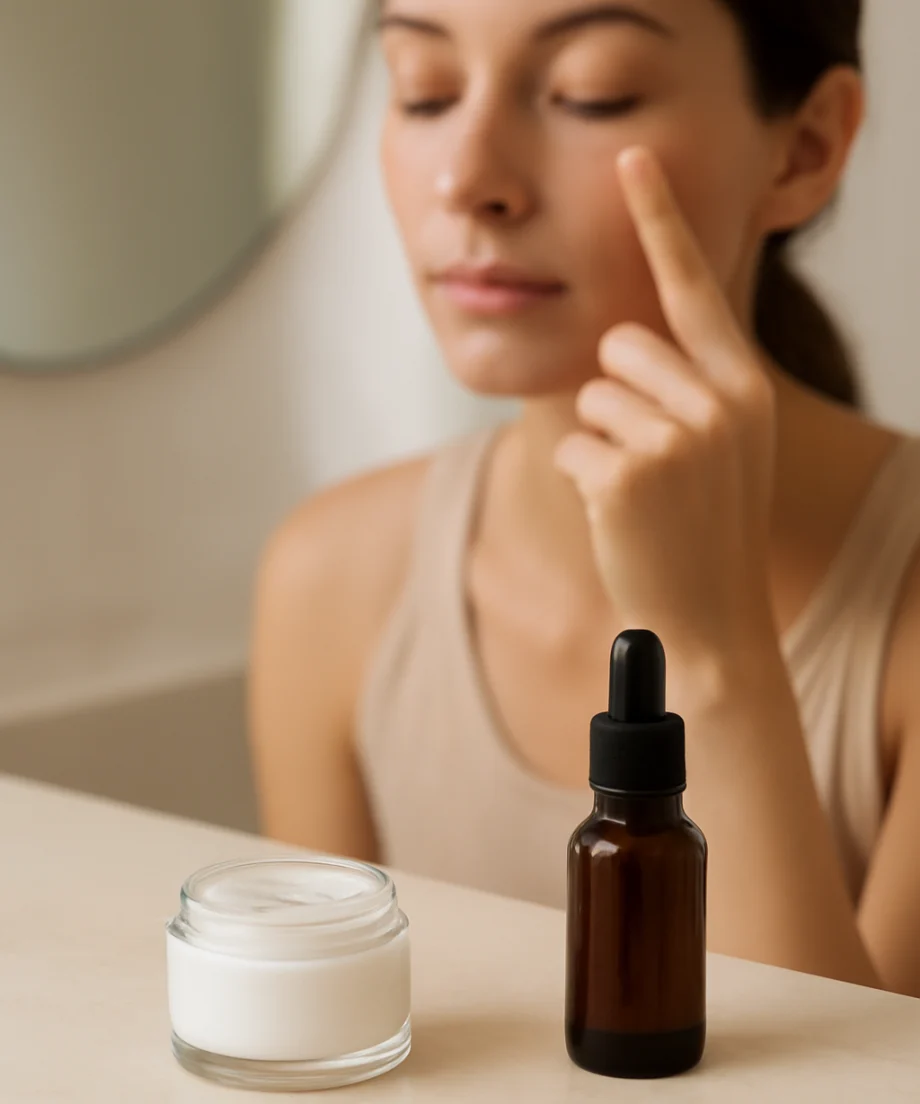
A facial vitamin C serum is generally designed for broader use across the face. Some serums are lightweight and spread easily, while others may contain a more active or acidic vitamin C format that can feel uncomfortable around the eyes. A facial product is not automatically unsuitable for the under-eyes, but “for the face” does not necessarily mean “for the eye area.” Always check the current packaging and manufacturer’s directions.
Formula details can change over time. If a product’s eye-area instructions, ingredient list, or recommended use matter to your decision, verify the current label or manufacturer information rather than relying on an older review or product description.
Which option is better for dark circles?
Vitamin C eye cream may be the better starting point when you want a product specifically intended for the appearance of dullness or uneven-looking tone around the eyes. Vitamin C is an antioxidant ingredient commonly used in cosmetic skincare, and some forms are included in products designed to make skin look brighter or more even.
However, the word “brightening” does not mean that every type of dark circle will respond in the same way. A cream may be more relevant to the appearance of surface discoloration than to a hollow that creates a shadow. It also will not change the underlying shape of the eye area or remove visible puffiness caused by temporary fluid retention.
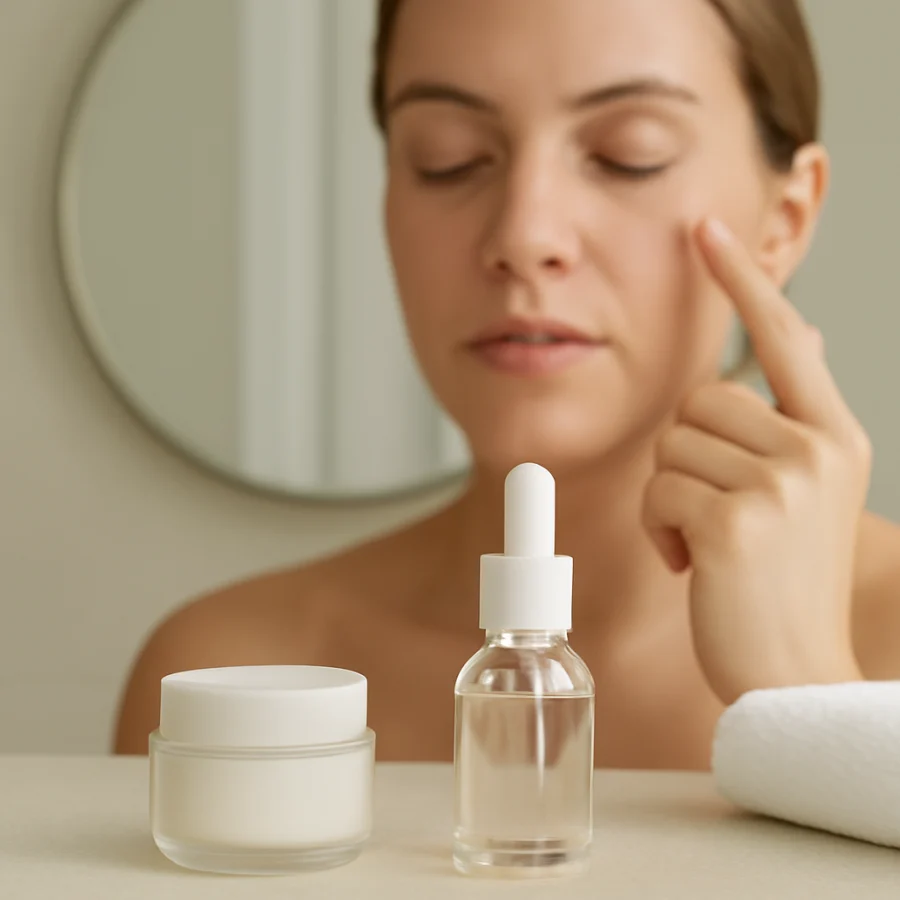
A facial serum can be reasonable if its instructions allow use around the eyes, your skin tolerates it, and you already use it comfortably on the rest of your face. But choosing a serum simply because it feels more concentrated does not guarantee better under-eye results. The eye area has less room for error: a product that feels fine on the cheeks may sting, dry, or irritate the skin near the eyes.
For more background on the ways vitamin C may affect the appearance of tired-looking skin, see our guide to vitamin C and tired-looking under-eyes.
Why facial vitamin C serum may feel too strong near the eyes
Some vitamin C serums are formulated with a low-pH environment or a type of vitamin C that can feel tingling or irritating, particularly when the skin barrier is already dry or sensitive. Other formulas use vitamin C derivatives that may feel gentler, but the experience still depends on the complete formula and the individual.
The area beneath the eyes is also close to the eyes themselves. Even when a product is intended for facial use, it can migrate with facial movement, warmth, sweat, or rubbing. A product that enters the eye may cause discomfort, and irritation around the eye can make the area look temporarily red, dry, or more tired.
This does not mean every vitamin C serum is too strong for the under-eyes. It means that strength cannot be judged reliably from the product category alone. Read the directions, avoid the lash line and eyelids unless the label specifically allows those areas, and introduce the product cautiously.
How to choose between the two
Choose based on the product’s intended use
Start with the manufacturer’s instructions. If an eye cream is labeled for the under-eye area, it may be the simpler choice for a targeted routine. If a facial serum specifically says it can be used around the eyes, follow the recommended amount and placement. If the label does not mention the eye area, do not assume that use is appropriate.
Consider your skin’s tolerance
Sensitive, dry, or recently irritated skin may do better with a simpler routine and a product that emphasizes comfort and moisturization. This does not make an eye cream automatically non-irritating, and it does not make a serum automatically unsuitable. Preservatives, fragrances, acids, vitamin C forms, and other ingredients can all influence how a product feels.
Patch testing can help you identify an obvious reaction before applying a new product near the eyes, although it cannot predict every possible response. Follow the product label, use a small amount, and stop using the product if you develop persistent stinging, redness, swelling, rash, or worsening discomfort. If symptoms are severe or do not settle, seek appropriate medical advice.
Look at the surrounding formula
Vitamin C is only one part of a product. A formula may also contain moisturizing, soothing, exfoliating, fragranced, or otherwise active ingredients. If your under-eyes are dry, a product with a comfortable, non-stripping texture may be more useful to you than a lightweight serum that leaves the area feeling tight.
Packaging can matter as well. Vitamin C formulas may be sensitive to air, light, or time, depending on the form and the overall product design. Keep the container closed and store it according to the label. Changes in color, smell, texture, or performance may indicate that a formula has changed, although appearance alone is not a complete way to judge product quality. You can read more about changes in oxidized vitamin C eye products before deciding whether to continue using one.
Can you use both vitamin C eye cream and serum?
You usually do not need both products to get the basic benefit of adding vitamin C to a routine. Layering two vitamin C products around the eyes may increase the chance of pilling, dryness, or irritation without providing a clear cosmetic advantage.
If you want to use a facial vitamin C serum on the face and an eye cream under the eyes, keep the application areas distinct. Apply the facial serum where the label directs, avoiding the immediate eye area if it is not approved for that use. Then apply a small amount of the eye cream to the orbital area, staying away from the lash line and avoiding direct contact with the eye.
There is also no need to use vitamin C at the same time on every part of the face. A simple routine that you can use consistently and comfortably may be more suitable than a complicated routine with several overlapping actives. Our under-eye routine builder can help organize product choices around common concerns and skin types.
How to apply vitamin C around the eyes
- Begin with clean, dry skin unless the product label gives different instructions.
- Use a very small amount. More product is not necessarily more effective and may increase migration or irritation.
- Tap the product along the orbital bone rather than rubbing it directly into the lash line or eye.
- Allow it to settle before applying moisturizer, makeup, or other products that may cause pilling.
- Use daytime sun protection as directed for exposed skin. Vitamin C does not replace sunscreen or physical protection.
Keep expectations realistic. A vitamin C product may make under-eye skin look more refreshed, moisturized, or even in tone over time, but visible changes vary. Makeup, lighting, sleep, allergies, dehydration, and facial movement can all affect how the area looks from day to day.
When a vitamin C product may not be the right priority
If your main concern is puffiness, a vitamin C product may not be the most directly relevant choice. If dryness makes fine lines look more noticeable, improving moisturization and avoiding irritating products may be a more useful first step. If shadows are caused largely by the shape of the eye area, topical skincare may have limited visible impact.
For people with reactive skin, a vitamin C-free routine may also be appropriate while the skin settles. You can reassess later rather than forcing an active ingredient that causes discomfort. If you have ongoing swelling, significant redness, pain, vision changes, or a sudden change around one eye, skincare is not a substitute for professional evaluation.
The practical choice for your routine
Choose a vitamin C eye cream when you want targeted under-eye use, prefer a cream texture, or find facial serums uncomfortable near the eyes. Consider a facial vitamin C serum only when its current directions allow under-eye application and your skin tolerates it without irritation. In either case, the complete formula and your application habits matter more than the product name.
For a focused comparison of vitamin C formats, review the differences between L-ascorbic acid and vitamin C derivatives. The most suitable option is the one you can apply as directed, keep away from the eyes themselves, and use consistently without making the under-eye area feel dry or irritated.




Comments
0No comments yet. Be the first to share a helpful note or question.
Leave a Comment
Your email address will not be published. Comments are reviewed before appearing on the site.