

Dry, scaly skin under the eyes usually improves with a gentle routine focused on reducing irritation, adding moisture, and protecting the skin barrier. Pause potentially irritating products, cleanse with lukewarm water and a mild fragrance-free cleanser, and apply a simple moisturizer while the area feels tight or flaky. Because the skin around the eyes is delicate, persistent, painful, swollen, or intensely itchy scaling should be evaluated by a qualified health professional rather than managed only with cosmetics.
Why the under-eye area can become dry and scaly
The skin around the eyes is thin and exposed to many of the same environmental and lifestyle factors that affect the rest of the face. Cold air, low indoor humidity, wind, hot water, and frequent cleansing can leave the surface feeling tight. Rubbing the eyes, removing makeup repeatedly, or wiping away tears can also disturb the skin barrier.
Sometimes the problem is not a lack of oil alone. A product may be causing irritation or contact sensitivity, especially if you recently introduced a new eye cream, concealer, cleanser, sunscreen, makeup remover, or lash product. Fragrance, essential oils, exfoliating acids, retinoids, and certain preservatives may be tolerated by facial skin but feel uncomfortable near the eyes.
Flaking can also occur when the skin is dehydrated. Dehydrated skin lacks water at the surface and may look crepey or feel tight, while dry skin often refers to a lower-oil skin type or a temporary reduction in surface lipids. The two can overlap, but they are not exactly the same. You can read more about this distinction in dry under-eyes versus dehydrated skin.
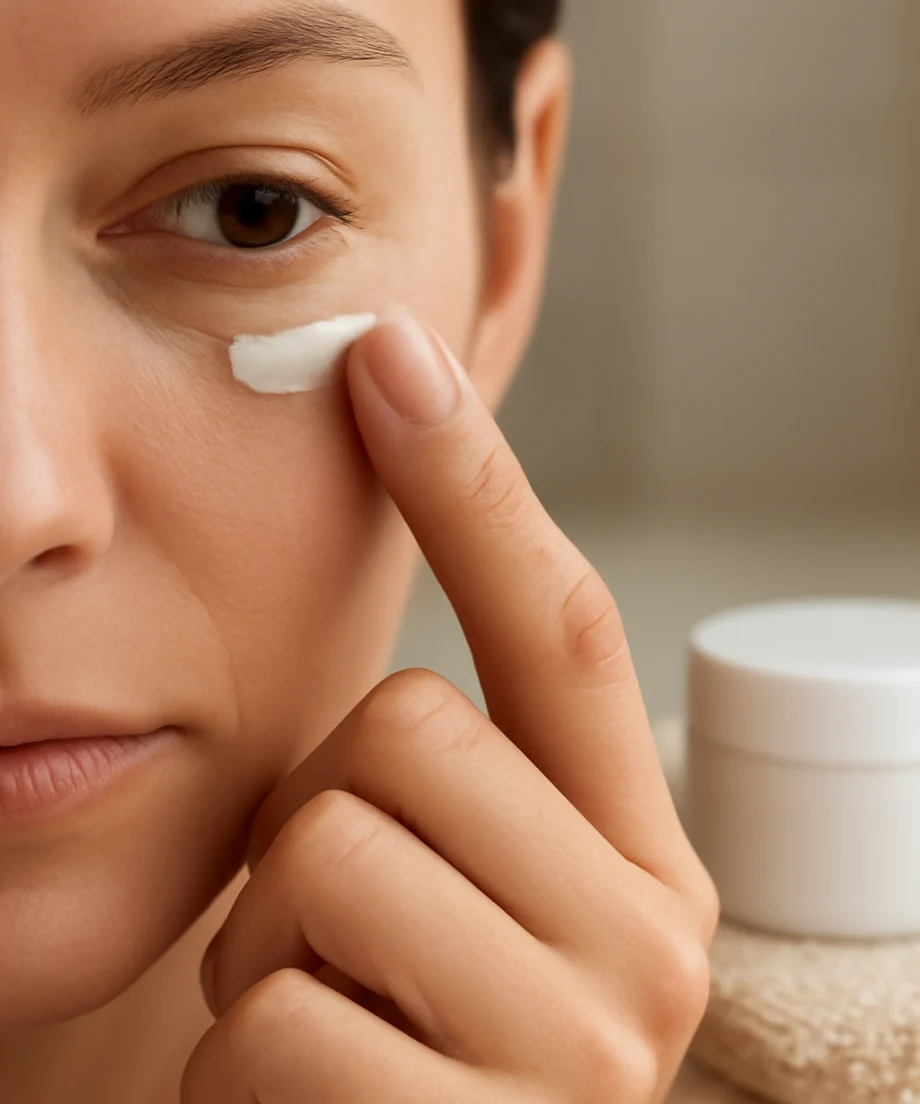
What to do first when the skin starts flaking
Simplify your routine
For several days, consider using only a gentle cleanser, a basic moisturizer, and sunscreen that does not sting. Temporarily set aside exfoliating products, retinoids, strong vitamin C formulas, fragranced products, and other new or active treatments near the affected area. This does not establish the cause, but it can reduce the number of possible irritants while the skin settles.
Do not scrub away flakes or use a facial brush around the eyes. Physical exfoliation can make the surface look temporarily smoother while increasing discomfort and dryness. If flakes are lifting, let them loosen naturally after cleansing rather than pulling at them.
Use lukewarm water and gentle pressure
Hot water may feel soothing briefly, but it can make dryness more noticeable. Use lukewarm water and pat the area dry with a soft towel. Avoid dragging cotton pads across the skin. When removing makeup, hold a suitable remover against the area for a moment to loosen product, then wipe gently without repeated rubbing.
Moisturize while the skin is slightly damp
Apply a small amount of a bland, fragrance-free moisturizer after cleansing. A cream or ointment texture may feel more comfortable than a very light gel when the area is rough or visibly flaky. Keep the product on the orbital area rather than placing it directly into the eyes, and follow the product directions.
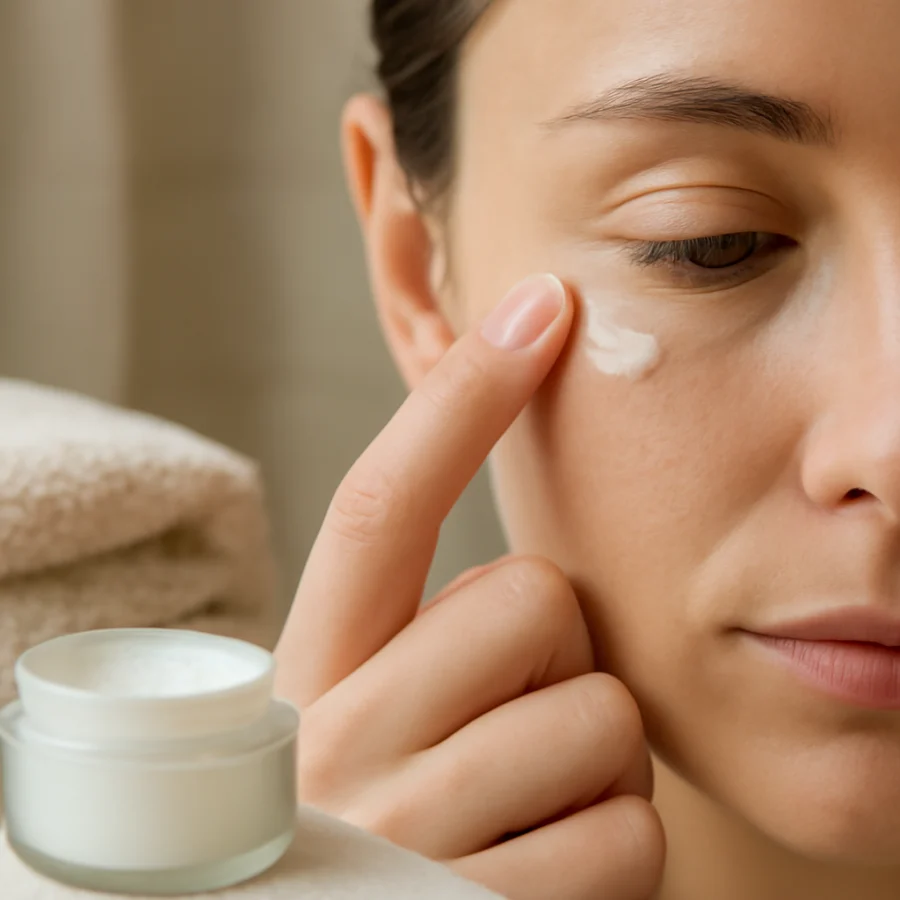
Ingredients that may support a dry under-eye area
No single ingredient works for every person, and an eye product is not automatically safer or more effective simply because it is labeled for the eye area. Look for a formula that feels comfortable, does not sting, and fits your routine. Check the current packaging and manufacturer ingredient list because formulas can change.
Humectants
Humectants help attract and hold water at the skin’s surface. Glycerin, hyaluronic acid, panthenol, and beta-glucan are examples commonly found in moisturizing products. They may make the skin feel more flexible and less tight, but they work best as part of a broader moisturizing routine. If a lightweight product containing humectants leaves the area feeling tight, a richer cream layered over it may provide more comfort.
For a closer look at this type of ingredient, see how hyaluronic acid may help dry skin around the eyes.

Emollients
Emollients help smooth rough-feeling areas by filling spaces between surface skin cells. Common examples include squalane, fatty alcohols, plant oils, and certain esters. They can improve the feel and appearance of flaking without changing an underlying medical condition.
Occlusives
Occlusives form a protective layer that slows water loss. Petrolatum, dimethicone, and some waxes or heavier oils are examples. They may be especially useful at night when the skin feels very dry, although richer textures can migrate into the eyes or feel too heavy for some people. Apply a thin layer and stop if you develop stinging, redness, or eye discomfort.
Ceramides and barrier-supporting ingredients
Ceramides are lipids naturally found in the skin barrier. Products containing ceramides may help support the feel of a compromised barrier, particularly when paired with other moisturizing ingredients. They are not a guaranteed solution for scaling, and they do not diagnose or treat the reason the skin became irritated. Our guide to ceramides for the under-eye area explains their cosmetic role in more detail.
Ingredients and habits to approach carefully
Retinol, exfoliating acids, benzoyl peroxide, highly fragranced formulas, essential oils, and some brightening products can be irritating around the eyes. These ingredients are not automatically inappropriate, but the thin skin in this area may be less tolerant, particularly when it is already flaky.
If you use an active, follow the label and avoid applying it to broken or irritated skin. Introduce only one new product at a time, use it less frequently if the directions allow, and consider a patch test on another area of skin before applying it near the eyes. Stop using a product if burning, worsening redness, swelling, or persistent irritation occurs. Do not apply prescription products around the eyes unless a qualified clinician has instructed you to do so.
Eye rubbing is another common source of trouble. Allergies, dry eyes, contact lenses, and habitual rubbing can all increase friction. Addressing the trigger may be more useful than repeatedly adding new skincare products.
How to choose an eye cream for flaky skin
When comparing products, prioritize comfort and a short, understandable routine over an impressive list of active ingredients. A suitable option may have:
- A fragrance-free or low-irritant formula, especially if your skin is sensitive.
- Moisturizing ingredients such as glycerin, ceramides, squalane, dimethicone, or petrolatum.
- A texture that spreads without tugging and does not sting when applied.
- Packaging that helps limit contamination and allows controlled application.
- Clear directions for use around the eye area.
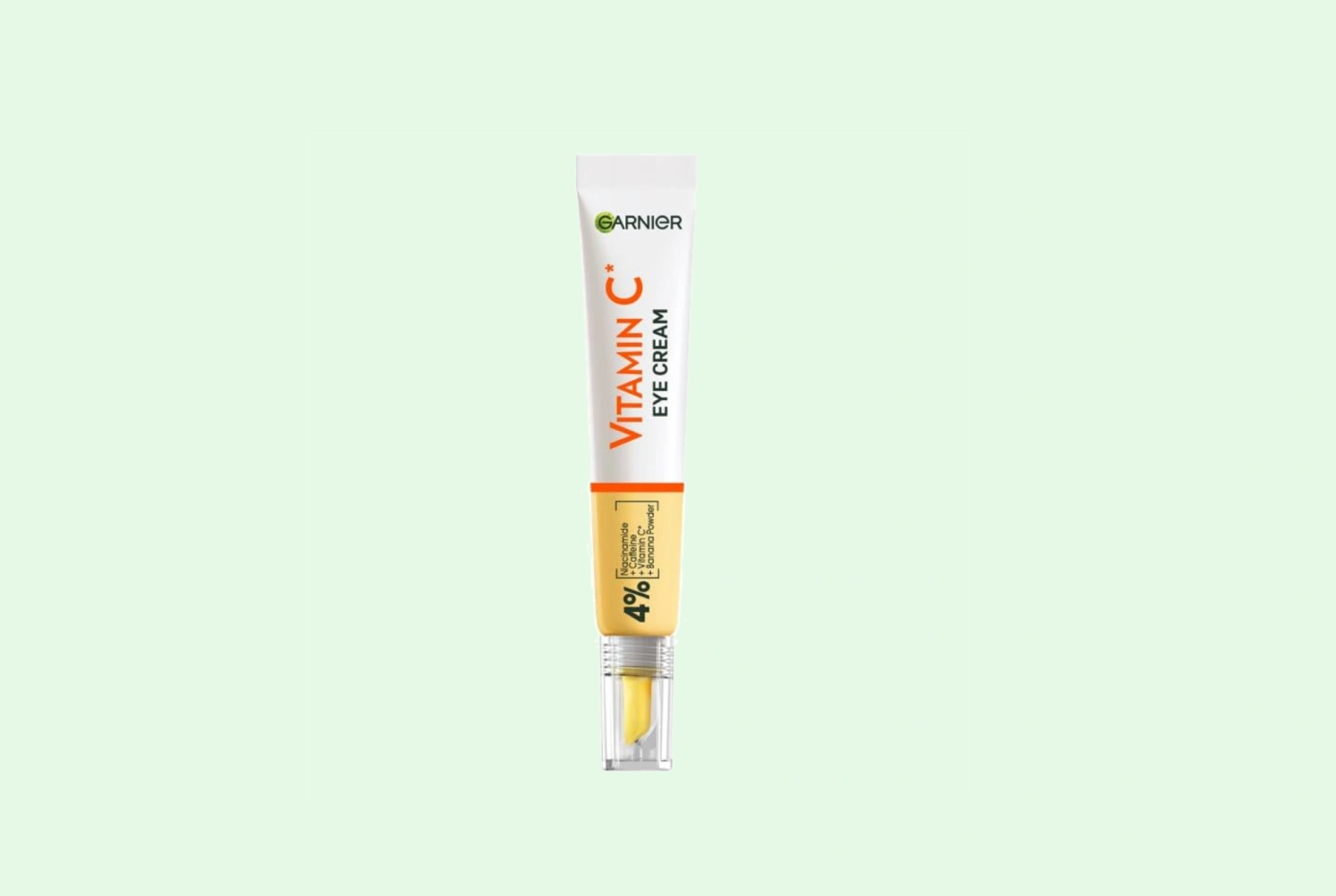
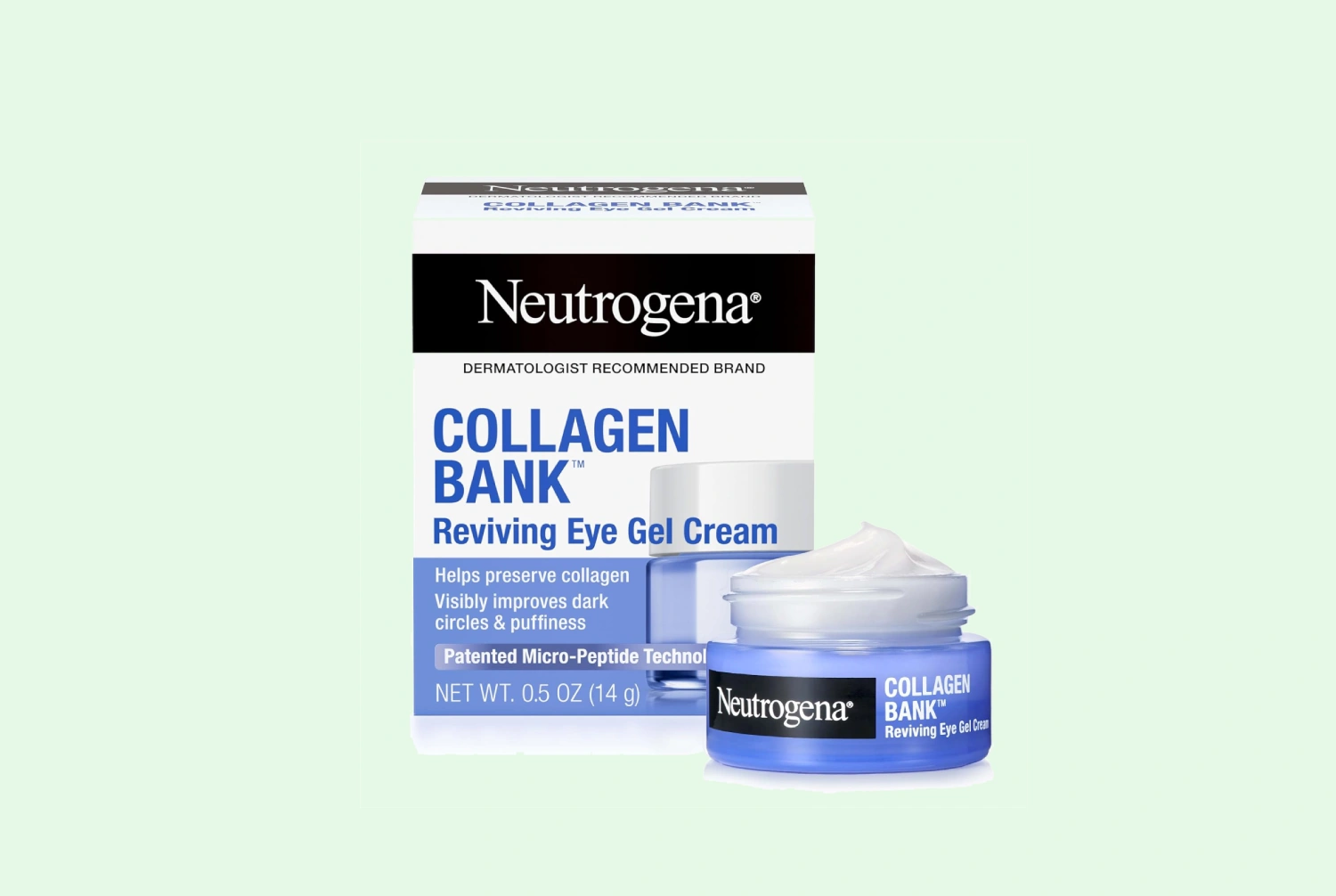
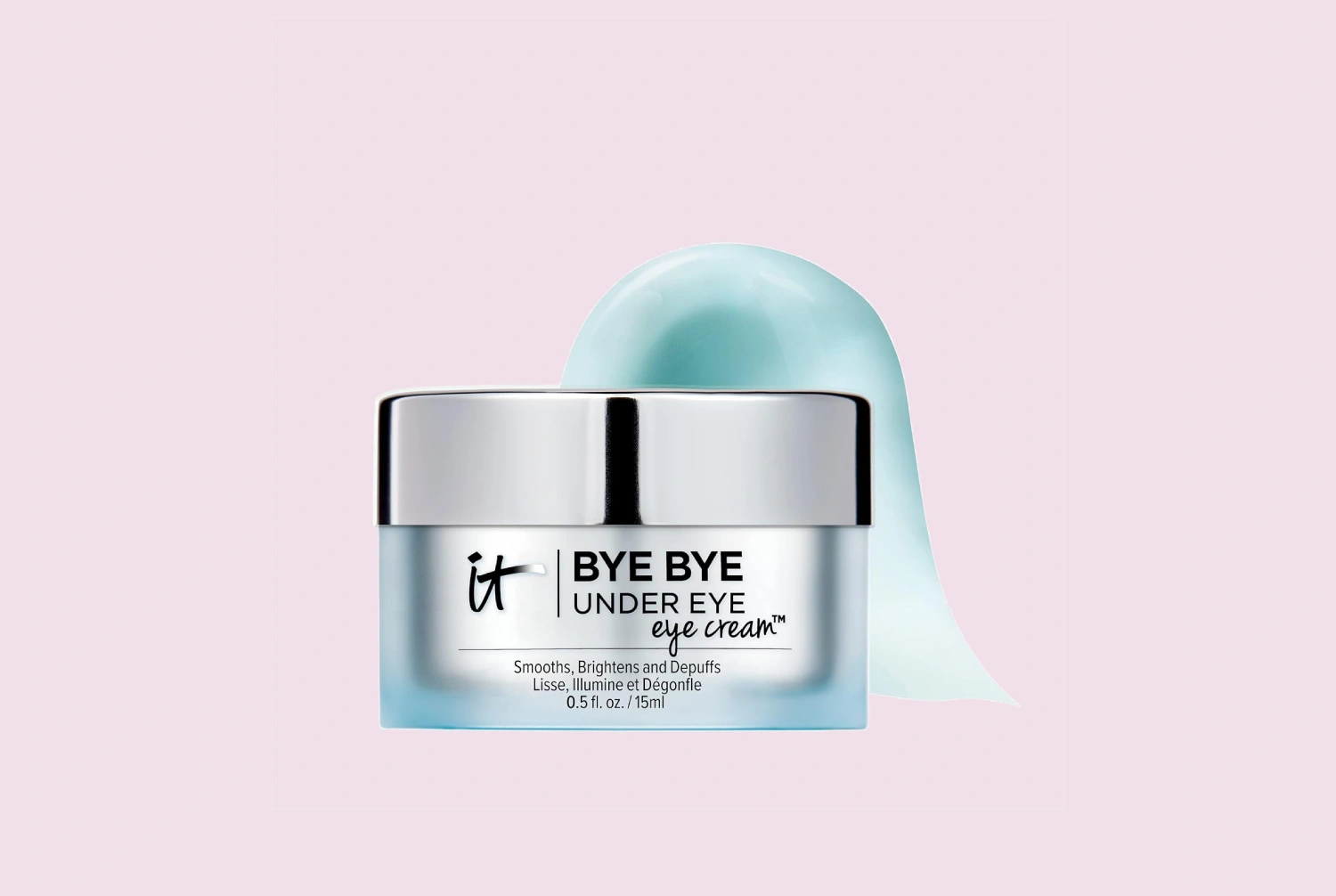
Labels and formulas vary, and “natural,” “hypoallergenic,” or “for sensitive skin” wording does not guarantee that a product will suit everyone. Review the current ingredient list before buying, especially if you have reacted to a product in the past. Our guide to choosing an eye cream for dry, sensitive skin can help you narrow the options.
How to apply moisturizer without making the area worse
Use less product than you might expect. After cleansing, place a small amount on your ring finger and gently tap it along the orbital bone, moving from the inner area toward the outer corner if that feels comfortable. Avoid rubbing directly over the lash line or placing cream into the eye. Give the product time to absorb before applying concealer.
If makeup looks patchy, adding more concealer may emphasize flakes. Instead, allow moisturizer to settle, use a thin layer of makeup, and avoid repeatedly pressing or wiping the area. Removing makeup at night with gentle movements is usually more helpful than trying to cover texture with heavier layers.
When dry, scaly skin needs medical attention
Cosmetic moisturizers can improve the look and feel of uncomplicated dryness, but they cannot determine or treat a medical cause. Seek professional advice if scaling is persistent, keeps returning, spreads beyond the under-eye area, or appears with marked redness, swelling, pain, cracking, oozing, crusting, or intense itching. Contact a qualified clinician promptly if you have eye pain, changes in vision, significant swelling, or symptoms involving the eye itself.
A clinician may consider possibilities such as irritation, an allergic reaction, eczema, eyelid inflammation, or another condition. Do not use steroid creams or other medicated products around the eyes without professional guidance, since the eye area requires particular caution.
A practical routine for dry, scaly under-eyes
In the morning, cleanse gently or rinse with lukewarm water if cleansing is unnecessary, then apply a bland moisturizer and a comfortable sunscreen around the eye area as directed. Sunglasses can also reduce exposure to wind and bright light that may encourage squinting or rubbing.
At night, remove makeup without scrubbing, cleanse gently, and apply a moisturizer with humectants, emollients, or barrier-supporting ingredients. If the skin feels especially dry, a thin occlusive layer may help reduce overnight moisture loss, provided it does not irritate your eyes.
Keep the routine steady rather than adding several treatments at once. Once the skin feels comfortable and looks less flaky, reintroduce active products one at a time and cautiously. If the scaling returns after a particular product, discontinue it and review the ingredient list rather than assuming that more moisturizer will solve the problem.

Comments
0No comments yet. Be the first to share a helpful note or question.
Leave a Comment
Your email address will not be published. Comments are reviewed before appearing on the site.