
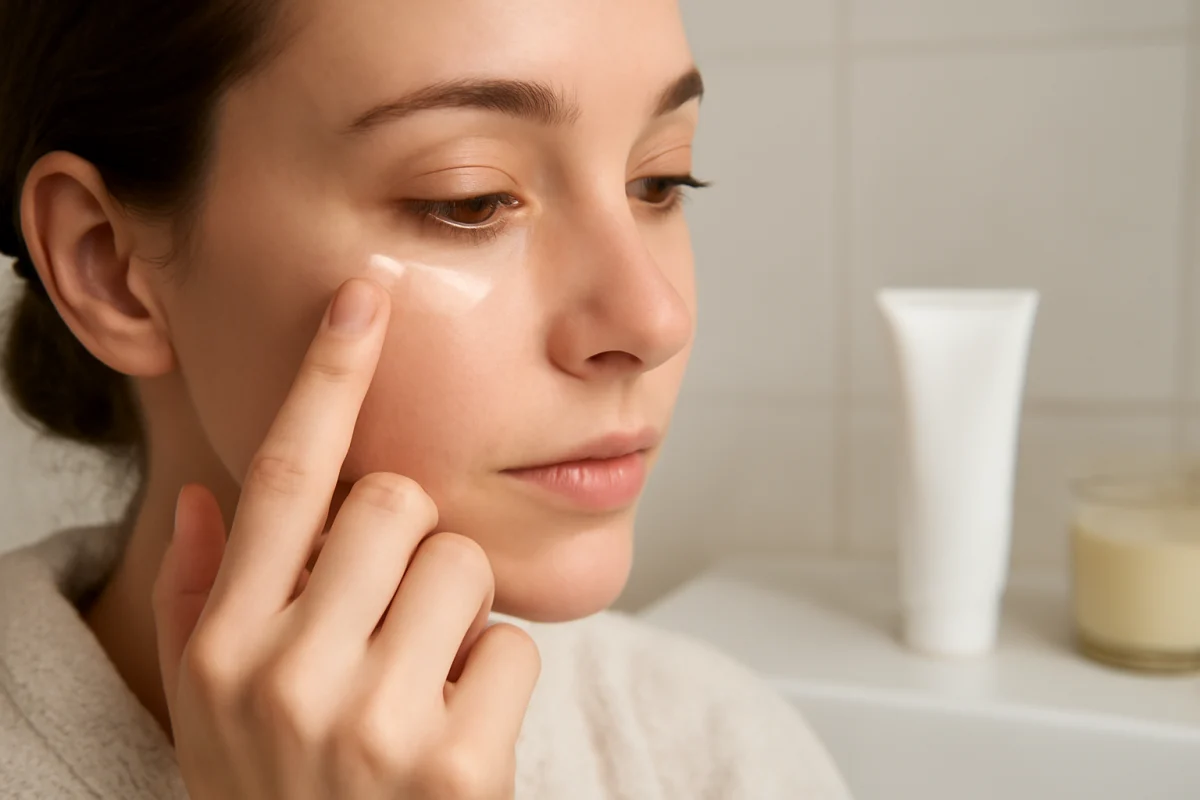
To improve dry skin under your eyes, simplify your routine, use a gentle cleanser, apply a fragrance-free moisturizer to slightly damp skin, and protect the area from wind and sun. Look for barrier-supporting ingredients such as ceramides, glycerin, and emollients, and pause potentially irritating actives until the tightness or flaking settles. These steps can make the skin look smoother and feel more comfortable, but persistent or severe symptoms may need evaluation by a qualified healthcare professional.
Why the under-eye area gets dry so easily
The skin around the eyes is delicate and often more vulnerable to moisture loss than other areas of the face. It is also exposed to frequent movement from blinking and facial expressions, rubbing from makeup removal, and environmental stress from cold air, wind, indoor heating, and sunlight.
Dryness can appear as tightness, rough texture, flaking, fine lines that look more noticeable, or makeup that settles unevenly. The appearance may overlap with dehydration, irritation, or another skin concern, so dryness alone does not identify a specific cause. For a broader explanation of possible contributors, see why the skin under your eyes may feel dry.
Some people also notice that their under-eyes look darker when the skin is dry. Flaking and roughness can catch the light unevenly, while repeated rubbing may make the area look more irritated. Improving moisture does not necessarily change every type of dark circle, however. Dark circles can have several possible contributors, including visible blood vessels, shadows from facial structure, pigmentation, and temporary irritation.
Start with a gentle under-eye routine
Cleanse without overdoing it
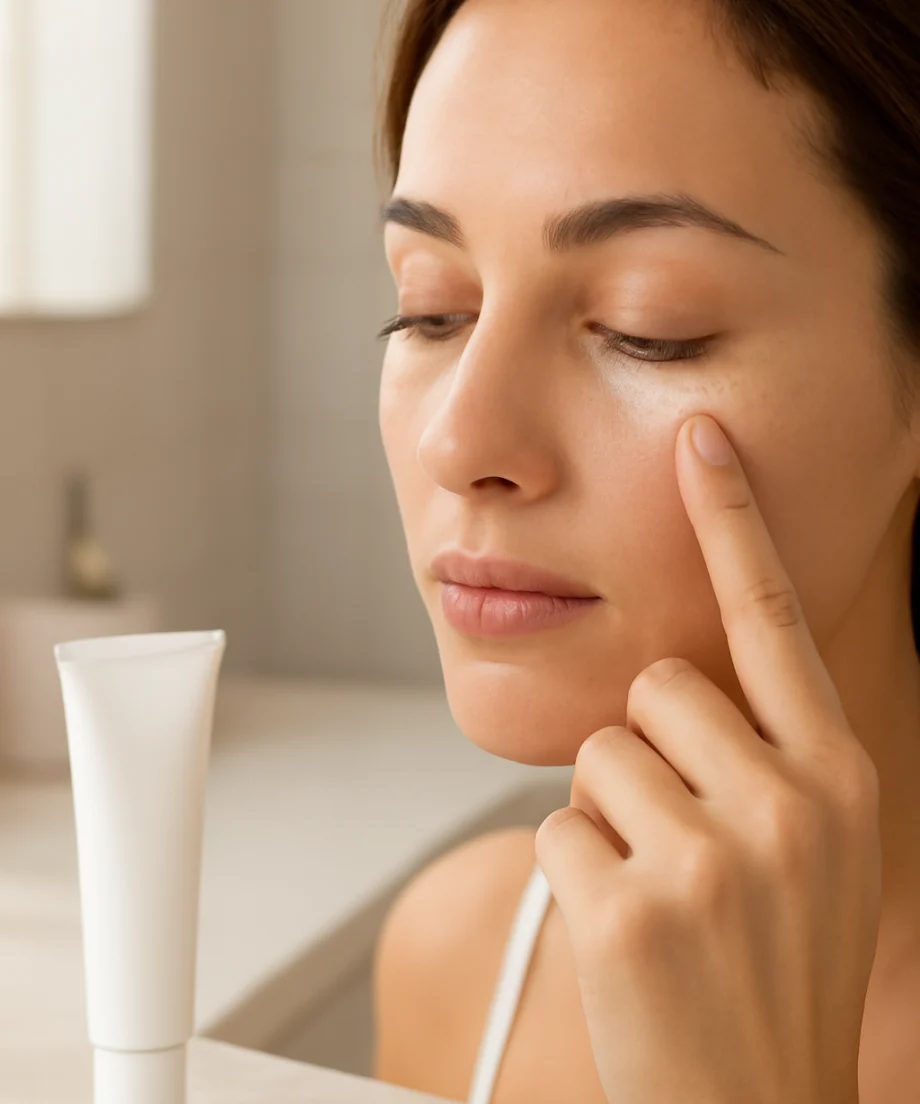
Use lukewarm water and a mild cleanser when you need to remove makeup, sunscreen, or other residue. Avoid scrubbing, rough washcloths, and repeated cleansing of the same area. When removing eye makeup, hold a damp cotton pad over the closed eye for a short time to loosen the product, then wipe gently rather than dragging the skin.
If a cleanser consistently leaves the area feeling tight, consider using less of it around the eyes or choosing a gentler formula. Keep cleanser and rinse water out of the eyes, and follow the product's directions.
Moisturize while the skin is slightly damp
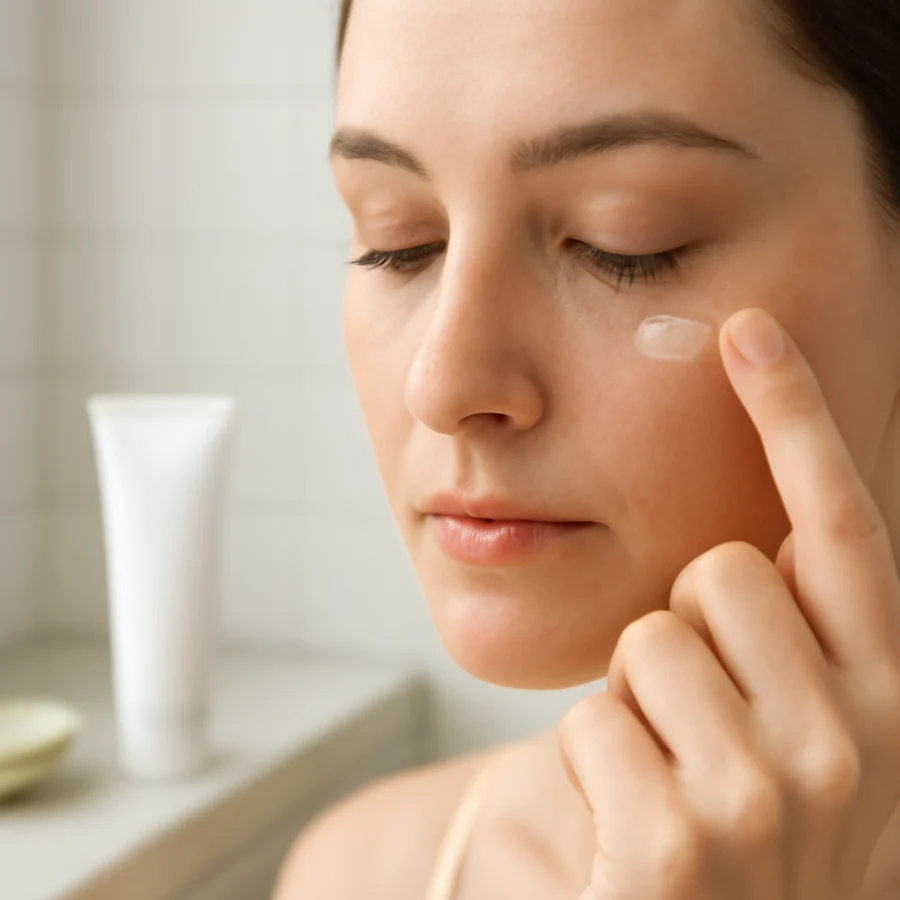
After cleansing, apply a small amount of a simple moisturizer while the skin is slightly damp. Damp skin can make application easier, but the product should not be placed so close to the lash line that it can migrate into the eyes. Use a light tapping motion instead of rubbing.
A product designed for the eye area is not automatically better for every person, and a facial moisturizer may be suitable if its label indicates that use around the eyes is appropriate. Choose based on the formula, your sensitivity, and how the product feels—not only on its category or packaging.
Protect the area during the day
Sun protection can help limit additional visible changes related to sun exposure, although it will not remove every type of dark circle. Use a sunscreen that is labeled for use around the eyes if that is where you plan to apply it, and wear sunglasses or a hat for additional comfort in bright conditions. If sunscreen stings or causes watering, keep it away from the immediate eye opening and consider asking a healthcare professional or pharmacist about alternatives.
Ingredients that may help dry under-eyes
Dry skin usually benefits from a combination of ingredients that attract water, soften the surface, and support the skin barrier. No single ingredient works for everyone, and a product's full formula matters more than one highlighted ingredient. Formulas can change, so check the current package and the manufacturer's ingredient list when product-specific details matter.
Humectants
Humectants such as glycerin and hyaluronic acid help attract and hold water at the skin's surface. They can make the area feel more comfortable and temporarily improve the look of fine dehydration lines. If a humectant product feels tight or sticky on its own, layer a moisturizer over it rather than relying on the serum or gel alone. You can learn more in this guide to hyaluronic acid and dry skin around the eyes.
Emollients
Emollients help soften rough-feeling skin and improve the look of an uneven surface. They may include plant oils, fatty components, or other skin-softening materials. The best choice depends on personal preference, sensitivity, and whether the formula feels comfortable without causing watering or heaviness.
Occlusive ingredients
Occlusives form a protective layer that can reduce water loss from the skin's surface. They may be useful at night when the under-eye area feels especially tight. Apply a thin layer and keep it away from the eye itself. A very heavy product can migrate while you sleep, so more is not always better.
Ceramides and barrier-supporting ingredients
Ceramides are lipid components used in many moisturizers formulated to support the skin barrier. They may be helpful when the area feels rough, tight, or easily irritated, but they are not a guaranteed solution. Read more about what ceramides do for the under-eye area before choosing a product.
What to pause when your under-eyes are irritated
When the skin is actively dry, flaky, or stinging, reduce the number of products touching the area. Temporarily pausing exfoliating acids, retinoids, strong fragrance, essential oils, and other products that cause discomfort may make it easier to identify what is aggravating the skin. This does not mean every potentially active ingredient is unsuitable for every person; it means irritated skin may need a simpler routine first.
Retinol and other retinoid products can be irritating, particularly when introduced too quickly or applied too close to the eyes. If you use one, follow the product label carefully and avoid applying it to compromised skin. Stop using it if burning, persistent redness, swelling, or worsening dryness develops. For more context, read about how retinol may affect under-eye dryness.
Patch testing can be a useful precaution, but it cannot guarantee that a product will not irritate the eye area. Do not apply a test product inside the eye or directly along the lash line. If a product gets into your eye and causes ongoing pain or vision changes, seek prompt medical care.
How to apply moisturizer without making dryness worse
- Wash your hands and gently cleanse the area if needed.
- Pat the skin dry, leaving it slightly damp rather than completely dry.
- Use a small amount of moisturizer and warm it between clean fingertips.
- Tap the product along the orbital area, generally on the bone beneath the eye and around the outer corner.
- Avoid rubbing, pulling, or applying product directly into the eye or too close to the lash roots.
- Allow the product to settle before applying makeup.
Using less product can reduce the chance of migration and pilling. If concealer looks patchy, give the moisturizer time to absorb and avoid layering several rich products at once. A separate guide explains how to layer eye cream on very dry skin.
Choosing an eye cream for dry skin
Look for a formula that is comfortable, easy to spread, and appropriate for the eye area according to its label. A short ingredient list is not automatically safer, and a long list is not automatically problematic. Consider whether the product contains moisturizing and barrier-supporting ingredients without obvious triggers for your skin.
If you have sensitive skin, fragrance-free options may be worth considering, but “fragrance-free” does not guarantee that a product will suit you. Apply new products cautiously, follow the label, and stop if irritation occurs. Avoid choosing an eye cream solely because it is marketed for dark circles; the label may describe cosmetic appearance benefits rather than medical treatment.
When dry under-eyes may need professional advice
Occasional dryness often improves after reducing irritation and using a consistent moisturizer. Seek advice from a qualified healthcare professional if the problem is persistent, painful, intensely itchy, swollen, cracked, oozing, or affecting your vision. It is also sensible to ask for guidance if symptoms began after a new cosmetic, cleanser, medication, or other exposure and do not improve after stopping the suspected trigger.
Do not assume that ongoing flaking is simply a need for a richer eye cream. Conditions affecting the eyelids or surrounding skin can have different causes and may require individualized care. Cosmetic skincare can support comfort and improve the appearance of surface dryness, but it should not be used as a substitute for diagnosis or treatment.
What results are realistic?
A suitable moisturizer may make the skin feel softer and look less rough, especially when dryness is related to cleansing, weather, or a disrupted surface barrier. Makeup may also apply more evenly when flakes and tightness are reduced. These changes can take consistent use, and they may vary with the season, environment, product tolerance, and the underlying cause of the dryness.
Moisturizing will not necessarily erase dark circles, remove structural shadows, or permanently change fine lines. The most practical goal is comfortable, well-moisturized skin and a routine that does not create additional irritation. Keep the routine simple, introduce one new product at a time, and review the current label whenever a formula changes.




Comments
0No comments yet. Be the first to share a helpful note or question.
Leave a Comment
Your email address will not be published. Comments are reviewed before appearing on the site.